
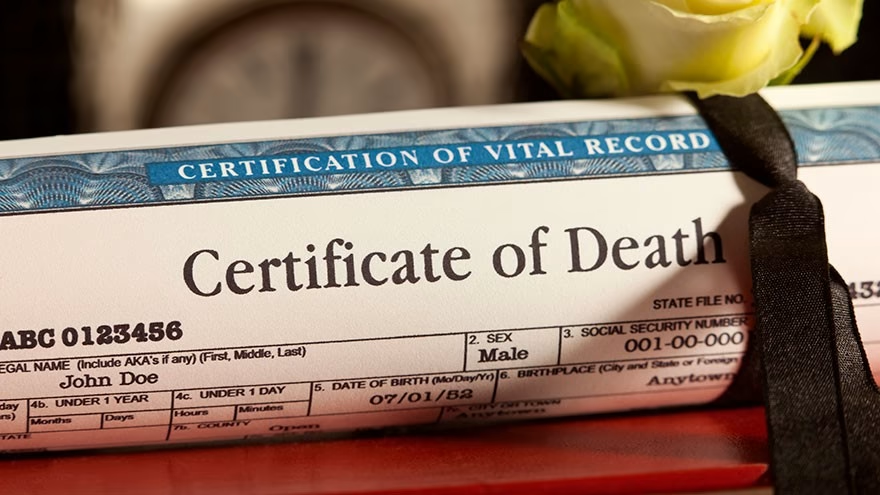
Searching for a death certificate can mean two different things. You may need a certified copy for estate, insurance, pension, property, or legal work. Or you may be looking for an older death record for genealogy. The process depends on where the death occurred, when it occurred, who is asking, and whether you need a certified record or an informational copy.
This article is legal and public-record information for a United States audience, not legal advice. Death-record access rules, fees, ID requirements, and eligibility vary by state, county, and city. If the certificate is needed for probate, benefits, title transfer, a lawsuit, or family conflict, ask the relevant vital records office or a licensed attorney in that state.
Where Should You Start?
Start with the place of death, not the person's last home address. Death certificates are usually filed where the death occurred. A person who lived in one state and died in a hospital across the state line may have a record in the state of the hospital.
USA.gov says to contact the vital records office of the state where the death occurred and be ready to provide the date and place of death. That simple instruction prevents many wrong-office requests.
What Information Do You Need?

Gather the full legal name, date of death, place of death, date of birth if known, spouse or parent names if known, and your relationship to the person. Some offices ask why you need the certificate. Certified copies often require government ID and proof that you are eligible.
If you are handling an estate, keep copies of your court appointment papers, letters of administration, executor documents, or other authority. Livecub's probate court overview can help explain why proof of authority matters after death.
How Do You Find The Right Vital Records Office?
The CDC's Where to Write for Vital Records tool links to state and territory instructions for birth, death, marriage, and divorce records. Use it when you know the state but not the agency address or current process.
Many states also route requests through county offices, city offices, online portals, mail, or in-person counters. Read the page carefully before paying. Fees, forms, notarization, ID rules, and processing times can change.
Who Can Order A Certified Death Certificate?
Eligibility depends on state law. Close family members, legal representatives, estate executors, administrators, and people with a documented legal interest are often eligible. Some states restrict recent death records but open older records after a waiting period.
Do not assume that being a friend, distant relative, or caregiver is enough for a certified copy. If you are not eligible, you may still be able to request an informational copy or older public record, depending on the state. If the record is needed for estate questions, Livecub's questions to ask an estate lawyer can help you prepare.
What Is The Difference Between Certified And Informational Copies?
A certified copy usually has an official seal or certification and can be used for legal and financial tasks. An informational copy may be useful for personal records or genealogy but may not be accepted by banks, insurers, courts, or government agencies.
Before ordering, ask the requesting institution what kind of copy it requires. Estate accounts, life insurance claims, pension benefits, transfer-on-death accounts, and property matters may need certified copies. Ordering too few certified copies can slow the process.
How Do You Search Online Safely?

Use official state, county, city, or authorized-vendor sites. Be careful with lookalike websites that charge extra fees without making the process clearer. Search for the state name plus "vital records death certificate" and check that the domain belongs to a government office or a clearly authorized vendor.
Some official offices use VitalChek or a state portal for online orders. Others handle requests directly. If a website promises instant certified records for every state, slow down. Certified vital records usually require identity checks and official processing.
What If The Death Was Recent?
For a recent death, the funeral home may help order initial certified copies. After that early window, family or the legal representative may need to order from the vital records office. Processing can take time because the medical certification and registration must be completed first.
Ask the funeral home how many copies it recommends for insurance, bank accounts, vehicles, property, benefits, and estate work. If funeral costs or benefits are part of the situation, Livecub's SSI and funeral benefits article may help frame related questions.
What If The Record Is Old?
Older records may be held by state archives, county clerks, city archives, libraries, or genealogical databases. The CDC state pages often note when statewide records began and where earlier records may be found. For example, some state pages direct users to county recorders for events before statewide registration.
For genealogy, you may not need a certified copy. A scanned index, archive record, obituary, cemetery record, church register, or newspaper notice may be enough for family research. For legal work, ask the institution what it accepts before relying on genealogy sources.
How Much Does A Death Certificate Cost?
Fees vary by state and ordering method. Online ordering, rush processing, shipping, and extra copies can increase cost. Some states charge less for extra copies ordered at the same time; others do not. Read the fee table before submitting payment.
Washington State, for example, says death-record fees start at a set amount per certificate and that applicants must provide valid ID and prove qualifying relationship. Your state may use different fees and rules, which is why official pages matter.
What If You Cannot Find The Record?
Check spelling variations, maiden names, nicknames, middle initials, date errors, and county boundaries. Confirm whether the person died at home, in a hospital, in a care facility, while traveling, or in another state. Also check whether the record may be under a corrected name.
If the certificate is needed to transfer property after a death, delays can affect other paperwork. Livecub's property transfer after trustee death article shows why death documentation often sits at the start of several legal steps.
How Does A Death Certificate Connect To Other Tasks?

Death certificates are often needed for probate, bank accounts, life insurance, retirement benefits, Social Security notifications, vehicle title changes, real estate, pensions, and closing utilities. Keep a list of every office that receives a copy.
If a power of attorney existed, remember that it ends at death. After death, estate authority comes from the will, court appointment, beneficiary designations, trust documents, or other legal process. Livecub's POA revocation guide explains POA authority while the principal is alive, but death changes the authority completely.
What Mistakes Delay Requests?
Requests often stall because the applicant sends the wrong fee, forgets ID, applies to the wrong state, uses a nickname, or asks for an informational copy when a certified copy is required. Another common delay is missing proof of relationship or legal authority.
Before mailing anything, check the current official instructions. Print the form from the vital records office, not an old saved copy. If the record is needed by a bank or court, ask that office exactly what version it needs and whether photocopies are accepted.
How Should You Track Your Requests?
Keep a simple log with the date ordered, office name, order number, fee, delivery method, and number of copies. Save receipts and confirmation emails. If several family members are working on the same estate, one shared list prevents duplicate orders and lost paperwork.
When copies arrive, store them flat and secure. Do not send your only certified copy to an office unless you know it will be returned. Many institutions can inspect and return a certificate, but some keep it. Ask first.
Frequently Asked Questions
Can I get a death certificate from any state?
No. Contact the state or local office where the death occurred.
Can anyone order a death certificate?
Not always. Certified copies are often limited to eligible relatives, legal representatives, or people with a documented legal interest.
How many certified copies should I order?
Ask banks, insurers, court staff, and benefit offices. Many families order several copies to avoid delays.
Are online death-certificate sites safe?
Use official government pages or authorized vendors listed by the vital records office.
What if I only need genealogy information?
An archive record or informational copy may be enough, but legal tasks usually require a certified copy.
What Is The Smartest Search Path?
Confirm where the death occurred, use the official state or local vital records office, gather ID and relationship proof, order the correct copy type, and keep records of every request. If the certificate is tied to estate, property, or benefits work, ask the receiving office what it will accept before spending money on the wrong document.

Tory Stearns
Edits practical household, travel and lifestyle explainers. Claims that can change are linked to current primary or subject-authority sources.



Leave a reply
Replying to