
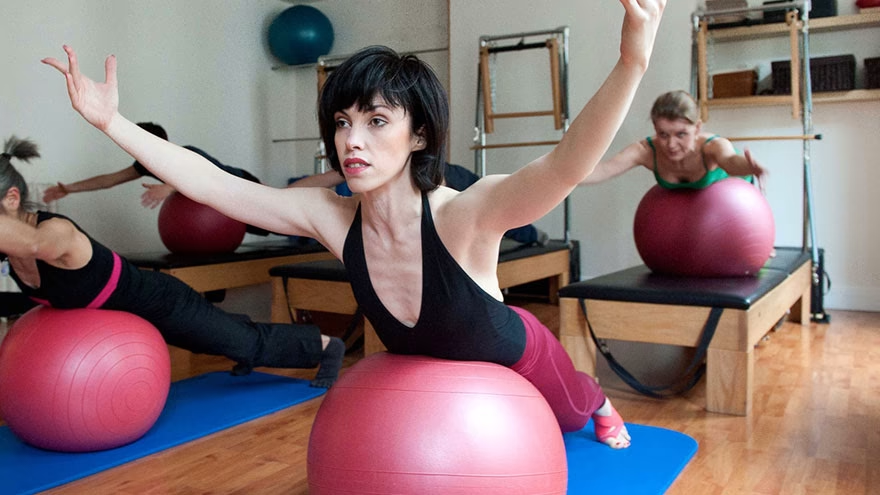
How to Use a Sitting Comfort Position in Labor is about using gravity, rest, and support without forcing one posture. Sitting can mean upright in bed, on a birth ball, on a chair, on a toilet, or supported by a partner. The right version depends on labor stage, monitoring, pain, and medical guidance.
This is general pregnancy education, not medical advice. Ask your OB, midwife, or nurse before changing positions, especially with an epidural, fetal monitoring concerns, high blood pressure, bleeding, dizziness, or high-risk pregnancy.
Why Sitting Can Help
Sitting can let the pelvis open while the upper body rests. Some people feel more grounded sitting than standing. Others find sitting too intense during contractions. There is no single best labor position.
Mayo Clinic notes that trying different labor positions can help with pain and a sense of control.
Use The Bed
Raise the head of the bed and sit with knees apart, pillows behind the back, and support under the arms. This can work when movement is limited or when the person needs monitoring.
If early labor emotions are high, Livecub's early labor support guide can help partners stay useful.
Try A Birth Ball

A birth ball can let the hips move while the body stays supported. Feet should be flat, the ball should be the right size, and someone should stay nearby if balance is uncertain.
Do not use a ball if dizziness, numbness, or staff concerns make it unsafe.
Use The Toilet
The toilet can relax the pelvic floor because the body already associates it with release. Some people use it for a few contractions, not as a long resting place.
Tell staff before going to the bathroom in active labor, especially if there is pressure or an urge to push.
Partner Support
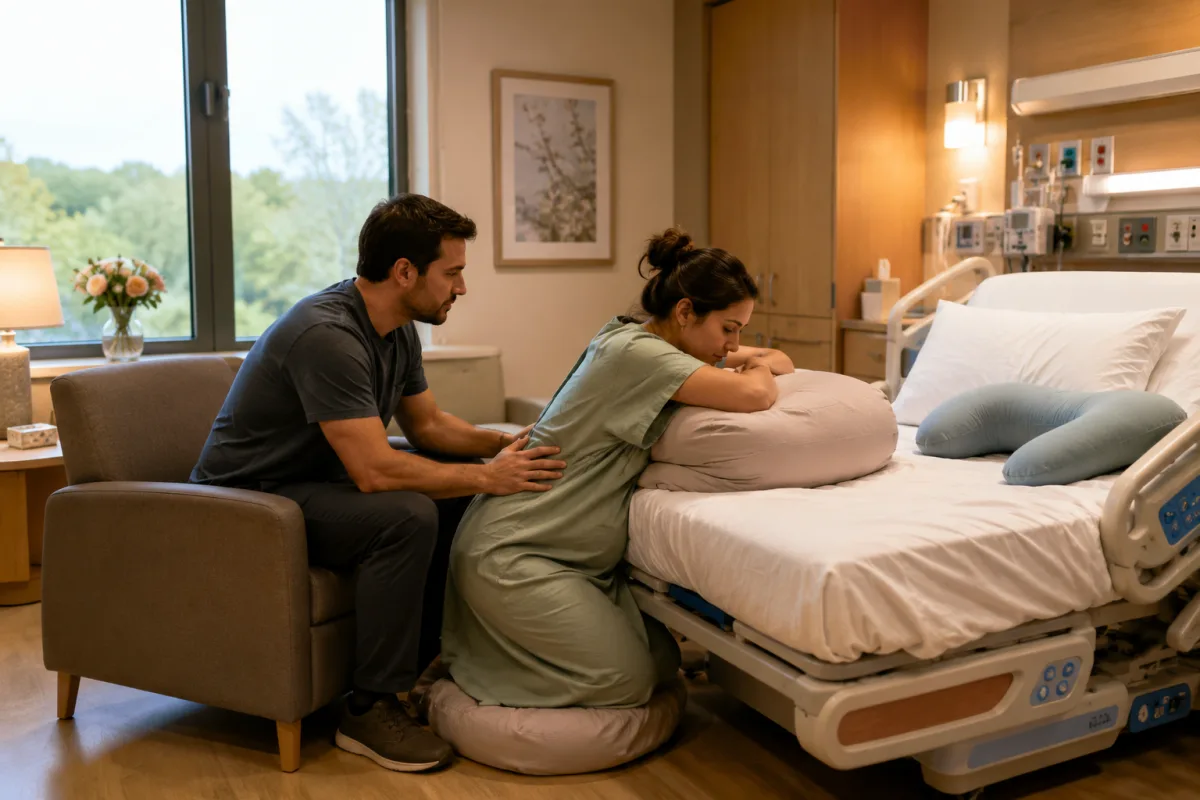
A partner can sit behind, hold hands, support shoulders, or provide counterpressure. They should avoid pulling or crowding. The laboring person gets to decide what touch helps.
For relationship communication, Livecub's staying intimate during pregnancy can support pre-labor conversations.
With An Epidural
A full unsupported sitting position may not be safe with numb legs. Staff may use throne position, side-lying, or supported sitting. Always ask before moving after an epidural.
Leg strength and blood pressure matter.
During Monitoring
Continuous fetal monitoring, IV lines, or blood pressure cuffs can limit movement, but often not all movement. Ask the nurse what sitting options keep the tracing clear.
A position that loses the baby's heart rate tracing may need adjustment.
For Back Labor
Sitting can worsen back labor for some people and help others. Leaning forward over a ball, table, or raised bed may allow counterpressure on the lower back.
If pain feels different or severe, ask for assessment.
Change Often
Sitting is one tool. Alternate with side-lying, standing, hands-and-knees, or walking if allowed. Changing positions can reduce fatigue and pressure.
The review article on maternal positions notes that position effects can vary by stage and outcomes; context matters in labor position evidence.
Watch For Pressure
Strong rectal pressure, urge to push, sudden pain, dizziness, or bleeding should be reported. Sitting can make pressure feel more intense because gravity is involved.
Do not stay in a position because it was in the plan.
Rest Between Contractions
Let the shoulders drop, unclench the jaw, and breathe normally between contractions. A sitting position should help conserve energy, not become another task.
If body image or exposure feels hard, Livecub's feeling attractive during pregnancy may help with the emotional side earlier in pregnancy.
After The Birth
If sitting caused hip, tailbone, or pelvic pain, mention it postpartum. Birth positions can affect soreness, and pelvic floor or physical therapy support may help.
Recovery should be part of the plan too.
Set Up The Room
Before active labor is intense, ask where the bed controls are, where the call button sits, and which side has the easiest access for staff. Sitting works better when pillows, water, towels, monitoring belts, and support people are already arranged.
Small setup details matter during contractions. A slippery floor, a ball that is too tall, or a chair without arms can turn a useful position into extra work. The goal is steady support with the least amount of fuss.
Use Short Trials
Try a sitting position for a few contractions rather than deciding it has to work for an hour. Notice whether pain feels more manageable, pressure feels productive, breathing is easier, and the baby can still be monitored if monitoring is being used.
If a position helps for ten minutes and then stops helping, that is still a success. Labor comfort is often a rotation of tools, not one perfect pose. Give yourself permission to change without treating the change as failure.
Protect The Tailbone
Some sitting positions put pressure directly on the tailbone. If that feels sharp or unhelpful, lean forward, shift weight to one hip, use pillows, sit on the edge of the bed, or switch to side-lying. Tailbone pain should not be ignored just because sitting is allowed.
A birth ball can reduce fixed pressure, but only when balance is good. If legs shake, feet cannot stay flat, or contractions are too strong to stay steady, choose the bed or another supported position.
Coordinate With Pushing
A sitting or semi-sitting position may be used during pushing, but it is not the only option. Some people need more hip opening, less tailbone pressure, or better rest between contractions. The care team may suggest side-lying, squatting support, or hands-and-knees based on progress.
If there is a strong urge to push while sitting on the toilet or ball, call staff before staying there. The feeling can change quickly, and staff need time to help with a safe move.
Emotional Comfort
Sitting can feel more social and less exposed than lying flat, which may help some people feel present and supported. Others feel watched or crowded. Ask for lights lowered, fewer people close to the bed, or a different support person position if that helps.
Comfort is physical and emotional. A technically correct position that makes the laboring person tense may not be the best choice. The person giving birth should remain the center of the decision whenever medical safety allows.
Stop Signals

Stop or change the position if there is dizziness, faintness, chest pain, heavy bleeding, sudden severe pain, numb legs, loss of balance, or staff concern about the fetal heart rate tracing. These signs are not moments to push through.
Also stop if the position increases fear. A short reset, a drink, a new pillow arrangement, or a side-lying break can make the next position more useful.
Hospital Bed Variations
A raised head-of-bed position can feel very different depending on knee support, hip angle, and pillow placement. Some people like a throne-style setup with knees open and the back supported. Others prefer sitting sideways or leaning over the raised back of the bed.
Ask the nurse to lock wheels, lower the bed when needed, and keep the call button within reach. A stable bed setup is especially helpful when contractions make it hard to explain what needs changing.
Birth Plan Wording
A birth plan can say that sitting, birth ball, toilet sitting, and supported upright positions are preferred if medically appropriate. That wording leaves room for monitoring, epidural safety, blood pressure concerns, and the baby's response.
Avoid wording that makes one position sound mandatory. Labor changes quickly, and a flexible plan helps staff support the goal without treating a needed change as a broken plan.
After A Long Labor
Fatigue changes what is safe. A position that felt steady in early labor may feel shaky after hours without sleep or food. If the laboring person is exhausted, supported sitting in bed may be safer than a ball or chair.
Comfort measures should reduce workload. If sitting requires constant muscle effort, switch to a position where pillows, the bed, or a support person carry more of the weight.
Frequently Asked Questions
Is sitting safe in labor?
Often, but safety depends on the pregnancy, monitoring, epidural, symptoms, and provider guidance.
Can I sit with an epidural?
Only with staff help if legs are weak or numb.
Does sitting speed labor?
It may help some people cope or use gravity, but labor progress depends on many factors.
Can I use a birth ball?
Usually only if balance is safe and staff agree.
When should I change positions?
Change for dizziness, numbness, severe pain, tracing problems, or if the position stops helping.
The Practical Takeaway
Use a sitting labor position by choosing stable support, checking with staff, protecting monitoring and epidural safety, changing positions often, and stopping when symptoms or the care team call for it.

Cashie Evans
Covers parenting and practical household topics with clear steps, safety notes and links to current guidance.



Leave a reply
Replying to