

Start With the Reader and the Result
Business letters and memos are not school essays with office clothes on. They are workplace tools. A good one tells the reader why the message exists, what facts matter, what action is needed, and when that action should happen. If the reader has to hunt for the point, the document has already made work harder.
Before you type the greeting or memo header, write one private sentence for yourself: "After reading this, the reader should..." Finish that sentence with a real action. Approve a request, attend a meeting, fix a billing issue, review a policy, or keep a record. That private sentence becomes your working purpose, and it keeps the message from wandering.
The UNC Writing Center's business writing guide emphasizes audience, reader needs, and the reason for writing. Its business writing resource is useful because it treats format and tone as choices tied to audience, not as decorations. That is the right mindset for letters and memos.
Know the Difference Between Letters and Memos
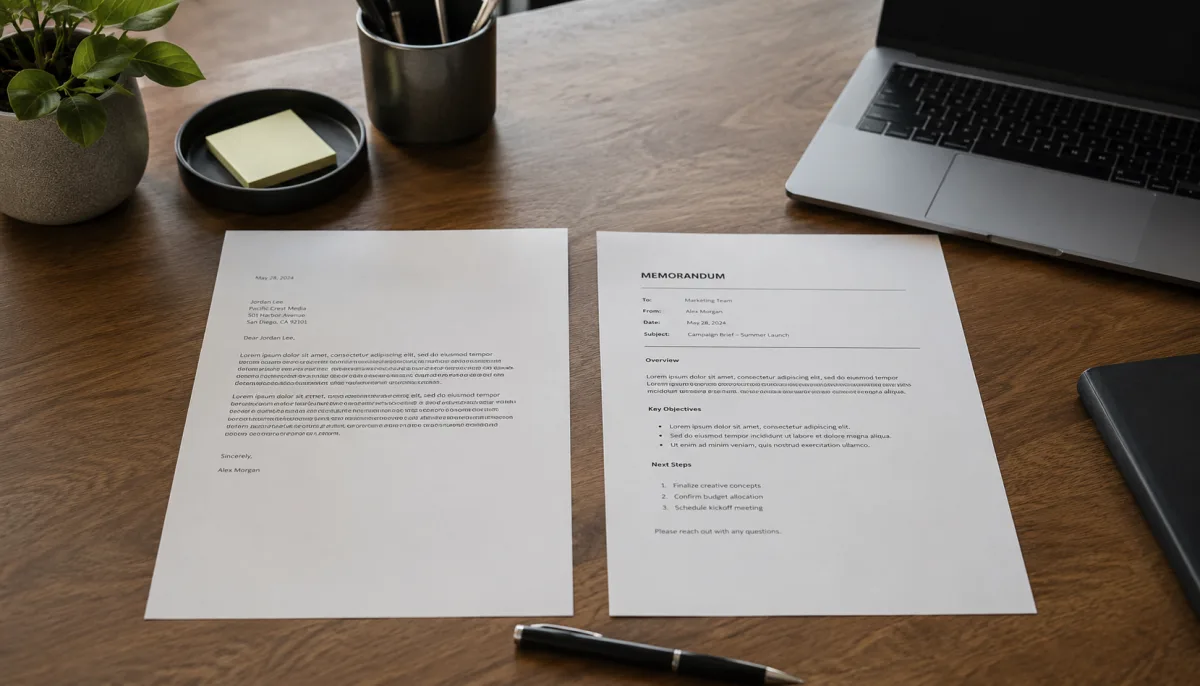
A business letter usually goes outside the organization or to someone who needs a formal record. It may be sent to a client, vendor, applicant, agency, landlord, customer, or partner. A memo usually stays inside the organization. It can announce a policy, summarize a decision, explain a procedure, or request internal action.
Use a letter for outside communication
Letters need a date, recipient information, a greeting, body paragraphs, a closing, and a signature block. The Purdue OWL guide to basic business letters explains common block formatting, where the text is left aligned and paragraphs are separated by space rather than indents. Most workplaces already have templates, so follow the local format when one exists.
Use a memo for internal decisions
Memos usually begin with To, From, Date, and Subject lines. Purdue OWL describes memos as brief documents used for routine internal communication, including decisions, agendas, policies, internal reports, and short proposals. A memo reference is useful when the format feels unfamiliar, but your workplace template should still win when there is a local standard.
Use email when the record can be lighter
Email can carry either a letter-like message or memo-like message, but it is not always the right place for formal decisions. If the topic affects money, policy, performance, discipline, or legal records, ask whether your workplace expects a signed letter, attached memo, or stored document. The format should match the risk of misunderstanding.
Build a Clean Structure
Readers scan workplace documents. Give them a clean path. Start with the point, add the necessary background, explain the action or decision, then close with the next step. This structure works for a short complaint response, a manager update, a vendor request, and an internal policy note. It is not fancy, but it saves time.
The first paragraph should answer why the reader is receiving the document. Do not open with a long history unless the history changes the decision. If there is bad news, state it plainly and respectfully. If there is a request, put the request early. If there is a deadline, do not bury it in the last line.
Use headings in longer memos. Use short paragraphs. Use bullets only when a list is easier to read than a sentence. The Digital.gov plain language guide, adapted from federal plain language material, recommends writing for the audience and designing content so people can understand and use it. That plain language guide supports the same practical goal: make the reader's job easier.
Write in a Tone That Fits the Situation
Professional tone is not cold. It is controlled. You can be firm without sounding angry, helpful without sounding soft, and brief without sounding rude. The safest tone is usually direct, polite, and specific. Avoid jokes in sensitive messages because they rarely age well in a forwarded document.
For customer issues, acknowledge the concern before explaining the decision. For coworker problems, describe behavior and impact rather than personality. For sympathy, illness, or personal loss, keep the message simple and human. Livecub's guide to office etiquette for sympathy cards is a useful reminder that workplace writing sometimes needs restraint more than polish.
If a workplace conflict is involved, write as if the message may be read by a manager, HR representative, or future project lead. That does not mean writing defensively. It means choosing facts over labels. Livecub's article on dealing with a rude coworker pairs with this approach because documentation works best when it stays observable.
Make the Action Easy to See
A business letter or memo should not make the reader guess the next move. If you need a response, name it. If you need approval, say what is being approved. If you need attendance, include date, time, location, and preparation. If you are sharing a decision, state what changes and when.
Use one action per paragraph when the message is complex. A paragraph about schedule should not also hide a budget request. A paragraph about policy should not also contain a personal aside. The more sensitive the topic, the cleaner the structure should be.
Customer-facing writing needs extra care because a small wording choice can calm or inflame a problem. Livecub's guide on handling restaurant customer service complaints shows the same pattern in a different setting: listen, state the next step, and keep the tone steady.
Format for Fast Reading
Formatting is part of the message. Use a readable font, consistent spacing, and a subject line that tells the truth. A subject line like "Updated visitor check-in procedure begins July 15" is better than "Important update." It gives the reader context before the first sentence.
Keep most workplace letters to one page when possible. Keep memos as short as the topic allows. If you need attachments, name them in the body and explain what the reader should do with them. A file attached with no direction often goes unread.
Administrative roles often live inside this kind of detail. Livecub's overview of receptionist and administrative assistant duties connects well here because front-office communication depends on accurate messages, clean records, and steady follow-through. Good writing supports all three.
Review Before You Send
Review is where many workplace documents get better fast. Read the first paragraph and ask whether the purpose is visible. Read the ending and ask whether the next step is clear. Then check names, dates, numbers, attachments, and titles. These small details decide whether the message feels dependable.
Read sensitive messages out loud. If a sentence sounds like irritation, rewrite it. If a sentence needs three commas to survive, split it. If a paragraph has two separate jobs, divide it. Do not rely only on spellcheck because spellcheck will not tell you that you sent the right memo to the wrong person.
Templates help, but they do not think for you. Keep a small checklist beside recurring documents: purpose, audience, action, deadline, attachments, approval path, and record location. For a customer letter, add account number and contact method.
For a staff memo, add who is affected and who is not. For a policy note, add the effective date and the person who can answer questions. These checks are plain, but they prevent many avoidable follow-up emails later.
Finally, match the document to the workplace. A creative agency, city office, restaurant group, law firm, and military unit may all use different norms. If you are adjusting your workspace and communication habits together, Livecub's guide on personalizing an office cubicle can sit beside this writing routine as part of building a calmer workday.
Frequently Asked Questions
What is the main difference between a letter and a memo?
A letter is often used for external or formal communication, while a memo is usually internal. Letters include greetings and closings; memos use header lines such as To, From, Date, and Subject.
How long should a business memo be?
Most memos should be as short as the topic allows. A routine memo may be a few paragraphs, while a policy or report memo may need headings, bullets, and supporting details.
Should business letters sound friendly?
They can sound warm, but they should stay professional. A good letter is clear, polite, specific, and respectful of the reader's time.
What should I check before sending?
Check the purpose, reader, tone, names, dates, numbers, attachments, subject line, and requested action. For sensitive messages, ask a trusted colleague to review the draft if policy allows.

Tory Stearns
Edits practical household, travel and lifestyle explainers. Claims that can change are linked to current primary or subject-authority sources.




Leave a reply
Replying to