
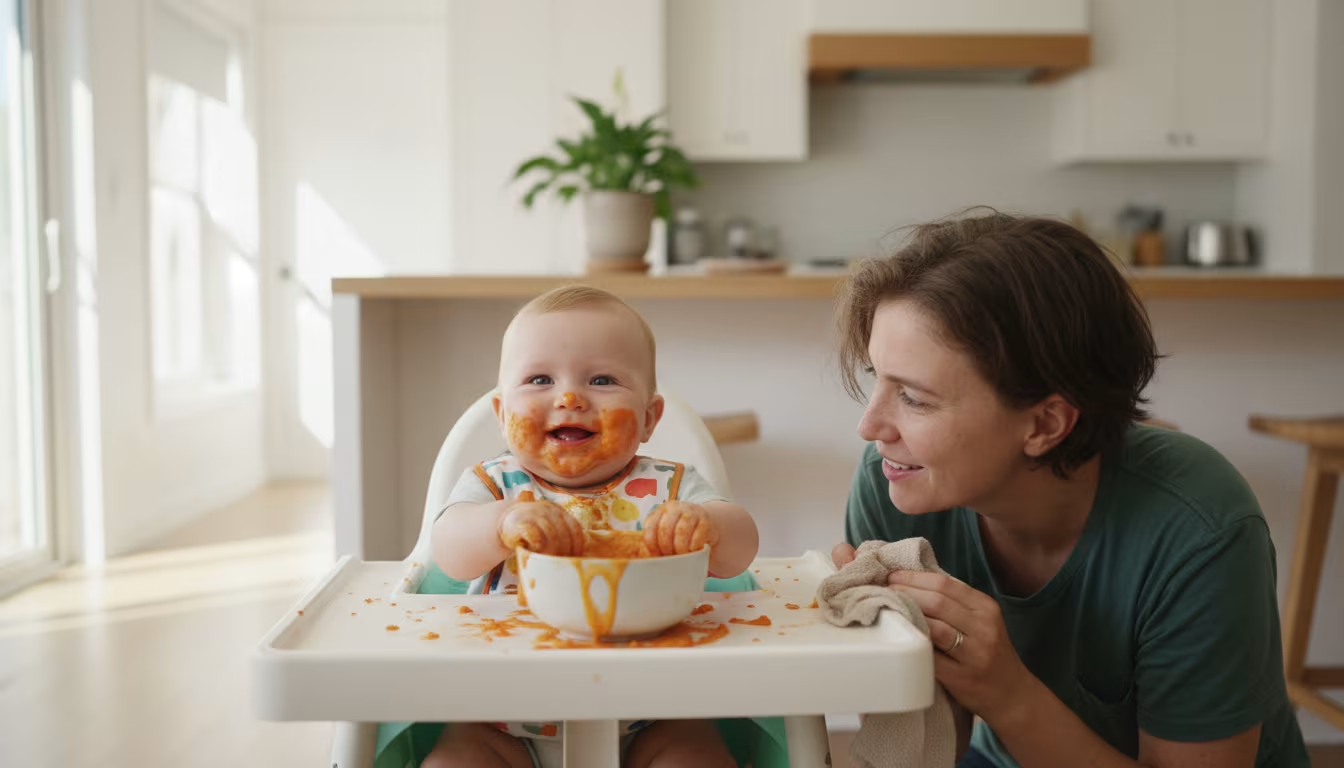
Feeding gets easier the moment you stop hunting for the perfect first bite and start watching your baby for signs of readiness. Those early meals are not really about nutrition anyway. Breast milk or formula stays the main source of calories for months, and the first spoonfuls are practice: tasting, pushing food around, meeting new textures, and learning to sit and eat alongside the family.
Look For Readiness, Not A Date
Most babies are ready for solids around six months, and starting before four months is not recommended. The U.S. Centers for Disease Control and Prevention's guidance at CDC.gov frames it that way, and the readiness signs matter more than the number on the calendar. Look for steady head control, the ability to sit with support, bringing objects to the mouth, genuine interest in what you are eating, and moving food to the back of the mouth to swallow rather than pushing everything straight back out.
If your baby was born early or has had growth, heart, lung, reflux, or swallowing concerns, check with your pediatrician before you start. Adjusted timelines are common, and our guide to premature baby development can help you think about readiness without leaning only on the calendar.
First Foods And Safe Textures
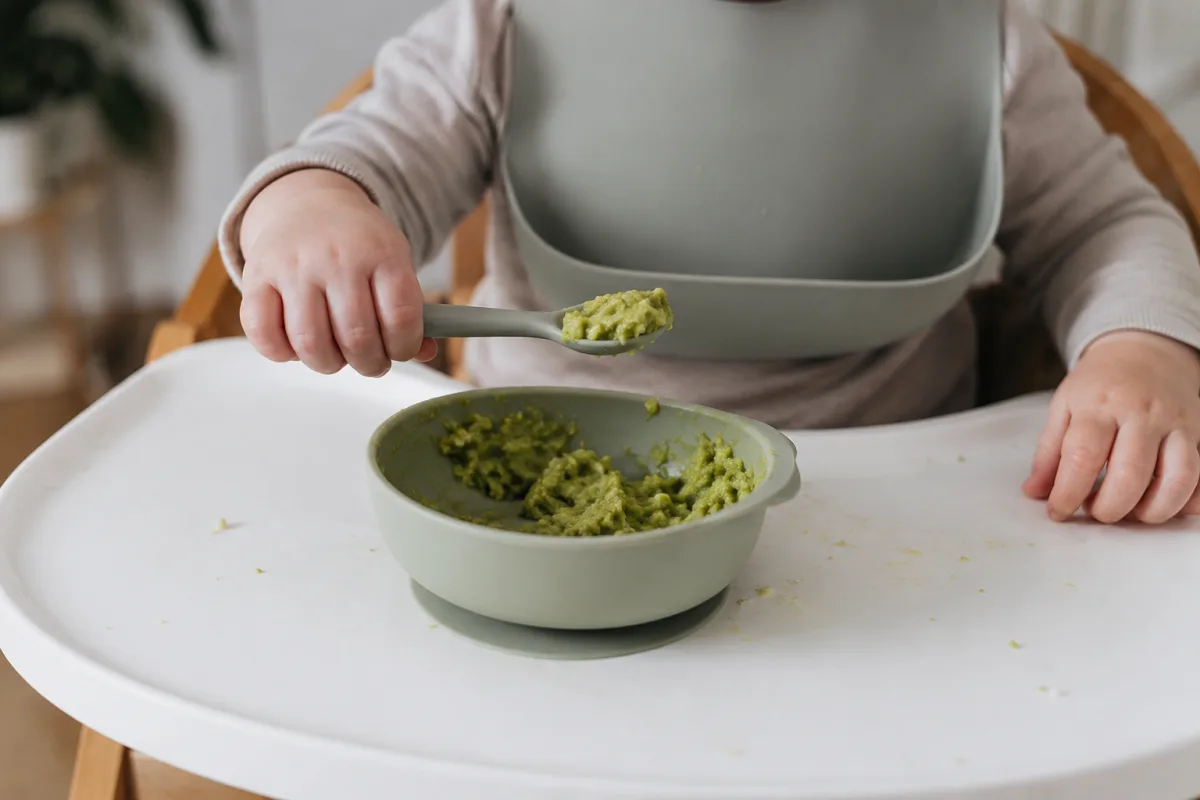
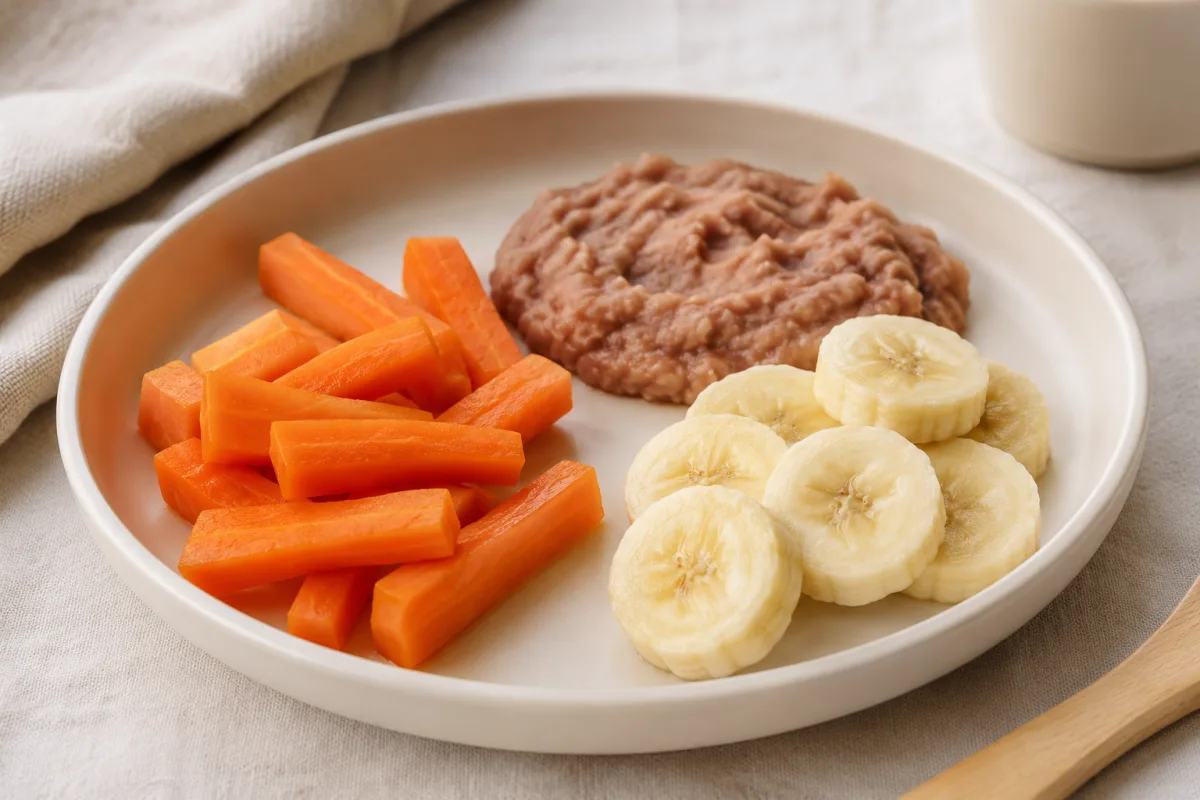
There is no required ceremonial first food. Iron-rich options are a smart early focus, since a baby's iron stores start running low around this age: soft cooked meat, beans, lentils, well-cooked egg if tolerated, iron-fortified infant cereal, and mashed versions of what your family already eats. Start with a small amount, once a day. Half a spoonful is a real attempt, and a grimace usually means the texture is new, not that your baby hates the food forever.
Texture matters far more than a fancy recipe. Early foods should mash easily between your fingers or be smooth enough to swallow safely: thick purees, mashed banana or avocado, plain yogurt, soft beans, flaky fish, and well-cooked vegetables all work. If you offer finger foods, shape and softness are everything. Keep your baby upright and strapped into a high chair for every meal, and never feed in a car seat, stroller, or on the move, because eating needs full attention.
A Simple First-Month Plan
You do not need a rigid schedule, but a loose four-week arc keeps expectations realistic and low-pressure. The point is safe practice and curiosity, not an empty bowl.
| Week | Focus | What it looks like |
|---|---|---|
| 1 | One meal, one food | Offer a single soft food when baby is alert but not starving; stop before frustration |
| 2 | Add variety | Rotate a vegetable, fruit, grain, and iron-rich protein across the week; keep milk feeds familiar |
| 3 | Adjust texture | Move toward thicker mash or very soft finger foods if smooth textures go well |
| 4 | Join family meals | Offer safe pieces from the family plate, before salt, honey, or hard textures are added |
Watch the baby, not the bowl. Turning away, closing the mouth, leaning back, or playing instead of eating usually means the meal is over. Pressure tends to backfire, so skip the tricks and airplane spoons; babies are learning to trust that mealtimes are safe.
Choking Prevention And Allergens

Preparation is what makes food safe, so cut foods small and mash them when needed. Avoid whole grapes, popcorn, nuts, hard raw vegetables, hot dog rounds, chunks of meat or cheese, hard candy, and thick spoonfuls of nut butter, along with any round, firm food that can seal off an airway. Learn the difference between gagging, which is noisy and red-faced, and choking, which can be silent or weak, and consider learning infant choking first aid before solids begin. Babies also grab fast once food appears, so our baby-proofing guide is worth a look for the hazards near the high chair.
Common allergens no longer need a long delay for most babies. Egg, peanut, dairy, wheat, soy, fish, shellfish, and sesame can generally be introduced after a few first foods, once your baby is developmentally ready, using safe forms: peanut butter thinned into a puree rather than a thick glob, egg fully cooked, and dairy as yogurt or cheese rather than cow's milk as a main drink before age one. If your baby has severe eczema, an existing food allergy, or a strong family history, ask the pediatrician before introducing peanut or other high-risk foods.
When To Call The Pediatrician
Mild redness around the mouth can come from simple food contact, but hives, swelling, repeated vomiting, coughing, wheezing, pale skin, or sudden sleepiness after a food needs urgent medical attention. A short food diary noting the food, amount, time, and any symptoms makes confusing reactions easier to sort out, and our baby rash guidance can help you tell everyday skin irritation from something that needs care.
Call your pediatrician for ongoing feeding refusal, coughing during feeds, poor weight gain, blood in the stool, or any reaction that worries you. A couple of safety rules round things out: no honey before age one because of botulism risk, no unpasteurized dairy or juice, and no cereal added to bottles unless a clinician specifically advises it for a medical reason. After the inevitable mess, our guide on how to wash an infant helps when food ends up in every fold.
Frequently Asked Questions
Can I start solids before six months?
Sometimes clinicians advise an earlier start for specific reasons, but before four months is not recommended. Ask your pediatrician.
What should the first food be?
There is no single required first food. Soft, safe, iron-rich options are a good early focus.
Should I wait three days between new foods?
Many families space foods out so reactions are easier to spot. Ask for a stricter plan if allergy risk is high.
Can my baby drink water with meals?
Small sips may be fine once solids begin, but breast milk or formula remains the main drink through infancy.
What if my baby refuses solids?
Pause and try again later. Call the pediatrician if refusal persists, growth is poor, or feeding seems painful.
This article is for general information only and is not a substitute for medical advice. Talk to a clinician who knows your full history before making changes.

Olivia Prete
Edits culture and personal-development articles, distinguishing opinion and experience from verifiable claims.




Leave a reply
Replying to