
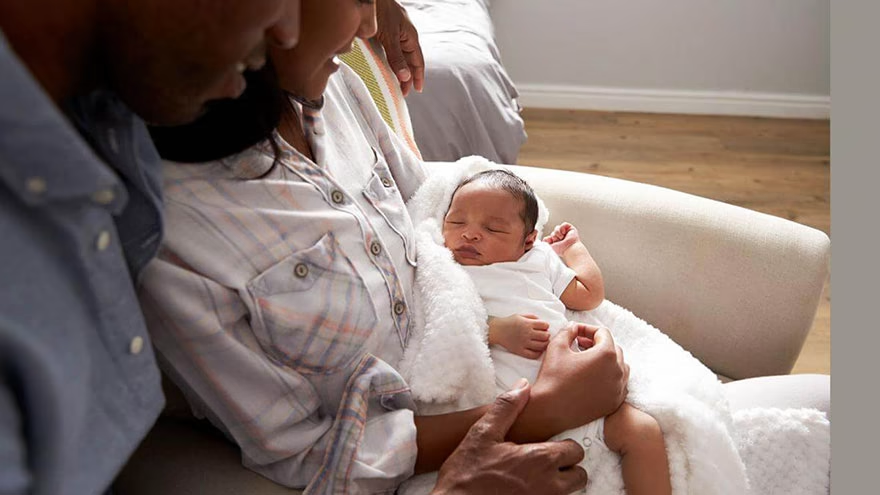
Is it Safe for a Newborn to Be Around a Chemo Patient? is a question families ask because they want closeness without putting anyone at risk. In many cases, a newborn can visit a loved one receiving chemotherapy, but the details matter: the patient's immune system, the baby's health, the type of treatment, body-fluid precautions, and infection exposure.
This article is general education, not medical advice. Ask the oncology team and the baby's pediatrician before close contact, especially if the newborn is premature, medically fragile, recently ill, or if the patient has low white blood cells, fever, mouth sores, vomiting, diarrhea, or a home chemotherapy pump.
Casual Contact Is Usually Different From Body Fluids
The main concern is not that a chemo patient becomes radioactive or unsafe to sit near. The concern is that small amounts of some chemotherapy medicines can leave the body through urine, stool, vomit, blood, saliva, sweat, semen, or vaginal fluid for a period after treatment.
The American Cancer Society's chemotherapy safety guidance gives home precautions for body fluids, laundry, trash, and cleaning. Normal visiting is different from cleaning a spill, changing soiled bedding, or handling contaminated waste.
Ask About The Time Window

Many cancer centers use 48 to 72 hours as a common safety window after chemotherapy, but some medicines may require longer precautions. Memorial Sloan Kettering's safe handling guidance says most chemotherapy medicine leaves the body within 48 hours, while some may take up to 7 days, so the care team should answer for the exact treatment.
That timing affects diapering, bathroom cleaning, laundry, kissing, shared beds, and who handles any body-fluid cleanup. If a newborn visits during the precaution window, keep the visit simple and avoid situations where the baby or caregiver contacts the patient's body fluids.
Protect The Chemo Patient From Infection
Chemotherapy can lower infection defenses. A newborn may not be visibly sick but can still be part of a household where siblings, parents, or visitors carry colds, flu, RSV, stomach viruses, or COVID. The chemo patient's risk may be higher than the baby's risk.
Do not visit if anyone in the baby's household has fever, cough, vomiting, diarrhea, rash, pink eye, recent exposure to a contagious illness, or symptoms that are not explained. Wash hands before the visit and keep the visit short if the patient is tired.
Newborn Health Matters Too
A full-term healthy newborn and a premature or medically fragile newborn are not the same risk situation. If the baby spent time in the NICU, has breathing problems, low birth weight, feeding issues, immune concerns, or has not yet had early pediatric follow-up, ask the pediatrician first.
Livecub's premature baby development guide and low-birth-weight and preterm infant article are useful background, but the baby's own clinician should guide visits.
Holding The Baby
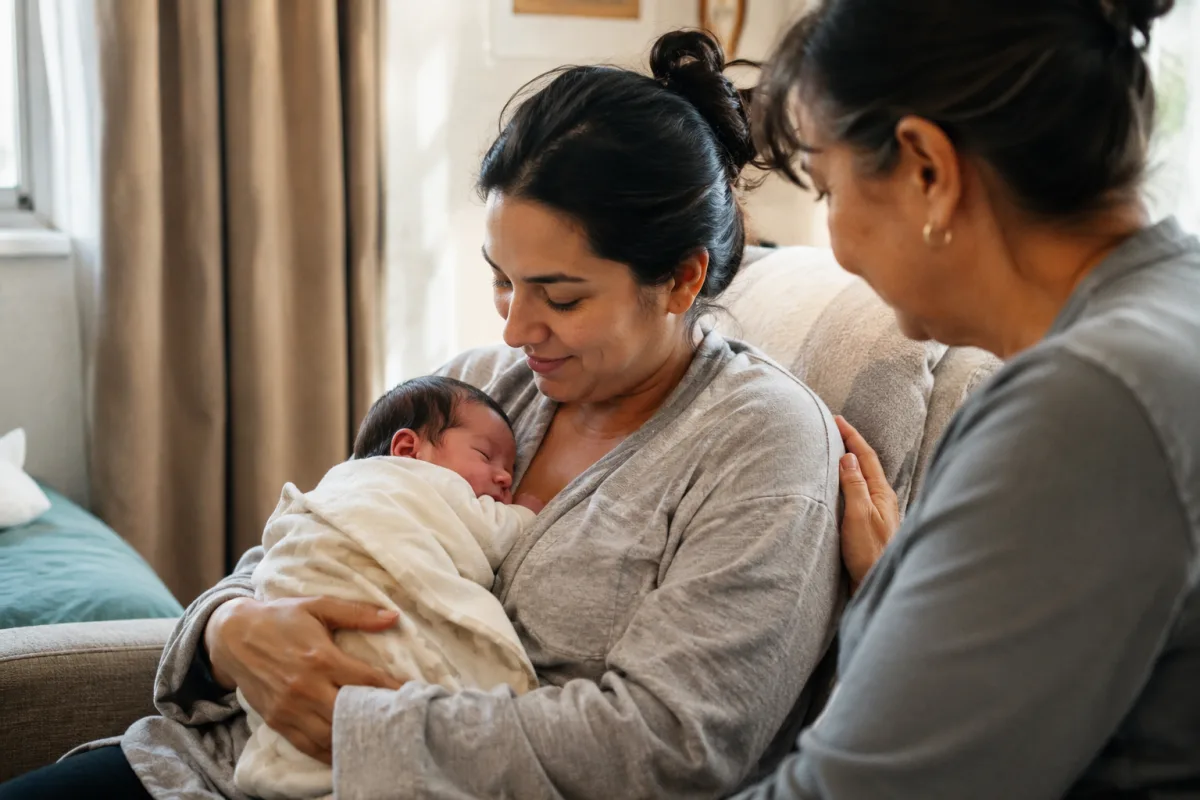
If the oncology team and pediatrician say a visit is fine, the patient can often hold the baby after washing hands well and wearing clean clothing. Avoid holding the baby immediately after vomiting, toileting, handling medicine, or touching body fluids. If the patient has open skin, draining wounds, or a central line site that is not covered, ask the care team.
A clean blanket between the patient and baby can help if the patient is worried about sweat, medication residue, or skin irritation. Keep the baby's hands away from medical tubing, ports, pump lines, medication bottles, and trash bags.
Kissing, Cuddling, And Face Contact
Cancer Research UK's chemotherapy safety at home page says it is safe to hug and kiss family and friends, and to visit, sit with, hug, and kiss children, while still taking body-fluid precautions. For newborns, be more cautious with face kissing because infection spread is a separate issue.
Kiss the top of the head or use cuddling without face-to-face kisses if anyone is unsure. Avoid kissing the baby's hands because newborns put hands near the mouth. Anyone with a cold sore should not kiss a newborn.
Bathroom And Laundry Precautions
During the care team's precaution window, the chemo patient may need to close the toilet lid before flushing, flush twice, clean splashes, wash hands well, and use gloves for body-fluid cleanup. Caregivers may need gloves for laundry or waste that contains body fluids.
Keep newborn items separate from chemo-soiled laundry. Baby blankets, burp cloths, and clothing should not be placed near contaminated laundry, disposable pads, or cleanup supplies.
Oral Chemo And Home Pumps
Oral chemotherapy, pills, capsules, topical medicines, injections, and pumps can add different risks. Keep all cancer medicines, pill bottles, tubing, pumps, gloves, and disposal bags out of reach of children and away from baby supplies.
Do not let a baby lie on tubing or bedding that could contain leakage. If a spill, leak, or pump problem happens, move the baby away and follow the oncology team's cleanup instructions.
Plan A Safer Visit

Choose a day when the patient feels well and the baby is healthy. Keep the room calm, avoid crowds, and ask visitors to wash hands. A small visit with one baby and one caregiver is easier to manage than a group gathering.
For home safety around a baby, Livecub's baby-proofing room-by-room guide can help prepare the space. For routine baby care, Livecub's infant washing guide and newborn hiccups article may help new parents separate normal care from true warning signs.
If The Patient Lives With The Baby
Living together is different from a short visit. Set up a plan for bathrooms, laundry, medication storage, trash, and who handles baby care during the body-fluid precaution window. If possible, another adult can handle diapers, spit-up cloths, and nighttime baby care right after chemotherapy.
The chemo patient may still be able to enjoy gentle time with the baby: sitting nearby, reading, singing, or holding the baby after handwashing if the care team allows it. The goal is to reduce exposure without isolating the patient from family life.
Cleaning Without Panic
Keep disposable gloves, paper towels, trash bags, and the oncology team's written instructions in one place. If a body-fluid spill happens, move the baby away first. Then clean according to the instructions. Do not let baby blankets, pacifiers, bottles, or toys sit on bathroom counters or treatment supplies.
Caregivers should wash hands after glove removal. If a spill is large, involves a medication leak, or touches baby items, call the oncology team for guidance.
Write the instructions down before treatment day. Tired families remember less under stress.
When To Postpone
Postpone if the patient has fever, infection symptoms, severe fatigue, uncontrolled nausea, active vomiting, diarrhea, new rash, low blood counts with strict instructions, or if the baby or caregiver is sick. Postpone if the family cannot follow body-fluid precautions.
Also postpone if the visit would create guilt or pressure. A video call, porch wave, photos, or a short masked visit from a distance may be kinder during a rough treatment week.
What To Ask The Care Team
Ask how long body-fluid precautions last for this exact medicine, whether the patient can hold a newborn, whether kissing is discouraged, whether masks are advised, and what infection signs should cancel a visit. Ask whether the patient has neutropenia or any special restrictions.
If the newborn has a rash or blisters, Livecub's baby rash and blister article can provide general context, but a pediatrician should decide whether the baby should visit a chemo patient.
Frequently Asked Questions
Can a chemo patient hold a newborn?
Often yes, if the oncology team and pediatrician agree, hands are clean, and body-fluid precautions are followed.
Can chemotherapy pass to a baby by sitting nearby?
Casual proximity is not the main concern. Exposure to body fluids or medicines is the issue to avoid.
How long after chemo should extra precautions last?
Many instructions use 48 to 72 hours, but some drugs need longer. Ask the oncology team.
Should a newborn visit if the chemo patient is neutropenic?
Ask the care team first. Infection prevention may require postponing or changing the visit.
Can sick family members bring the baby?
No. If the baby, caregiver, or household has illness symptoms, postpone the visit.
The Safest Answer
A newborn can often be around a chemo patient, but the visit should be planned. Protect the patient from infection, protect the baby from body-fluid exposure, keep medicines and cleanup supplies away, and let the oncology and pediatric teams set the final rules.

Linda Fehrman
Edits general wellness and relationship explainers. Health material is educational, avoids diagnosis and links to health-authority guidance.



Leave a reply
Replying to