
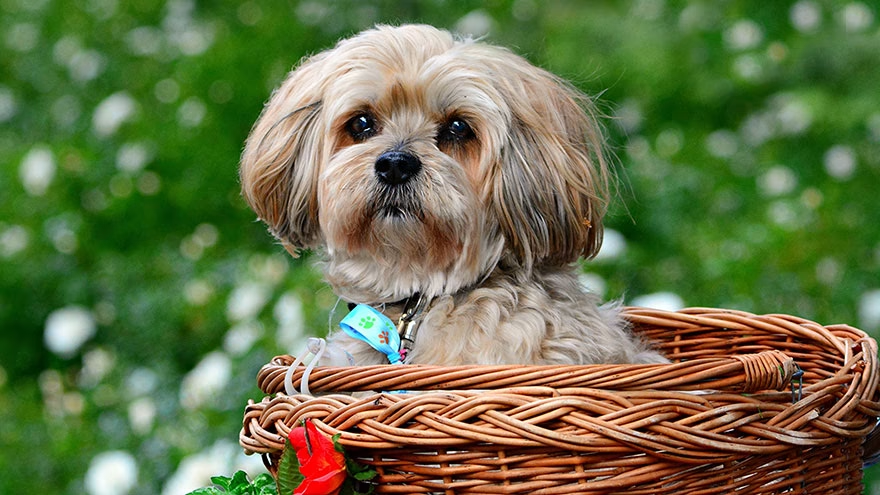
A Lhasa Apso was not designed to be a soft toy with a leash attached. The breed has a long watchdog history, a strong sense of personal space, and enough independence to make force-based training backfire. A useful Lhasa Apso training guide starts with respect for that temperament: short sessions, clear rewards, early handling, calm boundaries, and no assumption that small means easy.
What should you understand about the breed first?
The Lhasa Apso is a small companion dog with a serious alert streak. The AKC describes the breed as confident, smart, and sometimes complex, with a history as a sentinel. The AKC Lhasa Apso breed page is a good reminder that training should fit the dog in front of you.
A Lhasa often learns quickly but may not see the point of repetition. That does not mean the dog is stupid or stubborn in a cartoon way. It means the trainer needs timing, motivation, and a plan that makes cooperation pay.
If you are new to the breed, Livecub's Lhasa Apso questions guide can help with temperament expectations before training problems become household habits.
Which foundation skills matter first?
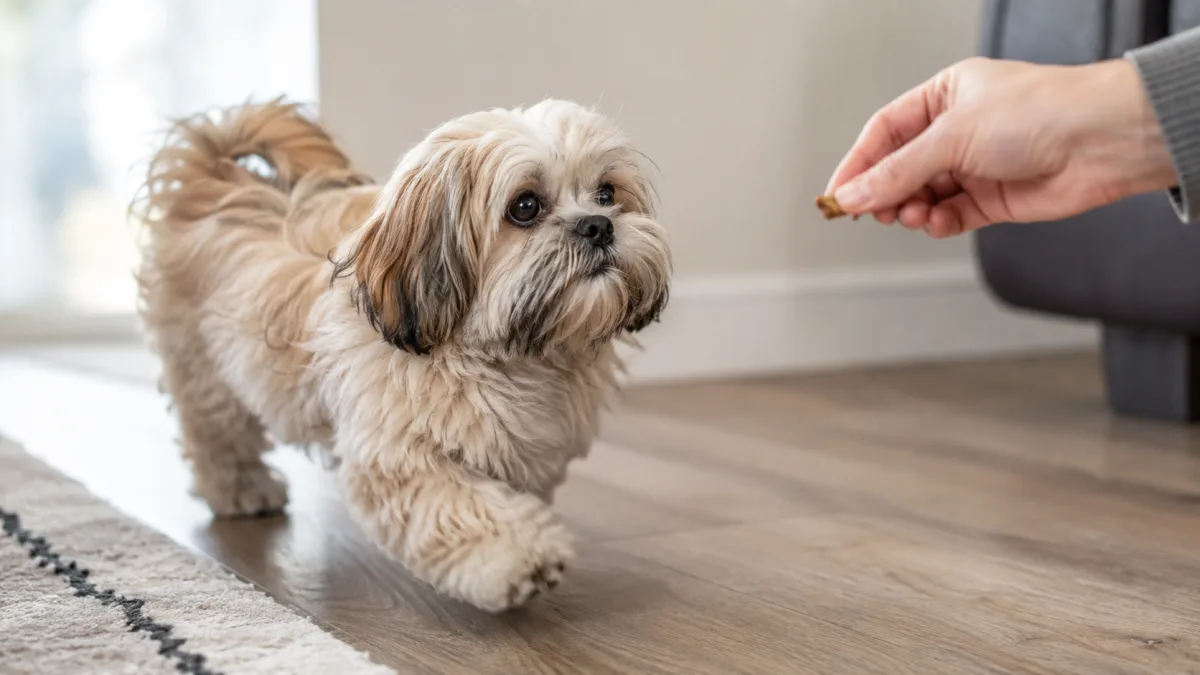
Start with skills that make daily life easier: name response, recall, grooming handling, leash walking, settling, and polite visitor behavior. A long trick list is less useful than a dog who can be brushed, called away from a doorway, and handled by a veterinarian.
Name response and recall
Say the name once, mark the moment the dog looks at you, and reward. Build recall indoors before expecting outdoor success. A Lhasa who ignores you in the kitchen will not become reliable at a park by magic.
Handling and grooming practice
Touch paws, ears, face, tail, and coat briefly, then reward calm cooperation. This breed's coat can require real maintenance, so handling practice is training, not decoration.
Loose-leash walking
Reward movement near your side and stop feeding the habit of pulling toward every doorway, dog, or scent. Keep sessions short enough that the dog can still think.
How should you motivate a Lhasa Apso?
Use rewards the dog actually wants: tiny food pieces, a favorite toy, permission to sniff, access to a person, or a short game. Change rewards if the dog loses interest. Repeating a dull treat is not a training plan.
The AKC's Canine Good Citizen materials emphasize responsible ownership and basic skills such as accepting friendly strangers, grooming, loose-leash walking, and recall. The AKC Canine Good Citizen program is a useful structure for turning household goals into testable behaviors.
Pay for the behavior you want. If barking, dodging, or refusing handling gets attention every time, the dog is still learning, just not the lesson you meant to teach.
Keep rewards small and fast. A Lhasa may lose the thread if you spend half the session opening bags, searching pockets, or negotiating. Prepare treats before the dog enters the room so the right behavior can be marked immediately.
How do you build a daily routine?
Use the same simple rhythm most days: potty, food, short training, rest, walk, grooming touch, and quiet time. Predictability helps an alert dog settle because the household stops feeling like a series of surprises.
Place training inside real moments. Ask for a sit before the leash clips on, a hand target before grooming, a recall before dinner, and a mat cue before guests enter. Tiny repetitions add up faster than one dramatic weekend session.
Do not train only when the dog is already misbehaving. A Lhasa that practices calm behavior when nothing is happening has a better chance of using that skill when the doorbell rings.
How do you handle barking without creating fear?
Lhasas can be alert barkers, and alerting is part of their history. The goal is not to erase the dog. The goal is to teach a stop cue, reward quiet, and reduce unnecessary triggers where possible.
Practice at low intensity. If the dog explodes at the window, start farther away or block the view during training. Reward a look back at you, a pause, or a move to a mat. Punishing after the dog is already frantic often adds tension without teaching an alternative.
Alert is not the same as out of control. A good routine lets the dog notice the world and then return to you.
Doorways need rehearsals, not hope. Have one person knock softly while the dog is on leash or behind a gate, then reward quiet orientation to you. Increase intensity only when the dog can recover quickly.
Why does grooming belong in training?
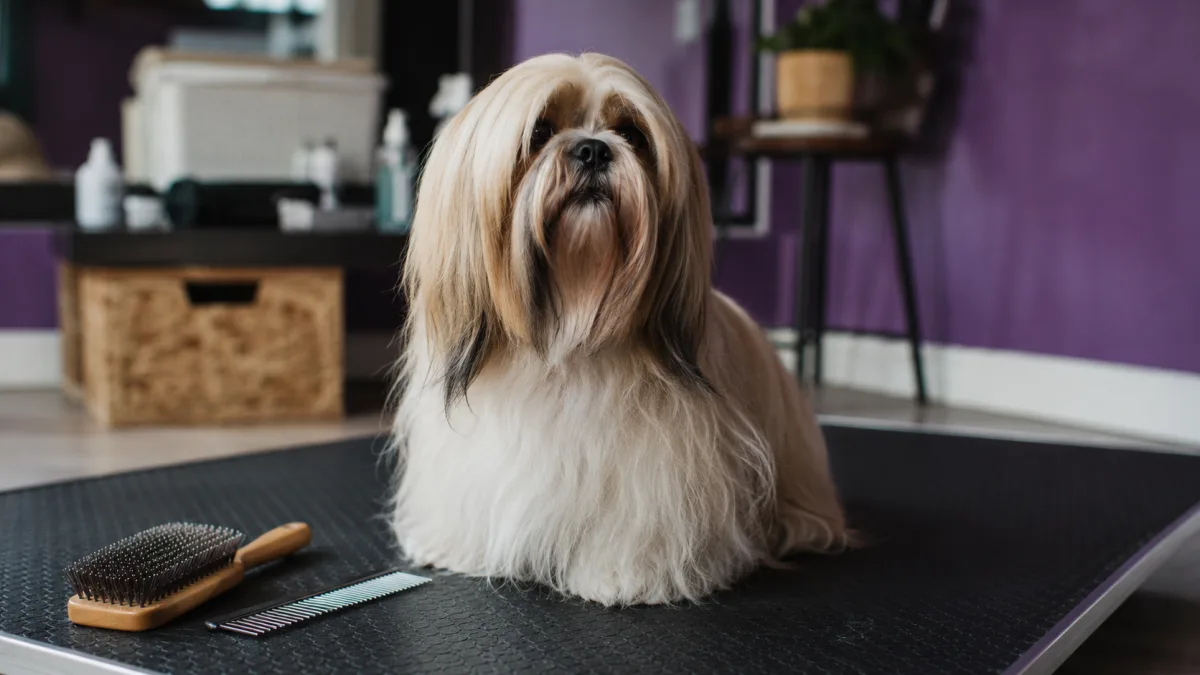
A Lhasa Apso with a long coat needs brushing, bathing, face care, nail trims, and professional grooming unless kept in a shorter trim. If the dog only learns about tools when a mat hurts, grooming becomes a fight.
Use small sessions: one paw, one ear touch, one short brush pass, then reward. Livecub's longhair Dachshund grooming guide shows the same practical rule for coat-heavy dogs: grooming goes better when the dog has been taught to participate.
Ask your groomer what handling behaviors would make appointments easier. Then practice those at home before the next appointment rather than apologizing afterward.
How should socialization be done?
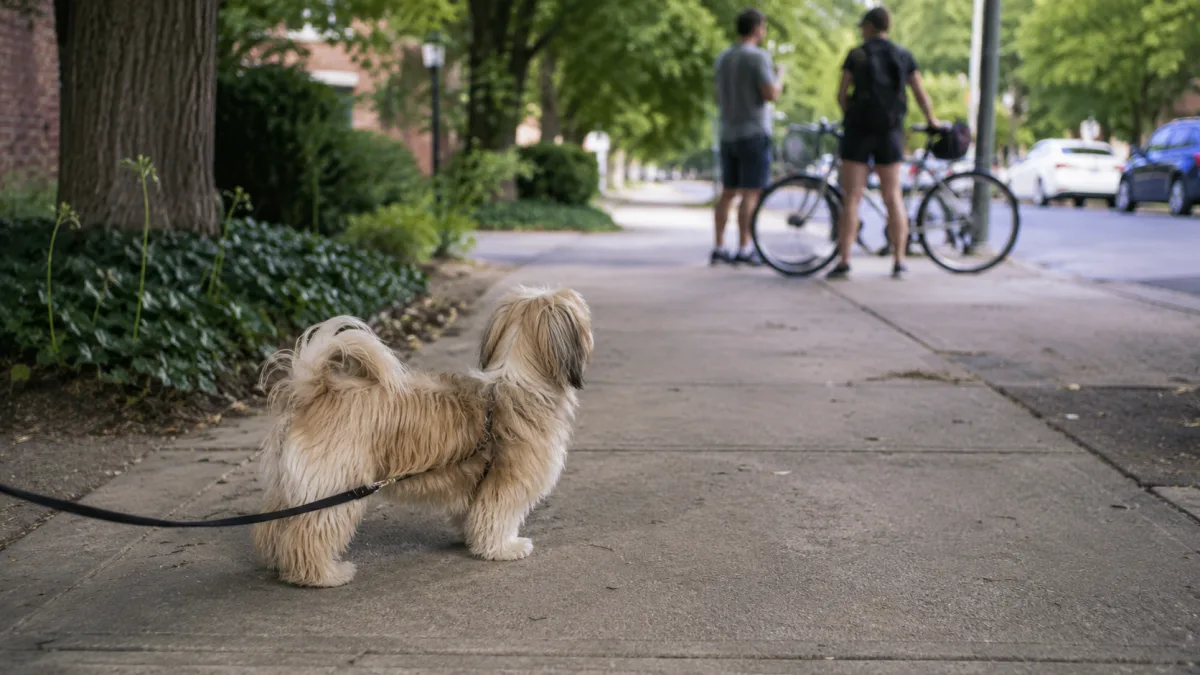
Socialization is not letting strangers grab the puppy. It is planned exposure to sounds, surfaces, people, dogs, grooming tools, car rides, and mild surprises at a level the puppy can handle. Pair new things with food, distance, and calm exits.
The American Veterinary Society of Animal Behavior states that early socialization should start before the puppy vaccination series is fully complete, using appropriate disease-risk management. The AVSAB puppy socialization statement is a strong source for balancing behavior and health risk.
If you compare small companion breeds, Livecub's Maltese questions guide shows why socialization and grooming expectations should be discussed before problems settle in.
What mistakes slow Lhasa Apso training?
Common mistakes include yelling after barking, repeating cues without reward, forcing handling, carrying the dog out of every problem, and giving up because the dog is small. Those habits teach avoidance, noise, or learned helplessness.
Keep rules consistent. If the dog is allowed to guard the sofa from visitors on Monday and corrected for it on Tuesday, the household becomes unpredictable. A mat cue, gate, leash, or quiet room can manage space while training catches up.
For a contrast with a more athletic pointing breed, Livecub's German Shorthaired Pointer questions guide shows how different breed histories change training emphasis.
Another mistake is skipping rest. A tired small dog can become mouthy, loud, or suspicious. Schedule naps and quiet breaks the same way you schedule training, especially for puppies and newly adopted adults.
How do you handle independence without fighting it?
Give the dog choices inside boundaries. Let the Lhasa choose between two beds, two toys, or two reward types, but keep house rules consistent. That approach respects independence without letting the dog run every doorway, sofa, or grooming session.
If the dog refuses a cue, lower the difficulty before repeating yourself five times. Move to a quieter room, use a better reward, or ask for an easier version. Clarity beats volume with an independent breed.
Practice short alone-time exercises too. Step behind a baby gate, return before the dog panics, and reward calm waiting. Build duration slowly. Independence should not mean isolation, and attachment should not mean the dog has no coping skills when you leave the room.
Review progress weekly. Pick one skill to keep, one trigger to reduce, and one handling task to make easier. Small plans prevent random nagging and help every family member stay consistent.
Frequently Asked Questions
Are Lhasa Apsos hard to train?
They can be independent, but they are trainable with short sessions, good rewards, consistency, and respect for handling limits.
How do I stop a Lhasa Apso from barking at guests?
Teach a quiet cue, reward calm behavior, manage the doorway, and practice with low-intensity guest setups before real arrivals.
Can a Lhasa Apso be trained off leash?
Some can earn more freedom, but recall should be built carefully. Use fences or long lines until reliability is proven.
How long should training sessions be?
Short sessions often work best. A few focused minutes repeated through the day usually beat one long, frustrating session.
Train the Lhasa you have, not the small dog you imagined. Cooperation grows faster when the work is clear, brief, and worth the dog's attention every single training day.

Chiara Bradshaw
Covers education, culture and creative topics with an emphasis on readable explanations and verifiable references.
Leave a reply
Replying to