
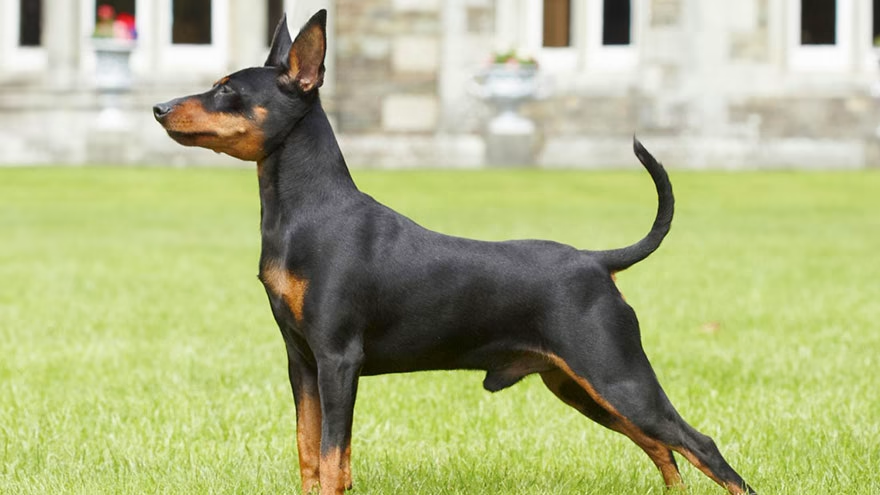
Miniature Pinscher breed information should start by clearing up the usual mistake: the Miniature Pinscher is not a tiny Doberman. The Min Pin is an older German toy breed with its own history, style, confidence, and troublemaking charm. It is small in size, but it rarely thinks small.
This breed can be funny, athletic, bold, alert, and affectionate with its people. It can also be noisy, stubborn, fast, and too brave for its own safety if the home is not prepared. A good Min Pin owner likes a small dog with a big-dog schedule.
What Is A Miniature Pinscher?
The American Kennel Club describes the Miniature Pinscher as a Toy Group breed known for confidence, animation, and a high-stepping gait. The breed is compact and smooth-coated, with a proud carriage that explains why many fans call it the "King of Toys."
Although the silhouette can remind people of a Doberman, the Min Pin is not a scaled-down version of that breed. VCA's Miniature Pinscher profile notes the breed's roots around German Pinschers, Dachshunds, and Italian Greyhounds. That mix helps explain the alertness, speed, and independent streak.
How Big Do Miniature Pinschers Get?
Miniature Pinschers are small dogs, often around 10 to 12.5 inches at the shoulder. Their size makes them easy to lift and travel with, but it does not make them fragile decorations. They are sturdy, quick, and often more athletic than new owners expect.
Because the dog is small, people sometimes allow rude behavior they would correct in a larger breed. That is a mistake. Jumping, door dashing, barking at strangers, stealing food, and refusing handling should be addressed early. If you enjoy comparing small breeds, Livecub's Miniature Schnauzer questions can help frame how different small dogs need different management.
What Is The Temperament Like?
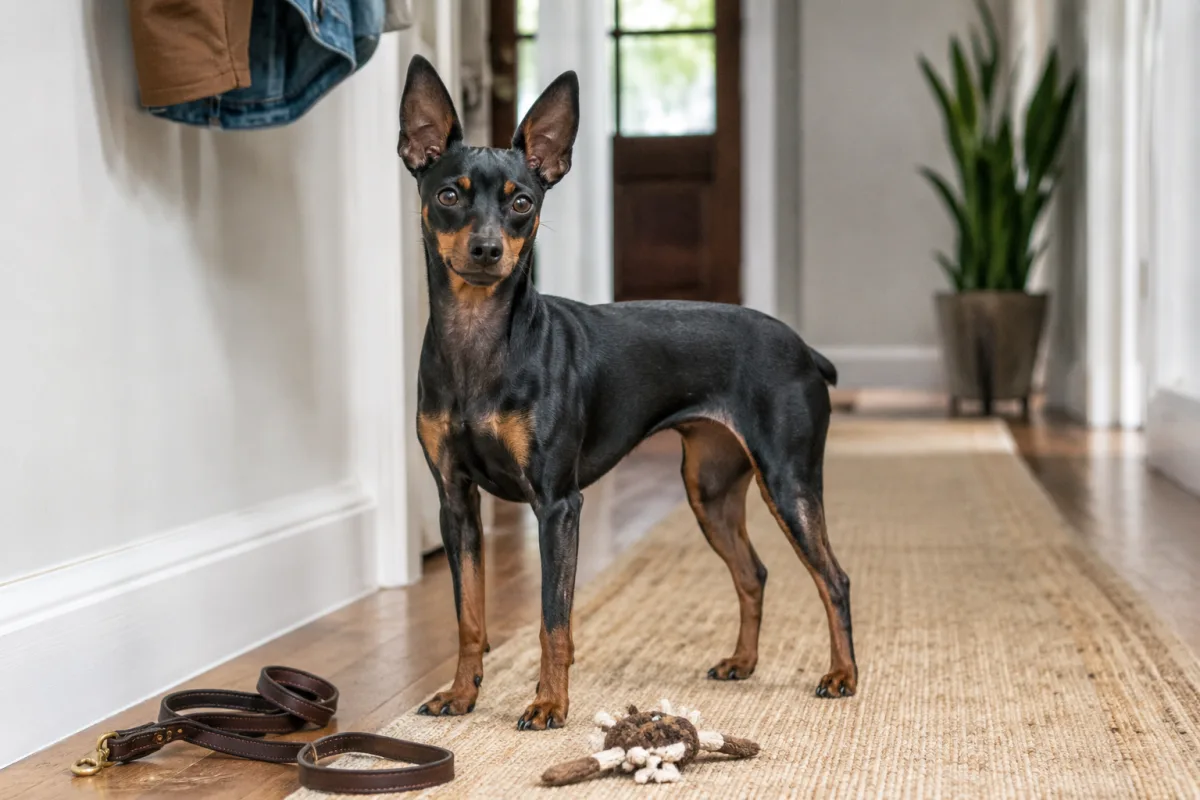
A good Min Pin is alert, lively, loyal, curious, and often comic. This is not usually a sleepy lap dog that waits quietly for life to happen. The breed wants to investigate, patrol, play, and be involved. Many are affectionate with family and reserved or loud around strangers.
That confidence can become pushiness without rules. Teach polite greetings, settling, coming when called, and trading stolen objects. A Min Pin that gets laughed at for every bossy behavior may become hard to live with later.
Are Miniature Pinschers Good Apartment Dogs?
They can be, but only if exercise, barking, and mental work are handled. Size alone does not make a dog apartment-friendly. A bored Min Pin can bark at hallway sounds, window movement, neighbors, delivery people, and every leaf that seems suspicious.
Use white noise, window management, training games, and enough outdoor time. If you want another small-companion comparison, Livecub's Maltese common questions show how a different toy breed may bring a different energy profile.
How Much Exercise Do They Need?
Miniature Pinschers need daily movement. Walks, fetch in a safe space, tug with rules, trick training, food puzzles, and short obedience sessions all help. They are small enough to exercise indoors during bad weather, but they still benefit from sniffing and seeing the world.
Do not let the dog run loose in unfenced areas. Many Min Pins are fast, curious, and too confident around cars or larger dogs. A secure leash and well-fitted walking gear or collar are basic safety tools.
How Should You Train A Miniature Pinscher?
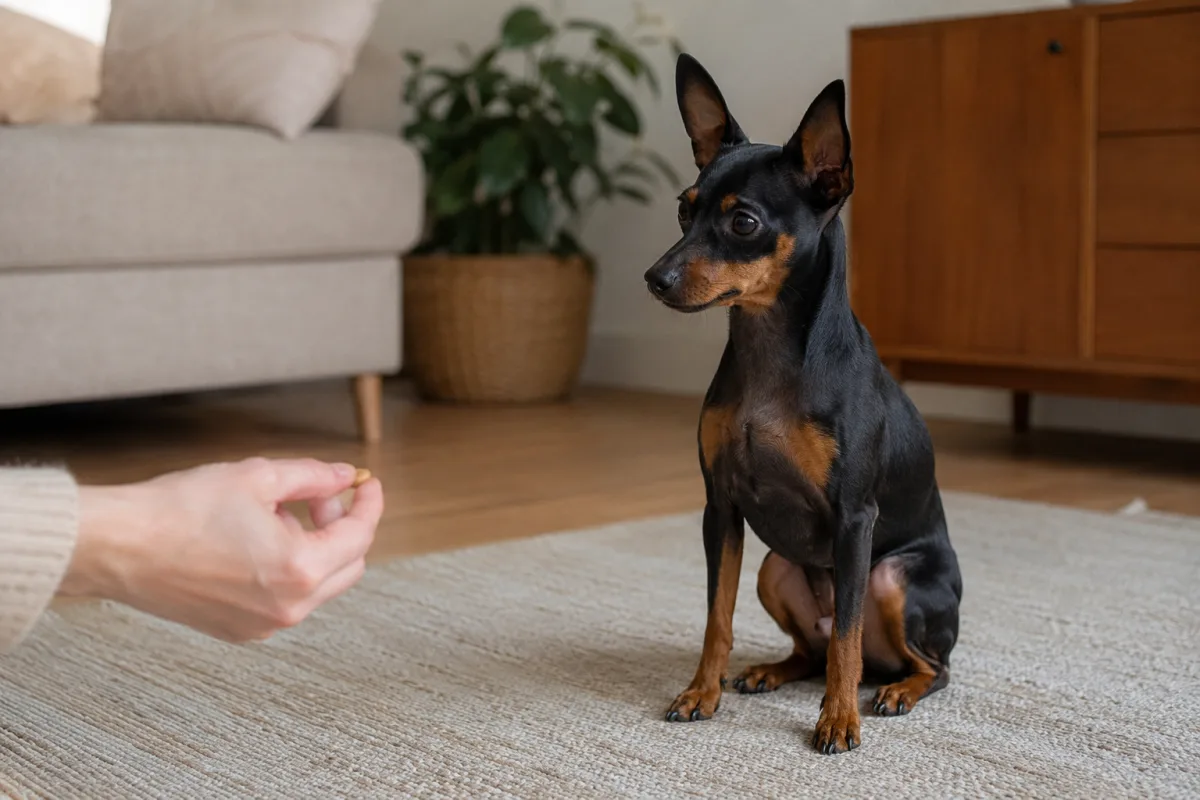
Use short, upbeat sessions with clear rewards. Min Pins are smart, but they can get bored with drilling. Teach name response, recall, sit, down, wait, leave it, drop it, leash manners, and handling. Practice in small pieces every day.
House training can require patience because small dogs can sneak away to make mistakes. Supervise, use a schedule, reward outdoor success, and clean accidents well. Do not depend on scolding after the fact; the dog needs clear chances to do the right thing.
What Grooming Do They Need?
The short coat is easy. Brush weekly, wipe the coat when dusty, trim nails, check ears, and brush teeth. Nail care matters because small active dogs can hate having feet handled if owners wait too long.
Livecub's longhair Dachshund grooming guide covers a different coat, but the handling lesson is the same: make grooming normal before it becomes a fight. Reward paw touches, ear checks, and standing still.
What Health Questions Should Buyers Ask?
Ask breeders about patella evaluation, eye care, heart history, thyroid history, and any breed-club recommendations. The Miniature Pinscher Club of America is the parent-club starting point for breed education and responsible breeding information.
Ask to see health records, meet the dam if possible, and discuss temperament honestly. A breeder should ask you questions too. If the seller is willing to ship a puppy with no conversation, no records, and no interest in your home, walk away. Livecub's Brittany breeder recommendations can help you think through breeder screening questions.
Are They Good With Children?
They can be good with respectful children, but this breed is often too quick and too small for rough handling. Children should not grab, chase, lift, or corner the dog. The dog should have a safe place to rest without being bothered.
Supervision matters. A Min Pin may defend itself if frightened, and a child may accidentally hurt a small dog by dropping it. Teach both sides: gentle hands for the child, calm exits for the dog.
What Should A Daily Routine Look Like?
A good daily routine gives the Min Pin a job before it goes looking for one. Start with a short walk or yard time, a few minutes of training, breakfast, rest, a midday break, another active session, and a calm evening routine. Rotate tricks, food puzzles, sniffing, and leash practice so the dog uses its brain.
Rest matters too. Some Min Pins stay busy because the household rewards every demand bark, paw slap, and lap takeover. Teach a bed cue and reward quiet settling. A small dog that can relax is much easier to take places.
How Do You Keep A Min Pin Safe?
Doorways, balconies, recliners, open gates, and big-dog playgroups deserve attention. Min Pins are quick enough to slip through a door and bold enough to challenge dogs that outweigh them. Use leashes, gates, and recall practice before assuming confidence equals safety.
Watch weight, too. A few extra pounds on a toy breed can change movement and comfort. Use measured meals, training treats counted into the day, and regular body checks. If you enjoy small hound comparisons, Livecub's Basset Hound questions show how body type changes care decisions.
Can Miniature Pinschers Travel Well?
They can be good travel dogs because of their size, but only when crate training, car safety, toilet routines, and barking are handled. A Min Pin loose in a hotel room can find cords, trash cans, door gaps, and furniture edges faster than you expect.
Bring familiar bedding, a secure carrier or crate, measured food, cleanup supplies, and a leash that fits well. Practice short car rides before a long trip. Travel should not be the first time the dog learns to settle outside the house.
What Mistakes Should Owners Avoid?
Do not treat the breed like a pocket ornament. Do not skip training because the dog is small. Do not allow door dashing. Do not overfeed. Do not let barking become the only hobby. Do not assume a confident small dog is safe around much larger dogs.
Also avoid buying for looks alone. A Min Pin should fit your energy, noise tolerance, training interest, and household rhythm. If you want a very quiet, low-drive dog, this breed may be too much.
Frequently Asked Questions
Are Miniature Pinschers related to Dobermans?
They are not miniature Dobermans. The Min Pin has its own older breed history.
Do Miniature Pinschers bark a lot?
Many are alert barkers. Training, exercise, and window management can help.
Are Miniature Pinschers easy to train?
They are smart, but independent. Short, consistent sessions usually work better than long drills.
Do Miniature Pinschers shed?
They shed lightly, and the short coat is easy to brush.
Can they live with other dogs?
Some can, with careful introductions and supervision. Their confidence can be risky around larger dogs.
Who Is The Breed Best For?
The Miniature Pinscher suits someone who wants a small, sharp, athletic companion and is willing to train, supervise, and laugh without letting the dog run the house. The right home gets a bright little character. The wrong home gets a tiny manager with no off switch.

Chiara Bradshaw
Covers education, culture and creative topics with an emphasis on readable explanations and verifiable references.
Leave a reply
Replying to