
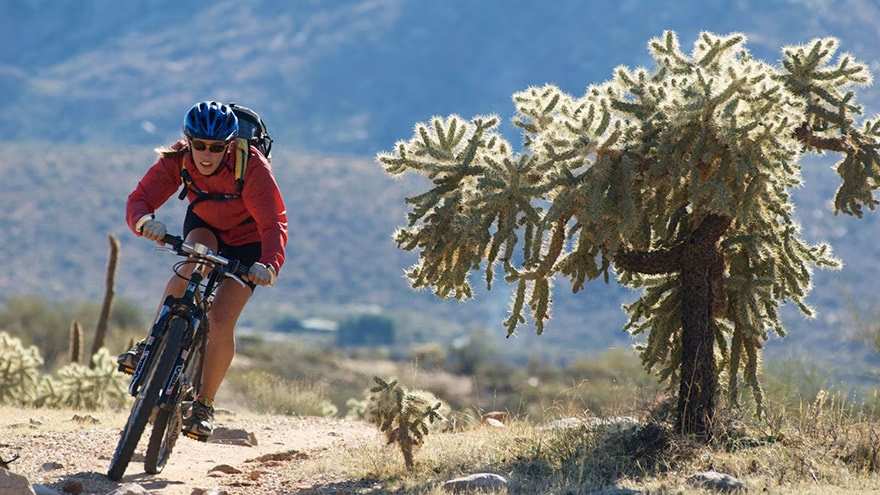
Mt. Lemmon Is a Real Mountain Ride
Mt. Lemmon bike riding in Tucson, Arizona is not a casual spin that happens to have a view. The Catalina Highway climbs from desert heat toward forested elevation, and the ride asks for pacing, water, fuel, weather awareness, and a controlled descent.
The attraction is obvious: long grades, changing desert-to-mountain scenery, overlooks, and a rare feeling of climbing through seasons. The challenge is just as real.
Respect the climb before you admire it. The mountain is more enjoyable when the plan matches your legs.
Know the Route Before You Roll
Many cyclists ride the Catalina Highway toward Windy Point, Summerhaven, or higher depending on fitness and conditions. The full climb can involve hours of steady work, significant elevation gain, and a descent that demands attention.
Visit Tucson's Mt. Lemmon visitor information is a useful planning starting point, while the Coronado National Forest site gives broader recreation and land-management context for the Santa Catalina area.
The U.S. Forest Service's Coronado National Forest recreation page can help visitors understand the federal recreation setting around the Santa Catalina Mountains.
For route-based travel thinking, Livecub's Waterfalls on Skyline Drive in Virginia fits the same idea: the road itself is the experience.
Start Early and Check the Weather
Tucson heat can be serious, especially at lower elevations. Start early, check road conditions, and remember that weather can change with elevation. A rider can begin warm and reach cooler, windy, or stormy conditions higher up.
ADOT's Arizona Traveler Information is useful for road-condition checks before driving or riding in the area. Also look at local forecasts for both Tucson and Mount Lemmon elevations.
One forecast is not enough for a mountain ride. Check both the bottom and the top.
Pace the Climb Like a Long Day
The lower miles can trick riders into starting too hard. Settle into an effort you can hold for a long time. If you are breathing raggedly early, the top half will feel much worse.
Use heart rate, power, perceived effort, or simple conversation pace. The best metric is the one that keeps you honest before fatigue makes decisions for you.
Mt. Lemmon rewards patience. A smooth first hour usually beats a heroic first twenty minutes.
If you are building outdoor confidence before a climb like this, Livecub's How to Adjust Walking Sticks shows how setup and pacing matter before terrain gets demanding.
Bring More Water and Fuel Than You Want To Carry
Heat, climbing, and dry air can drain a rider quickly. Carry enough water, electrolytes if you use them, and easy food such as bars, gels, fruit, or sandwiches. Know where services may be available, but do not assume everything will be open.
Eat before you feel empty. Small, steady fueling helps prevent the late-ride collapse that makes descending and traffic judgment worse.
For another travel activity where supplies matter, Livecub's How to Visit the Spiral Jetty on Utah's Great Salt Lake shows why remote or exposed routes need more planning than they seem to from a map.
Ride Visible and Predictably
Cyclists share the highway with vehicles, tourists, motorcycles, and other riders. Use a rear light, visible clothing, predictable line choice, and clear signals. Avoid weaving across the lane unless road conditions force it and you have checked behind you.
Groups should ride with discipline. Regroup at safe pullouts rather than blocking the road, and do not let conversation pull the line into traffic.
Visibility is part of route planning. A beautiful road is still a public road.
Prepare for the Descent
The descent can be the most dangerous part of the day. Check brakes, tires, wheels, and headset before the ride. Bring layers for the top because a sweaty rider can get cold quickly while descending.
Control speed before corners, look through turns, and leave room for gravel, wildlife, stopped cars, and nervous drivers. Do not chase a faster rider beyond your skill.
The climb is fitness; the descent is judgment.
Choose a Turnaround That Fits
You do not have to ride all the way to Summerhaven for the ride to count. Windy Point or another safe landmark can be a strong goal for a first attempt. The mountain will still be there later.
Set a turnaround by time, weather, water, and energy, not pride. If clouds build, heat rises, or legs fade early, turn around before the ride becomes a rescue problem.
For people who like unusual route stops, Livecub's Things to See Around Laughlin, Nevada offers the same reminder in travel form: a good day depends on distance control.
Make the Ride Part of a Tucson Trip
If you are visiting Tucson, leave space around the ride. Do not schedule a hard hike, late dinner, and long drive after a major climb. Eat, hydrate, and give yourself time to cool down.
For general destination planning, Livecub's Top 5 Places to See In Petoskey, Michigan shows why a trip feels better when one main activity has enough room around it.
Build a Shorter First Attempt
Riders new to Mt. Lemmon should consider a shorter target before committing to the full climb. A first ride to a viewpoint can teach you the grade, traffic rhythm, shoulder feel, and heat without requiring a summit effort.
Use the first attempt as research. Notice where water becomes low, where wind changes, how the descent feels, and what gear you wished you had carried.
A partial ride is not a failed ride. It can be the smart version of learning a mountain.
Check the Bike Before the Trip
Long climbing and descending magnify small bike problems. Inspect tires, brake pads, cables or hoses, drivetrain, bolts, wheels, and lights before the day of the ride.
Bring tubes or plugs, inflation, a multi-tool, chain quick link if you use one, ID, and a way to call for help. A mountain road is not the place to discover that your brakes were already marginal.
Mechanical confidence makes descending calmer. You still need skill, but the bike should not be the question.
Manage Heat on the Lower Slopes
The climb can begin in strong desert heat even when the top feels cool. Drink early, keep effort low while the temperature is high, and do not wait until thirst becomes urgent.
Heat also affects the descent if you start late. A rider who reaches lower elevations in afternoon heat may feel drained right when traffic and speed require focus.
Consider leaving a cooler in the car with extra water, salty food, and dry clothes. That simple after-ride setup can make the difference between a satisfying climb and an uncomfortable recovery.
Plan Regroups and Bailout Points
If you ride with others, agree on regroup points before the climb starts. A stronger rider disappearing up the road can leave a tired rider alone with traffic, heat, and no clear plan.
Use safe pullouts, not blind curves or narrow shoulders. If someone is struggling, shorten the ride early and treat that as good judgment, not failure.
The group plan should protect the slowest rider. That is how everyone gets home with the story intact.
Recover Before Driving Away
After the ride, cool down, drink, eat, change layers, and take a few minutes before driving. Long climbs can leave riders shaky even after the bike is back on the car.
Check for headache, chills, dizziness, or unusual fatigue. Those can be signs that heat, dehydration, or effort took more out of you than expected.
The ride is not over at the last pedal stroke. Recovery is part of the route.
Give yourself enough time to eat before sightseeing or driving across town. A rushed recovery can make the rest of the day feel worse than the climb.
Mt. Lemmon is memorable because it is not one thing. It is desert, grade, air, traffic, views, fatigue, and descent. Treat all of those as part of the ride.
Frequently Asked Questions
Is Mt. Lemmon a hard bike ride?
Yes. The climb is long, exposed in places, and affected by heat, elevation, traffic, and weather.
Do I need to ride to the top?
No. Choose a turnaround that matches fitness, conditions, water, and daylight.
What should I bring?
Bring water, food, lights, repair supplies, layers, ID, phone, and a realistic descent plan.
When is the best time to start?
Early morning is often better for heat and traffic, but always check current weather and road conditions.

Chiara Bradshaw
Covers education, culture and creative topics with an emphasis on readable explanations and verifiable references.



Leave a reply
Replying to