

A Pembroke Welsh Corgi is easy to want and easy to misunderstand. The short legs, bright expression, and comic confidence make the breed look like a ready-made family mascot. A good breeder knows better. Pembrokes are herding dogs in a small body: active, people-focused, smart, sometimes bossy, and quick to get bored if treated like decorations. Breeder recommendations should start there, because the right puppy is not the cutest photo. It is the puppy from health-tested parents, raised in a clean and social setting, matched to a household that understands the breed.
The American Kennel Club describes the Pembroke as a strong, athletic, lively little herder. That line matters. Even a companion Corgi carries working-dog habits: watching movement, reacting to routine, learning quickly, and sometimes trying to control children, visitors, or other pets with barking and heel nipping. A responsible breeder should talk about those traits before talking about coat color.
Start with the right picture of the breed
Pembrokes are not large dogs, but they are not low-maintenance dogs. They need exercise, training, grooming, weight control, and a household that enjoys a dog with opinions. Their short legs and long back mean jumping, stairs, obesity, and rough play deserve attention. Their double coat sheds. Their alertness can turn into barking if the home never teaches a quiet cue.
Before contacting breeders, decide what kind of life you can offer. Do you want a dog for casual companionship, obedience, herding, agility, therapy work, or an active family home? Do you have small children? Other dogs? Cats? A breeder cannot match a puppy well if you only say, "We want a cute Corgi." The more honest you are, the better the match.
Compare the breeder process across breeds if it helps. The questions you ask for a Corgi overlap with the questions in Brittany Spaniel breeder recommendations: health records, temperament, home life, contract terms, and what happens if the dog cannot stay with you. Breed details change, but ethical basics do not.
Do not let popularity rush you. Corgis are visible online, which means the market includes excellent preservation breeders, casual backyard litters, brokered puppies, and scams. A waitlist is normal. A breeder who always has multiple litters ready to ship should make you slow down, not hurry up.
What makes a breeder worth contacting?

Start with parent-club resources, local specialty clubs, dog sport communities, and referrals from owners whose dogs you admire in real life. A good breeder will usually ask you questions before offering a puppy. That is not gatekeeping for sport; it is how they decide whether a puppy fits your home.
The Pembroke Welsh Corgi Club of America advises buyers to look at as many Corgis as possible, visit breeders, ask health questions, watch puppies carefully, and avoid pet stores or wholesalers. That advice is practical because it moves the buyer away from shopping by photo alone.
A breeder worth contacting can explain why they bred a litter. They can tell you what they like about the sire and dam, what they hoped to improve, what traits they expect, and where the puppies are being raised. They know each puppy as an individual. They do not claim every puppy is perfect for every buyer.
Expect transparency about price, deposit terms, registration, spay or neuter expectations, limited registration if used, health guarantee, return policy, and what support looks like after the puppy goes home. A breeder who disappears after payment is not offering the kind of relationship most first-time Corgi owners need.
Health testing to ask for before a deposit
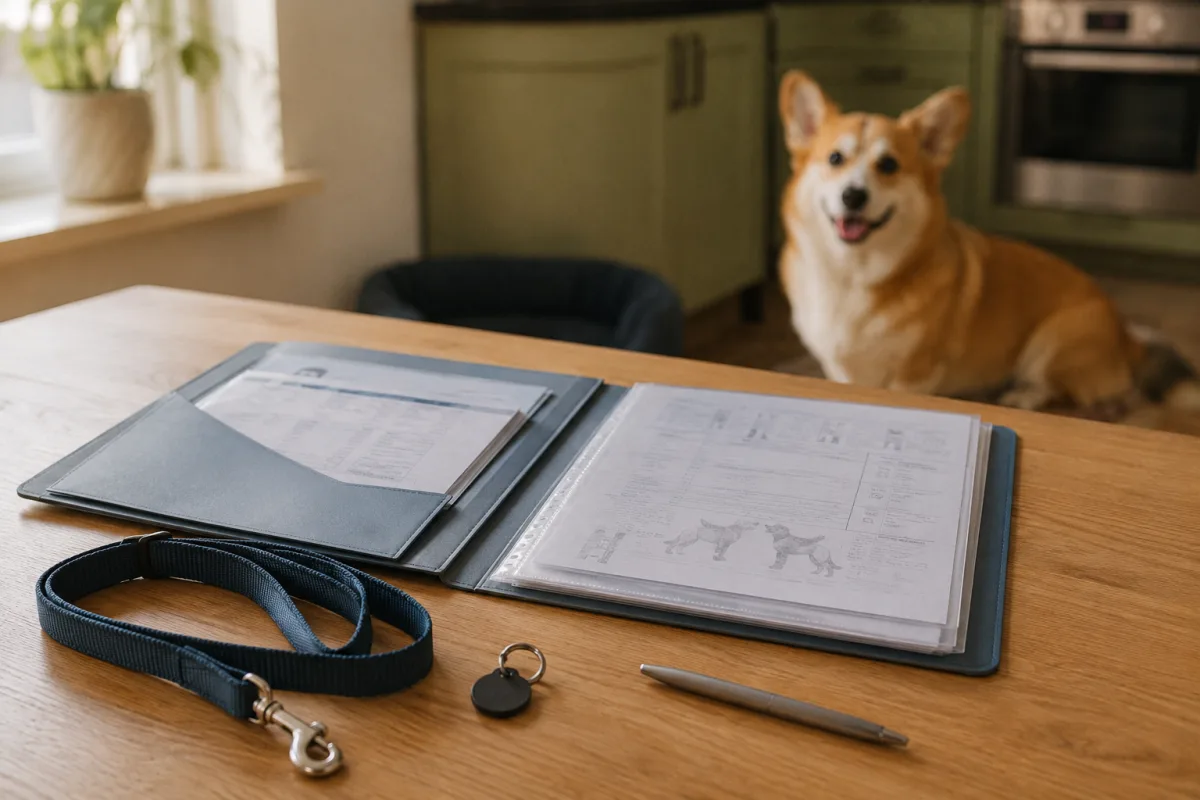
Health testing is not the same as a general vet check, and DNA testing alone is not enough. A vet check tells you how a puppy looked that day. Health testing on breeding dogs helps reduce known inherited risks. Ask for registered results, not verbal assurances. You should be able to see the registered names of the sire and dam and look up results when possible.
The PWCCA buying guide specifically tells buyers to ask whether the sire and dam have OFA hip certification and eye certification or exam documentation from a certified veterinary ophthalmologist. The Orthopedic Foundation for Animals CHIC program explains that breed-specific screening results give buyers better information, while also making clear that screening reduces risk rather than guaranteeing a disease-free dog.
For Pembrokes, discuss hips, eyes, degenerative myelopathy status, and any other issues the breeder sees in the family. Ask what ages relatives lived to and what older dogs in the line have experienced. A careful breeder will not pretend there is no risk. They will explain risk in plain language and show what they do to manage it.
Ask about puppy care, too. Have the puppies been examined by a veterinarian? What vaccinations and deworming have they received? What food are they eating? Have they been exposed to household sounds, handling, grooming, nail trims, crates, car rides, and different surfaces? A healthy start is both medical and behavioral.
Red flags in Corgi ads and online sellers
Be cautious with sellers who push immediate payment, refuse video or in-person conversation, avoid showing the mother, use stolen-looking photos, or claim they can ship a puppy anywhere tomorrow. Scams often use urgency. Poor breeders often use cuteness to keep buyers from asking hard questions.
"AKC registered" is not a health guarantee. Registration can confirm lineage within a registry, but it does not prove that the breeder did health testing, socialized puppies well, or made a thoughtful match. A beautiful website also proves little. Ask for documents, references, and direct conversation.
Avoid sellers who advertise rare colors that do not fit the breed or who market mixed traits as special purebred Pembrokes. Ask the breeder to explain coat colors and registration honestly. The Corgi world also includes Cardigan Welsh Corgis, which are a separate breed, so be sure you understand which breed you are buying.
Red flags look similar across breeds. If you have read about common small-dog questions in breeds such as the Miniature Schnauzer or Lhasa Apso, the same warning signs appear: vague health claims, no records, no contract, and no willingness to take responsibility after sale.
How to evaluate temperament and home fit

Temperament should be matched, not simply ranked. The bold puppy that runs to every visitor may fit an experienced active home. The thoughtful puppy that watches before joining may suit a calmer household. The mouthy puppy may be normal for the age but needs a home ready to train. Ask the breeder what each puppy is like when tired, startled, handled, separated, and fed.
If you visit, watch the whole litter for more than a few minutes. Puppies cycle between wild play and sleep. A sleepy puppy may look quiet only because it just finished wrestling. A pushy puppy may settle beautifully once held. Try to see recovery: how quickly does the puppy return to normal after a new sound or handling?
Talk about children honestly. Corgis can be wonderful family dogs, but herding instinct and excitement can show up as ankle chasing or nipping. Families need a plan for gates, naps, chew toys, supervised play, and training children not to grab or chase the puppy. A breeder should help you think through that rather than promising that all Corgis are automatically good with kids.
Grooming and body handling should start early. Pembrokes do not have the coat burden of a longhair breed, but they still shed, need nail care, and benefit from being comfortable with brushing. Owners who have handled grooming-heavy dogs, or even read about grooming a longhair Dachshund, already know the larger lesson: care is easier when the dog learns touch before there is a problem.
What to expect after bringing a Corgi home
A responsible breeder sends you home with records, feeding instructions, registration information if applicable, contract copies, microchip details, and guidance for the first week. They should want updates and be available for reasonable questions. They should also have a return clause stating that the dog can come back to them if you cannot keep it.
Plan the first month around routine. Crate training, house training, gentle socialization, short training sessions, and careful exercise will do more than a pile of toys. Protect the puppy from forced greetings and from high jumps off furniture. Keep the body lean as the dog grows. Extra weight is not harmless on a low, long-backed herding breed.
Training should start immediately, but calmly. Teach name response, recall games, handling, settling, leash basics, and polite play. Redirect heel nipping to toys and structured games. Reward quiet attention before barking becomes the default way to get results. A Corgi is bright enough to learn household patterns fast, including the patterns you did not mean to teach.
If you are choosing between breeds, compare energy and structure honestly. A Corgi is smaller than a Basset Hound but often quicker and more intense. It is not as physically large as many herding or sporting breeds, but its brain still wants a job. The right breeder will help you decide whether that is a good fit before your deposit is taken.
Frequently Asked Questions
How do I know if a Pembroke Welsh Corgi breeder is reputable?
Look for documented health testing, honest temperament discussion, clean puppy raising, a written contract, references, and a breeder who asks you questions instead of selling to anyone with money.
What health tests should I ask about?
Ask about OFA hip results, eye exams, degenerative myelopathy status, and any other health issues known in the line. Ask to see documentation for the sire and dam.
Is AKC registration enough?
No. Registration is not a health or temperament guarantee. It should be paired with health testing, responsible breeding choices, and strong puppy raising practices.
Should I visit the breeder before buying?
Whenever possible, yes. A visit or detailed live video call lets you see the environment, the mother, puppy behavior, cleanliness, and how the breeder answers questions.
Are Pembroke Welsh Corgis good family dogs?
They can be excellent family dogs in homes that provide training, exercise, boundaries, and supervision with children. Herding instinct and barking need early guidance.
Buying a Pembroke Welsh Corgi should feel less like grabbing a popular puppy and more like starting a long relationship. The breeder's answers, records, and willingness to support you after pickup matter as much as the puppy's face in the photo.

Chiara Bradshaw
Covers education, culture and creative topics with an emphasis on readable explanations and verifiable references.



Leave a reply
Replying to