
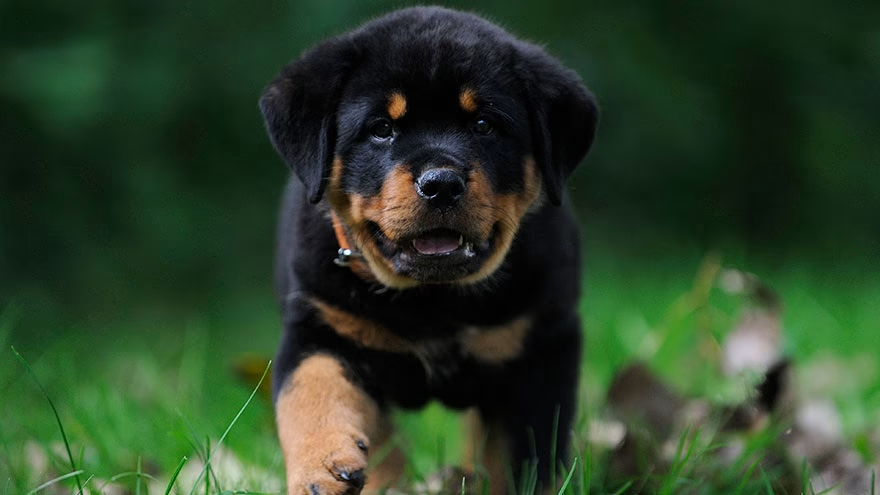
Owning a Rottweiler starts with choosing the right breeder and being honest about the dog you are bringing home. A Rottweiler can be steady, loyal, affectionate, trainable, and deeply attached to family. It is also a powerful working breed that needs health screening, early training, thoughtful socialization, and an owner who will not treat strength as decoration.
Good Rottweiler breeder recommendations should help buyers avoid vague promises and ask about the things that shape the dog's life: hips, elbows, heart, eyes, JLPP, temperament, drive, size, family fit, and support after purchase.
What Should A Rottweiler Breeder Know?
The American Kennel Club describes the Rottweiler as a strong working breed with a loyal, loving, confident guardian nature. A breeder should be able to explain what that looks like in real homes, not only in a show ring or protection-sport video.
Ask how the parents behave with visitors, children, other dogs, vet handling, grooming, travel, and quiet household routines. A responsible breeder should care about stable temperament as much as size or head type. If you are still learning the breed, Livecub's Rottweiler questions gives a broader ownership overview.
What Health Testing Should You Expect?

The American Rottweiler Club health statement lists major screening areas such as hips, elbows, eyes, cardiac evaluation, and juvenile laryngeal paralysis and polyneuropathy, often shortened to JLPP. Buyers should ask for public results and understand what the breeder does with those results.
Do not accept "vet checked" as a substitute for breed-specific screening. A puppy wellness visit is not the same as x-rays, eye exams, cardiac checks, and genetic testing used in breeding decisions. Ask for registered names, OFA or equivalent records, test dates, and what problems have appeared in relatives.
Why Do Hips And Elbows Matter?
Rottweilers are large, powerful dogs, so orthopedic soundness affects comfort, work, exercise, and aging. Hip and elbow dysplasia can lead to pain, arthritis, lameness, and expensive care. Genetics matter, but growth rate, weight, exercise, and surfaces also affect joint health.
VCA explains that hip dysplasia is influenced by genetics as well as diet, environment, exercise, growth rate, muscle mass, and hormones. That means a breeder should discuss puppy growth and the owner should keep the dog lean. Livecub's biggest dog breeds article is a reminder that large-body care requires planning.
What Is JLPP And Why Ask About It?
JLPP is an inherited neurologic disease in Rottweilers. The American Rottweiler Club health statement addresses breeder responsibility for avoiding affected puppies. Ask whether both parents were tested or cleared through pedigree in a way the breeder can document.
A buyer does not need to become a geneticist, but the breeder should be able to explain carrier, clear, and affected status in plain language. If the breeder dismisses genetic testing as unnecessary, that is a serious warning sign.
How Should A Breeder Talk About Temperament?
A Rottweiler breeder should talk about confidence, trainability, nerve, social stability, and family fit. A good Rottweiler should not be frantic, fearful, or uncontrolled. It also should not be sold to buyers who want intimidation more than a stable companion.
Ask how puppies are socialized: surfaces, sounds, handling, visitors, car rides, crates, grooming, and age-appropriate problem solving. Ask how the breeder matches puppies to homes. The boldest puppy is not automatically the best choice.
What Red Flags Should Stop A Purchase?
Be cautious if a breeder refuses health records, breeds only for size, brags about aggression, sells without questions, has no contract, avoids showing adult dogs, or says training can wait. Be careful with sellers who market unusual colors, extreme bulk, or instant availability instead of health and temperament.
Also walk away if the environment is dirty, puppies seem weak, adult dogs are unstable, or the breeder pressures you to pay before answering basic questions. A serious Rottweiler breeder is not trying to place a powerful puppy with anyone who has money.
Are Rottweilers Good Family Dogs?
They can be excellent family dogs in prepared homes. Children need supervision, and the dog needs training before it is large enough to knock people over. Teach calm greetings, leash manners, leave it, drop it, wait, place, and polite door behavior early.
A Rottweiler should not be raised as a backyard ornament. It needs household life, training, exercise, and rules. For contrast with a smaller but intense terrier, Livecub's Staffordshire Bull Terrier health problems shows why breed love should include honest health and management talks.
How Much Training Should You Plan?
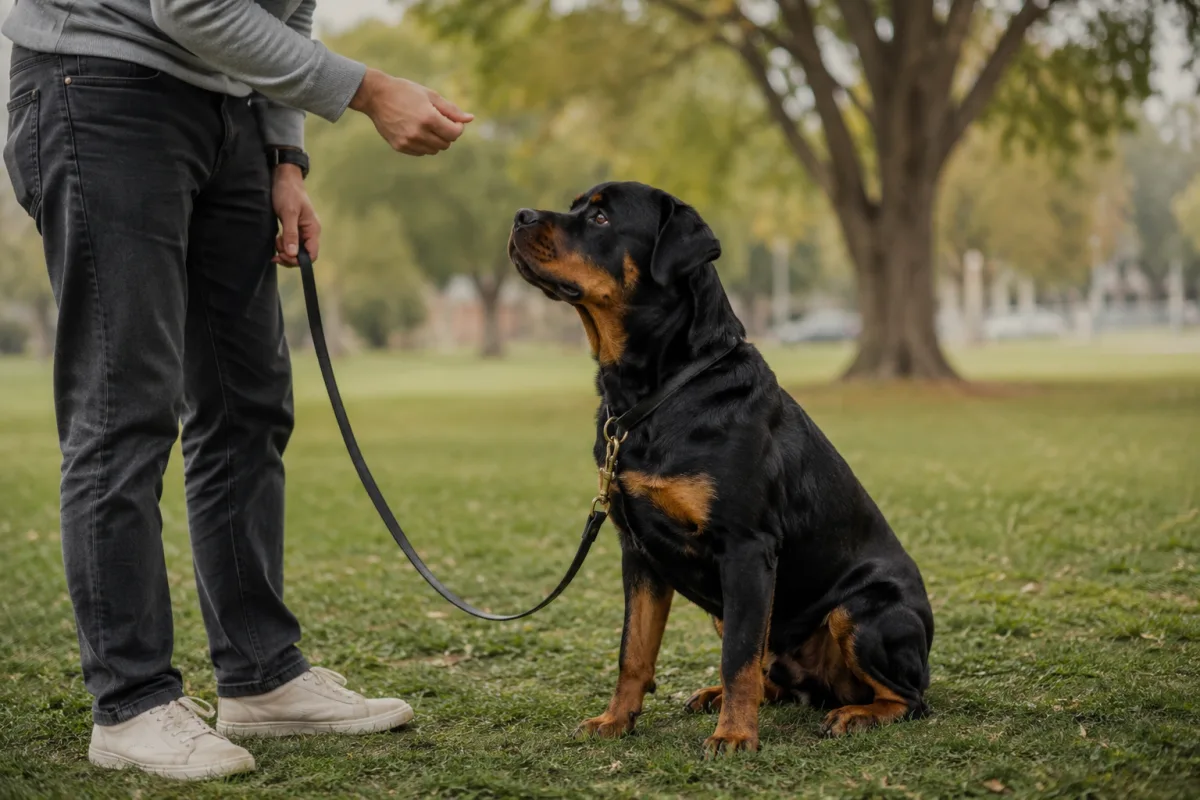
Plan training from the first week. Puppy class, manners class, controlled socialization, and daily practice are normal for this breed. Reward-based training with clear boundaries works well for many Rottweilers. Harsh handling can create conflict or distrust, while permissive handling can create a dog that uses its body to get what it wants.
Practice in real life: before meals, at doors, on walks, around visitors, during grooming, and around distractions. Do not wait for adolescent strength before teaching leash walking. A teenage Rottweiler with no foundation can be difficult and unfair to manage.
What Should The Contract Cover?
Read the contract before pickup. It may cover health records, registration, spay or neuter terms, breeding restrictions, return policy, guarantees, and owner responsibilities. Ask what happens if a serious health issue appears, or if you can no longer keep the dog.
A contract does not make a breeder ethical by itself, but vague or missing paperwork is a warning. The breeder should be willing to explain every term. If the conversation becomes pressure instead of clarity, slow down.
What Daily Costs Should You Expect?
Rottweilers cost more than many buyers expect. Food, large beds, crates, training, preventives, orthopedic care, insurance or emergency savings, dental care, and safe transport all add up. A poorly bred bargain puppy can become expensive through health problems or behavior support.
Ask your veterinarian about large-breed growth, weight, exercise, and bloat emergency signs. Ask the breeder what they feed, how they condition adults, and what they expect from owners during the first year. Livecub's Brittany Spaniel breeder recommendations can help structure general breeder questions, even though the breeds differ.
What Questions Should You Ask Before A Deposit?
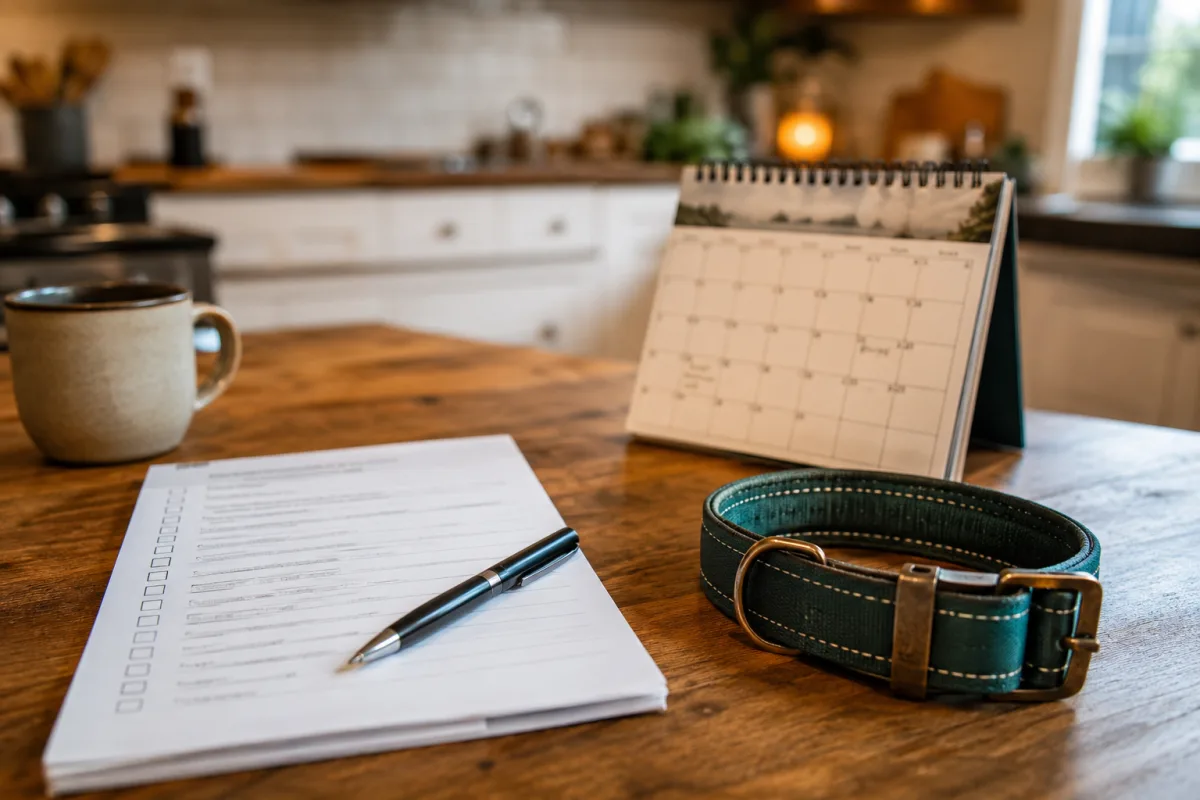
Ask for hip, elbow, eye, cardiac, and JLPP records. Ask about longevity, cancer, allergies, cruciate injuries, bloat, temperament, dog tolerance, and what the breeder does if a dog is returned. Ask why the litter was bred and what kind of homes the breeder wants.
Meet adult dogs if possible. Watch how they recover after excitement. Watch how the breeder handles them. Stable adult dogs tell you more than polished puppy photos. If you cannot visit, ask for clear video, references, and records.
How Do You Compare Working And Companion Lines?
Some Rottweilers come from lines selected for sport, work, or higher drive. Others are bred primarily for stable companion and show homes. Neither label guarantees the right dog. Ask what the parents actually do, how intense they are, how they settle, and what kind of owner succeeds with their puppies.
A high-drive puppy can be excellent in the right hands and a poor fit in a casual household. A calmer puppy still needs training and structure. The breeder should help match the puppy to your daily life, not simply let you pick the largest or boldest one.
What Should Happen After Pickup?
Book the first veterinary visit, enroll in training, set house rules, and plan controlled socialization. Introduce surfaces, sounds, calm visitors, car rides, grooming, and short alone-time practice. Keep growth steady and the puppy lean. Ask the breeder and veterinarian about appropriate exercise while joints develop.
Do not let the puppy practice behaviors that will be dangerous at adult size. Jumping, leash dragging, door charging, guarding objects, and rough mouthing need kind, early direction. Waiting until the dog is strong enough to win is unfair to both dog and owner.
Frequently Asked Questions
Are Rottweilers good first dogs?
They can be for prepared owners with training support, but they are not a casual first dog.
What tests should a Rottweiler breeder show?
Ask about hips, elbows, eyes, cardiac evaluation, and JLPP documentation, plus any other testing the breeder uses.
Should I choose the biggest puppy?
No. Choose by health, temperament, breeder match, structure, and fit, not only size.
Are Rottweilers naturally protective?
Many are watchful, but protection should never be an excuse for poor socialization or unstable behavior.
What is the biggest red flag?
A breeder who avoids health records and sells aggression, size, or intimidation as the main feature.
Should You Buy From This Breeder?
Buy only if the breeder can show health records, describe stable temperament, answer hard questions, and support the dog for life. A Rottweiler deserves a breeder and owner who take the breed seriously from the start.

Chiara Bradshaw
Covers education, culture and creative topics with an emphasis on readable explanations and verifiable references.


1 Comment
Join the discussion. Comments are moderated before appearing.