
What Makes the Scariest Runways Feel Scary?
The scariest runways in the world are usually not scary because aviation ignores safety. They feel scary because terrain, runway length, weather, slope, water, and approach path leave passengers with little visual margin. A mountain on one side and ocean on the other can make a routine professional operation feel dramatic from a window seat.
The FAA's Runway Safety Program treats runway safety as a system involving pilots, air traffic controllers, airport vehicle drivers, markings, procedures, and risk management. That system view matters. A runway can be challenging and still be operated under strict limits.
Travel articles often rank airports by fear, but fear is not a technical metric. Engineers and regulators look at runway length, obstacle clearance, approach design, pavement condition, weather minima, aircraft performance, pilot qualification, and emergency planning.
The useful lens is constraint, not spectacle. The most famous runways are memorable because every design choice is shaped by land, water, elevation, or weather.
A runway feels scary when passengers can see the limits. A long runway in flat terrain hides its margin. A short strip on an island or mountain shows the edge of the system through the window, even when the operation is planned carefully.
The engineering question is available margin: how much runway, climb performance, braking distance, visibility, and go-around option are available for the aircraft and conditions that day.
Why Is Saba's Airport So Famous?
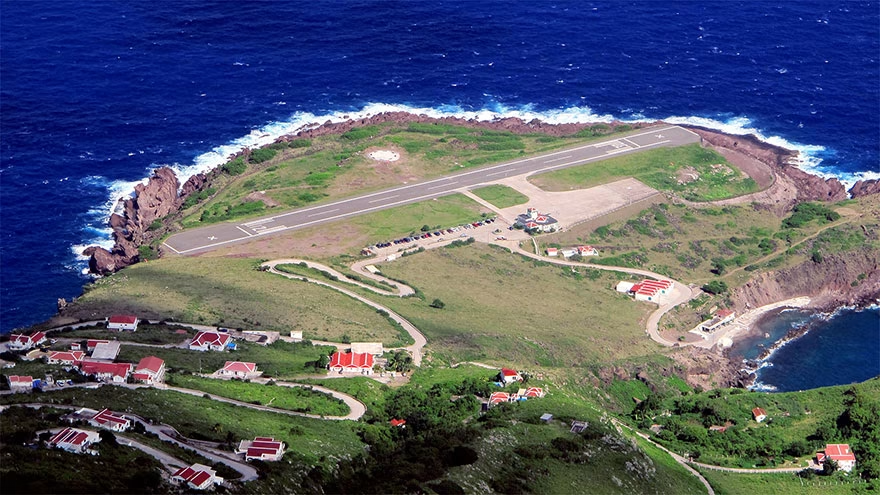
Juancho E. Irausquin Airport on Saba is famous because it serves a mountainous island with a runway that is only about 400 meters long. The Public Entity Saba's airport page describes it as the shortest commercial runway in the world.
The setting adds to the reputation. The runway is near steep terrain and Caribbean water, so passengers see a very short strip in a dramatic landscape. That does not mean random aircraft can just drop in. Operations are limited by aircraft capability, pilot training, and local procedures.
Saba is a good example of why "scary" can be misleading. The runway looks extreme, but it exists because the island needs air access. The engineering problem is to create service within hard geographic limits.
For nervous travelers, Livecub's relaxation massage guide is not aviation-specific, but it points to the same idea: fear feels more manageable when the body has a plan to settle.
Why Does Lukla Appear on So Many Lists?
Tenzing-Hillary Airport at Lukla is closely tied to Everest-region travel. The Civil Aviation Authority of Nepal's airport profile places the airport at high elevation in Solukhumbu and identifies it as the Lukla airport.
Passengers notice the terrain first. Mountains, elevation, weather, and a short runway make the approach and departure feel intense. For pilots, the concern is not drama; it is performance, visibility, wind, slope, and available options.
Mountain airports can be unforgiving because weather changes fast and terrain limits missed approaches or circling space. That is why scheduling, aircraft choice, and pilot qualification matter so much.
The safest passenger habit is respect the weather delay. If a mountain flight is delayed or canceled, that may be the safety system doing its job.
Why Is Madeira Often Mentioned?
Madeira's airport is famous for a runway built in difficult geography, with mountains and ocean shaping approach paths. The airport is also discussed because local winds can make approaches demanding, especially for passengers watching from the cabin.
Madeira shows that scary runways are not only short. Wind patterns, terrain, and approach design can make an airport memorable even when the runway length is far greater than island strips like Saba.
Passenger videos often flatten the technical picture. A bumpy landing clip may reflect gusty weather, not bad engineering. A smooth landing at a demanding airport may hide years of training, procedures, and infrastructure.
That is why videos alone are poor evidence. A clip cannot show dispatch planning, aircraft weight, runway condition, crew qualification, forecast changes, or the alternate-airport plan. The visible drama is only part of the story.
What Design Factors Make a Runway Demanding?
Short pavement limits stopping and takeoff margin. High elevation reduces aircraft performance. Slope changes sight picture and braking. Nearby terrain changes approach and departure options. Water at runway ends leaves little room for visual comfort.
Wind is another major factor. Crosswinds, tailwinds, wind shear, and turbulence around terrain can change a normal approach into a demanding one. The aircraft may be capable, but the day's conditions may not be acceptable.
Runway surface and markings matter too. Pilots need clear cues, reliable braking, lighting where required, and procedures that match the airport. A runway is not just asphalt; it is a designed operating environment.
For another checklist-based decision topic, Livecub's questions to ask an estate lawyer article has an odd but useful parallel: specialized risk calls for better questions, not casual assumptions.
Why Do Weather and Pilot Qualification Matter?
Weather can make the same runway feel ordinary one hour and demanding the next. Crosswind, tailwind, rain, low cloud, turbulence, and shifting visibility all change the usable margin.
Some airports require special procedures, approved aircraft types, or crew experience because the environment leaves less room for improvisation. Published limits are part of the safety design, not an inconvenience.
Passengers may see only a delay, diversion, or canceled flight. The operator is looking at whether the approach can be flown within rules and with enough margin. That conservative decision may be the most reassuring part of the whole trip.
Are Scary Runways Unsafe for Passengers?
Not automatically. A runway can look intimidating and still operate within strict limits. The passenger usually sees cliffs, water, slope, or mountains. The operator sees aircraft performance charts, approach procedures, training standards, weather minima, and go/no-go rules.
That said, challenging airports deserve respect. If a flight requires a specific aircraft, daylight conditions, special pilot training, or strict weather limits, those constraints should not be treated as marketing drama.
Passengers can make safer choices by booking reasonable connections, allowing weather buffer days in mountain or island regions, and listening to operator instructions. Pressure to "just go" is not useful around difficult airfields.
If flying anxiety is part of the problem, Livecub's massage guide is only indirectly related, but the relaxation theme can help travelers think about preflight stress as something to manage, not feed.
What Can Passengers Do Before Booking?
Passengers cannot evaluate an airport like a dispatcher, but they can avoid creating unnecessary pressure. Do not book a once-a-day mountain or island connection with no buffer before a cruise, trek, wedding, or international flight.
Choose operators with clear local experience, read baggage and weather policies, and understand that small aircraft may have stricter weight or visibility limits. If a route is known for weather delays, build the delay into the trip rather than fighting it at the counter.
Buffer days reduce pressure. The most stressful part of a challenging airport is often not the runway; it is the passenger's schedule leaving no room for a safe delay.
How Should You Read Scariest-Runway Lists?
Read them as engineering and geography stories, not as proof that an airport is careless. Ask what the actual constraint is: length, weather, terrain, elevation, slope, surface, traffic mix, or approach path.
Be cautious with outdated rankings. Airports extend runways, change procedures, improve navigation, restrict aircraft types, or close routes. A list copied for years may describe an older version of the airport and miss current operating rules.
A good runway article should tell you why the airport is demanding and what system manages the risk. If it only says "terrifying" over and over, it is entertainment, not useful aviation explanation.
The best takeaway is simple: aviation fear often comes from visible geography, while aviation safety comes from invisible systems. The runway may be dramatic, but the rules around it are the story.
Frequently Asked Questions
What is the scariest runway in the world?
There is no official single winner. Saba, Lukla, Madeira, Courchevel, Barra, and similar airports appear often because of geography and operating constraints.
Does a short runway mean an airport is unsafe?
No. Short runways require the right aircraft, performance planning, procedures, and pilot qualification.
Why do mountain airports get delayed?
Weather, visibility, wind, and terrain can limit safe operations. Delays are often part of risk management.
Can passengers choose safer flights into difficult airports?
They can choose reputable operators, allow buffer days, avoid tight connections, and respect weather-related cancellations.

Cashie Evans
Covers parenting and practical household topics with clear steps, safety notes and links to current guidance.
Leave a reply
Replying to