

A Schipperke training guide has to respect the breed's engine. The Schipperke is small, fast, nosy, vocal, and convinced that every sound, opening door, dropped crumb, and backyard movement is its business. Training works when it gives that busy mind rules, outlets, and rewards that beat self-appointed security work.
This is not a soft toy dog that happens to wear a black coat. A Schipperke can be affectionate and comic, but it can also bolt, bark, chase, dig, steal, and ignore a weak recall. Start early, keep sessions short, and train the daily habits that make the dog livable.
What Makes Schipperke Training Different?
The American Kennel Club describes the Schipperke as curious, lively, intense, mischievous, and tied to its history as a barge dog. Those words should shape the training plan. Curiosity is trainable energy, but only if the owner directs it before the dog finds its own project.
Schipperkes learn quickly. They also test gaps quickly. If jumping on the counter works once, if barking opens the door once, or if dodging the leash becomes a game once, the lesson sticks. Consistency is kinder than letting rules change by mood.
When Should Training Start?
Start the first day at home. Teach name response, hand target, come, sit, settle, crate, leash pressure, grooming handling, and trading stolen items. Keep sessions tiny: one to three minutes, several times a day. End while the puppy still wants more.
The Schipperke Club of America says Schipperkes can bolt outdoors, bark, be hard to housebreak, and need early recall because they like exploring. That is not a warning to fear the breed. It is a map of what to train first.
Everyone in the home should use the same cues. A Schipperke notices loopholes: one person lets it rush the door, another rewards quiet, a third laughs when it steals socks. Mixed rules slow training because the dog keeps testing which version of the house is open today.
How Do You Teach Recall?
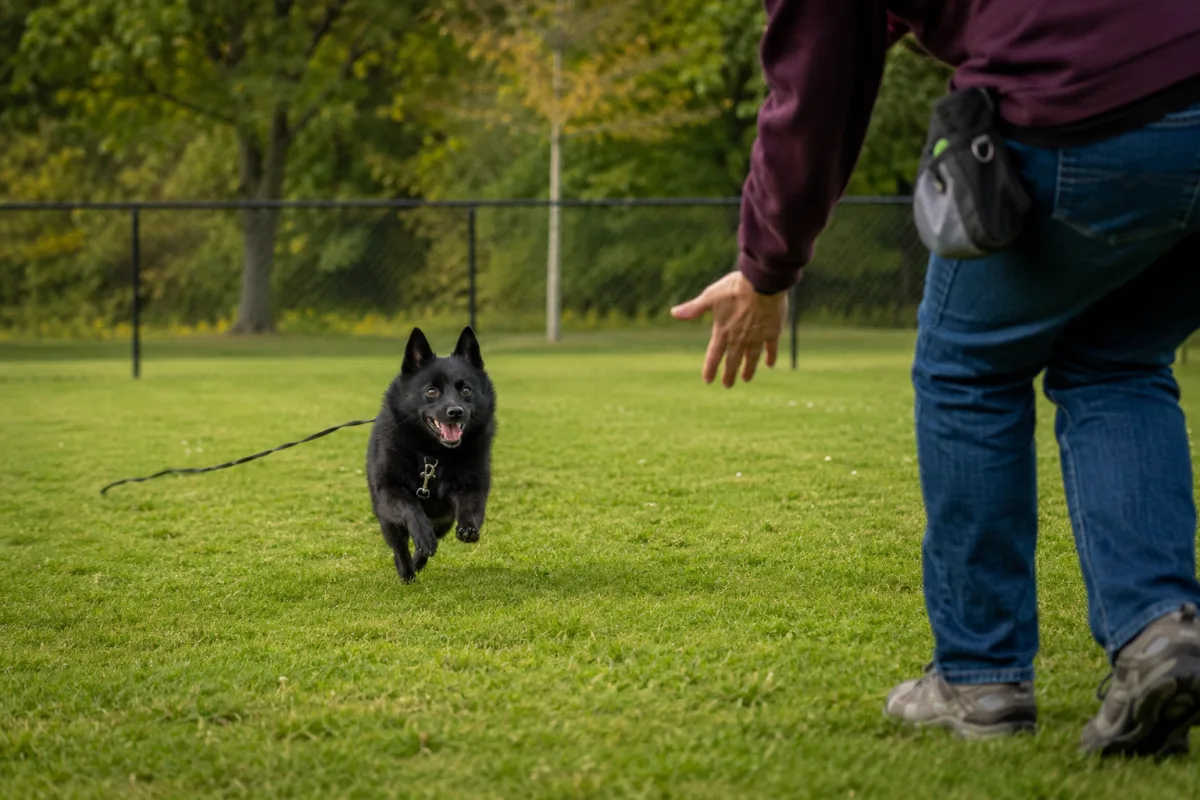
Teach recall indoors before expecting it outside. Say the cue once, reward heavily, and release the dog back to sniffing or play. The release matters. If "come" always ends fun, a clever Schipperke starts doing the math.
Move from hallway to fenced yard to long line. Use chicken, cheese, a favorite toy, or a short chase game as payment. Do not call the dog for punishment, nail trimming, or the end of every outing. If you need another active-breed comparison, Livecub's German Shorthaired Pointer questions shows how recall changes with prey drive and energy.
Outside fenced areas, assume the leash is part of the safety system. A Schipperke that usually comes may still chase a squirrel, bird, or blowing leaf. Train recall for emergencies, but manage freedom like the dog has opinions.
How Do You Reduce Barking?
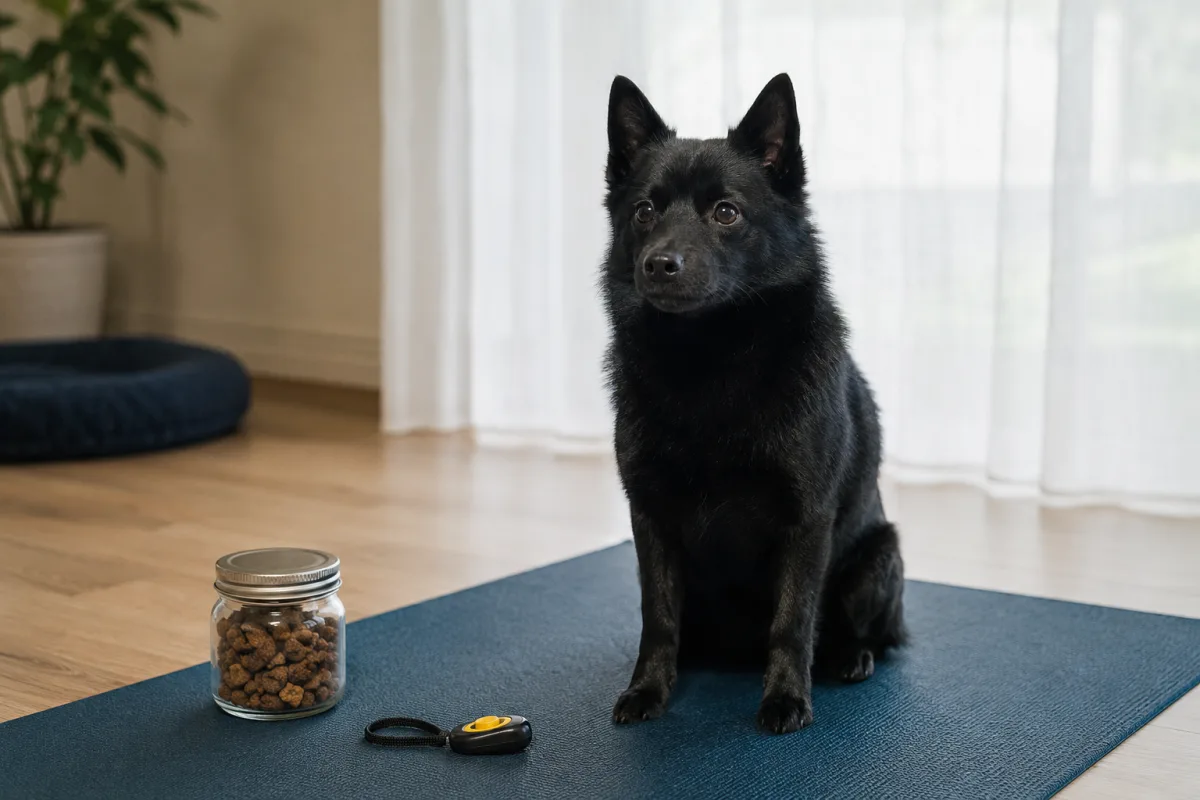
Barking is not a random flaw. It is watchdog behavior, excitement, frustration, fear, or demand. First identify the trigger: window traffic, doorbell, other dogs, hallway noise, crate frustration, visitors, or boredom. Then reduce rehearsal and teach a replacement.
The AKC's guidance on nuisance barking recommends teaching a quiet cue and rewarding the behavior you want. For a Schipperke, timing matters. Reward the first pause, then build a longer settle. Do not shout over the dog. That often sounds like joining in.
Use window film, baby gates, white noise, mat training, and planned enrichment. A Schipperke left to patrol a busy street-facing window may become an expert alarm system. Give the dog a job you can live with.
What Helps With House Training And Crate Training?
House training needs supervision, schedule, and fast reward. Take the dog out after waking, eating, play, and confinement. Reward immediately outdoors. Inside accidents usually mean the puppy had too much freedom, too much time, or too little supervision.
Crates and pens are helpful if they are built with good associations. Feed meals in the crate, use safe chews, keep exits calm, and avoid using the crate as a punishment box. A Schipperke that sees confinement as a fight may bark, scratch, and rehearse frustration.
Night routines matter too. Last potty trip, low-key crate entry, and a predictable morning exit help the puppy understand the rhythm. If the dog wakes at every sound, cover part of the crate, use steady background noise, and reward quiet mornings rather than noisy demands.
Small dogs often get too much household freedom too soon because they are easy to scoop up. Treat the puppy like a large working dog in a small body. Supervision teaches faster than scolding after the fact.
How Much Exercise Does A Schipperke Need?
A Schipperke needs daily movement and daily thinking. Walks, sniffing routes, tug with rules, recall games, food puzzles, trick training, agility foundations, and scent games all help. Pure running is not enough if the brain stays hungry.
PetMD notes that Schipperkes may become destructive without enough exercise or mental stimulation and that positive reinforcement and training games help hold interest. That fits the breed. Boring drills lose to mischief.
Use structure after activity. A fast game should end with a calmer cue: mat, chew, sniff search, or rest. Otherwise, the dog may leave training more wired than before. If you compare small companions, Livecub's Miniature Schnauzer questions offer another view of vocal, clever small dogs.
Rotate activities during the week. One day can be a sniff walk, another can be trick training, another can be indoor search games, and another can be careful meet-the-world practice. Variety keeps the dog engaged without turning every day into louder, faster exercise.
How Do You Stop Door Dashing?
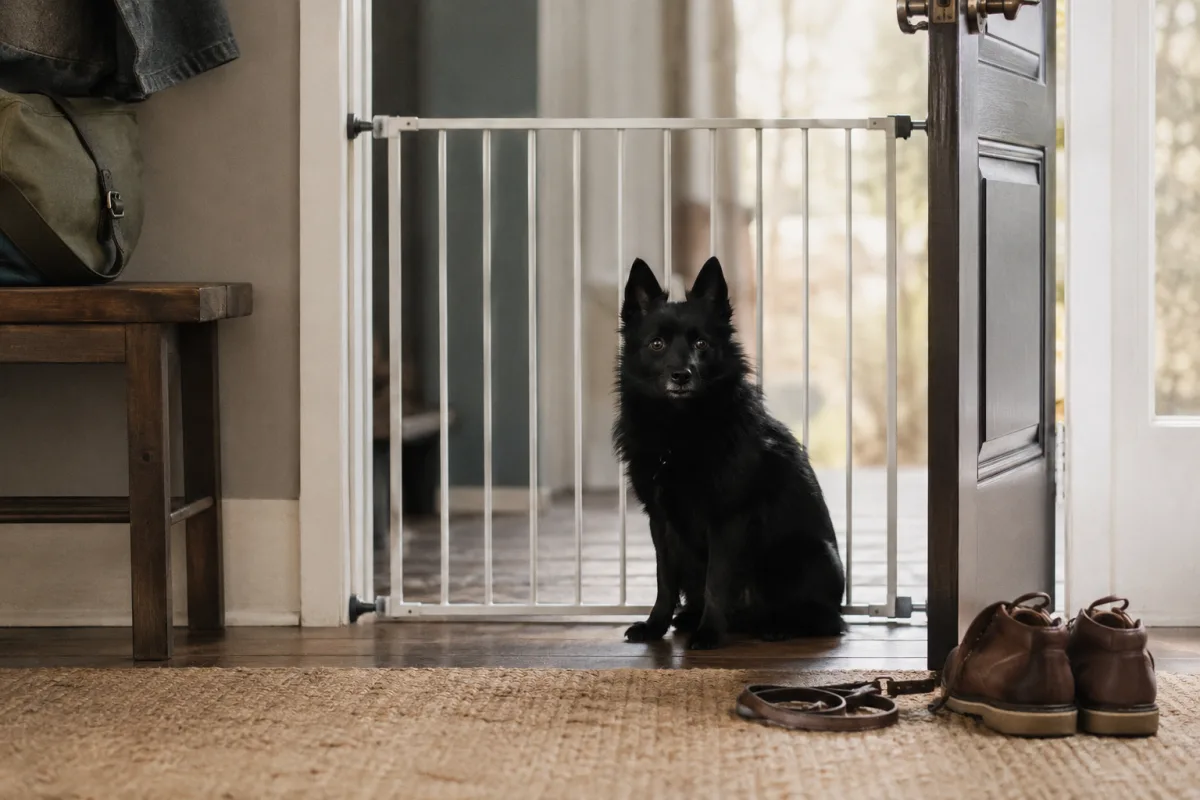
Door manners are a safety skill. Teach the dog that open doors do not mean launch. Practice with a leash on, reward backing away from the threshold, and release through doors only after permission. Start with low-value doors before trying the front door at delivery time.
Manage the environment while training catches up. Use gates, closed interior doors, leashes, and family rules. Guests should know not to swing doors open while the dog is loose. A Schipperke can be through a gap before a person finishes saying "wait."
What About Socialization?
Socialization should make the puppy confident, not overwhelmed. Let the dog see people, surfaces, sounds, grooming tools, car rides, calm dogs, children at a distance, and normal city or neighborhood motion. Pair new things with food, play, and space.
Do not let strangers grab the puppy just because it is small. A worried Schipperke may become defensive if people loom, squeal, or scoop. The goal is neutral confidence: the dog can notice the world without needing to police it.
Grooming and vet handling belong in socialization too. Practice touching paws, lifting lips, brushing the coat, looking in ears, and brief restraint. Pay well for cooperation. A small dog that learns body handling early is easier to care for as an adult.
How Do You Train Around Other Pets?
Schipperkes can live with other pets, but chase instincts require management. Use gates, leashes, crates, and slow introductions with cats or small animals. Reward the dog for looking away and returning to you. Do not rely on one peaceful afternoon as proof that supervision is no longer needed.
Teach leave it, come, settle, and stationing on a mat before expecting polite behavior around motion. If your household includes long-coated dogs too, Livecub's longhair Dachshund grooming guide is a reminder that cooperative handling should be trained before care becomes urgent.
Frequently Asked Questions
Are Schipperkes hard to train?
They can be challenging because they are independent and busy, but they learn well with rewards and consistency.
Do Schipperkes bark a lot?
Many do. Watchdog instincts, boredom, and excitement all need early training and management.
Can Schipperkes be off leash?
Many should stay leashed or fenced because bolting and chase behavior can override recall.
Are Schipperkes good apartment dogs?
They can be, if barking, exercise, enrichment, and hallway triggers are managed daily.
What is the first command to teach?
Name response and recall are early priorities, along with settle, crate, and trading items.
What Is The Best Training Mindset?
Train the Schipperke like a clever watchdog, not like a decorative lap dog. Give it rules, safe outlets, recall practice, quiet training, and mental work every day. The breed's spark is the reason people love it; the training plan should make that spark livable. Keep the work daily.

Chiara Bradshaw
Covers education, culture and creative topics with an emphasis on readable explanations and verifiable references.



Leave a reply
Replying to