
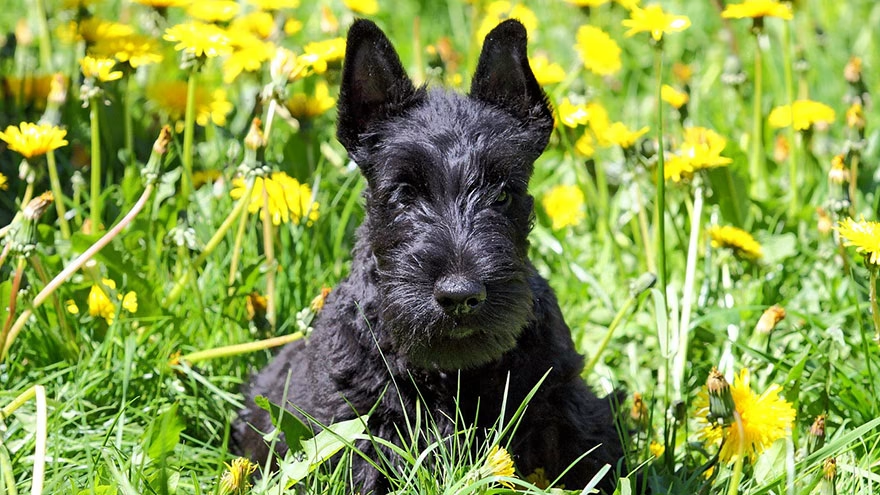
A Scottish Terrier is small enough for an apartment and stubborn enough to make a new owner rethink every training shortcut. These Scottish Terrier questions matter because the breed is not a soft toy in a black coat. Scotties are compact, alert, serious little terriers with a strong prey drive, a weatherproof coat, and a personality that rewards patient people more than pushy ones.
Are Scottish Terriers good family dogs?
They can be, but they are not usually the loose, bouncy family dog some people imagine. The American Kennel Club describes the Scottish Terrier as confident, independent, and dignified. That means a Scottie may bond deeply with the household while still wanting personal space and clear rules.
The AKC Scottish Terrier profile lists the breed in the Terrier Group and gives a typical weight of 18 to 22 pounds. That size is manageable, but the temperament is real terrier: alert, opinionated, and quick to chase movement.
If you are comparing small dogs, Livecub's Miniature Schnauzer questions can help because both breeds are compact and bearded, but their training feel and social style are not identical.
How much exercise does a Scottish Terrier need?
Scotties need daily movement, not marathon mileage. A few purposeful walks, training games, sniffing time, and safe yard play usually fit the breed better than repetitive high-impact exercise. Their short legs and sturdy body are not built for jogging beside a bike.
Leash control matters. A Scottie may ignore a recall if a squirrel, rabbit, or cat triggers the terrier brain. Secure fencing and a leash are more reliable than assuming loyalty will beat instinct.
For owners who like very large breeds, Livecub's biggest dog breeds guide shows the opposite end of the size scale. The planning issue is the same: exercise should match body structure, not the owner's fantasy.
Are Scottish Terriers easy to train?
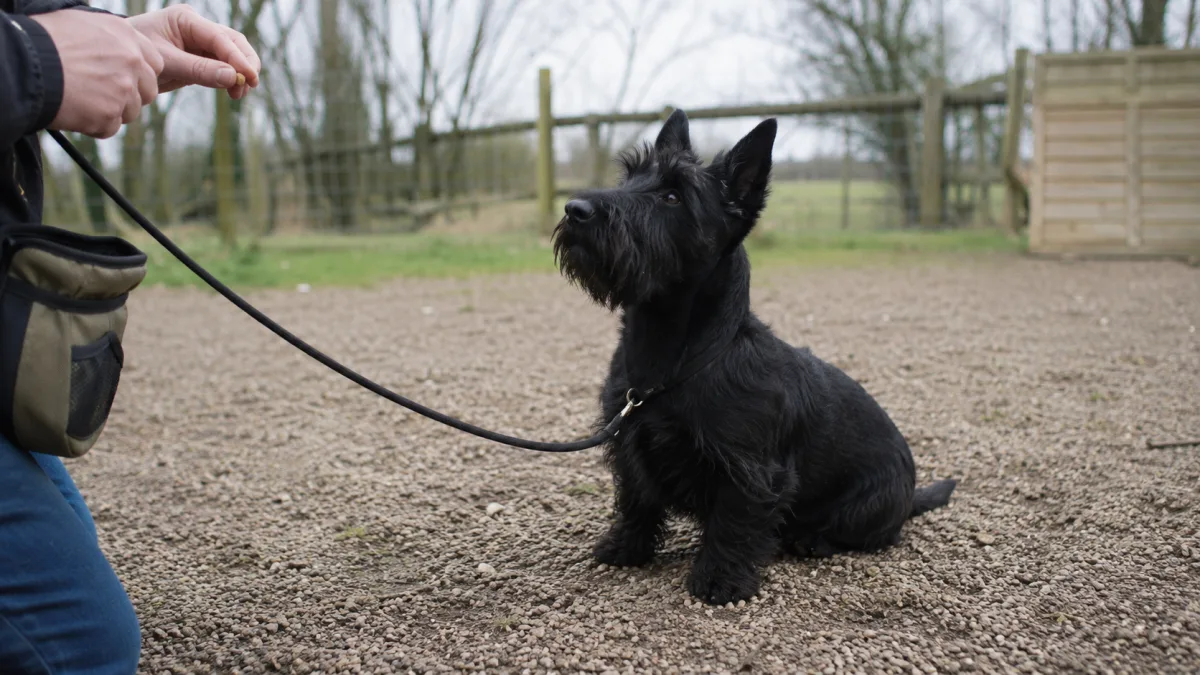
They are trainable, but they are not usually eager servants. A Scottie learns best when the lesson is short, clear, consistent, and worth doing. Harsh repetition can make the dog shut down or argue.
Use food, praise, games, and firm household routines. Practice recall in controlled spaces, teach a reliable "leave it," and reward calm handling early. A Scottie that learns cooperation as a puppy is easier to groom, walk, and examine as an adult.
Independence is not disobedience by default. It is a breed feature that needs structure. Training should make the right choice obvious rather than trying to overpower the dog.
Do Scottish Terriers bark a lot?
Many Scotties are alert barkers. They notice people, animals, doors, vehicles, and odd sounds. That makes them useful watchdogs, but it can also make apartment living noisy if the owner lets every bark become a full announcement.
Teach a quiet cue and reward the dog for returning to you after the first alert. Do not yell over barking; that can sound like joining the noise. Manage window access if outside movement keeps the dog rehearsing the same bark loop.
How much grooming does a Scottish Terrier need?
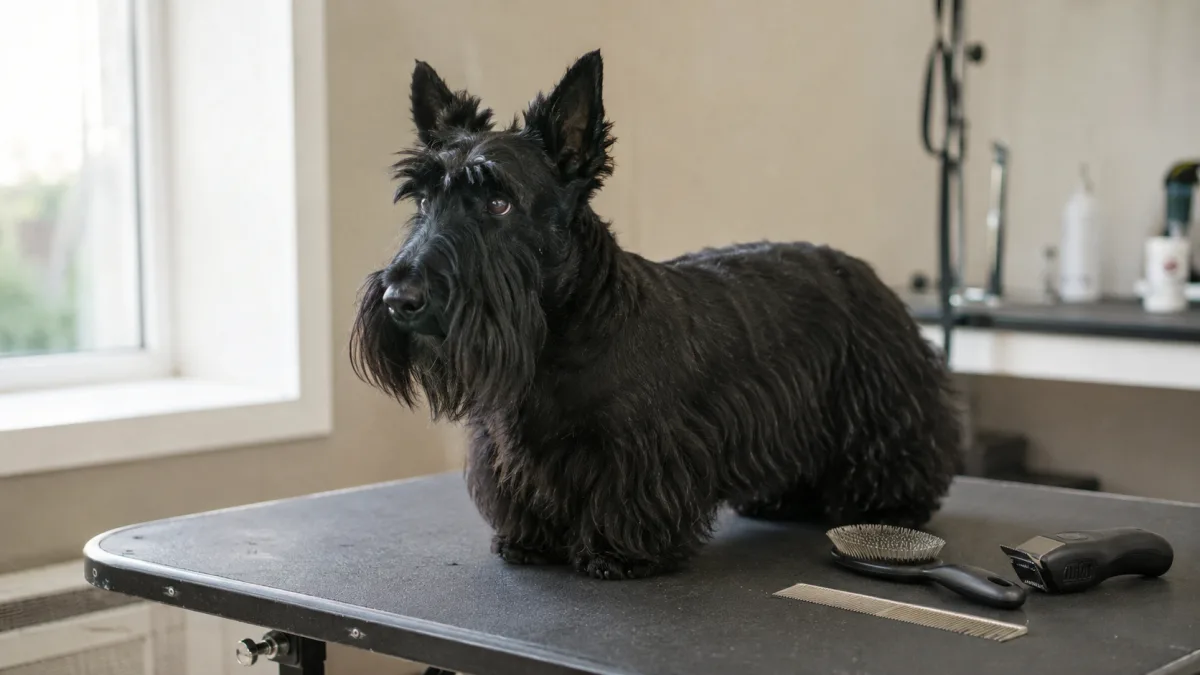
The Scottish Terrier has a hard outer coat and softer undercoat. The Scottish Terrier Club of America notes that the breed's coat needs regular grooming and stripping or clipping to maintain the classic outline. A neglected Scottie coat can mat, trap debris, and hide skin problems.
The Scottish Terrier Club of America characteristics page is useful because it frames the breed as a real working terrier, not just a haircut. That coat was built for weather and ground work.
Budget for grooming before buying the puppy. If you plan to hand-strip for show texture, you need skill or a groomer who understands terrier coats. If you clip for a pet home, you still need brushing, beard cleaning, nail trims, and ear checks.
Livecub's longhair Dachshund grooming guide covers a different coat, but it makes the same point: grooming is routine care, not a cosmetic extra.
Are Scottish Terriers good with children and other pets?
Scotties can live with respectful children, especially when raised with them, but they are not a breed for rough handling. Children should not grab the beard, crowd the dog in a bed, or treat the dog like a stuffed animal. The dog also needs an adult to enforce boundaries.
Other pets depend on the individual dog and the household setup. A Scottie may do well with another dog after careful introductions, but small prey animals are a poor match. Cats can work in some homes if the dog is trained and managed early.
If you want to compare terrier energy and health considerations, Livecub's Staffordshire Bull Terrier health guide is a useful contrast, though the breeds are very different in build and social style.
What health issues should Scottish Terrier owners watch for?
No breed is guaranteed healthy. The Scottish Terrier Club of America health section discusses breed concerns and health testing, including conditions such as von Willebrand disease, craniomandibular osteopathy, and Scottie cramp. These are not reasons to panic; they are reasons to choose a careful breeder and keep a veterinarian involved.
The STCA health page is a better source than random symptom lists because it is breed-specific and points owners toward organized health knowledge. Ask breeders what they test, what they have seen in their lines, and what support they provide after placement.
Do not diagnose from a breed article. If a Scottie has abnormal gait, bleeding, jaw pain, urinary signs, skin changes, or unexplained weakness, call a veterinarian.
How long do Scottish Terriers live?
AKC lists the Scottish Terrier life expectancy as 12 to 15 years. That range is not a promise for any individual dog. Weight control, dental care, veterinary checkups, safe exercise, and prompt attention to symptoms all affect quality of life.
A long life with a Scottie also means planning for senior stubbornness. Older dogs may need ramps, non-slip floors, shorter walks, and more patient grooming. Small dogs can still become heavy to lift when joints hurt.
Is a Scottish Terrier good for first-time owners?
A first-time owner can succeed with a Scottish Terrier if they like structure, grooming, training, and a dog with opinions. The breed is less ideal for someone who wants instant obedience, off-leash freedom, or a low-maintenance coat.
If you are still comparing compact breeds, Livecub's Lhasa Apso questions and Basset Hound questions show how different small-to-medium companion dogs can be in grooming, training, and daily rhythm.
What should you ask a Scottish Terrier breeder?

Ask about health testing, temperament, puppy socialization, grooming expectations, diet, contract terms, return policy, and support after the sale. Meet the dam if possible, or at least discuss her temperament honestly. A breeder should explain both the charm and the problems of the breed.
Walk away from anyone who always has puppies, refuses questions, avoids health talk, will not take a dog back, or sells the breed as perfect for everyone. A good breeder filters buyers because Scotties are not a universal fit.
What kind of home fits a Scottish Terrier?
A Scottie can fit a house, apartment, or small yard if the owner manages barking, grooming, and leash safety. The best home is predictable: meals, walks, training, rest, and handling happen on a routine the dog understands.
Busy homes can work when adults protect the dog's space. A quiet corner, crate, or bed gives the Scottie somewhere to leave the action. That matters for a breed that may enjoy the family without wanting constant touching.
Do not confuse compact with casual. The dog is small enough to carry, but the ownership job is full-size.
Plan the routine before the puppy arrives home.
Consistency is the kindness here.
Frequently Asked Questions
Do Scottish Terriers shed?
They shed less visibly than many breeds, but they are not maintenance-free. The coat needs regular brushing and professional or skilled home grooming.
Can Scottish Terriers live in apartments?
Yes, if they get daily walks, mental work, barking management, and safe potty routines. The owner must manage alert barking and prey drive.
Are Scottish Terriers cuddly?
Some are affectionate, but many show love by staying near their person rather than demanding constant handling. Respect the individual dog's style.
Do Scottish Terriers need a fenced yard?
A fenced yard helps, but it must be secure. Terriers can chase, dig, and test boundaries, so supervision still matters.
Choose a Scottie for the dog behind the outline: loyal, sharp, independent, and funny, but never low-effort.

Chiara Bradshaw
Covers education, culture and creative topics with an emphasis on readable explanations and verifiable references.

Leave a reply
Replying to