
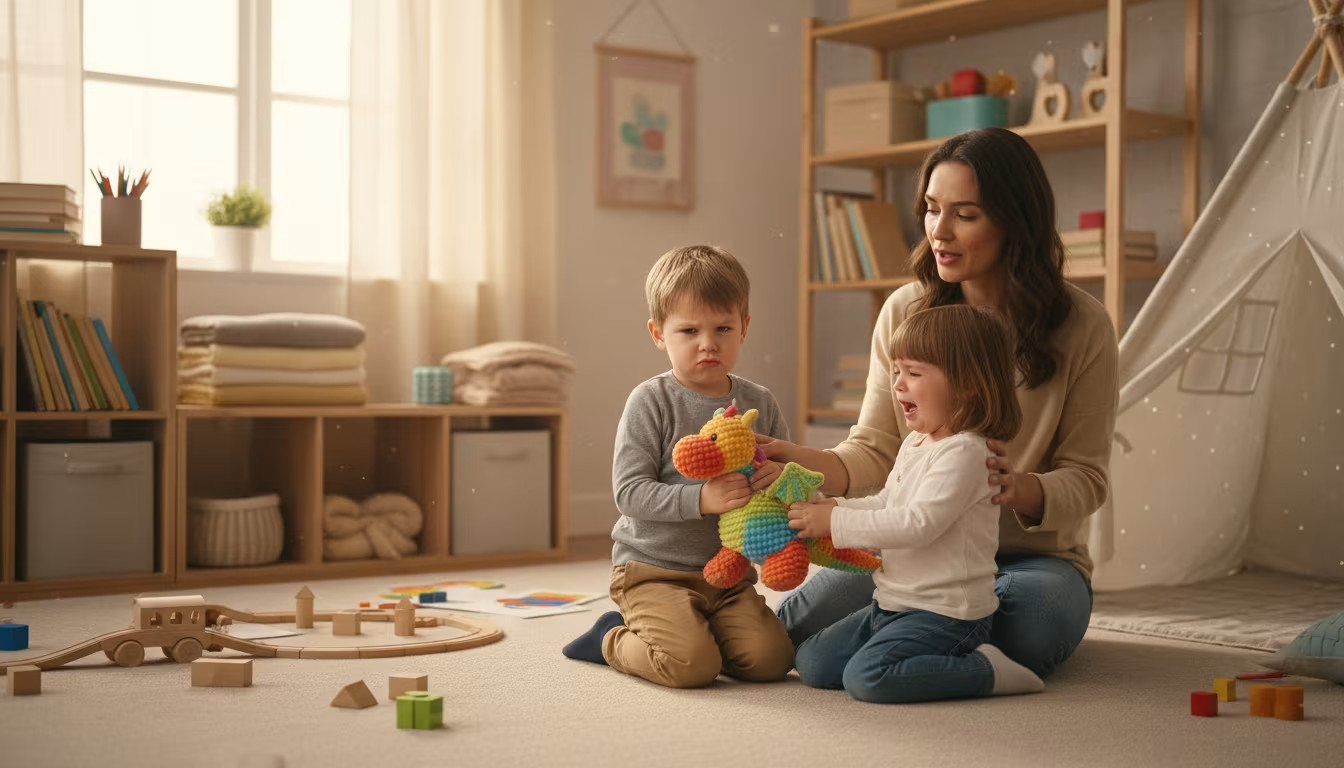
Two children rarely agree all day, and no household rule can make them. Brothers and sisters compete for space, attention, toys, fairness, identity, and control, so the realistic goal is not silence. It is fewer explosions, faster recovery, and a home where conflict runs on predictable rules.
Peace, in this sense, is a skill children build with coaching. Parents who aim for zero disagreement usually end up refereeing every hour; parents who aim for safe conflict and honest repair get a calmer house over time.
Expect Conflict, Not Constant Peace
Nationwide Children's describes sibling rivalry as competition or conflict between children in the same family and notes it can be a natural part of growing up (Nationwide Children's). Normal, though, does not mean ignored. Everyday friction becomes a teaching moment once safety is protected and the adults stay neutral.
Comparisons are the fastest way to turn friction into lasting resentment. "Why can't you be like your sister" or "your brother never acts this way" tells one child they are the family problem. Describe the behavior instead and say what needs to happen next, without casting anyone as the household example or the villain. When you correct, do it privately when you can; a public scolding entertains the other child and deepens the grudge.
Build Rules, Repair, And One-On-One Time
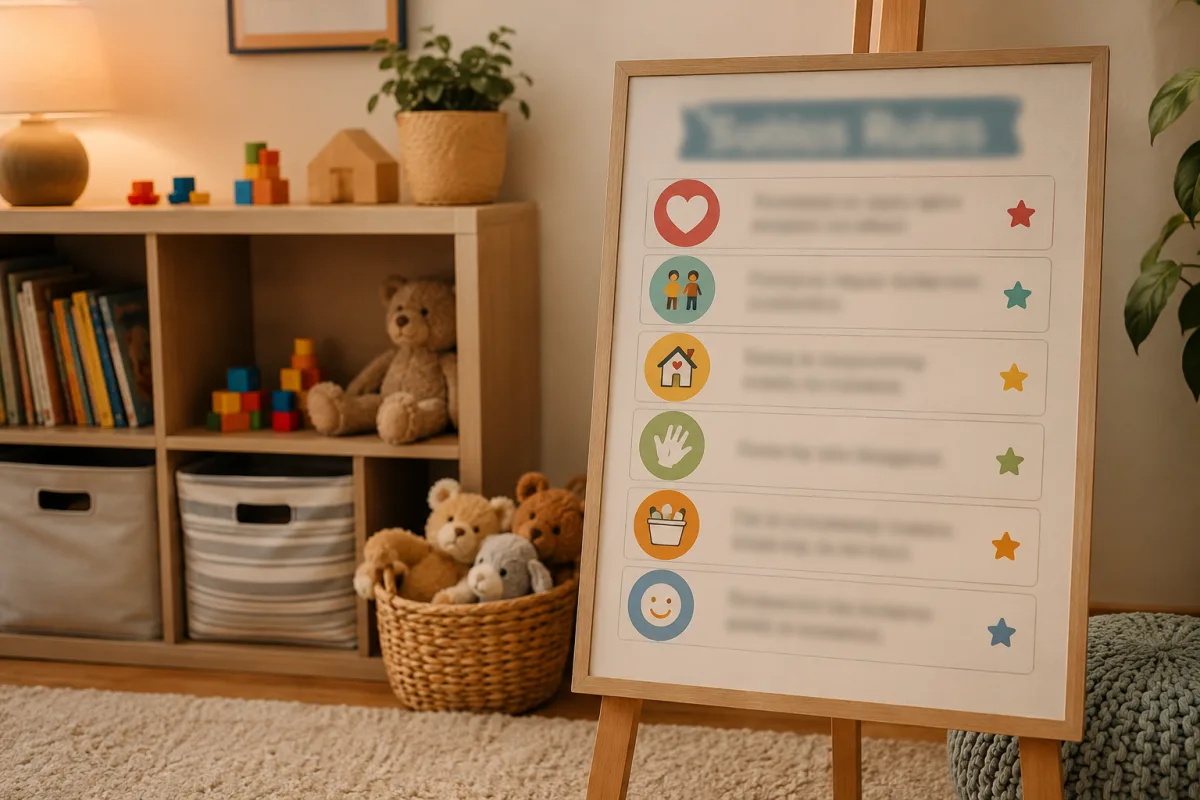
House rules work best when they are short and repeatable: no hitting, no name-calling, ask before taking, stop when someone says stop, and get an adult for anything unsafe. Post them if the children are old enough to read. Predictability calms a house more than a fresh lecture after every fight, and turn-taking is far easier to teach during a quiet moment than in the middle of a battle over the tablet.
Children often fight hardest for attention, so ten minutes of focused one-on-one time can quietly lower the conflict that follows. It does not need to be elaborate; a walk, a book, or a snack tells a child they are seen. After a blow-up, coach repair rather than forcing a hollow apology. Ask what happened, what each person needs now, and what repair looks like, whether that means returning a toy, cleaning a mess, or giving space. When children are too upset to think, separate first and teach later, because nobody learns conflict skills while screaming. Then notice the peaceful moments out loud: "you traded," "you stopped when asked." Specific praise gets repeated far more than a vague "good job." Toddlers need extra prevention here, since impulse control and language are still forming; Livecub's toddler tantrum guide can help with the emotional storm underneath many of their fights.
Remember That Fair Is Not Always Equal
Equal treatment and fair treatment are not the same thing. One child may need more homework help, another more medical care, another more supervision. Trying to make every moment identical usually creates new arguments rather than ending old ones.
Explain it in plain language: everyone gets what they need, and everyone does not always get the same thing at the same time. It also helps to separate fairness from feelings. A child who shouts "unfair" often means "disappointed." You can acknowledge the feeling without rewriting the rule: "I hear that you wanted the first turn. The timer still says your turn is next."
Protect Safety First
There is a real line between normal rivalry and harmful aggression. Hitting, biting, kicking, choking, threats, or repeated intimidation calls for immediate adult action: separate the children and protect the one who was harmed. Do not file serious aggression under ordinary sibling squabbles, because safety comes before any lesson.
Watch the whole pattern, not just the volume. The loud child is not always the only one contributing, and a quieter child may provoke, hide, or collapse to shift the blame. Bring in a pediatrician, therapist, or family counselor if the conflict involves fear, injuries, cruelty, property destruction, or one child avoiding shared spaces at home. Reaching for outside help is a safety step, not a parenting failure.
Ease New-Baby And Age-Gap Jealousy
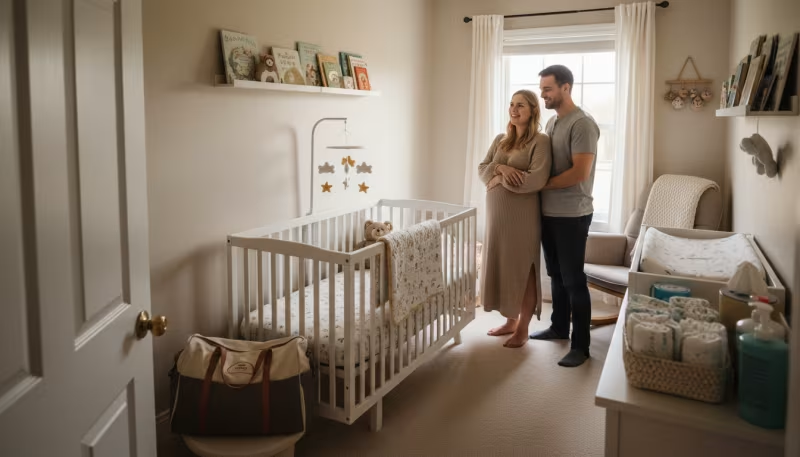
Mayo Clinic Press notes that older siblings may react to a new baby with clinginess, regression, or testing limits (Mayo Clinic Press). Give the older child safe, real jobs and private attention so they do not feel replaced, and stay patient when a potty-trained toddler suddenly wants a bottle again.
Age gaps create their own friction. Older children may feel invaded while younger ones want constant access, so respect an older child's need for privacy while still teaching kindness toward the little one. Low-pressure shared fun helps everyone: cooking, building, water play, or a silly family game builds a better track record between siblings than any lecture about getting along. As younger siblings become mobile, Livecub's room-by-room baby-proofing guide can help families rethink shared spaces so fewer fights start over territory.
Defuse The Daily Flashpoints
Most sibling conflict clusters around a few predictable triggers, and screens sit near the top of the list because turns, volume, and ownership are all so easy to argue about. Make the screen rule before the device appears, not in the heat of the grab: use timers, a posted turn order, and charging stations that belong to the adults rather than to whoever snatches the tablet first. The same logic applies to toys, seats in the car, and the front spot in any line.
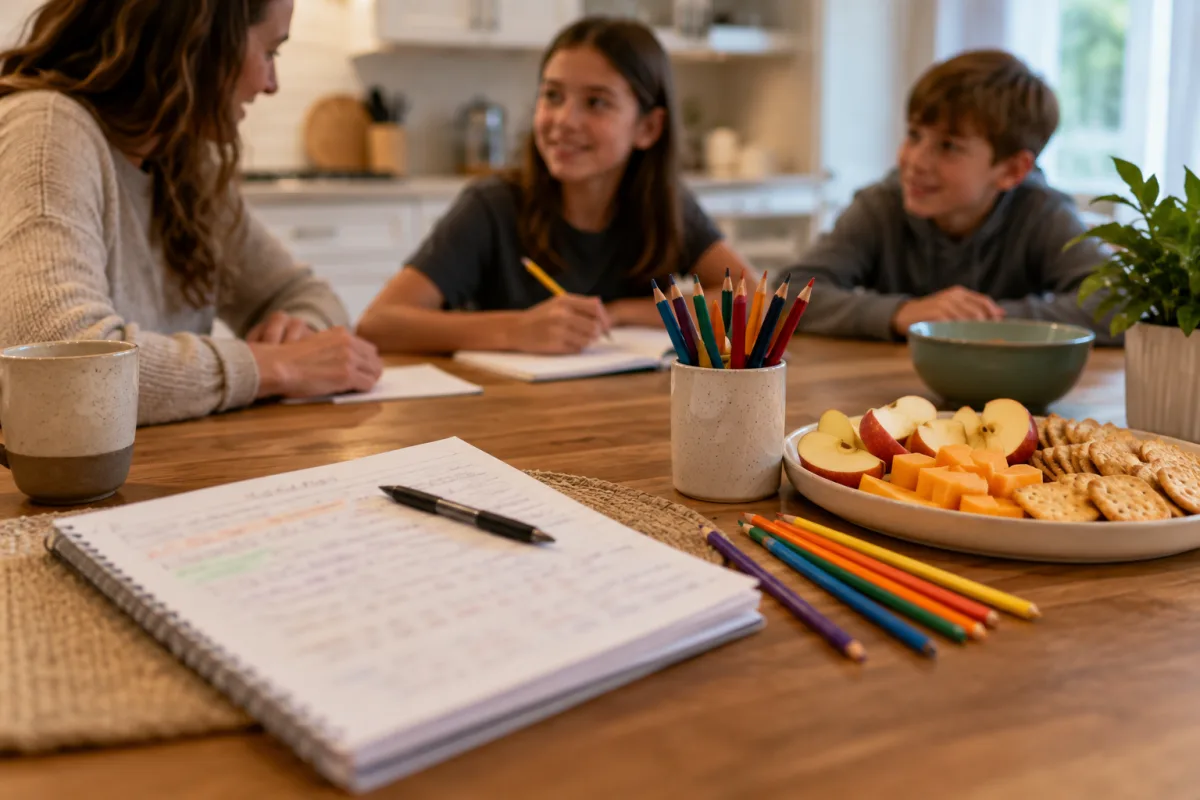
Shared chores can build teamwork or spark another fight depending on how you set them up. Paired jobs with clear roles work best, such as one child rinsing while the other dries, and quick praise for cooperation lands before the task can curdle into competition. Bedtime carries its own jealousy over stories, songs, and parent attention, so use a predictable order or rotate who goes first, and give each child a small private ritual so no one feels that love is being rationed. For repeated flare-ups over a single issue, a short family meeting held away from the conflict lets children help design the rule, and children tend to follow a plan they helped build.
Frequently Asked Questions
Is sibling rivalry normal?
Some conflict is normal, but repeated harm, fear, injury, humiliation, or targeting needs adult action and possibly professional help.
How do I stop sibling fights fast?
Separate unsafe children, calm the room, restate the rule, and solve the problem later when everyone can think again.
Should parents force apologies?
Not as the whole solution. Teach repair that matches the harm, such as returning an item, cleaning up, or giving space.
How can I prevent rivalry after a new baby?
Give older siblings private attention, safe helper jobs, honest reassurance, and patience with regression.
What does fair mean with siblings?
Fair means each child gets what they need. It does not always mean identical treatment at the same moment.
Rivalry eases when parents drop comparisons, guard safety, protect a little one-on-one time, coach real repair, and keep a short set of rules the children can repeat back to you. Reinforce the calm moments, let finished conflicts end, and the house slowly learns a better default.

Timothy Davidson
Edits step-by-step general-interest guides for clarity, realistic limits and source verification.


Leave a reply
Replying to