

The Short Answer
The stair climber and jump rope can both be hard, efficient cardio workouts. The better choice depends on your joints, coordination, space, budget, and tolerance for repetition. A stair climber is easier to pace and usually friendlier for people who want low-skill cardio with steady lower-body work. Jump rope is cheaper, portable, and intense, but it asks more from your calves, feet, timing, and landing mechanics.
If your main goal is a workout you can repeat three or four times a week, choose the one your body accepts. The CDC's adult activity guidance says adults can aim for 150 minutes of moderate activity, 75 minutes of vigorous activity, or a mix, plus strength work at least two days each week. That CDC physical activity overview matters here because both options only work if they fit into a full week, not just one hard session.
Think of the choice this way: the stair climber is steady pressure; jump rope is rhythmic impact. One makes your legs climb without going anywhere. The other turns a small rope into a timing test. Neither is magically better. Each rewards a different kind of consistency.
How the Work Feels
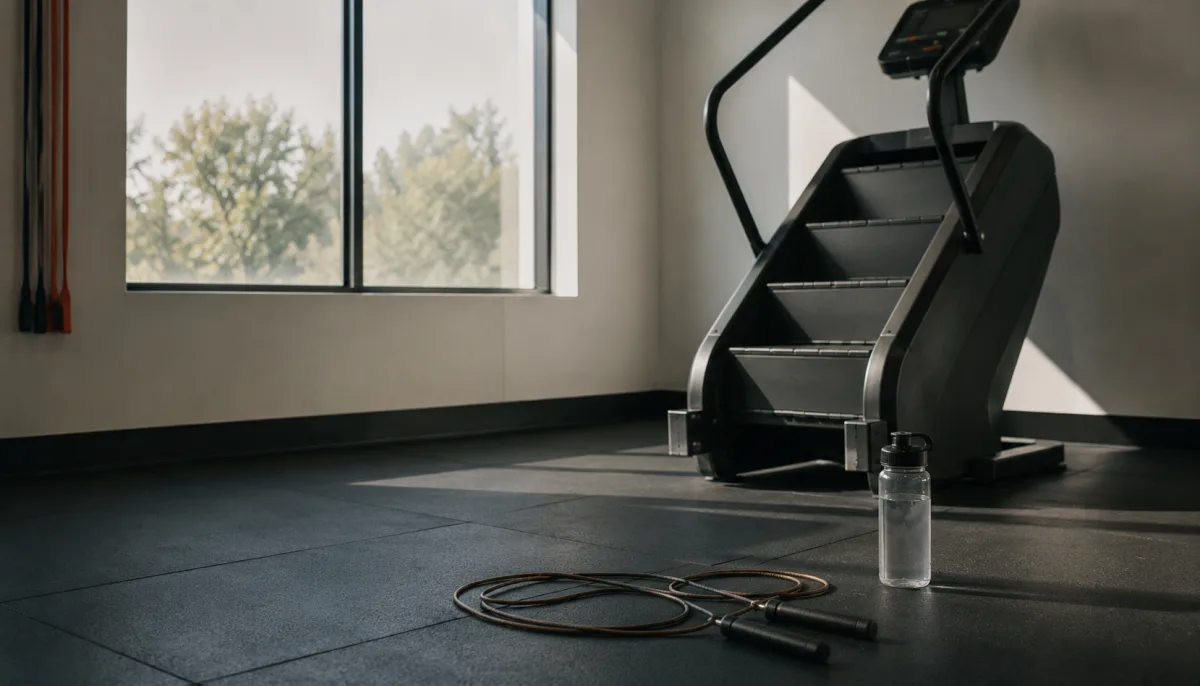
A stair climber feels like a controlled grind. Your heart rate rises, your breathing deepens, and your quads and glutes start talking early. You can adjust speed, hold the rails lightly for balance, and settle into a pace. The movement is simple enough that many people can listen to music or watch a screen once they learn not to lean heavily on the handles.
Jump rope feels sharper. The first minute may feel easy, and the third minute may feel unfair. Your feet, calves, shoulders, wrists, and core all have jobs. You need timing, posture, and a relaxed grip.
If you tense up, the rope catches. If you land hard, your calves pay for it the next day. The payoff is that a short jump rope session can feel athletic in a way many machines do not.
People who like dance-style cardio may enjoy jump rope because rhythm keeps the brain engaged. Livecub's guide on basic aerobic steps pairs well with that idea. People who prefer a clear machine pace may lean toward the stair climber, especially if they want fewer moving parts.
Calories and Intensity
Calorie burn depends on body size, speed, fitness level, and how honestly you work. Harvard Health's calorie chart lists a general stair step machine session at about 180, 216, or 252 calories in 30 minutes for people weighing 125, 155, or 185 pounds. The same chart lists rope jumping as higher at harder efforts. You can compare the activity table in Harvard Health's calories burned guide.
The Adult Compendium of Physical Activities gives another way to compare effort through MET values, which estimate energy cost. Its current site explains METs as a ratio between activity cost and resting cost. You can explore that framework at the Compendium of Physical Activities. In plain terms, faster rope jumping usually rates very high because it is quick, repetitive, and full-body. Stair climbing can also be vigorous, especially when speed or resistance rises.
Do not choose by calorie charts alone. A workout that burns more per minute but leaves you too sore to repeat may lose to a workout you can do regularly. For weight management, Livecub's guide on losing weight with Tae Bo makes a similar point: effort, routine, and food habits work together.
Muscles and Joint Stress
The stair climber works the glutes, quads, hamstrings, and calves with repeated stepping. It can build local leg endurance, especially if you avoid hanging on the rails. Leaning hard on the handles reduces the work and can irritate posture. Stand tall, place the full foot when possible, and use the rails for balance rather than support.
Jump rope spreads the work across the lower legs, shoulders, wrists, and trunk. The calves and Achilles tendons take a lot of repeated load. That does not make jump rope bad, but it does mean beginners should start with short intervals. A good first session might be ten rounds of 20 seconds jumping and 40 seconds rest. Build slowly before trying long unbroken sets.
Impact is the big difference. A stair climber has no flight phase, though knees can still feel stressed if the step height or pace is too aggressive. Jump rope includes repeated landings. Softer shoes, a forgiving surface, and quiet landings help, but people with foot, ankle, knee, or pelvic floor symptoms may need a slower ramp. If pain changes your gait, stop and choose a lower-impact option.
Equipment, Space, and Consistency
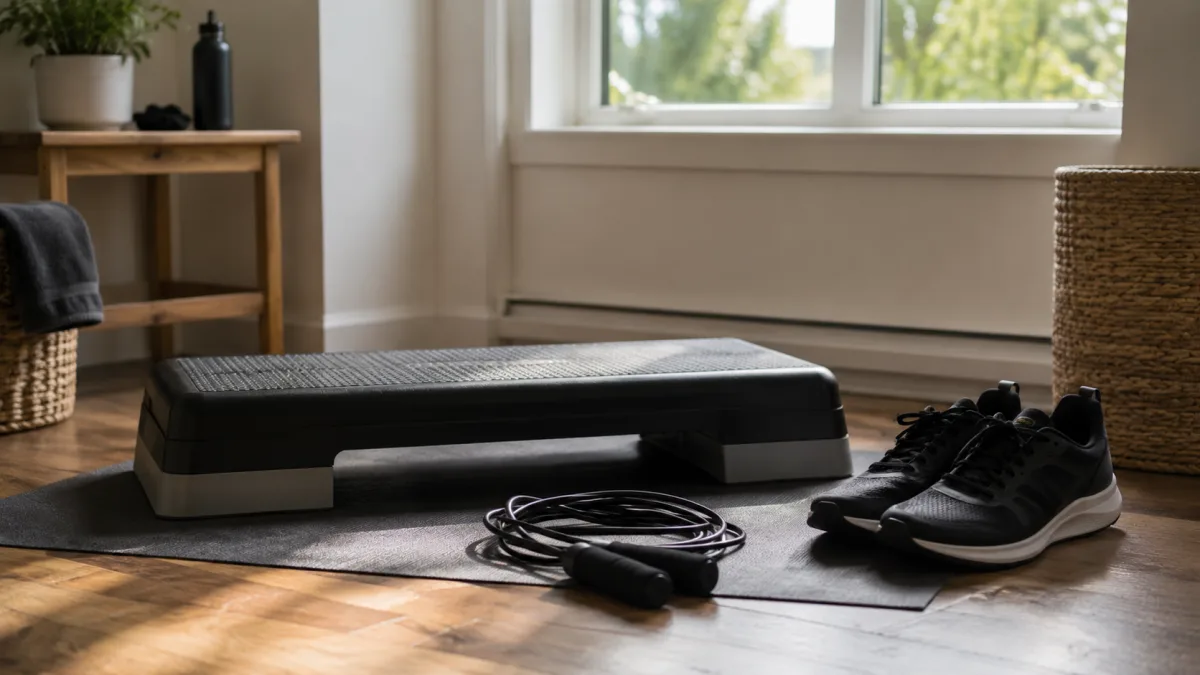
The stair climber usually requires a gym, a home machine, or access to stadium steps. It takes up space and can be boring for people who dislike machines. Its advantage is predictability. You can set a pace, track time, and repeat the same workout next week. That makes progress easy to measure.
Jump rope costs little and fits in a bag. You need enough ceiling height, a floor that will not damage the rope, and room around you. A basic beaded or PVC rope is fine for learning. Speed ropes are fast, but they punish timing errors. Start with a rope length that lets the handles reach around armpit height when you stand on the center of the rope.
If you train at home, jump rope wins on storage. If you train at a gym and want a low-fuss cardio block after lifting, the stair climber may be easier. If you like outdoor stair workouts, Livecub's article on running bleachers offers a related option with fresh air and real steps.
How to Pick the Right One
Choose the stair climber if you want steady lower-body cardio, dislike high-impact jumping, or need a workout that is easy to scale with machine settings. It is also a good pick for intervals because you can change speed without changing skill. Try five minutes easy, ten minutes moderate, five rounds of one minute hard and one minute easy, then a cooldown.
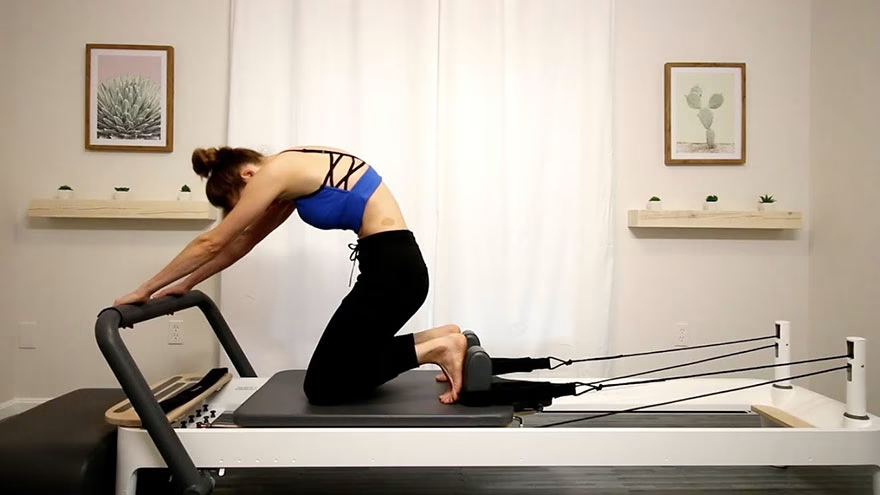
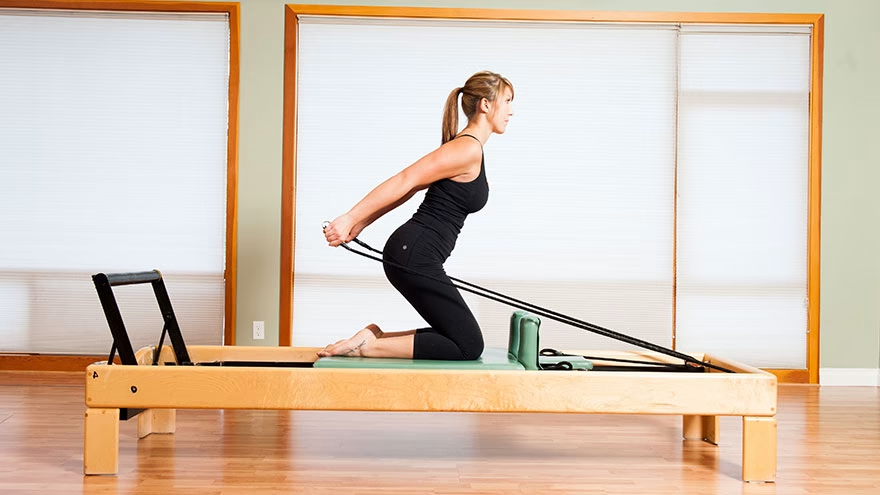
Choose jump rope if you want portable cardio, enjoy skill practice, or need a quick session in a small window. Keep the first month humble. Practice bounce steps, boxer steps, and short intervals before chasing speed. If you already use spring-loaded equipment, Livecub's guide on using a jump board on a Pilates reformer may feel familiar because both ask for controlled landing and rhythm.
Choose neither every day. Mix cardio types so your tissues get different loads. A week might include one stair session, one jump rope skill session, one easy walk, and two strength workouts. If you enjoy slower movement, Livecub's comparison of Pilates and tai chi can round out recovery days with control and balance work.
Sample Week
For a stair-climber focus, start with three sessions. Day one can be 20 minutes steady at a pace where talking is possible but not easy. Day three can be intervals: eight rounds of 45 seconds hard and 75 seconds easy. Day five can be 25 minutes moderate with no rail leaning. Add strength work on two separate days, especially squats, hinges, calf raises, and core work.
For a jump-rope focus, start smaller. Day one can be ten rounds of 20 seconds jumping and 40 seconds rest. Day three can be skill work with alternating steps and easy bounce practice. Day five can be twelve to fifteen short rounds if your calves feel normal. Stop adding volume if soreness lingers more than a day or changes how you walk.
For a mixed week, use the stair climber for steady conditioning and jump rope for short skill intervals. This gives you the machine's pacing and the rope's coordination challenge without asking your calves to absorb every cardio session. The best plan is the one you can repeat while still sleeping well, lifting well, and feeling ready for the next workout.
Frequently Asked Questions
Is jump rope better than the stair climber for fat loss?
Jump rope can burn a lot of calories per minute, but fat loss depends on weekly activity, strength training, food intake, sleep, and consistency. The better tool is the one you repeat without pain.
Is the stair climber easier on the knees?
It is usually lower impact than jump rope because there is no repeated landing from a jump. Knee comfort still depends on step height, pace, posture, and whether you lean on the rails.
Can beginners jump rope every day?
Most beginners should not start with daily jump rope. Short sessions with rest days give calves, feet, and tendons time to adapt. Walking or cycling can fill easier days.
Which workout is better for athletes?
Jump rope often helps athletes with rhythm, foot speed, and coordination. The stair climber is useful for leg endurance and conditioning. Many athletes can use both at different points in training.

Timothy Davidson
Edits step-by-step general-interest guides for clarity, realistic limits and source verification.

Leave a reply
Replying to