
Know the Machine Before Moving
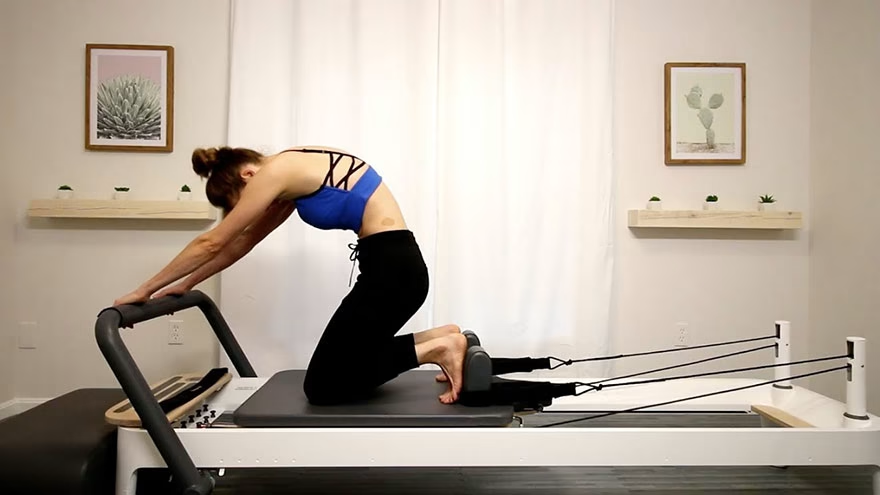
A Pilates Performer is a home-style Pilates machine similar in purpose to a reformer. It uses a sliding carriage, springs or cords for resistance, straps, a footbar, and a frame to guide controlled movement. The machine can support strength, mobility, and body awareness, but only when the user understands setup and control.
Do not climb on and start pulling straps at random. Learn how the carriage moves, how resistance changes, how the stopper works, and where hands and feet should go. A moving carriage can surprise beginners. The first skill is equipment awareness.
Cleveland Clinic's overview of Pilates benefits and basics describes Pilates as a low-impact, full-body workout that can support strength, flexibility, and stability. The machine does not replace good form; it gives form something to work against.
Set Up the Space and Machine
Place the Pilates Performer on a flat, stable surface with enough room around it. Check that the frame is fully open, the carriage moves smoothly, the footbar is secure, and springs or cords are attached correctly. If the machine folds, make sure all locks are engaged before use.
Wear clothes that let you move without getting caught. Avoid loose drawstrings, dangling jewelry, slippery socks, or long hair that can fall into the carriage area. Use grippy socks or bare feet if the manufacturer and setting allow it. Keep children and pets away while the machine is in use.
Read the manual for the exact model. Different Performers and reformer-style machines use different resistance systems. Guessing at setup can create poor form or injury risk. A beginner session should feel calm, not like a puzzle.
Before each session, do a quick check. Look at the springs or cords, footbar, straps, wheels, stopper, and frame locks. If anything feels loose, sticky, or uneven, stop and fix the setup before exercising. Machine checks are part of training.
Start With Low Resistance
Springs and cords change how the exercise feels. More resistance is not always harder in a simple way. Sometimes heavier resistance supports the body; sometimes lighter resistance demands more control. That is why beginners should start with the manufacturer's beginner settings or an instructor's recommendation.
Move slowly enough that the carriage does not slam into the stopper. Control the return as much as the push. If the carriage bangs, the movement is too fast or the resistance is poorly chosen. Pilates is not about throwing the machine around.
If you are comparing movement systems, Livecub's Pilates or Tai Chi article can help frame the shared value of control, balance, and body awareness. The Performer adds resistance, but the quiet focus is similar.
Keep the first session almost boring. Learn how to get on, lie down, place the feet, move the carriage a few inches, and return slowly. Confidence grows faster when the first workout teaches control instead of testing pride.
Learn Footwork First
Footwork is often the first exercise because it teaches alignment. Lie on the carriage, place feet on the footbar, and keep hips, knees, and ankles tracking in the same line. Press the carriage away without locking the knees, then return with control.
Try parallel feet, heels, toes, and a small Pilates V only if the position feels comfortable and has been taught. Keep the pelvis steady and ribs relaxed. The movement should come from the legs while the trunk stays organized.
Stop if there is sharp pain in knees, hips, back, or neck. Mild effort is expected; joint pain is feedback. A trained instructor can help adjust spring tension, foot placement, or range of motion.
Footwork also teaches how the machine responds. If one leg pushes harder, the carriage may feel uneven. Keep the pressure through both feet and track the knees over the toes. The goal is clean alignment.
Use the Straps With Control
Straps can train arms, shoulders, back, hips, and core, but they require attention. Check that straps are even and not twisted. Hold handles securely. Keep wrists neutral and shoulders down rather than shrugged toward the ears.
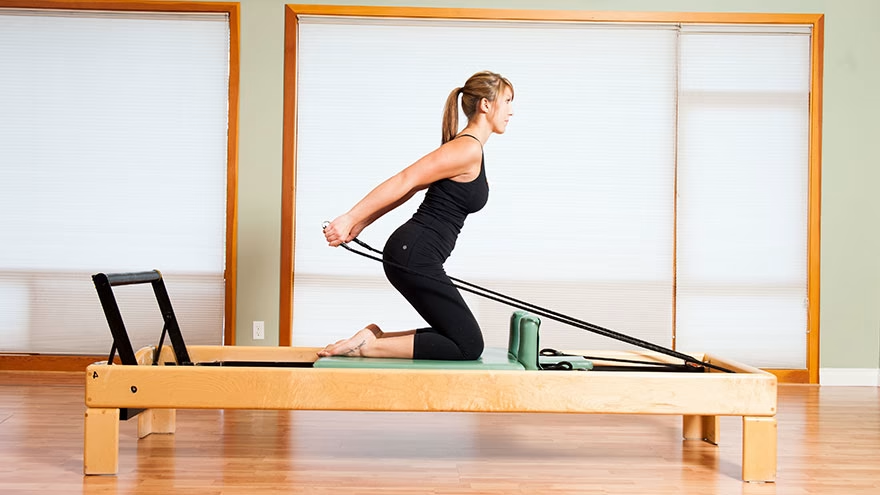
For arm work, start with small ranges. Pulling too far can strain the shoulders or make the ribs flare. For leg straps, beginners should learn with an instructor because the legs can move the carriage quickly. Slow arcs are better than large uncontrolled circles.
Keep the strap path clear. A strap rubbing against the frame, twisting around a hand, or pulling unevenly can change the exercise quickly. Reset the straps before starting another repetition.
ACE's Pilates safety discussion notes that learning correct movement with instructor help can reduce injury risk. Its Pilates guidance is a reminder that form matters more than novelty.
Breathe and Keep Alignment
Breathing helps control movement. Many Pilates exercises pair effort with an exhale and return with an inhale, but the main rule for beginners is not to hold the breath. Holding breath can create tension and make movement feel jerky.
Keep the neck long, shoulders relaxed, ribs heavy, and pelvis steady unless the exercise asks for spinal movement. Do not chase a huge range of motion. Small, clean movement is usually better than large movement that shifts the spine or strains the joints.
If you want to build general movement confidence, Livecub's basic aerobic steps article covers simpler body coordination away from the machine. Sometimes floor work helps the Performer feel less confusing.
For neck comfort, use the headrest only as directed by the machine and exercise. If the neck strains, stop and reset. A beginner should not force the head position to copy a video. Comfort and control matter more than appearance.
Check the ribs and lower back during every exercise. If the ribs pop up or the lower back arches suddenly, reduce the range or resistance. Pilates should train control in the middle of the body, not only the arms and legs.
Progress Slowly
Once footwork, simple arm work, and basic carriage control feel steady, progress gradually. Add new exercises one at a time. Change resistance slowly. Do not combine unfamiliar spring settings, new positions, and faster tempo in the same session.
Jump board work, kneeling work, standing splits, and advanced plank variations should wait until the foundation is strong. Livecub's jump board on the Pilates reformer article fits a later stage, not the first day.
Keep sessions short at first. Ten to twenty focused minutes can teach more than an hour of sloppy movement. Stop while form is still good. Fatigue can turn a controlled machine into a sloppy one.
When to Get Instruction
Instruction is useful for almost everyone, especially people with back pain, joint issues, pregnancy, surgery history, balance concerns, or no Pilates background. A good instructor can teach setup, alignment, resistance, and modifications. Large classes or online-only practice may not give enough feedback for a beginner.
If using a home Pilates Performer, consider at least a few sessions with a qualified instructor on a reformer-style machine. Bring questions about your model and goals. The goal is not to become dependent on instruction; it is to learn safe habits before practicing alone.
Stop and ask for help if you cannot tell which muscles should be working. Confusion is common at first, but guessing under resistance can build poor habits. A small correction early can make home practice safer.
A Pilates Performer can be a helpful tool when it is treated with respect. Learn the equipment, move slowly, breathe, choose reasonable resistance, and build from basics. That is how the machine becomes useful instead of intimidating.
Keep a short practice log with resistance settings, exercises, and how the body felt the next day. That record helps you repeat good sessions and avoid jumps that were too large. Progress should be measured and calm, with steady form.
Frequently Asked Questions
Is a Pilates Performer the same as a reformer?
It is similar in purpose, but models vary. A Performer is often a home-style machine, while studio reformers may have different springs and parts.
What should beginners do first?
Learn setup, carriage control, spring resistance, and basic footwork before straps, kneeling exercises, jump board work, or advanced moves.
Should Pilates Performer exercises hurt?
No. Muscle effort is normal, but sharp joint, back, neck, or shoulder pain means you should stop and adjust or get instruction.
How often should I use a Pilates Performer?
Start with short sessions two or three times a week if your body tolerates it, then build gradually with good form.

Chiara Bradshaw
Covers education, culture and creative topics with an emphasis on readable explanations and verifiable references.
Leave a reply
Replying to