
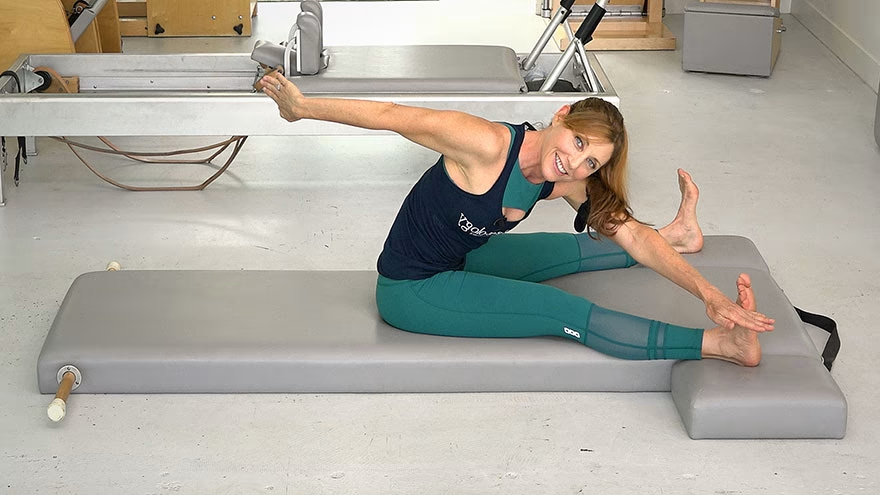
Alisa Wyatt Is Best Understood Through Classical Pilates
Alisa Wyatt Pilates is not just a name attached to exercise videos. Wyatt is associated with classical Pilates, the style that aims to preserve the order, rhythm, equipment, and principles of Joseph Pilates' original work. That matters because her teaching is usually framed around precision rather than random fitness moves.
Her public work is closely tied to Pilatesology, an online platform focused on classical Pilates instruction. The better question for a new viewer is not whether the catalog looks impressive. It is whether classical Pilates, with its detail and control, fits the body, goals, and access to instruction they actually have.
Classical Pilates rewards patience more than novelty.
Who Is Alisa Wyatt?
Alisa Wyatt is a Pilates teacher and co-founder of Pilatesology. Pilatesology's about page describes the platform as dedicated to classical Pilates and preserving Joseph Pilates' original work through experienced teachers.
That does not mean every class is right for every person. It means the teaching usually values controlled movement, clear order, and form. If you prefer fast-changing workout formats, her work may feel slower than expected at first.
Slow does not mean easy in Pilates.
Why Lineage Comes Up So Often
Classical Pilates teachers often discuss lineage because the method was passed from Joseph Pilates to students, apprentices, studios, and later teacher-training programs. The point is not celebrity ancestry. It is a way of explaining why a class uses a certain order, vocabulary, or apparatus setup.
For a viewer, lineage talk is useful only if it improves the practice. Ask what the teacher is helping you feel: better spinal articulation, quieter shoulders, stronger center, cleaner transitions, or more control on equipment.
What Classical Pilates Emphasizes
Classical Pilates often uses a planned sequence, specific transitions, breath, spinal articulation, control, and full-body coordination. Mat work and apparatus work are connected rather than treated as unrelated workouts.
The National Pilates Certification Program's about Pilates page explains Pilates as a method developed by Joseph Pilates and practiced on both mat and equipment. That context helps explain why reformer, Cadillac, Wunda Chair, and mat exercises appear together in classical teaching.
For equipment context, Livecub's jump board on the Pilates reformer article is a useful internal reference, though jump board work is only one small part of the apparatus world.
What the Teaching Often Feels Like
Expect cueing about control, breath, placement, and transition. The class may ask you to do less than you expected, but with more attention. A small adjustment in rib position or leg height can change the whole exercise.
This kind of work can feel humbling if you are used to measuring exercise by sweat. The challenge is often accuracy, not exhaustion.
Mat Work Versus Apparatus Work
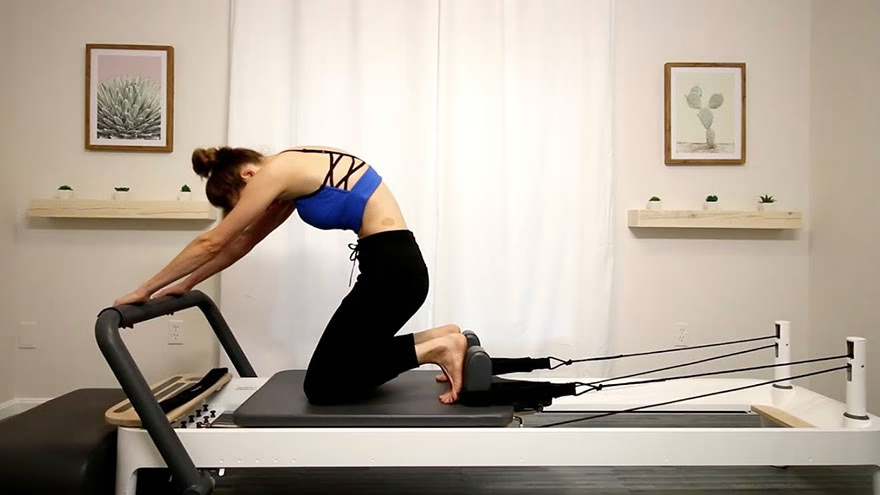
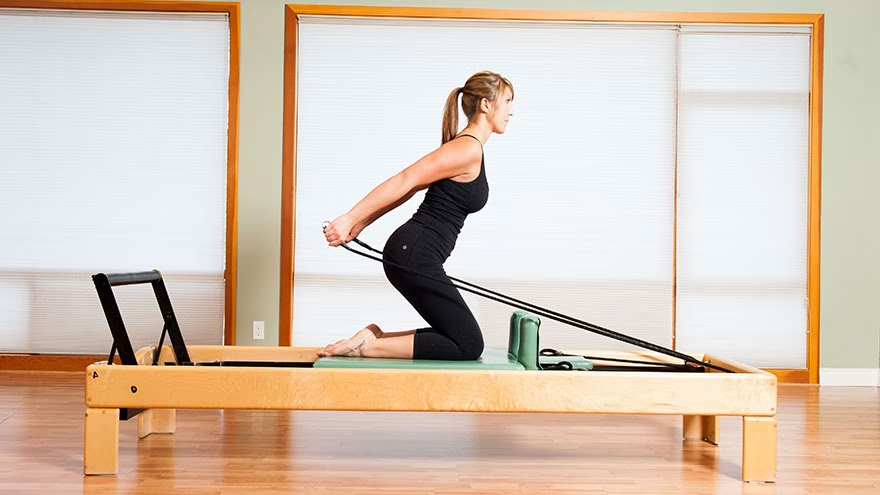
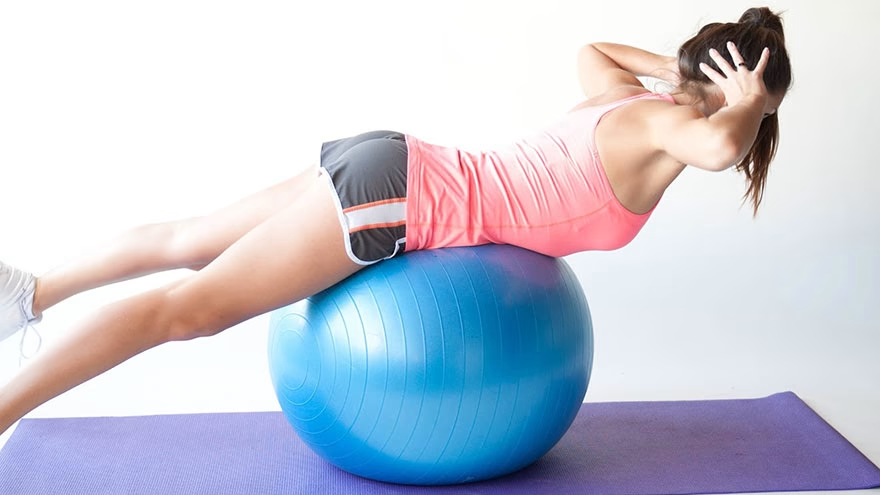
Mat Pilates uses body weight, gravity, and the floor. Apparatus work uses springs, straps, bars, and moving platforms to create support or resistance. A beginner may assume equipment is always harder, but sometimes apparatus helps a person find an exercise more clearly.
If learning from video, mat work is usually more accessible because it needs less equipment. Apparatus work should be approached carefully unless you have training on the equipment or a qualified teacher watching your setup.
Equipment adds feedback, but it also adds consequences.
What to Look for in a Class
Choose a class that matches your level, not your ambition. A good beginner class explains setup, breath, range of motion, and what to do if the neck, back, hips, or shoulders feel strained.
Watch the teacher's pacing. If the class moves faster than you can control, choose a slower one. A workout you cannot organize in your body will not become better because the teacher is famous.
Livecub's Pilates or Tai Chi comparison can help readers think about whether they want controlled strengthening, slower meditative movement, or both.
Video Class Versus Studio Class
Video classes are convenient and useful for repetition, but they cannot see your neck, ribs, pelvis, or breath. A studio teacher can adjust the exercise, change springs, correct setup, and stop a compensation before it becomes a habit.
If you use video, start conservatively. Keep the screen where you can see it without twisting. Pause often. Repeat fundamentals until the cues make sense in your own body.
Choosing an Instructor Beyond the Name
A famous name or polished catalog is not the only quality signal. Look for clear cueing, appropriate level labels, respect for modifications, and explanations that help you understand why an exercise is being done.
If you are attending in person, ask about training background, experience with your needs, and how the instructor handles injuries or limitations. A confident teacher should be able to slow the work down without making a student feel embarrassed.
Safety and Modifications
The CDC's adult physical activity guidance includes muscle-strengthening activity as part of a weekly routine. Pilates can contribute to that for some people, but safe practice still depends on form, load, history, and instruction.
Modify if you feel neck strain, back pain, hip pinching, dizziness, numbness, or breath-holding. Stop if pain is sharp or unusual. If you are pregnant, injured, post-surgical, or managing a medical condition, ask a clinician or qualified instructor before following advanced video work.
Precision beats pushing through.
How to Use an Online Catalog Well
Start with a short beginner class and repeat it. Repetition teaches the method. Jumping between advanced classes can create confusion because Pilates builds skills across exercises.
Keep a notebook of what felt clear, what felt strained, and which cues helped. Revisit the same lesson after a few days. The second or third pass is often where the teaching starts to land.
For a conditioning contrast, Livecub's running bleachers benefits shows the opposite end of training intensity. Pilates asks for smaller, cleaner control.
How Often to Practice
Two or three short sessions a week can teach more than one long session done with fatigue. Consistency matters because Pilates uses coordination and memory as much as strength.
Leave space between difficult sessions if your neck, hips, or back feel overworked. Soreness can happen, but sharp pain is not a badge of progress.
Red Flags in Any Pilates Class
Be cautious if a class pushes pain, discourages questions, gives no options, rushes apparatus setup, or treats every body the same. Pilates is detailed work. The teacher should care whether the detail is possible for you.
Also be careful with advanced inversions, loaded spring work, or fast transitions if you are practicing alone. Save those for a setting where someone can see the full movement and adjust the setup before strain appears in practice or recovery.
That caution keeps the method useful longer for steady home practice over time without avoidable setbacks.
Who May Like Alisa Wyatt's Style
Her style may suit people who enjoy classical order, detailed cueing, mat fundamentals, apparatus history, and a serious approach to movement. It may also appeal to teachers who want to see how experienced classical instructors organize material.
It may not suit someone who wants loud music, constant novelty, sweat-first pacing, or a casual stretch class. That mismatch is not a flaw. It is a matter of training taste.
Practical Setup at Home
Use a firm mat, enough space to move arms and legs, and a camera angle that lets you check alignment if needed. Keep props nearby only if the class asks for them. Do not improvise unstable equipment.
For movement-surface ideas, Livecub's tumbling mat guide is not Pilates-specific, but it reinforces why the surface under the body matters.
When to Choose Another Class
Choose another class if the pace makes you hold your breath, the teacher gives no modifications, or the exercises repeatedly create pain. Also change class if you need prenatal, post-rehab, senior, or sport-specific support that the lesson does not address.
A good Pilates choice fits the person in front of the screen.
Frequently Asked Questions
Is Alisa Wyatt's Pilates beginner-friendly?
Some classes may be, but choose by level. Classical Pilates can be precise, so beginners should start slow and repeat fundamentals.
What is Pilatesology?
Pilatesology is an online platform focused on classical Pilates instruction from experienced teachers.
Do I need a reformer?
No. Mat classes can be useful, but apparatus work needs proper setup and instruction.
Can Pilates replace all strength training?
It depends on your goals and body. Pilates can build control and strength, but some people also need other resistance training or cardio.

Alyssa Curlin
Edits general health, nutrition and education explainers. Medical topics are educational and link to public-health guidance.
Leave a reply
Replying to