
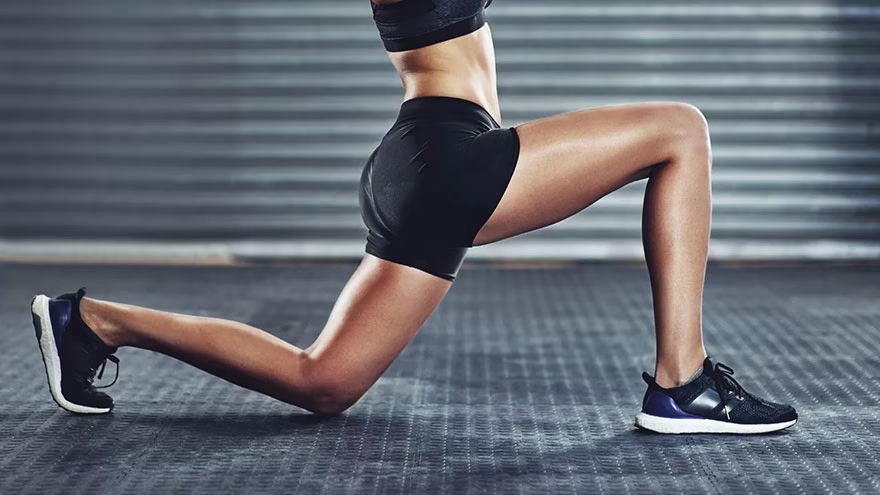
Train the Muscles, Do Not Promise Spot Loss
A fat burning workout for the hamstrings and inner thighs can be useful if it is honest. You can train those muscles, raise heart rate, improve leg strength, and support overall fat loss. You cannot guarantee that the body will remove fat from the exact area being exercised.
That does not make the workout pointless. Strong hamstrings help hip extension, knee control, and posture. Strong inner thighs, also called adductors, help stabilize the pelvis and knees during walking, squats, lunges, and changes of direction.
Target the muscles, but judge fat loss as a whole-body result.
Why Inner Thigh Training Still Matters
SELF's explainer on inner thigh workouts points out that spot training is not the goal, but adductors still support knee, hip, pelvis, and low-back stability. That is a better reason to train them than chasing a quick visual change.
The hamstrings deserve the same respect. They help the hips extend and the knees bend, and they work with glutes during hinges, bridges, step-ups, and running. If they are weak or poorly coordinated, other areas may take over.
For a higher-intensity leg option, Livecub's running bleachers benefits article shows how stair-style work challenges the posterior chain and conditioning.
Warm Up Before Lower-Body Work
Use five to eight minutes to warm up. Start with easy marching, hip circles, bodyweight hinges, shallow side lunges, glute bridges, and ankle movement. The goal is to make the first working set feel ready, not stiff.
Pay attention to knees and hips during the warm-up. If a side lunge pinches, reduce the range. If a hinge pulls sharply behind the knee, slow down and shorten the movement.
The warm-up should improve the first set, not tire you out.
Workout Structure
Use this plan as a circuit. Do one exercise, rest briefly, then move to the next. After all exercises are done, rest one to two minutes and repeat for two to four rounds depending on fitness level.
Beginners can use body weight only. More experienced exercisers can add dumbbells, a resistance band, or a slower tempo. Keep every repetition controlled enough that the knees track well and the low back stays quiet.
The CDC's adult activity guidance supports a mix of aerobic work and muscle-strengthening days. This routine fits best when it is paired with walking, cycling, dance, or other cardio.
Exercise 1: Romanian Deadlift
Stand with feet about hip width. Soften the knees, push the hips back, and let the torso tip forward while the back stays long. Stop when hamstrings feel loaded, then drive the hips forward to stand.
Use body weight first, then dumbbells when the pattern feels clear. Do eight to twelve repetitions. If the low back feels more than the hamstrings, reduce range and practice the hinge near a wall.
The hips move back; the spine does not fold.
Exercise 2: Glute Bridge With Heel Drive
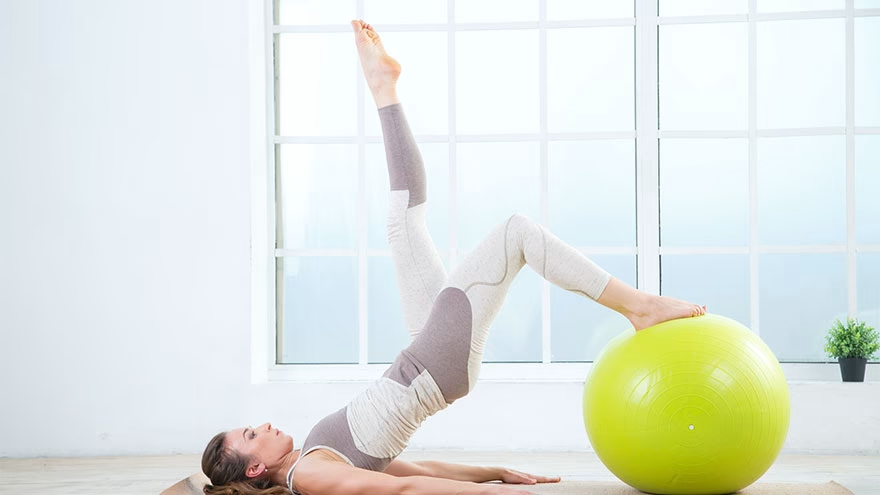
Lie on your back with knees bent and feet on the floor. Press through the heels and lift the hips until the body forms a gentle line from shoulders to knees. Lower slowly and repeat.
To bias the hamstrings, move the feet slightly farther away, but do not let the low back arch. Do ten to fifteen repetitions. If the hamstrings cramp, bring the feet closer and reduce the height.
Exercise 3: Side Lunge
Step one foot to the side, bend that knee, and sit the hips back while the other leg stays longer. Push through the bent leg to return to standing. Alternate sides or finish one side before switching.
This trains the inner thigh on the long-leg side and the glutes on the bent-leg side. Keep the foot grounded and the knee tracking in the same direction as the toes. Use six to ten repetitions per side.
Side work is only useful when the knee and foot agree.
Exercise 4: Sumo Squat Pulse
Stand wider than hip width with toes turned out slightly. Lower into a squat that feels strong and pain free, then pulse through a small range. Keep the chest lifted and the knees following the toes.
Use ten to twenty controlled pulses, not frantic bouncing. The inner thighs should work, but the knees should not collapse inward. Hold a dumbbell only after the bodyweight version feels steady.
Exercise 5: Hamstring Walkout
Start in a bridge. Walk the heels a few small steps away from the body, then walk them back in. Keep the hips as steady as possible and stop before the low back takes over.
This is harder than it looks. Use two to six walkouts per round. If the hamstrings cramp, switch back to standard bridges and build tolerance over time.
Add Cardio Without Losing Form
To raise the conditioning effect, add low-impact cardio between rounds. Use marching, step touches, easy jump rope without a rope, or light cycling. Keep the effort high enough to breathe harder but not so high that the next strength set falls apart.
Livecub's basic aerobic steps article can help beginners add rhythm without jumping. For readers who like martial-arts style cardio, Livecub's Tae Bo weight loss guide gives another way to think about whole-body effort.
How Hard Should It Feel?
Most working sets should feel like a seven out of ten by the final repetitions. You should still control the last rep and leave the floor or mat safely. If form changes halfway through the set, the load, range, or speed is too high.
The American College of Sports Medicine's 2026 note on resistance training highlights regular participation and matching the program to the person. For this workout, that means steady sessions beat random punishment.
Hard work should still look organized.
Weekly Plan for Fat Loss Support
Use this workout two times per week with at least one day between sessions. Add two or three cardio sessions on other days. Keep one day lighter if your legs stay sore or your knees feel irritated.
Fat loss also needs food habits that match the goal. Extreme restriction can make training feel worse and lead to skipped sessions. A steady pattern of protein, plants, water, and sleep is more useful than a short burst of willpower.
How to Scale the Workout
Make the workout easier by reducing range, using fewer rounds, taking longer rests, or removing weights. Make it harder by slowing the lowering phase, adding a set, using a band, or holding dumbbells. Change one thing at a time.
If the hamstrings stay sore for more than two days, reduce walkouts and deadlifts before cutting the whole plan. If the inner thighs feel strained, use shallower side lunges and keep the feet closer together. The right version should feel challenging but repeatable.
Use one clear change per week so you can tell what helped, what irritated the joints, and what made the next session feel better.
Scaling is part of training, not a step backward.
Common Mistakes
The first mistake is rushing the circuit until every exercise looks the same. The second is choosing a range of motion that the hips do not own yet. The third is judging progress only by thigh size after one week.
Track strength, energy, soreness, measurements, and workout consistency. If you can hinge better, squat with cleaner knees, and finish rounds with better breathing, the plan is working even before visual changes catch up.
Safety Notes
Stop for sharp pain, numbness, tingling, dizziness, chest pain, or symptoms that do not settle. Use a stable floor and shoes that do not slide. If you have a recent injury, pregnancy, surgery, or a medical condition, get qualified guidance before pushing harder.
Livecub's tumbling mat guide is not a lower-body workout article, but it is a useful reminder that training surfaces can affect comfort and safety.
Frequently Asked Questions
Can this workout burn inner thigh fat?
It can support total-body fat loss, but it cannot force fat loss only from the inner thighs.
How often should I train hamstrings and inner thighs?
Two focused sessions per week is a reasonable start for many people, especially with recovery days between them.
Do I need weights?
No. Start with body weight. Add dumbbells or bands only when the movements stay controlled.
Why do my hamstrings cramp during bridges?
The feet may be too far away, the range may be too high, or the muscles may be tiring. Bring the feet closer and reduce the lift.

Chiara Bradshaw
Covers education, culture and creative topics with an emphasis on readable explanations and verifiable references.
Leave a reply
Replying to