
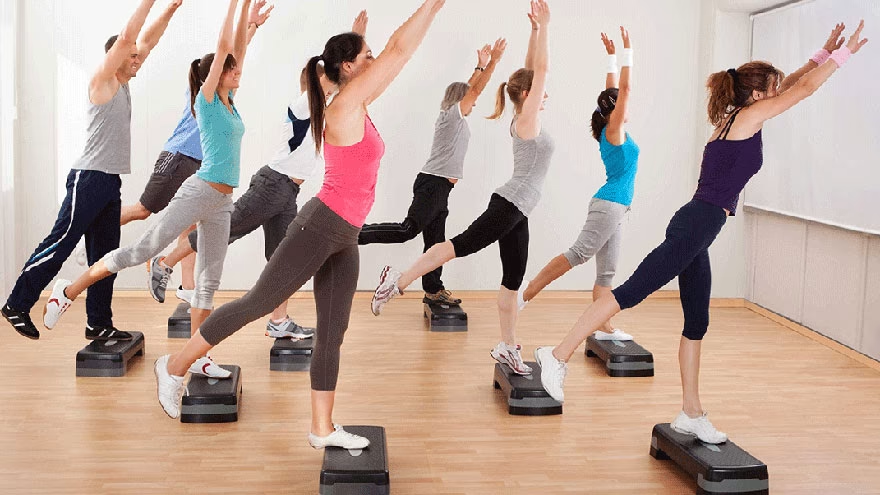
Basic aerobic steps are the building blocks of dance fitness, step classes, low-impact cardio, and at-home movement. Once you understand marching, step touch, grapevine, V-step, knee lifts, hamstring curls, and simple turns, a class stops looking like a mystery. The goal is not fancy choreography first. The goal is rhythm, safe movement, and steady breathing.
This guide is general fitness information, not medical advice. If you have chest pain, dizziness, fainting, uncontrolled blood pressure, heart disease, pregnancy restrictions, joint injury, or a chronic condition, ask a clinician before starting or changing exercise. Stop if you feel severe pain, pressure in the chest, unusual shortness of breath, or faintness.
What Counts As An Aerobic Step?
Aerobic steps are repeated movements that raise heart rate and use large muscle groups. They can be low impact, where one foot stays close to the floor, or higher impact, where hops and jumps appear. Beginners should learn low-impact versions before adding speed or bounce.
The Mayo Clinic explains that aerobic exercise raises heart rate and can help heart health, weight management, mood, and overall fitness. Basic steps make that kind of training easier to follow because you are not guessing where your feet go.
How Do You Start Safely?
Clear the floor, wear supportive shoes, keep water nearby, and start with music slow enough to control. March in place for a minute before learning any pattern. Keep knees soft, ribs stacked over hips, and steps small until you understand the move.
Use the talk test. At moderate effort, you can talk but not sing. If you cannot speak a short sentence, slow down. The CDC recommends 150 minutes of moderate-intensity aerobic activity each week for adults, plus muscle-strengthening work on two days. Short beginner sessions can count toward that total.
What Is A March?
The march is the reset button. Step right, step left, keep the torso tall, swing arms naturally, and keep your steps under control. A march can be slow for warm-up, bigger for cardio, or used between harder moves to recover without stopping.
Good instructors return to a march when a group gets lost. If you miss a move, do not freeze. March, breathe, find the beat, and join again. Livecub's guide to teaching an aerobics class is useful if you want to understand why simple reset moves help a room stay together.
How Do You Do A Step Touch?
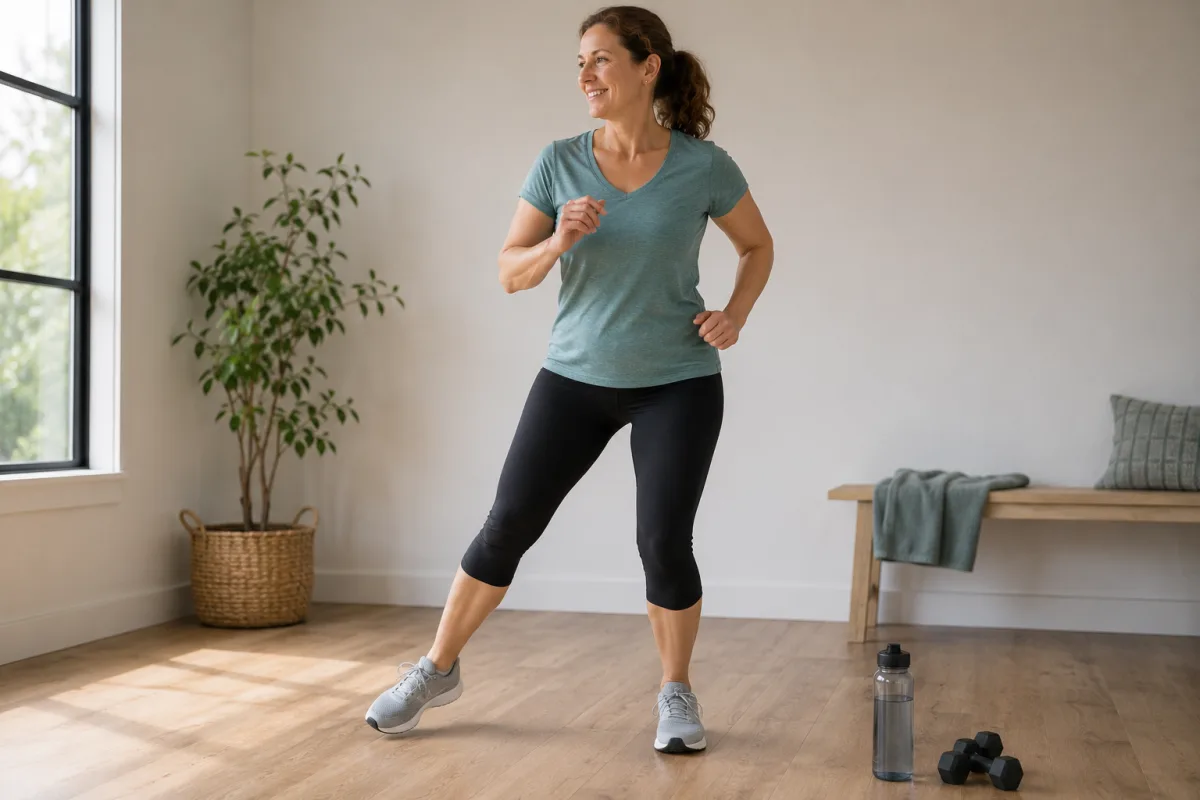
Step to the right, bring the left foot in to tap, then step left and tap the right foot in. Keep the tap light. Add arm swings, shoulder height reaches, or a gentle squat only after the footwork feels easy. This is one of the most useful low-impact moves because it travels side to side without needing much space.
To make it easier, keep the feet close and arms low. To make it harder, widen the step, bend the knees more, or add stronger arms. Step touch also pairs well with chair-based or lower-impact movement. Livecub's chair dancing guide can help if standing cardio is not the right choice today.
What Is A Grapevine?
A grapevine travels sideways in four counts: step right, cross left behind, step right, tap left. Then reverse: step left, cross right behind, step left, tap right. Keep the crossing step small at first so the feet do not tangle.
If crossing behind bothers your knees, hips, or balance, use two step touches instead. A grapevine should feel smooth, not risky. Add a knee lift, hamstring curl, or clap on the fourth count only after the base step is steady.
How Do You Do A V-Step?
A V-step moves forward wide and back narrow. Step the right foot forward and out, step the left foot forward and out, step the right foot back to center, then step the left foot back to center. The feet draw a letter V on the floor.
Start small. Beginners often make the V too wide and lose balance. Keep the knees aligned with the toes and avoid twisting. Once comfortable, switch the lead foot so the left side gets practice too. Balanced practice keeps choreography from feeling one-sided.
What Are Knee Lifts And Hamstring Curls?
For a knee lift, step on one foot and lift the opposite knee toward hip height or lower. Keep the standing knee soft and the torso tall. For a hamstring curl, step on one foot and bend the other knee so the heel moves toward the back of the thigh. Do not kick hard or arch the back.
These moves raise intensity without much travel. They are useful in small rooms. Add arms carefully: pull elbows down with knee lifts, or sweep arms back with curls. If the arms disturb balance, keep hands at the waist until the legs are steady.
How Do You Combine Steps?
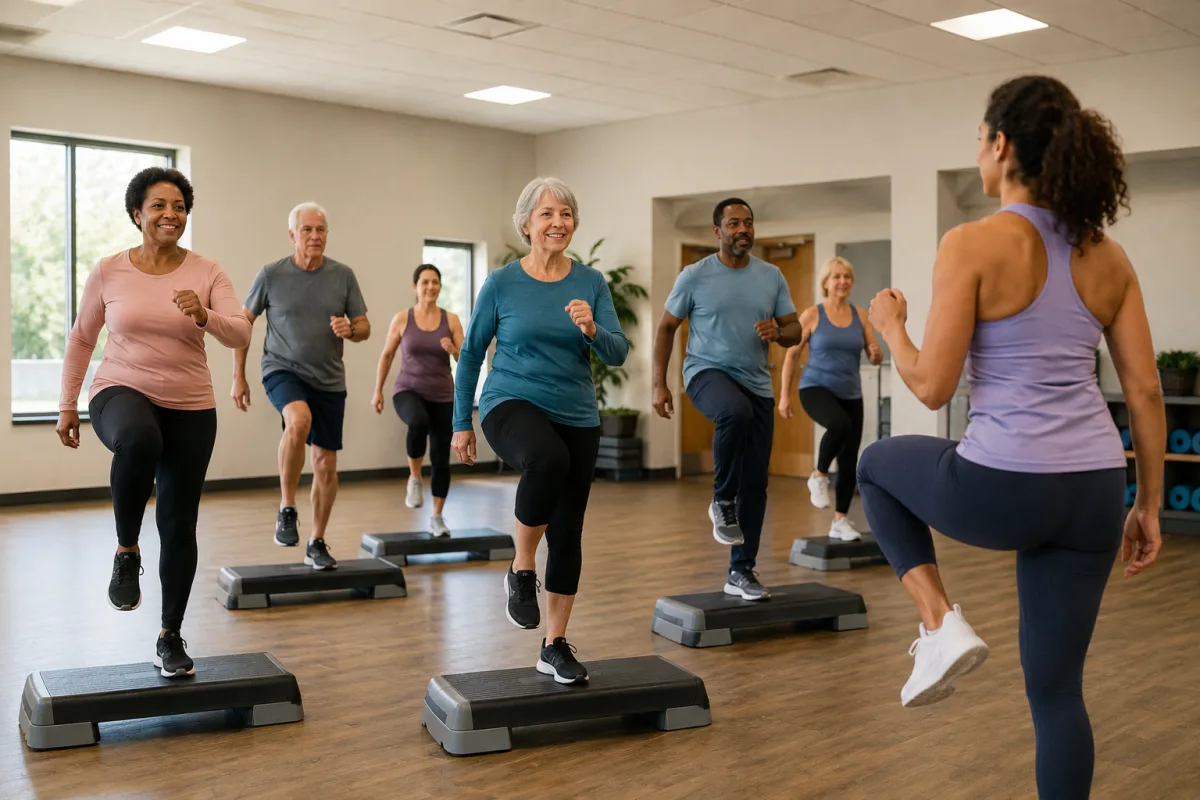
Use simple blocks. Try eight marches, four step touches, two grapevines, four knee lifts, then return to marching. Count out loud if needed. Most beginner routines use counts of four or eight because music phrases often feel natural that way.
For more cardio flavor, you can add gentle boxing arms or martial-arts-inspired movement. Livecub's Tae Bo weight-loss guide covers a more intense style, but basic aerobic footwork should come first. Control beats speed.
How Should You Warm Up And Cool Down?
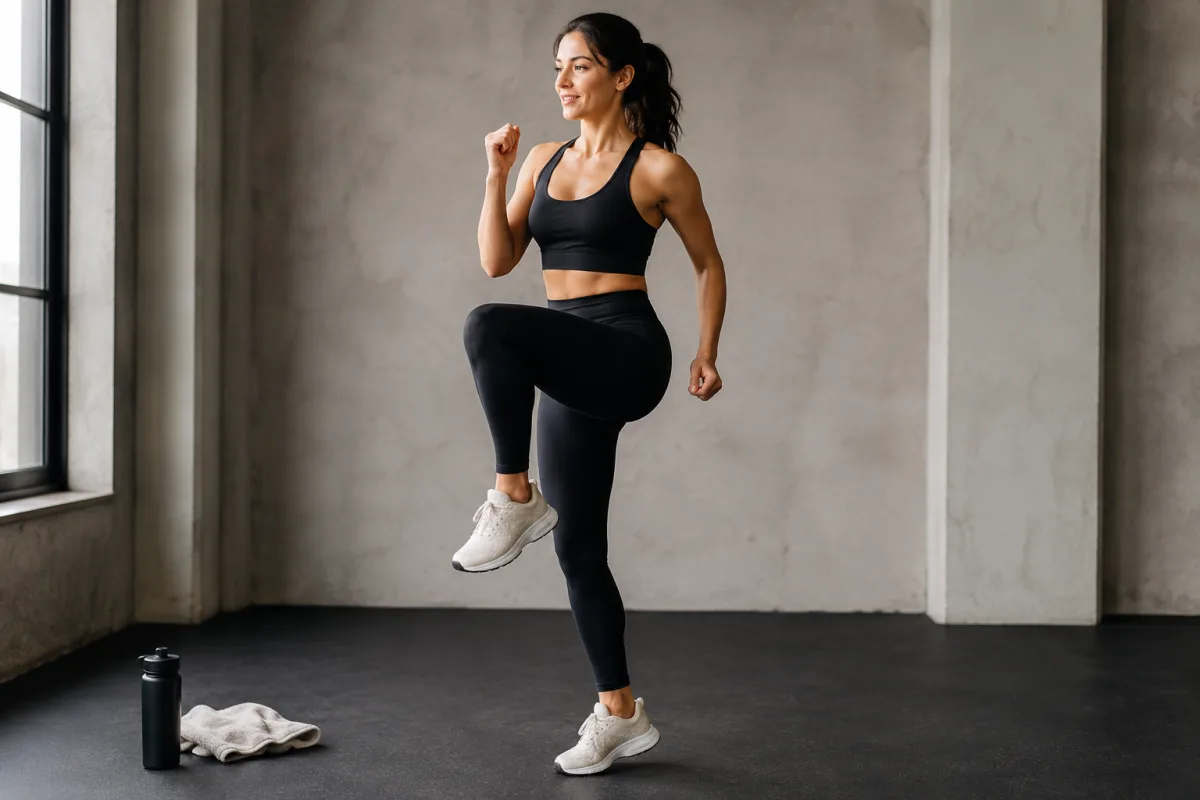
The American Heart Association recommends warming up for 5 to 10 minutes and doing the same activity at a slower pace before harder effort. For aerobics, that can mean marching, small step touches, shoulder rolls, and gentle side steps.
Cool down by reducing the size and speed of the movements. Let breathing settle. Then stretch major muscle groups while warm. Do not drop to the floor suddenly after intense movement if you feel lightheaded; keep walking slowly until you feel steady.
What Mistakes Should Beginners Avoid?
Do not chase speed before form. Do not copy high-impact versions if your joints are not ready. Do not turn every move into a squat. Do not exercise on a slippery rug. Do not ignore pain that changes your gait. A basic class should leave you tired in a good way, not limping.
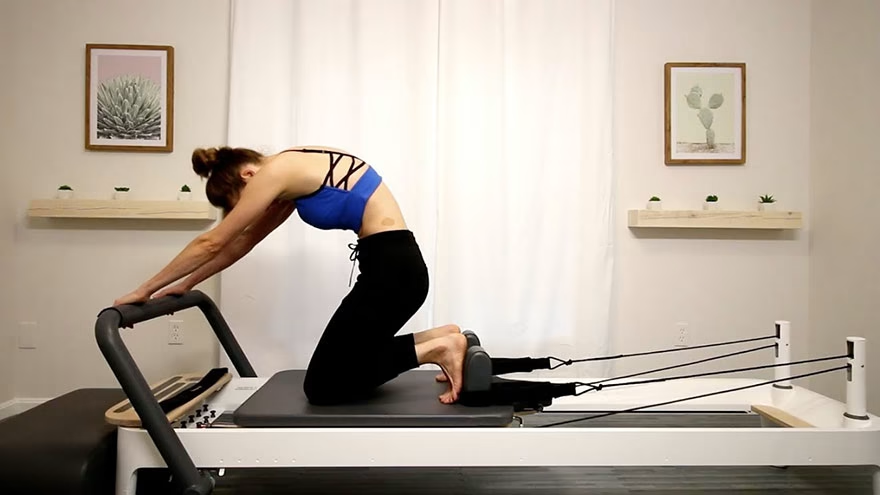
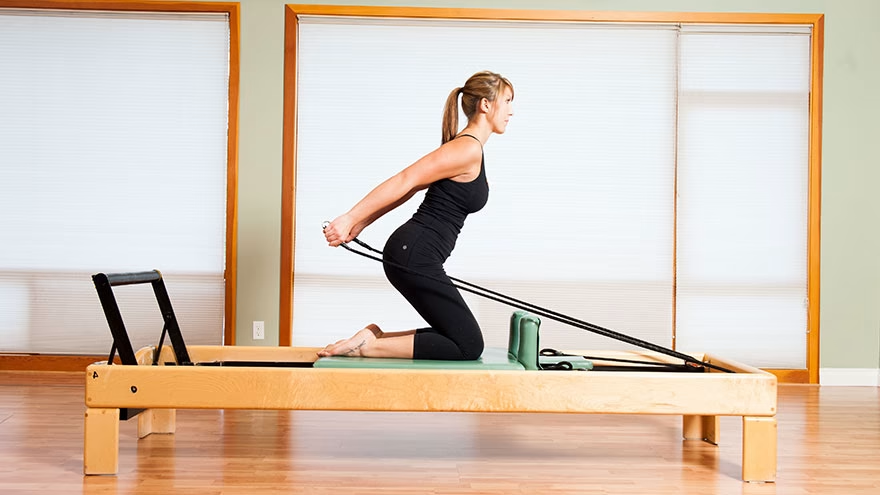
If step equipment is involved, learn flat-floor footwork first. Step platforms add height, balance demands, and timing. Livecub's Pilates reformer jump board guide shows how equipment changes impact and control; the same principle applies to step aerobics.
What If You Have Limited Space?
Keep everything smaller. March in place, step touch without traveling far, use knee lifts instead of grapevines, and turn V-steps into small forward-back patterns. You do not need a studio floor to practice rhythm. You need a clear patch without rugs, cords, toys, or furniture corners that catch your feet.
Limited space also makes direction changes riskier. Skip fast turns until you have more room. A compact routine can still raise heart rate if the arms and legs move steadily.
How Can Kids Or Beginners Build Endurance?
Use short blocks and repeat them. Five to ten minutes of basic steps can be enough at first. Add time slowly, not all in one day. For younger movers, keep the focus on play, rhythm, and confidence rather than calorie talk.
Livecub's endurance exercises for kids article can help families think about age-appropriate stamina. Adults can use the same idea: start where the body is, then build a routine that feels repeatable.
Frequently Asked Questions
What is the easiest aerobic step?
Marching and step touch are usually the easiest because they keep timing simple and can stay low impact.
Can I do aerobics without jumping?
Yes. Step touch, march, grapevine, knee lifts, curls, and V-steps all have low-impact versions.
How long should a beginner session be?
Start with 5 to 15 minutes if you are new, then add time as breathing, joints, and confidence allow.
Do I need music?
No, but music helps many people keep rhythm. Choose slower tracks until the steps feel natural.
What should I do if I get lost?
March in place, breathe, find the beat, and rejoin at the next simple move.
What Is The Best Way To Practice?
Practice one step at a time, then combine them in short blocks. Keep the effort moderate, warm up, cool down, and treat missed steps as normal. Basic aerobic steps work because they are repeatable. The more familiar the footwork becomes, the easier it is to focus on breathing, posture, and enjoyment.

Olivia Prete
Edits culture and personal-development articles, distinguishing opinion and experience from verifiable claims.
Leave a reply
Replying to