
Billy Blanks and the Origin of Tae Bo
William Wayne Blanks was born on September 1, 1955, in Erie, Pennsylvania — the fourth of fifteen children growing up in a poor neighborhood on the city's east side. As a child, he had an anomaly in his hip joints that impaired his movement, earning taunts from his siblings and prompting his instructors to write him off. The boy, they said, would never accomplish much athletically. He would prove them spectacularly wrong.
Blanks discovered karate at eleven, watching Bruce Lee on television and deciding, with the kind of clarity only a child can muster, that he was going to become a world martial arts champion. He did exactly that. Today he holds a 7th-dan black belt in taekwondo, a 5th-dan black belt in karate, and a black sash in Hung Ga kung fu — accumulating national and international titles through the 1970s and 1980s on the U.S. Karate team, including a bronze medal at the 1981 World Games.
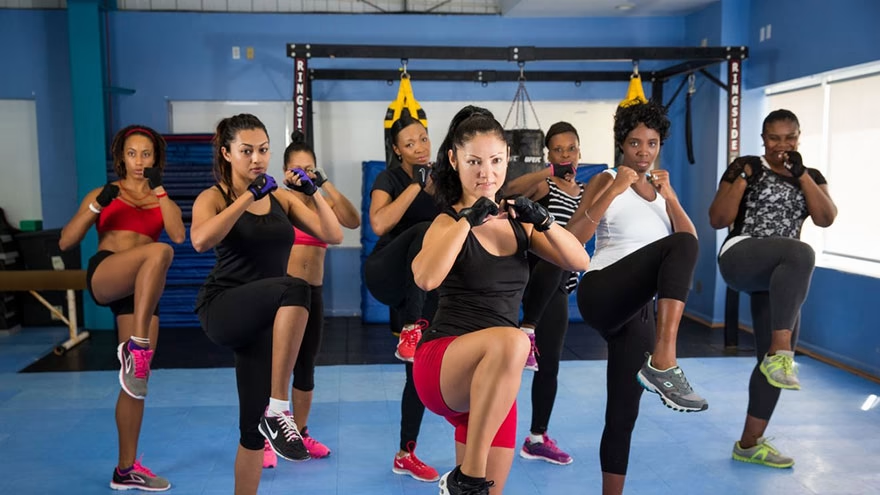
The workout he eventually created, Tae Bo, takes its name from the two disciplines that anchor it: tae from taekwondo and bo from boxing. Blanks developed it in the late 1980s while running a karate studio in Quincy, Massachusetts, combining his martial arts footwork and kicking patterns with boxing combinations and aerobic pacing. He later opened a fitness center in Los Angeles, attracting celebrity clients including Paula Abdul, and the program's reputation spread by word of mouth before Blanks began releasing mass-marketed videos. The results were staggering: he sold over 1.5 million VHS tapes in his first year alone, generating between $80 million and $130 million in sales, with the tapes reportedly outselling every major home video release of 1999 — including The Matrix. A boy told he'd never walk normally had built the most popular fitness program on the planet. You can read more about his competitive career and Tae Bo origins at the Billy Blanks Wikipedia biography.
Why Tae Bo Works for Weight Loss — the Physiology

Tae Bo weight loss isn't a mystery once you understand what the body is doing during a session. A typical class runs 45 to 60 minutes of near-continuous movement — punches, kicks, lateral shuffles, jabs, and roundhouses — and that movement simultaneously recruits large muscle groups across the entire body. That's the key distinction from most single-pattern aerobic exercise.
The kicks drive through the quadriceps, hamstrings, glutes, and hip flexors. The punching combinations load the shoulders, triceps, and biceps. And because every kick and punch originates from a rotational base, the core — abdominals, obliques, and lower back — fires constantly to maintain balance and transfer force. When you are asking your legs, upper body, and core to work in overlapping bursts rather than taking turns, your cardiovascular system has to supply oxygen to a much larger total muscle mass. Heart rate climbs faster. It stays higher. And calorie burn accelerates accordingly.
Compare that to a 60-minute walk, where the calorie demand is primarily lower-limb and relatively low in intensity, or to a stationary bike, where the upper body idles. Tae Bo's multi-muscle recruitment is why people who switch from walking to a Tae Bo class often report surprising fatigue in the first two weeks — the body simply isn't used to that distribution of effort.
If you enjoy comparing workout styles, the Pilates vs. Tai Chi breakdown on this site offers a useful look at lower-intensity alternatives that complement high-impact aerobic work like Tae Bo.
How Many Calories Does Tae Bo Burn?
According to Harvard Health, martial arts and kickboxing-style activities burn approximately 300 calories per 30 minutes for a 155-pound person — translating to roughly 600 calories per hour at sustained intensity. At lighter effort, the number drops toward 350 to 400 per hour; at peak intensity during fast combination sequences, it can push past 650. Body weight matters significantly here: a 185-pound person doing the same session burns approximately 360 calories per 30 minutes, or 720 per hour, because more mass requires more energy to move.
For a 155-pound person doing five one-hour sessions per week at moderate-to-high intensity, that's approximately 3,000 calories burned per week from Tae Bo alone. The weight loss math then becomes straightforward: it takes a deficit of approximately 3,500 calories to lose one pound of body fat. Five Tae Bo sessions at 600 calories each generate 3,000 calories of deficit from exercise — combine that with even a modest reduction in food intake, and losing close to a pound per week becomes realistic. Most consistent practitioners report 3 to 5 pounds per month, which aligns with a sustainable deficit rather than crash weight loss.
There's also an afterburn to factor in. Because Tae Bo involves intervals of intense punching and kicking combinations followed by lower-intensity recovery movement — a structure that closely mirrors high-intensity interval training — it generates excess post-exercise oxygen consumption (EPOC). The body continues burning additional calories for up to 24 to 48 hours after the session as it repairs muscle tissue and restores oxygen levels. Research suggests this afterburn adds roughly 6 to 15 percent on top of in-session calorie expenditure. For a 600-calorie session, that's an extra 36 to 90 calories per workout — not enormous on its own, but it compounds meaningfully across weeks of consistent training.
Getting Started — the Beginner Progression

The most common mistake new Tae Bo participants make is starting with an advanced tape and then quitting after two sessions because the coordination requirements feel impossible. Tae Bo is a skills-based workout. The movements — front kicks, side kicks, roundhouses, jabs, crosses, and hooks — need to be learned before you add speed and combination complexity.
Beginners should start with a 15- to 20-minute introductory session, focusing on learning one movement at a time. Front kick before side kick. Single jab before jab-cross combinations. The footwork patterns that shift weight for a roundhouse kick are genuinely different from what most people use in daily life, and the brain-to-body coordination takes two to three weeks to establish. That's not a flaw — it's one of Tae Bo's underrated advantages: it requires enough mental engagement to make the time pass quickly.
Shin splints and general lower-leg soreness are common in the first two to three weeks of regular impact work. They are usually a sign that calf muscles and shin flexors are adapting to the new load, not that something is wrong. Managing this means starting with shorter sessions, building gradually — adding no more than 10 percent additional duration per week — and giving yourself two days of recovery between sessions initially.
Footwear matters more than most beginners expect. Running shoes are engineered for forward motion and have very little lateral stability; during the direction changes, pivots, and shuffle steps of Tae Bo, they can roll underfoot and increase ankle injury risk. Cross-training shoes with a wider, flatter sole and lateral support are the right choice — they're built precisely for multi-directional movement. This single equipment decision prevents a large proportion of early Tae Bo injuries.
The progression looks roughly like this: weeks one and two at 15 to 20 minutes, three to four times per week, learning basic movements; weeks three and four extending to 30 minutes as coordination improves; and by week six to eight, most beginners can handle a full 45 to 60-minute intermediate session without stopping. For a sense of how other instructors structure aerobic classes from the ground up, the guide to teaching aerobics classes walks through beginner-friendly pacing principles that apply equally to home Tae Bo practice.
Structuring Your Tae Bo Routine for Weight Loss
Frequency and consistency beat intensity every time for weight loss. Three to four sessions per week — each 45 to 60 minutes — produces better long-term results than two exhausting sessions that leave you too sore to move for five days. The goal is to make Tae Bo a weekly habit, not a heroic sprint.
Every session needs a warm-up and a cool-down. This isn't filler. A five-minute warm-up of marching, shoulder rolls, and light arm circles raises muscle temperature and prepares the hip joints — particularly important given the kick-heavy nature of Tae Bo — for the range of motion the workout demands. Skipping it and launching directly into high kicks is how hip flexors get strained. The cool-down, equally five minutes of slow movement and static stretching, helps clear metabolic byproducts from the muscles and accelerates recovery between sessions.
A realistic monthly schedule for a beginner might look like Monday, Wednesday, and Friday sessions of 30 minutes in the first month, progressing to 45-minute sessions four times per week by month two. By month three, adding a fifth session or extending to 60 minutes on two of the days is appropriate. The basic aerobic steps guide explains the foundational footwork patterns that underpin Tae Bo — understanding them helps you move more efficiently and burn more calories per session without working harder.
Rest days are not wasted days. Muscle repair happens during recovery, not during the workout itself. Two consecutive days off per week allows the body to adapt, which is what produces long-term fitness gains and sustained weight loss rather than plateau.
Combining Tae Bo with Diet for Real Results
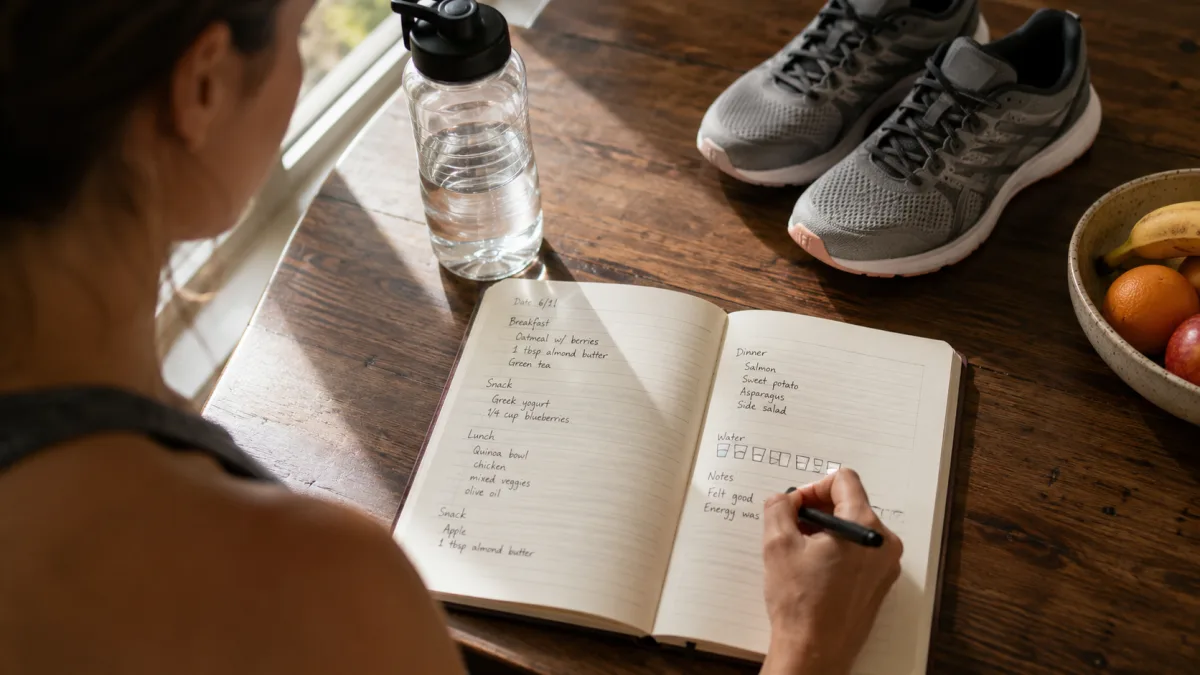
Exercise alone rarely drives significant weight loss, and Tae Bo is no exception to this rule. The arithmetic is unforgiving: a single slice of thick-crust pizza represents approximately 300 calories — half an hour of hard Tae Bo work. It takes very little time to eat back the calories that took an hour to burn.
The combination that produces consistent Tae Bo weight loss is a moderate caloric deficit through diet — typically 300 to 500 fewer calories per day than maintenance — stacked on top of the calories burned through exercise. Together, these create the 500 to 1,000 calorie daily deficit that corresponds to approximately one to two pounds of weight loss per week, which is both sustainable and evidence-supported.
In practice, the most effective dietary adjustment for Tae Bo practitioners is raising protein intake. High-intensity aerobic work causes minor muscle damage that requires amino acids to repair. Protein also generates satiety — you feel full longer after a protein-adequate meal than after an equivalent calorie count from carbohydrates. Aim for 0.7 to 1 gram of protein per pound of body weight on training days. Adequate hydration is equally important: Tae Bo generates significant sweat, and even mild dehydration impairs performance, increases perceived effort, and blunts fat oxidation.
For people looking for lower-impact ways to stay active on rest days, chair dancing is an excellent active recovery option — it keeps the body moving without the impact load of a full Tae Bo session.
Heart Rate, HIIT Elements, and Workout Intensity
Understanding where your heart rate sits during Tae Bo explains a lot about why it works. Maximum heart rate is estimated by subtracting your age from 220 — so a 35-year-old has an estimated max of 185 beats per minute. The aerobic fat-burning zone sits at 60 to 80 percent of that max; the anaerobic threshold begins around 80 to 85 percent.
A sustained Tae Bo session keeps most participants in the 65 to 80 percent zone during combination sequences and in the 60 to 65 percent zone during the lower-intensity recovery transitions between combinations. This oscillation between slightly higher and slightly lower effort is functionally identical to interval training — and that structure is what triggers EPOC, the afterburn effect described earlier.
For fat loss, both the sustained aerobic zone (60 to 70 percent of max HR) and the higher-intensity peaks (75 to 85 percent) contribute, but through different metabolic pathways. Lower-intensity sustained work draws more directly from fat stores as a fuel source. Higher-intensity intervals draw more from glycogen stores during the effort but produce greater EPOC and total calorie expenditure over the 24-hour period following the session. Tae Bo's natural structure — driven by combination sequences and recovery steps — provides both without requiring the participant to consciously monitor which zone they're in.
Heart rate monitoring, even with a basic chest strap, adds useful data. If you find you're not reaching 65 percent of your max HR during active segments, increase kick height and punch speed. If you're consistently hitting 85 percent or above and struggling to recover between combinations, reduce the kick height and slow the arms rather than stopping entirely. The goal is to stay in continuous motion throughout the session. The Polar T31 HRM maintenance guide is useful if you're using a chest strap monitor and need to keep it running reliably.
The benefits of sustained cardiovascular work extend well beyond Tae Bo. Running bleachers offers a complementary challenge for days when you want to vary your aerobic training and add an outdoor component.
Staying Safe — Joints, Footwear, and Modifications
Tae Bo involves more lower-body impact than low-intensity aerobics or cycling, and that deserves honest acknowledgment rather than minimization. The kicks — particularly side kicks and roundhouses at full height — place significant rotational load on the knee joint and compression on the hip. For most healthy adults this is fine, even beneficial for building joint resilience over time. For those with existing knee, hip, or ankle issues, modifications remove the risk without eliminating the calorie burn.
The most effective modification is reducing kick height to approximately 50 percent of maximum range. A hip-height side kick produces most of the same glute and quadriceps engagement as a shoulder-height kick, with a fraction of the joint stress. You're still recruiting the large lower-body muscle groups; you're just reducing the lever arm at the end of the range of motion where joints are most vulnerable. Floor-based punching sequences — jabs, crosses, and uppercuts with the feet planted — provide substantial upper body and core work with no lower body joint impact at all.
Wrist alignment during punching matters more than new Tae Bo participants expect. A bent wrist at the moment of punch extension places stress on the wrist joint and reduces punching efficiency. Keep the wrist straight and the fist firm, with knuckles aligned through the forearm, through every punch. This becomes natural with a few sessions of focused attention.
If you're building an overall fitness setup for a Tae Bo practice space, flooring choice affects impact absorption significantly. A sprung wood floor or rubber exercise mat reduces the ground reaction forces from kicks and landing patterns more than concrete or tile. This matters most for participants doing Tae Bo four or five times per week.
Frequently Asked Questions
How long does it take to see weight loss results from Tae Bo?
Most consistent practitioners notice body composition changes — clothes fitting differently, improved muscle tone — within three to four weeks of three to four sessions per week. Scale weight loss at a sustainable rate of one to two pounds per week typically shows clearly by weeks four to six, assuming diet is also adjusted. Results come faster when the workout is paired with a food diary or calorie tracking app from day one.
Can beginners do Tae Bo, or is it only for people who are already fit?
Beginners can absolutely start Tae Bo, with two caveats. First, choose a beginner or introductory video rather than jumping to an advanced 60-minute session. Second, expect the first two weeks to feel awkward — the coordination of simultaneous punching and kicking patterns is genuinely new for most people, and that's normal. Fitness level matters less than coordination patience in the early weeks.
How does Tae Bo compare to other aerobic workouts for calorie burn?
Tae Bo burns more calories than low-impact aerobics, brisk walking, or casual cycling at the same duration, largely because of the multi-muscle simultaneous engagement described above. Harvard Health data shows martial arts and kickboxing activities burn approximately 600 calories per hour for a 155-pound person — similar to vigorous swimming or running at a moderate pace. The difference is that Tae Bo also builds punching and kicking coordination, which pure running doesn't.
How many times per week should I do Tae Bo to lose weight?
Three to four sessions per week is the practical target for weight loss. This provides enough calorie burn across the week to create a meaningful deficit while allowing recovery days to prevent overuse injuries. Adding a fifth session after the first month, once the body has adapted to the impact load, is reasonable. Going from zero to five times per week immediately is the most reliable way to develop shin splints and burn out.
Do I need any special equipment to start Tae Bo at home?
Cross-training shoes are the one non-negotiable. Workout clothes that allow full leg movement for kicks, and a cleared space of at least six by six feet, complete the basic setup. Heart rate monitoring is useful but optional — a basic chest strap or wrist monitor helps you confirm you're in the aerobic training zone. Hand wraps or light gloves protect the wrists during heavy punching sessions once you're past the beginner stage, but aren't needed initially.

Olivia Prete
Edits culture and personal-development articles, distinguishing opinion and experience from verifiable claims.

Leave a reply
Replying to