
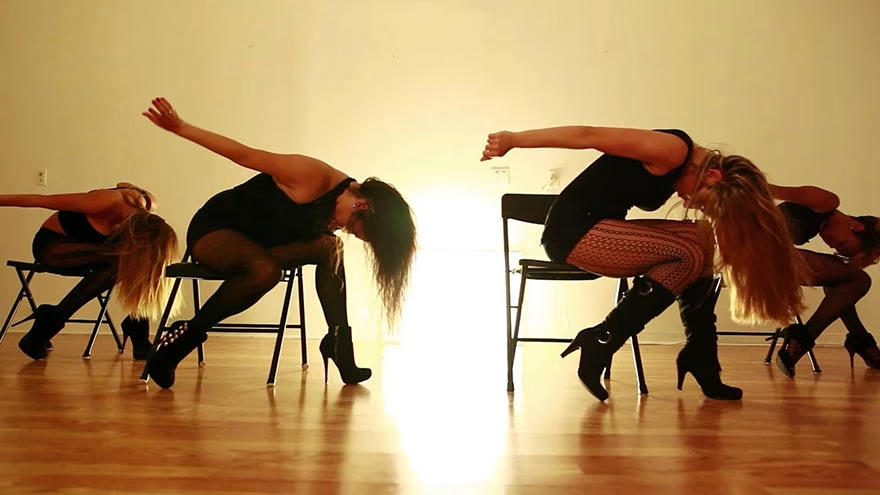
Chair dancing is seated movement set to music. It can be playful, sweaty, gentle, or expressive depending on the routine. The chair gives support, but it does not make the workout pointless. Your arms, torso, hips, feet, breathing, coordination, and posture all work when the movement is planned well. The trick is to treat it as exercise, not as random wiggling while sitting down.
Use a sturdy chair with no wheels, no soft sinking cushion, and enough room around you to move your arms. Put both feet flat on the floor before the music starts. Sit tall without locking the spine. If you are new to exercise, recovering from injury, pregnant, dizzy, dealing with chest pain, or managing a medical condition, ask a qualified health professional what level of movement is appropriate for you.
Set up the chair and the room first
The chair should stay still. A dining chair or firm armless chair usually works better than an office chair. If the floor is slick, move to a mat or place the chair where it will not slide. Keep shoes on if they help your feet grip, and clear bags, rugs, pets, and cords from the movement space.
Seat height matters. Your knees should bend near 90 degrees with feet resting on the floor. If the chair is too high, your feet dangle and hip marching becomes awkward. If it is too low, your knees crowd your chest and the lower back may round. Sit near the front half of the seat for active dancing, then scoot back during rest if you need support.
The NHS sitting exercises page uses a stable chair and upright posture for movements such as chest stretches, upper-body twists, hip marching, ankle stretches, and neck rotation. Those basics translate well to chair dancing because every dance phrase starts from posture and control.
Warm up before the music gets fast
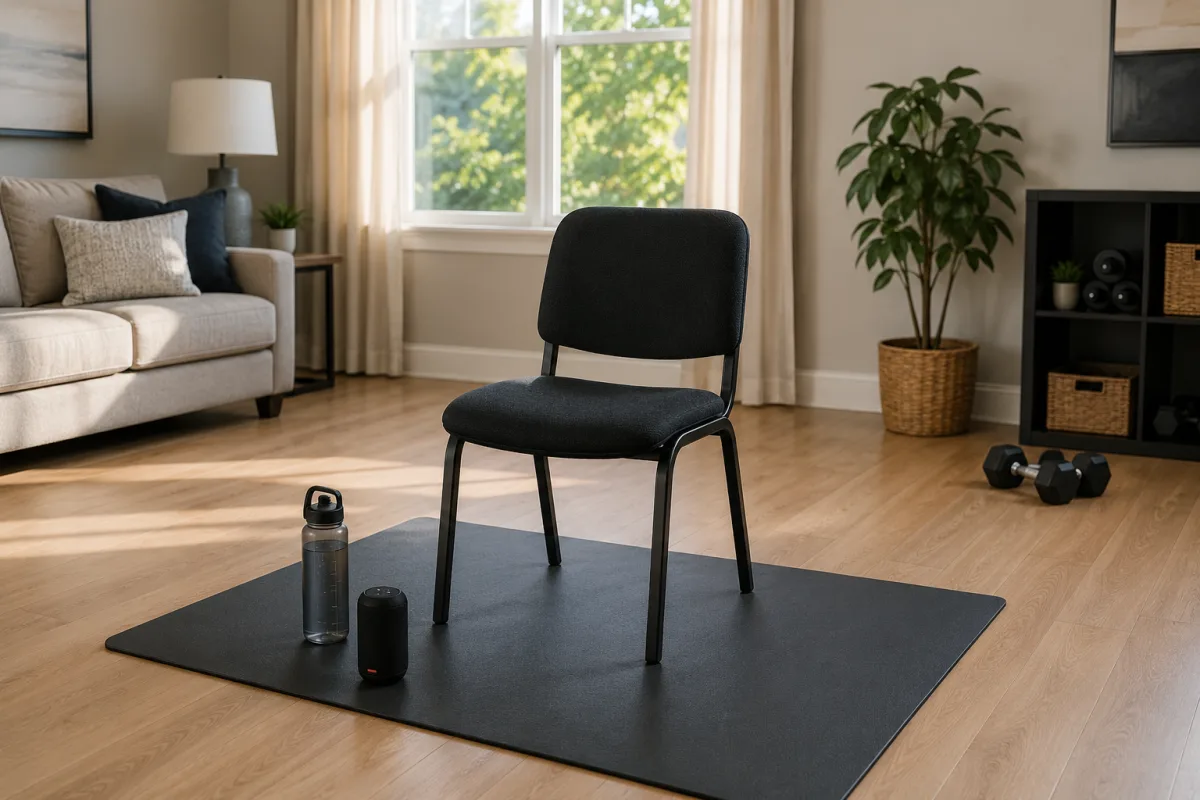
Start with two to five minutes of easy movement. Roll the shoulders, tap one toe at a time, lift and lower the heels, circle the wrists, and breathe steadily. Add small side reaches and gentle torso turns. The warmup should feel like waking up the joints, not proving anything.
Once the body feels ready, use a slow song. March in place while seated: right foot, left foot, right foot, left foot. Add arm swings if the shoulders feel good. Then try heel taps forward, toe taps to the side, and gentle knee lifts. Keep the movements small enough that you can stay tall in the chair.
If you already know basic aerobic steps, chair dancing uses many of the same ideas in seated form. A march becomes seated marching. A step-touch becomes side toe taps. A grapevine becomes a side tap pattern with arms crossing and opening. You keep the rhythm while lowering the impact.
Use the talk test. During moderate movement, you should be able to talk in short sentences. If you cannot speak, the song is too fast or the movements are too big for that day. If you feel sharp pain, chest pressure, faintness, or unusual shortness of breath, stop.
Build a simple seated dance phrase
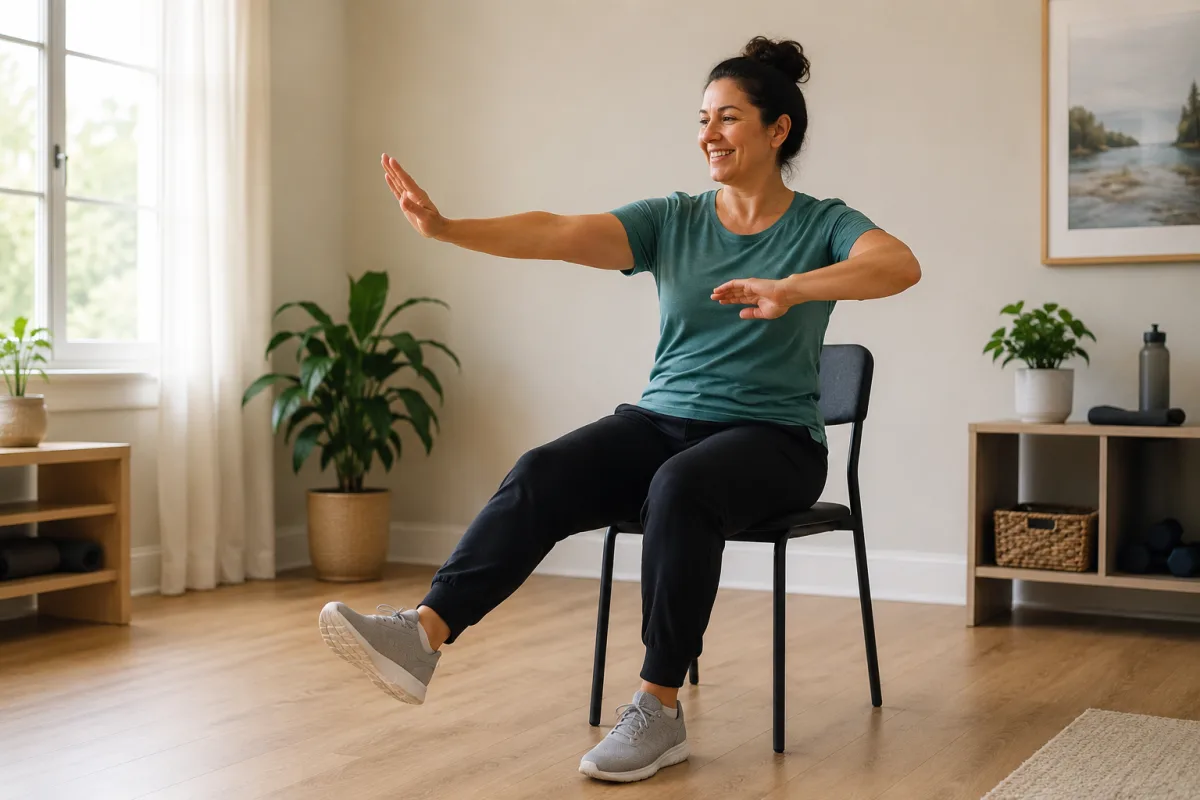
A good beginner phrase has four parts. Start with eight counts of seated marching. Add eight counts of alternating side taps. Add eight counts of reach-and-pull arms, as if pulling a rope toward the chest. Finish with eight counts of heel taps forward. Repeat the phrase through one song.
Keep the upper body active. Reach across the body, press the palms forward, make small circles, open and close the arms, or clap on the beat. If shoulder mobility is limited, keep the hands lower. If the shoulders feel strong, reach higher but avoid shrugging the neck toward the ears.
Use the torso carefully. A seated twist can make the dance feel bigger, but the hips should stay stable. Turn through the ribs and upper back rather than yanking the lower spine. Keep the knees pointing forward unless the movement intentionally opens one hip to the side.
Chair dancing can borrow from Pilates, tai chi, aerobics, and simple social dance. If controlled core work appeals to you, compare the movement quality with Pilates reformer jump board work: the goal is rhythm and alignment, not bouncing without control.
Use music tempo to control intensity
Music decides more than mood. A song that is too fast can make seated movement jerky. Start around a comfortable walking tempo, then increase speed only when you can keep posture and breathing. A playlist can move from warmup, to steady work, to a slightly faster song, then back down for cooldown.
The CDC adult activity guidance recommends regular aerobic and muscle-strengthening activity for adults, and the older-adult guidance adds balance work. Chair dancing can contribute to movement time, but it should be matched to ability. It is one part of a week, not the whole plan for everyone.
Change one variable at a time. If you increase the tempo, keep the arm pattern simple. If you add bigger arms, keep the footwork steady. If you add light hand weights, slow the song down and protect the shoulders. Many beginners make the workout harder in three ways at once and then wonder why it feels chaotic.
For a group class, choose music with a clear beat and clean edits. If you teach, demonstrate the next move before the change. That cueing habit is the same skill needed in teaching an aerobics class: people move better when they are not surprised every eight counts.
Add strength and coordination without leaving the chair
Chair dancing can include small strength moves. Press the hands together, then release. Pull the elbows back as if squeezing the shoulder blades. March with a taller knee lift. Extend one leg and flex the foot. Lift both heels, then both toes. Use a resistance band only after the basic routine feels steady.
ACE Fitness describes chair exercises that include seated hip abduction, arm work, and controlled lower-body movement. The same principle applies in dance form: slow enough to control, repeated enough to build familiarity, and adjusted for the person in the chair.
Coordination can be trained gently. Try right heel tap with left arm reach, then switch. Try two marches and one clap. Try a side tap with the opposite hand crossing the body. If you get mixed up, laugh, reset, and keep the beat with one simple movement. Coordination improves when the brain gets repeatable patterns, not when every move changes too quickly.
Chair dancing is also useful for mixed-age settings because movements can be scaled. A child may use bigger arms. An older adult may use smaller foot taps. A coach planning endurance exercises for kids can borrow the idea of rhythm and repetition while still choosing age-appropriate intensity.
Cool down and check how you feel afterward
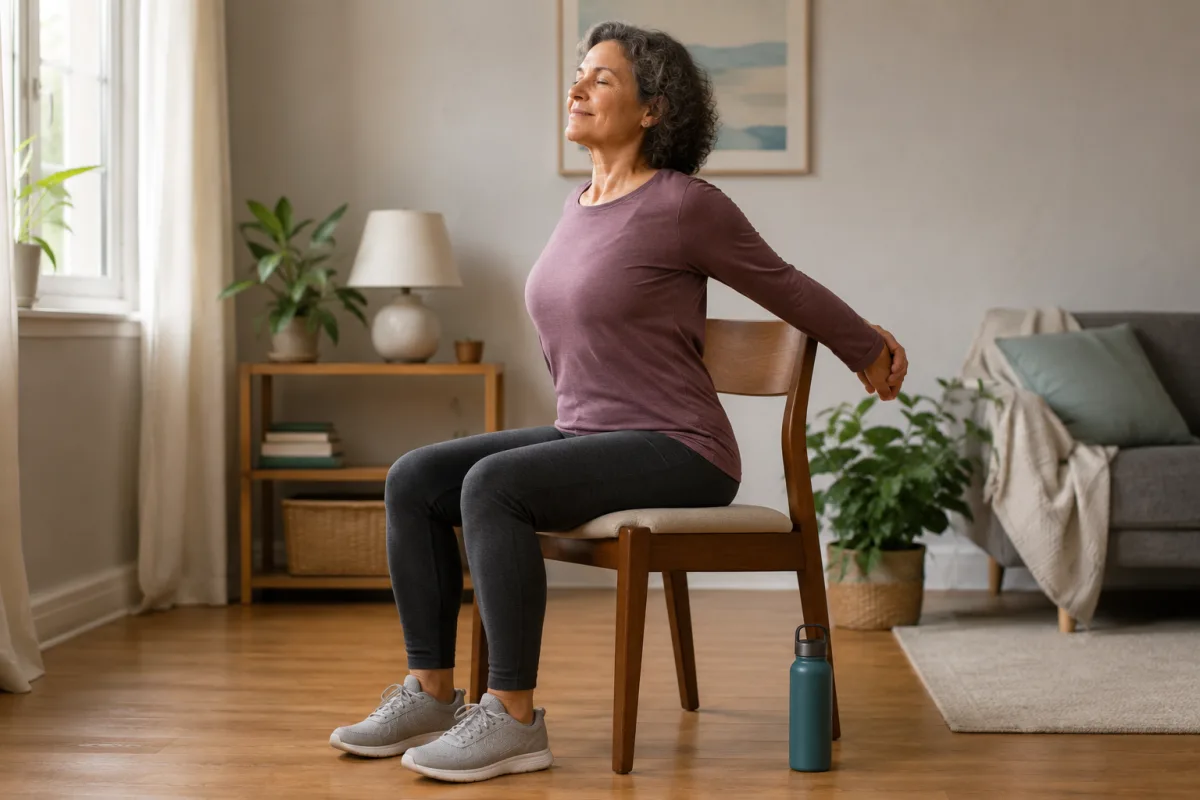
End with slower music or no music. March gently, lower the arms, roll the shoulders, and let the breathing settle. Stretch the chest by opening the arms low and wide. Stretch the ankles by extending one leg and flexing the foot. Turn the head slowly side to side. The cooldown is not decoration; it helps you notice whether the workout was the right level.
Afterward, check your body. Mild warmth, better mood, and light muscle fatigue are normal. Sharp joint pain, dizziness, chest symptoms, or unusual shortness of breath are not. Adjust the next routine by shortening the session, lowering the tempo, or removing arm reaches above shoulder height.
Chair dancing can pair well with gentler movement practices. If you like slower control, you may enjoy comparing seated dance with Pilates or tai chi. The common thread is attention: smooth movement usually beats rushed movement.
Do not measure success by how wild the routine looks. A good chair dance leaves you more awake, coordinated, and comfortable in your body. The chair is support, not an apology.
Frequently Asked Questions
Can chair dancing count as exercise?
Yes, if it raises your breathing and uses repeated movement. It may count toward aerobic activity for some people, but intensity depends on tempo, range of motion, and personal fitness.
What kind of chair is safest?
Use a firm chair without wheels. It should not slide, rock, or sink. A chair with no arms gives more movement space, but some people prefer arms for support.
How long should a beginner routine last?
Start with 5 to 10 minutes, including warmup and cooldown. Add time gradually if you feel good afterward and can keep posture during the routine.
Can I use hand weights while chair dancing?
Only after you can control the movements without weights. Use very light weights, keep shoulders relaxed, and stop if the neck, wrist, or shoulder feels strained.
Is chair dancing only for older adults?
No. It can work for beginners, office workers, people with temporary mobility limits, and anyone who wants low-impact movement set to music.

Alyssa Curlin
Edits general health, nutrition and education explainers. Medical topics are educational and link to public-health guidance.
Leave a reply
Replying to