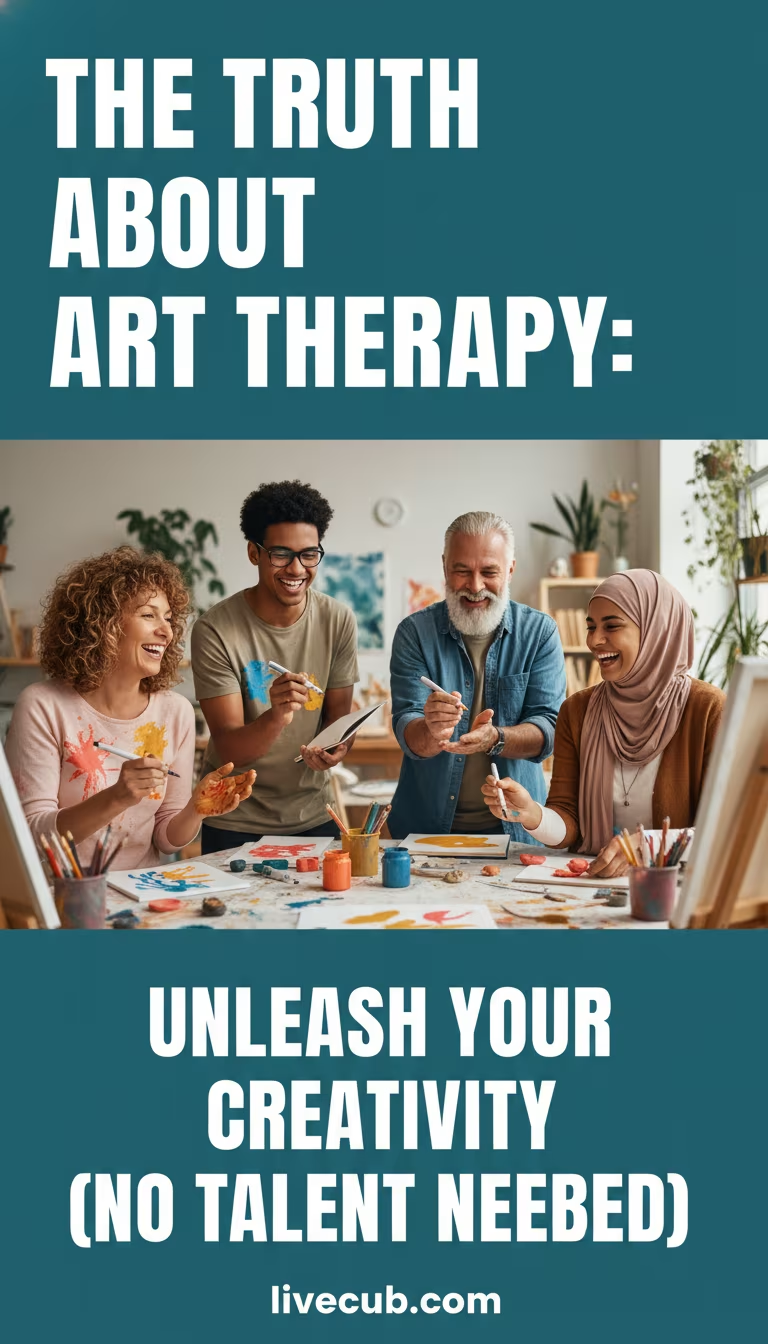
The Benefits of Art Therapy for Non-artists
Ever felt that knot in your stomach after a long, stressful day? You know the feeling. Maybe it’s a nagging worry you can't quite shake, or a persistent feeling of being overwhelmed by your to-do list. We’ve all been there, standing in front of the fridge, mindlessly scrolling through our phones, or just staring blankly at the wall, wishing for an escape. You’re looking for a way to just… process everything, to find a moment of peace, but traditional meditation or journaling just don't seem to click for you. What if I told you there's a powerful, incredibly accessible tool that doesn't require any artistic talent whatsoever, and it could be exactly what you need to quiet that inner critic and unlock a deeper sense of well-being? It's called art therapy, and it's not just for professional artists or those with specific diagnoses. It's for you, the everyday person navigating the beautiful, messy chaos of life.
Why This Matters
Here’s the thing: in our fast-paced world, we're constantly bombarded. Notifications ping, deadlines loom, and social media feeds present an endless highlight reel of everyone else’s seemingly perfect lives. It’s no wonder so many of us feel disconnected from ourselves, struggling to articulate what’s really going on inside. We often suppress emotions, thinking we need to be strong, always put-together. But those feelings don't just disappear; they manifest as stress, anxiety, or even physical tension. What we're missing is a non-verbal outlet, a space where we can explore, express, and understand our inner landscape without the pressure of finding the "right" words or conforming to expectations. This is precisely where art therapy, or even just therapeutic art-making, steps in. It offers a gentle, judgment-free zone to explore your feelings, challenge your thoughts, and reconnect with your authentic self. It's not about creating a masterpiece for a gallery; it's about the process, the journey, and the incredible insights you gain along the way. Think of it as a workout for your mind and soul, where the only goal is personal growth and well-being. It’s about giving yourself permission to be messy, to experiment, and to discover new facets of who you are, making it an essential part of a balanced, fulfilling lifestyle.
Unlocking Your Inner Calm: Art for Stress Relief and Emotional Expression
Let's be real, daily life can be a rollercoaster. One minute you're crushing it, the next you're spiraling with stress. You know that feeling when your brain just won't shut off, replaying conversations or anticipating future problems? It's exhausting, right? In my experience, one of the most immediate and profound benefits of engaging with art, even as a complete beginner, is its incredible ability to act as a powerful stress reliever. When you’re focused on the act of creating, your mind shifts away from those anxious thoughts. It’s a form of active meditation, grounding you in the present moment. You’re not trying to solve a problem; you’re simply moving a brush, tearing paper, or molding clay. This singular focus helps quiet the mental chatter that often accompanies stress and anxiety. What I love about it is that it doesn’t require any previous training. You don't need to know how to draw a perfect circle or mix complex colors. The goal isn't aesthetic perfection, but emotional release. It's about letting your hands do the talking when words feel inadequate. Imagine you've had a particularly frustrating day. Instead of bottling it up or venting endlessly to a friend, you could sit down with some paints and just let whatever colors and strokes emerge. Maybe it's a chaotic swirl of dark hues, or perhaps you find yourself drawn to calming blues and greens. There’s no right or wrong; there’s just expression. This process allows your subconscious to surface, giving form to emotions that might otherwise remain hidden or overwhelming. It’s a way to externalize those heavy feelings, look at them, and then, often, let them go. I've found that even 15-20 minutes of this kind of creative engagement can completely shift my mood, leaving me feeling lighter, more centered, and surprisingly refreshed. It’s a powerful self-care practice that’s accessible to everyone, regardless of their artistic background or perceived skill level. It really is about giving yourself that space to breathe and just be.
Simple Artistic Activities for Instant Calm
- Mindful Doodling: Don't underestimate the power of a simple pen and paper. Instead of drawing specific objects, try drawing lines, shapes, or patterns without a plan. Let your hand move freely. Focus on the sensation of the pen on paper, the rhythm of your hand, and the emerging design. This helps clear your mind and can be incredibly meditative. Try setting a timer for 10 minutes and just let it flow. You might be surprised at the intricate patterns your subconscious mind creates, offering a visual break from mental clutter.
- Coloring for Adults: You might think coloring books are just for kids, but they’ve gained massive popularity among adults for a reason. The predefined outlines remove the pressure of "what to draw," allowing you to fully immerse yourself in the act of choosing colors and staying within the lines (or purposefully going outside them!). This focused activity can lower heart rate and reduce cortisol levels, bringing a sense of order and calm. Grab a detailed mandala or nature scene and just enjoy the vibrant process; it’s a wonderful way to unwind and shift your focus.
- Emotional Collage: This is a fantastic way to express complex feelings without a single word or brushstroke. Gather old magazines, newspapers, fabric scraps, or even digital images. Tear or cut out anything that resonates with you – colors, textures, words, or images – that represent how you're feeling or how you want to feel. Arrange them on a piece of paper, a cardboard, or even a digital canvas using an app. There’s no right or wrong way to do it; just let your intuition guide you. The act of selecting and arranging allows for a symbolic representation of your inner world, offering clarity and a sense of emotional release.
Seeing Yourself Anew: Art as a Mirror for Self-discovery and Problem-solving
Sometimes, we get stuck in our own heads, don't we? We endlessly churn over a problem, or we feel a certain way but can't quite pinpoint why. It's like trying to navigate a dense fog – you know you're moving, but you can't see the path ahead. This is where art, used therapeutically, becomes an incredibly powerful tool for self-discovery and even problem-solving. When you create something, you're not just putting colors on a page; you're externalizing your inner world. The choices you make – the colors, the shapes, the textures, the subject matter (or lack thereof) – can reveal things about your subconscious thoughts and feelings that you weren't even aware of. For instance, have you ever drawn a stick figure in a particular pose that perfectly captured your mood, even if you didn't consciously intend it? That's art speaking for you. Through this external representation, you gain distance and perspective. It's easier to observe and reflect on a feeling when it's literally outside of you, on a canvas or sculpted in clay. What might have felt like an overwhelming, shapeless blob of emotion can suddenly take on a form, making it less daunting and more comprehensible. I’ve personally found that when I’m grappling with a tough decision or feeling unclear about my direction, simply drawing or painting about the situation, rather than writing about it, helps me see things from a different angle. It’s not about analyzing the art like an expert; it’s about noticing what emerges. "Why did I choose this color for that feeling?" "What does this chaotic line represent in my life right now?" These aren't questions you force, but rather insights that naturally bubble up as you engage with your creation. This process isn't just about understanding emotions; it can also be incredibly useful for practical problem-solving. By metaphorically representing a challenge, you can experiment with different "solutions" within your artwork, unlocking creative approaches that your analytical mind might have overlooked. It expands your perspective and allows for more imaginative solutions to manifest, touching on areas of personal growth and even influencing how you approach challenges in your tech-driven professional life.
Reigniting Your Spark: How Creativity Boosts Confidence and Cultivates Presence
Let's talk about confidence for a minute. How often do you feel truly confident in trying something new, especially if you believe you're "not good" at it? For many of us, the idea of engaging with art immediately brings up memories of school art classes where we felt judged, or we compare ourselves to professional artists on social media. This can really dim your inner spark, making you hesitant to explore any creative outlet. But here's the beautiful paradox of art therapy for non-artists: it actively works to dismantle that self-doubt. Because the focus isn't on producing a perfect outcome, but on the process itself, you're free from the tyranny of judgment. There's no wrong way to express yourself. When you create something, anything, and realize that its value isn't tied to external approval but to your internal experience, your confidence starts to blossom. You begin to trust your own instincts, your own choices, and your own unique way of seeing the world. This newfound self-trust often spills over into other areas of your life, making you feel more empowered to take risks, voice your opinions, or even try on a bold new fashion style you previously thought "wasn't for you." What I particularly appreciate is how art-making cultivates presence, or mindfulness. In our perpetually distracted world, being truly present is a rare and precious gift. When you're absorbed in creating, you're fully in the moment. Your worries about the past and anxieties about the future fade away, replaced by the tactile sensation of materials, the interplay of colors, or the evolving shape beneath your hands. This isn't just a pleasant diversion; it’s a powerful practice that strengthens your ability to focus and appreciate the here and now. I've found that regularly engaging in even simple creative acts makes me more aware of the smaller joys in my day – the way light hits a leaf, the texture of a scarf, the subtle shifts in a conversation. It retunes your senses and re-engages your spirit, helping you feel more alive, more observant, and more connected to the richness of everyday life. This cultivates a stronger sense of self, knowing that you can create, explore, and simply be without the need for external validation. It's a true act of self-love and personal growth that reignites your inner spark, pushing you towards a more mindful and confident existence.
Common Mistakes to Avoid
Alright, so you’re ready to dip your toes into the therapeutic waters of art-making. That’s fantastic! But before you grab those paints, let's talk about a few pitfalls that can derail your experience, especially if you're not an "artist." The biggest mistake I see people make, time and time again, is striving for perfection. We’re so conditioned by external validation and the idea that art must be beautiful or technically proficient. Forget that! The moment you start worrying if your drawing looks "right" or if your painting is "good enough," you completely miss the point of art therapy. This isn't about creating something gallery-worthy; it's about the process of expression and discovery. So, ditch the inner critic at the door. Another common stumble is overthinking your choices. People often stare at a blank page or a pile of materials, paralyzed by indecision. "What should I draw? What color should I use? Is this the 'right' way?" There's no right way. Seriously. Just pick something, anything, and start. If you’re drawn to blue, use blue. If you feel like scribbling, scribble. Trust your intuition. Overthinking suffocates the spontaneity and authenticity that make art-making so therapeutic. Lastly, don't make the mistake of comparing your work to others'. Social media is a prime culprit here, making us believe everyone else is a brilliant artist. Your creative journey is entirely your own. Your expression is unique to you. What someone else creates has absolutely no bearing on the value or benefit of your own experience. Focus on your internal sensations, your feelings, and the insights you gain. It's your personal journey, not a competition. Avoiding these common traps will help ensure your art-making experience is liberating, insightful, and genuinely beneficial for your well-being.
Expert Tips
You've gotten a taste of the magic, and now you want to go a little deeper? Awesome! Here are some "expert" tips – though really, they're just ways to lean into the process even more fully. First, consider trying themed prompts to kickstart your sessions. Sometimes a blank page can still feel intimidating. Instead of "draw anything," try "Draw how you feel about your biggest goal," or "Create an image that represents a challenge you're facing," or "Use colors and shapes to depict your ideal weekend." These prompts provide a gentle structure without dictating the outcome, helping you bypass mental blocks and directly tap into your subconscious. You can find many such prompts online or even create your own. Secondly, don't be afraid to experiment with unconventional materials. You don't need expensive art supplies. Try found objects like leaves, twigs, string, or even scraps of old clothing to create texture and meaning. Use coffee grounds for color, or tear up an old newspaper for collage elements. The act of repurposing and experimenting can be incredibly liberating and spark new insights, pushing your creativity beyond traditional boundaries. It also broadens your perspective on how 'art' can be integrated into everyday life and resourcefulness. Finally, and this is a big one: document your process and reflections. Take a quick photo of your artwork when it's done. Jot down a few notes about how you felt while creating it, what thoughts came to mind, or what you notice about the finished piece. This isn't about judging the art, but about capturing your experience. Over time, looking back at these reflections can reveal patterns, growth, and recurring themes in your emotional landscape, deepening your self-understanding significantly. It helps solidify the insights gained and makes the therapeutic benefits more tangible and trackable, which is super helpful for personal growth and cultivating a reflective lifestyle.
Final Thoughts
So, there you have it. The benefits of art therapy aren't some exclusive club for the naturally gifted. It’s an open invitation for all of us – you, me, and everyone in between – to tap into a powerful, ancient language that transcends words. It’s a space to breathe, to explore, to heal, and to grow, all without the pressure of performance. Whether you’re feeling overwhelmed, creatively blocked, or simply seeking a deeper connection with yourself, remember that a blank page or a handful of clay holds infinite possibilities for self-discovery and peace. Don’t wait for inspiration to strike or for your "artistic gene" to magically appear. Just start. Pick up a crayon, grab some dirt from your garden, doodle on a napkin. Give yourself permission to be messy, to experiment, and to trust your own intuition. You're not aiming for a masterpiece; you're cultivating a practice of self-care and self-expression that can profoundly enrich your life. So, what are you waiting for? Your inner artist, and your calmer, more confident self, is ready to emerge. It’s time to pick up those tools and rediscover the vibrant world within you. Go on, give it a try – you might just surprise yourself!
📌 Pin This For Later!

Linda Fehrman
Linda began writing professionally in 2014. The majority of her work has been published on fitness, health-eating and relationships. Linda is well-versed and passionate about relationships, fitness and health issues.


Leave a reply
Replying to