
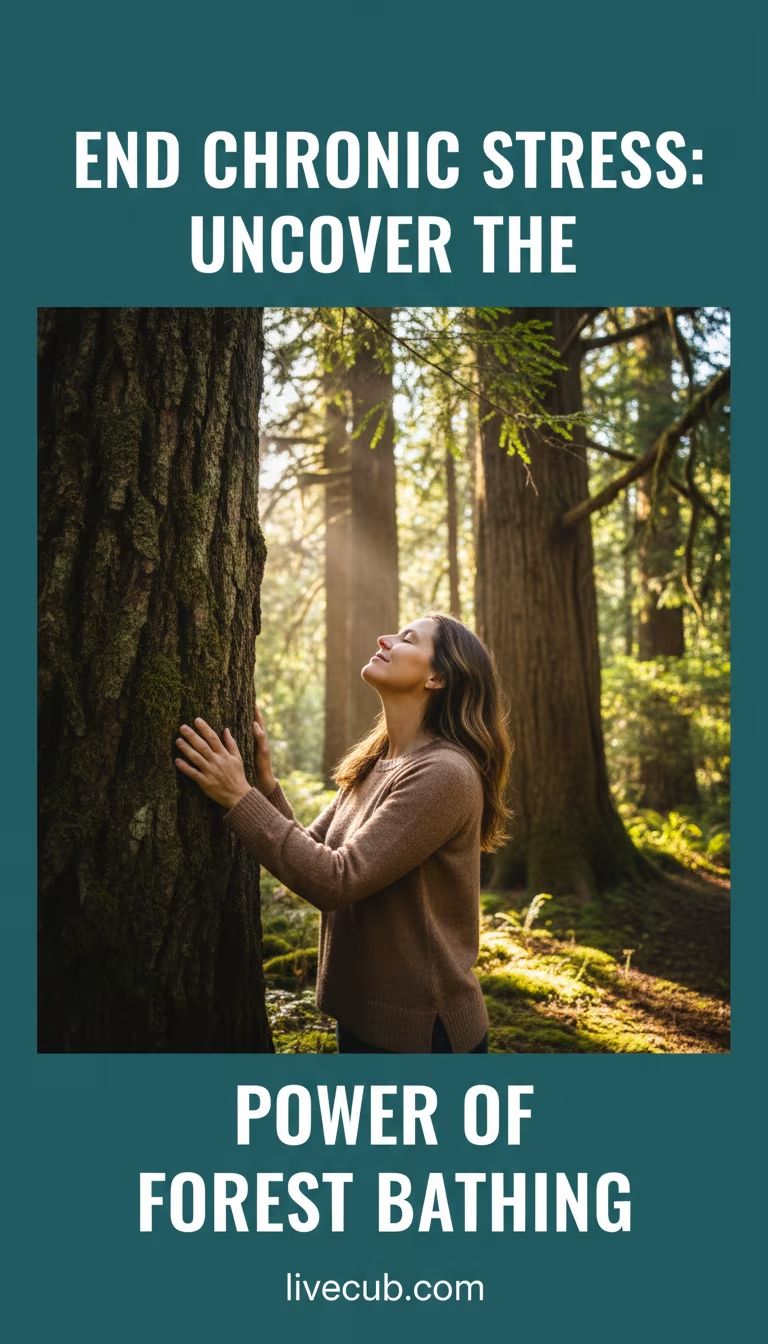
Slowing almost to a stop under a canopy of trees asks very little of you, which is exactly why it helps. The practice often called shinrin-yoku, a Japanese phrase meaning "taking in the forest atmosphere," is not a hike or a fitness goal. It is unhurried, sensory time in a natural setting, and the calm it produces comes from the pace rather than the distance covered.
This is general health education, not medical treatment. Time among trees may ease everyday stress, but panic, depression, trauma symptoms, chest pain, fainting, or unsafe thoughts need professional care.
What the Practice Actually Involves

Forest bathing means walking slowly, sitting, listening, watching light move through leaves, touching bark, and letting your attention settle without a target. The pace is deliberately easy so the nervous system can downshift from its usual alert state. A workout hike keeps the body in effort; this does the opposite, giving the senses more to notice and the mind less to chase.
You do not need wilderness. A tree-lined trail, botanical garden, quiet cemetery path, shaded campus, or pocket park can all work, because the practice rests on sensory contact rather than on how remote the place is. If mobility is limited, sitting on a bench near trees may be enough. The term is closely tied to nature therapy, a broader field studying how contact with green space affects wellbeing.
What the Research Suggests
Studies on forest environments tend to measure cortisol, heart rate, blood pressure, and self-reported mood or anxiety. Several have reported short-term drops in stress markers after slow forest time compared with equivalent time in a city street. The evidence is promising rather than conclusive: sample sizes are often small, and the effect appears strongest as a repeatable support habit, not a single dramatic outing.
The likely reason is straightforward. A forest gives attention many soft places to land, such as moving leaves, distant birds, shifting shade, the smell of soil, and open sightlines. That variety competes with the loop of repetitive worry and can loosen its grip, which is often what "feeling calmer" actually means in the moment.
A Simple Practice You Can Repeat
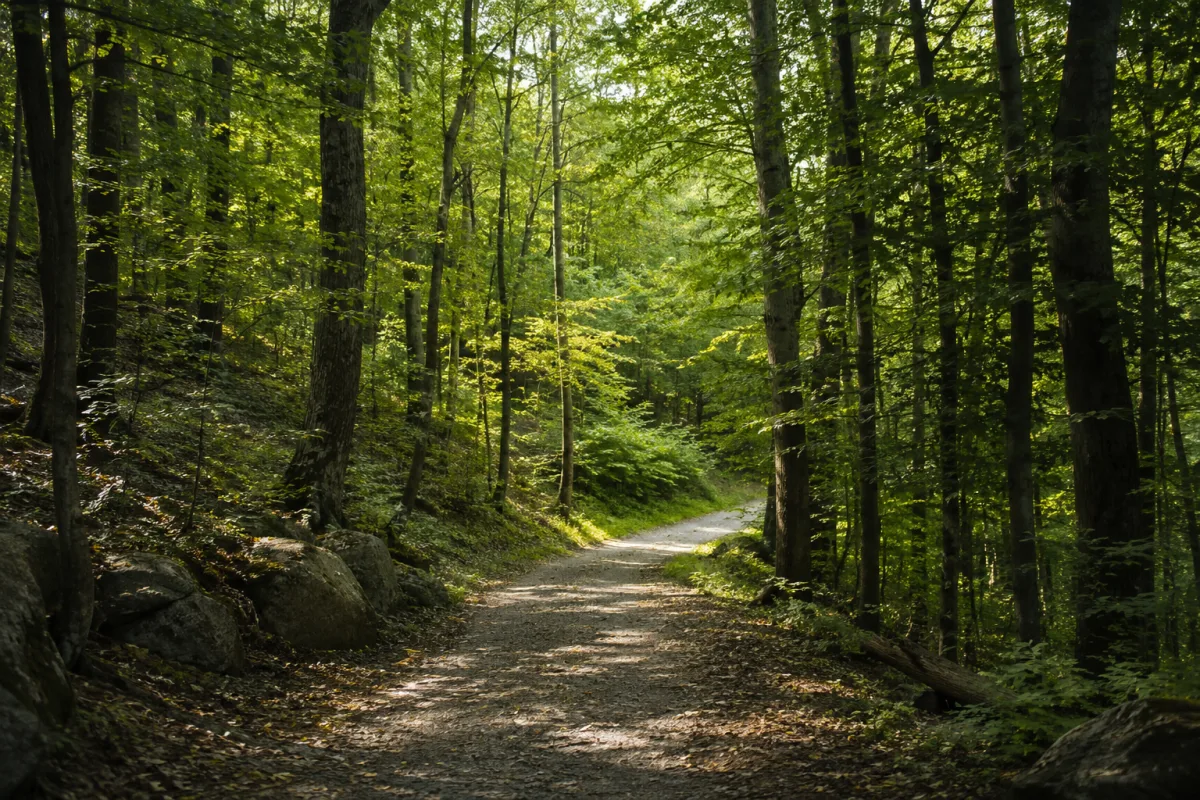
Silence your phone, walk slowly for about ten minutes, then pause. Move through the senses one at a time: notice five things you see, four sounds, three textures, two smells, and one sensation in the body. When the mind wanders, return to the next detail. The goal is not an empty head; it is the returning itself. Let breathing settle on its own, since forced deep breaths make some people dizzy. Lengthening the exhale slightly is gentler.
The best version is the one you will actually repeat. Ten minutes twice a week usually does more than one ambitious trip that never happens again. Pairing it with an existing routine helps, and the sensory anchors below give you a place to start on any given day.
| Sense | Anchor to notice | If distracted, try |
|---|---|---|
| Sound | Wind, birds, gravel, distant traffic | Stay with one sound for a few breaths |
| Sight | Light through leaves, distance, shade | Track a single moving branch |
| Touch | Bark, cool air, feet on the ground | Feel your weight shift as you walk |
| Smell | Soil, leaves, rain, pine | Take one slow breath through the nose |
| Time | 10–20 minutes, twice weekly | Shrink to a 3-minute pause by one tree |
A short note afterward turns the habit into feedback: where you went, how long, stress before and after, and what pulled your attention away. Patterns become visible over a few weeks. Livecub's food journal guide can be adapted into a simple mood-and-nature log.
Staying Safe and Knowing the Limits
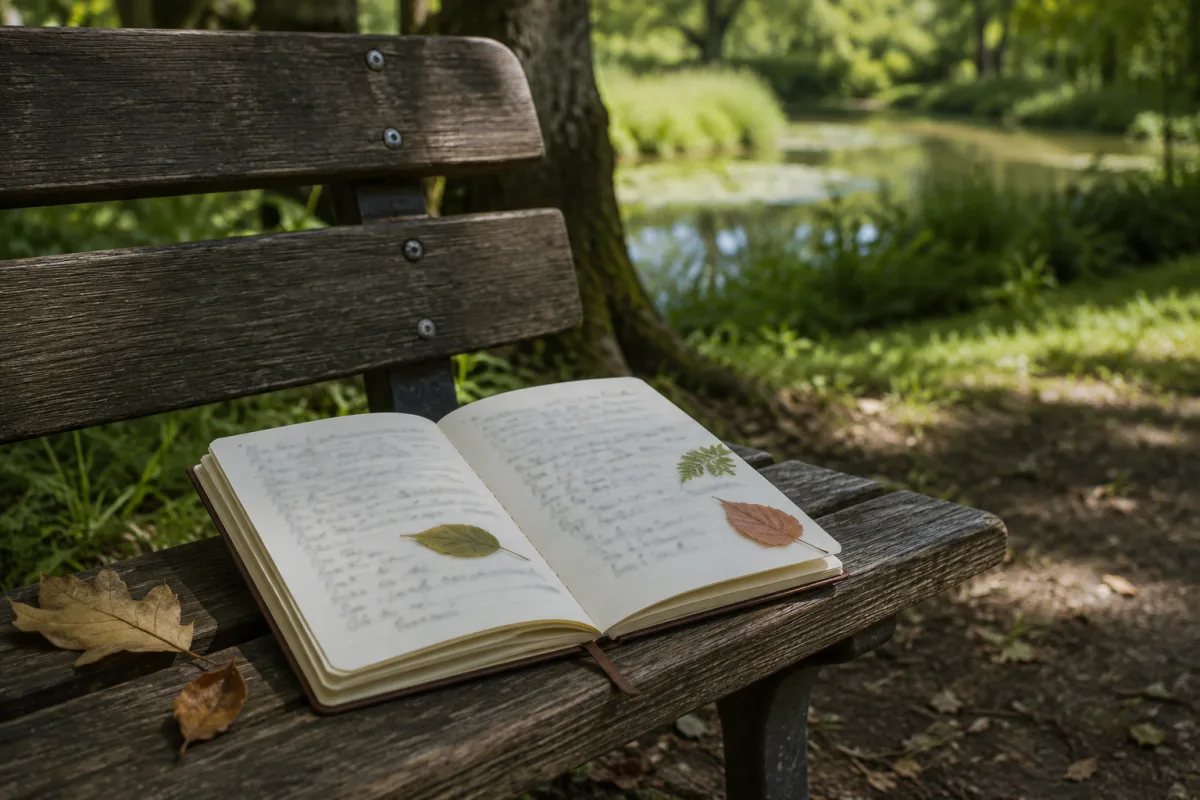
Check weather, trail conditions, ticks, heat, hydration, and daylight, and tell someone your plan if the area is isolated. People with asthma or severe allergies should plan around pollen, smoke, and cold air. Seasons change the practice and its risks: winter offers bare quiet, spring adds scent and birdsong, summer brings shade and insects, fall brings color and cooler air. If dusk or isolated paths would keep your body on alert, choose a daylight route in a public park instead. Calm does not require proving bravery.
Forest bathing may ease stress, but it is not a stand-alone treatment for an anxiety disorder. If fear keeps someone from work, school, sleep, or relationships, clinical care matters more than any nature routine. For performance-specific nerves, Livecub's stage fright guide is a related read. Treat trees as a reliable reset you can return to often, not a cure, and let the outing stay imperfect. Ten quiet minutes after work, phone away and shoulders down, is enough to make the habit real.
Frequently Asked Questions
Does forest bathing reduce stress?
Research suggests it may lower short-term stress markers and improve perceived stress for some people, especially when repeated.
Is it the same as hiking?
No. Hiking focuses on distance or fitness; forest bathing focuses on slow sensory attention.
How long should I do it?
Start with 10 to 20 minutes and repeat regularly if it feels helpful.
Can I do it in a city park?
Yes. A quiet green space with trees can still work.
Can it replace therapy?
No. It can support stress care, but clinical symptoms need professional help.

Timothy Davidson
Edits step-by-step general-interest guides for clarity, realistic limits and source verification.




Leave a reply
Replying to