
Safari Animals Are Better Seen With Patience Than a Checklist
Safari animals are often reduced to a top-five list, but wildlife viewing is not a scavenger hunt. A lion sleeping in shade, a rhino grazing far away, or elephants moving quietly through dust may teach more than a rushed drive chasing every famous species before lunch.
The five animals many travelers hope to see are lion, rhinoceros, leopard, elephant, and buffalo. They are often grouped as the "Big Five," a phrase with hunting origins, so modern travelers should use it carefully and focus on observation, conservation, and respect.
A good safari is measured by attention, not only by how many animals are checked off a list.
Why Are Lions So Compelling on Safari?
Lions draw attention because they are social, powerful, and often visible in open savanna habitat. A pride may spend much of the day resting, which can disappoint travelers expecting constant action. Rest is part of the animal's life, not a failed sighting.
Look for behavior: cubs playing, females watching the distance, males scent-marking, or the group shifting toward shade. A guide can explain what the body language means, but the traveler has to slow down enough to notice.
WWF's lion conservation information describes threats such as habitat loss and conflict with people. That context matters because a safari sighting depends on protected landscapes and local communities, not only luck.
Never pressure a guide to crowd lions. Close vehicles can stress animals, block movement, and ruin the experience for everyone nearby.
What Should Travelers Know About Rhinos?
Rhinos are not interchangeable. White rhinos are generally larger and more often seen grazing in open areas, while black rhinos tend to be more elusive browsers. Their names do not describe color in any useful way for a first-time traveler.
Rhino sightings can be tightly managed because poaching remains a serious conservation threat. Some parks limit location sharing, and guides may avoid giving exact details over open radio.
The International Rhino Foundation's rhino species information explains the five living rhino species and the pressure many face. That makes a distant rhino sighting feel less like a poor view and more like a privilege.
Use binoculars and patience. A rhino far from the track may be the safest and most ethical sighting of the day.
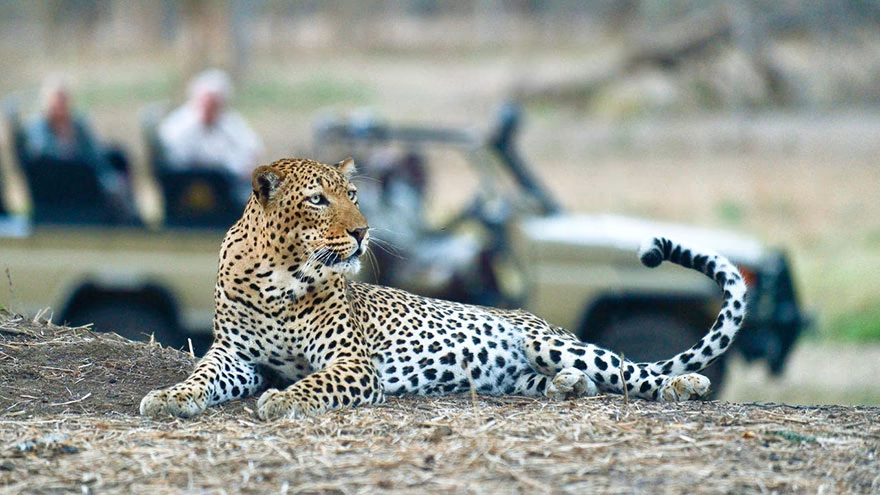
Why Are Leopards Harder to See?
Leopards are solitary, adaptable, and good at disappearing into shade, rocks, grass, and trees. Many first-time safari travelers underestimate how easily a large cat can vanish in plain sight.
A guide may read tracks, alarm calls, drag marks, or the behavior of antelope and birds. Travelers can help by staying quiet and scanning slowly instead of asking to rush to the next place.
Leopard sightings often happen in low light, near riverine areas, or where a cat has carried prey into a tree. Do not expect a perfect photograph. Often the best moment is a tail, a face in branches, or the slow movement of spots through grass.
Wildlife travelers who enjoy patient watching may also like a quieter trip such as seeing moose near North Conway, where distance and timing matter more than speed.
How Should You Watch Elephants?
Elephants can seem gentle because they are social and expressive, but they are still powerful wild animals. Watch the herd structure, the calves, the ears, the trunk, and the way older animals respond to the vehicle.
WWF's African elephant page discusses conservation pressure, habitat, and threats. Seeing elephants well should make travelers more careful, not more demanding.
Give elephants space, especially near water, calves, narrow roads, and thick bush. If the guide backs up, lowers voices, or waits, trust that judgment. A closer photo is not worth a stressed herd.
The best elephant sightings often unfold slowly: dust, low rumbles, a calf tucked between adults, and the group deciding where to move next.
Why Do Buffalo Deserve Respect?
African buffalo may not look as dramatic as cats or rhinos, but they are strong, alert, and unpredictable when threatened. Herds can be calm at a distance and defensive if boxed in.
Look for the shape of the herd, older bulls on the edge, calves in the middle, and egrets or oxpeckers moving around them. A buffalo sighting can teach as much about group defense as a predator sighting teaches about hunting.
Do not stand in vehicles, shout, or push for a closer angle. The safety rules that apply to large wildlife are not suggestions. They are part of why people and animals can share the landscape without constant conflict.
If your safari includes walking segments, gear and guide instructions matter. A basic travel skill such as adjusting walking sticks is not safari training, but it reflects the same idea: prepare before the terrain teaches you.
How Do You Photograph Safari Animals Without Missing the Moment?
Set the camera before the sighting. Know how to change exposure, focus mode, and shutter speed without looking down for a full minute. Wildlife rarely waits while someone studies a menu screen.
Use silence, not frantic movement. A beanbag or stable rest helps more than leaning out of the vehicle. Take a few photos, then watch with your own eyes.
Do not geotag sensitive wildlife sightings. Exact location sharing can harm animals, especially species targeted by poachers. When in doubt, share the broader park or region, not the precise spot.
The photograph should not become the reason the animal is disturbed. A slightly distant image is better than a close one created by pressure.
What Safari Etiquette Should First-Time Travelers Know?
Safari etiquette begins with listening to the guide. Stay seated when asked, keep voices low, do not imitate animal calls, and do not ask the driver to block another vehicle for a better angle.
Respect the queue at a sighting. If several vehicles are watching a leopard or lion, take your turn and move on when the guide says it is time. A single vehicle can ruin the sighting by crowding the animal or blocking its path.
Bring neutral clothing, patience, and binoculars. Bright outfits are less important than behavior, but quiet colors, sun protection, and layers make long drives more comfortable.
Open landscapes demand the same kind of patience found on other slow-search trips, from wildlife routes to meteorite-hunting areas in Nevada. The reward often comes after scanning, waiting, and accepting that nature is not scheduled.
A respectful traveler improves the sighting for everyone, including the animal.
How Do You Choose a Responsible Safari Operator?
Ask how many vehicles are allowed at one sighting, how guides are trained, how the operator supports conservation, and what rules apply around off-road driving. A low price is not useful if the viewing style stresses animals.
Look for clear communication before booking. Good operators explain park rules, luggage limits, age policies, medical access, and what happens if weather or animal movement changes the plan.
Responsible guides also manage expectations. They should not promise a leopard at sunset or a rhino at close range. Wildlife is not a scheduled performance.
The guide's judgment is part of what you are paying for. Choose one you are willing to trust.
Ask about quiet time too. A safari with constant radio chatter and rushed sightings can feel busy without feeling deeper or more respectful for anyone nearby.
Frequently Asked Questions
What are the five famous safari animals?
The group usually means lion, rhinoceros, leopard, elephant, and buffalo. The phrase has hunting origins, so many modern travelers use it as a viewing shorthand, not a value system.
Which safari animal is hardest to see?
Leopards are often difficult because they are solitary, quiet, and well camouflaged. Rhino sightings can also be limited by habitat, security, and conservation concerns.
Is it safe to photograph safari animals?
Yes, if you follow guide instructions, stay in the vehicle when required, avoid noise, and do not pressure animals for a closer angle.
Should I bring binoculars on safari?
Yes. Binoculars make distant rhinos, birds, cats in shade, and small behavior details much easier to enjoy without crowding wildlife.
Can children go on safari?
Many can, but age rules vary by lodge and activity. Choose family-appropriate drives, shorter outings, and guides experienced with children.
Let the Animals Set the Pace
A safari is better when the traveler stops demanding scenes and starts reading behavior. Give wildlife space, listen to the guide, and let patience turn a sighting into understanding.

Timothy Davidson
Edits step-by-step general-interest guides for clarity, realistic limits and source verification.



Leave a reply
Replying to