
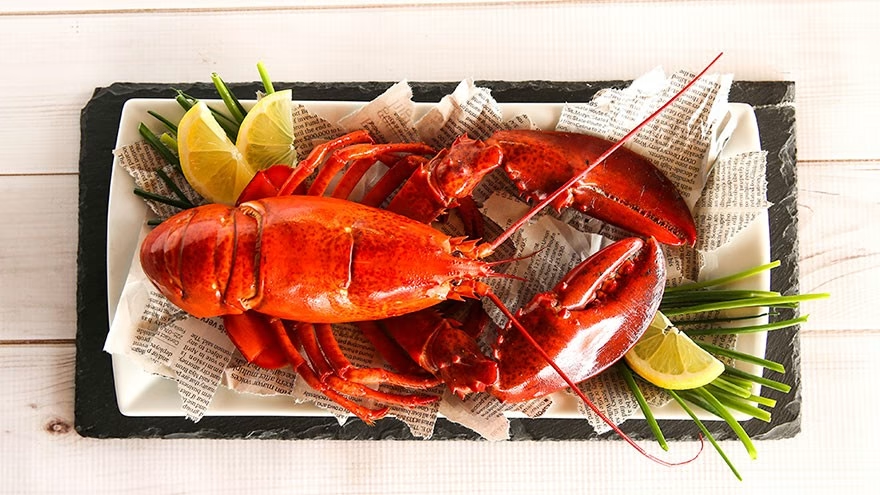
Lobster goes from sweet to rubbery faster than its price suggests. Good tips for cooking lobster are mostly about buying live seafood safely, keeping it cold, choosing steam or boil, using enough pot space, checking doneness, and stopping the cooking before the meat tightens. The recipe is simple. The timing is not.
Start with a live, moving lobster from a trustworthy source. The FDA says live crabs and lobsters should show leg movement and spoil rapidly after death, so only live ones should be selected and prepared. Once home, keep seafood cold and cook it promptly. A lobster dinner should feel relaxed at the table, but the handling before cooking needs discipline.
Before buying, decide how many people you are feeding and what else is on the table. A lobster that is too large can be harder to time because the tail and claws finish at different speeds. Several smaller lobsters can be easier for a home cook, especially with a normal stockpot. Ask the fish counter when the lobsters arrived and keep the trip home short.
How Do You Buy And Store Lobster Safely?
Choose lobsters that are alive, responsive, and held cold. The FDA seafood safety guide says seafood used within two days should be stored at 40 degrees F or below, and live crabs and lobsters should show leg movement. Do not buy a motionless lobster and hope cooking fixes it.
Keep live lobster cool, damp, and ventilated, not sealed in fresh water or an airtight bag. Cook the same day if possible. If you are cooking a broader seafood meal, Livecub's frog legs buying and cooking guide is useful for the same rule: start with quality before technique.
At home, clear the counter before the lobster leaves the bag. Set out tongs, a lid, towels, a thermometer, salt, and a tray. This prevents the nervous scramble that makes people overcook seafood or leave it sitting warm. If you are uneasy handling live lobster, ask the market what preparation help they offer and plan the timing around pickup.
Should You Steam Or Boil Lobster?
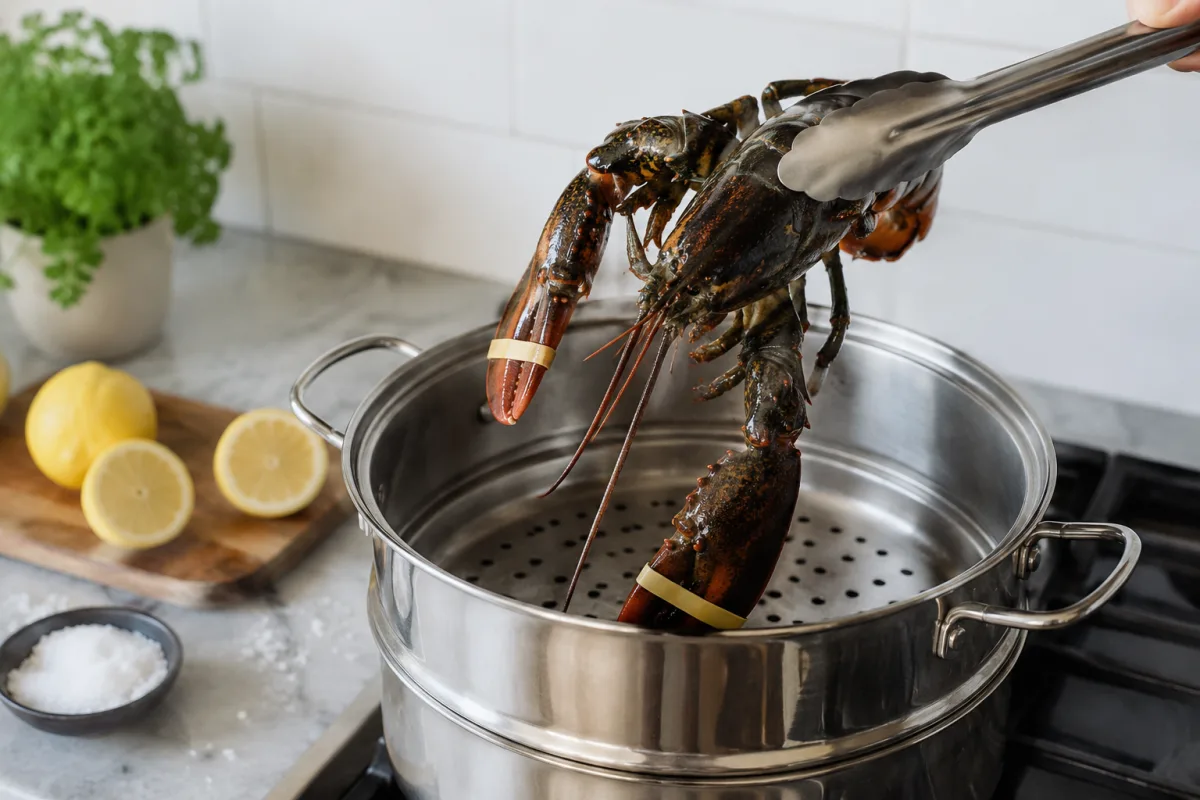
Steaming gives more control and less water dilution. Boiling is straightforward and useful when cooking several lobsters, but it can wash flavor from the shell and requires a large pot that returns to heat quickly. Maine Lobster Now recommends salted water and clear timing, while also describing steaming as a traditional method with practical control.
For beginners, steaming is often easier because the lobster is not rolling around in a full pot of water. Use a rack or enough water to create strong steam, keep the lid tight, and start timing when steam returns. Boiling works too; just avoid crowding the pot. Crowding lowers temperature and makes timing unreliable.
The pot matters more than most recipes admit. It should be tall enough to contain steam, wide enough that lobsters are not stacked tightly, and heavy enough to recover heat after the lid opens. If the pot is small, cook in batches. A crowded pot gives uneven results, and no amount of butter can fix a tail that went tough while a claw was still underdone.
How Long Should Lobster Cook?
Time depends on size and method, so use time as a guide, not proof. The FDA says most seafood should be cooked to 145 degrees F, and lobster flesh should become firm, pearly, and opaque. Maine Lobster Now uses higher internal targets in its instructions, which shows why home cooks see conflicting numbers. The practical point is the same: use a thermometer and stop guessing.
Insert the thermometer into the thickest tail meat, not between shell and meat. Claws may need more time than tails, especially on larger lobsters. If the tail is done and the claws lag, separate and finish the claws briefly. That gives better texture than punishing the tail until the claws catch up.
Shell color alone is a poor judge. The shell turns red before the meat texture tells the full story, and a large lobster can look finished while thick claw meat needs more time. Check the meat, then act quickly. Pull cooked lobster from the pot, drain it, and stop the heat. Leaving it under a lid while people gather plates keeps cooking it.
What Makes Lobster Tough Or Watery?
Overcooking makes lobster tough. Under-salting and boiling in too much water can make it taste flat. Letting cooked lobster sit in hot water keeps cooking it after the timer ends. Pull it promptly, drain it well, and rest only briefly. Carryover heat is real.
Watery meat can also come from poor handling, frozen-thawed products, or cooking a lobster that was weak before it went into the pot. If the raw lobster smells sour, rancid, fishy, or like ammonia, the FDA says not to eat seafood with those odors. Trust your nose before you trust butter.
How Do You Crack And Serve Lobster Cleanly?
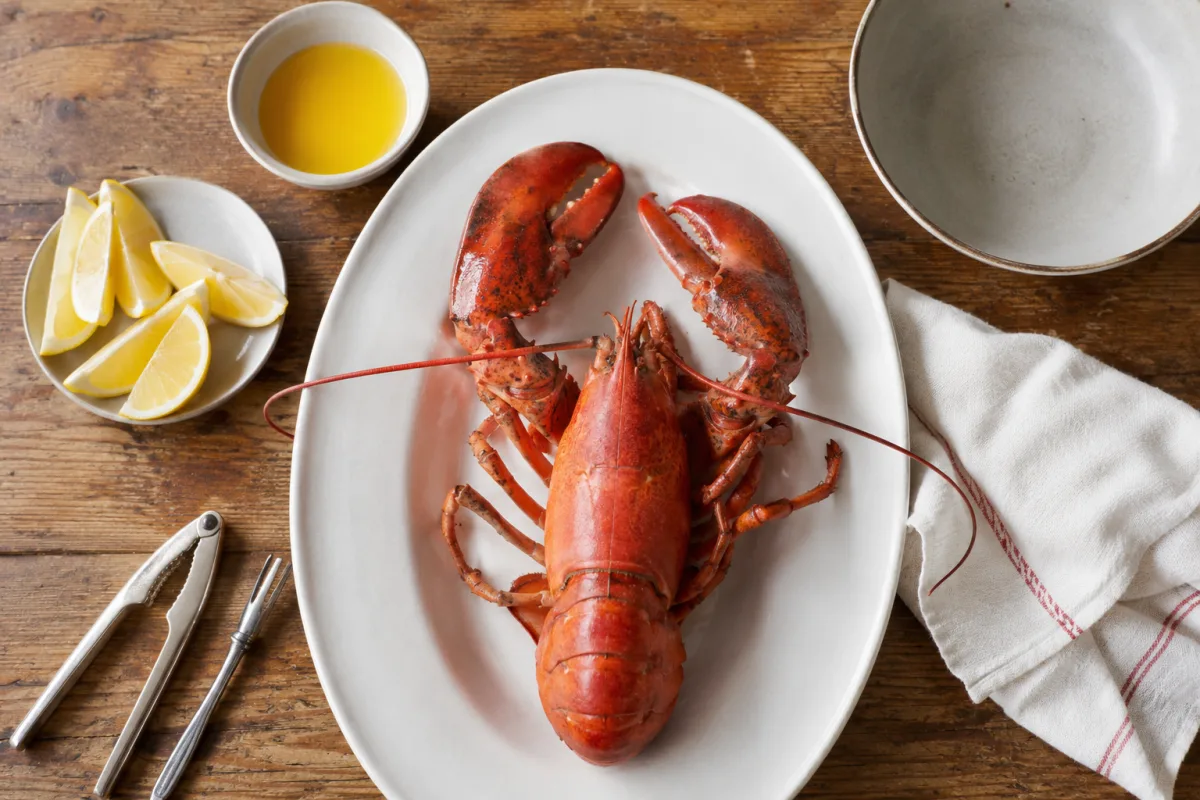
Let the lobster cool just enough to handle. Twist off claws, separate knuckles, twist the tail from the body, and use kitchen shears to open the tail shell from the underside. Crack claws gently so the meat stays in larger pieces. Keep a bowl for shells, a towel for hands, and a small dish for melted butter or lemon.
If presentation matters, crack one lobster in the kitchen as a test before serving the rest. You will learn how hard the shell is, where the juices run, and which tools work on that batch. For a casual table, give each person a towel and permission to eat slowly. Lobster is messy food. Trying to make it spotless usually makes it less enjoyable.
Remove the dark intestinal vein from the tail if present. NOAA Fisheries notes that the FDA advises consumers not to eat tomalley, the light-green substance found in lobster. Some older recipes praise it, but current food-safety advice is easy to follow: skip it. If you like seafood technique projects, Livecub's goose cooking guide shows the same method-first thinking in a very different protein.
What Can You Do With Leftover Lobster?
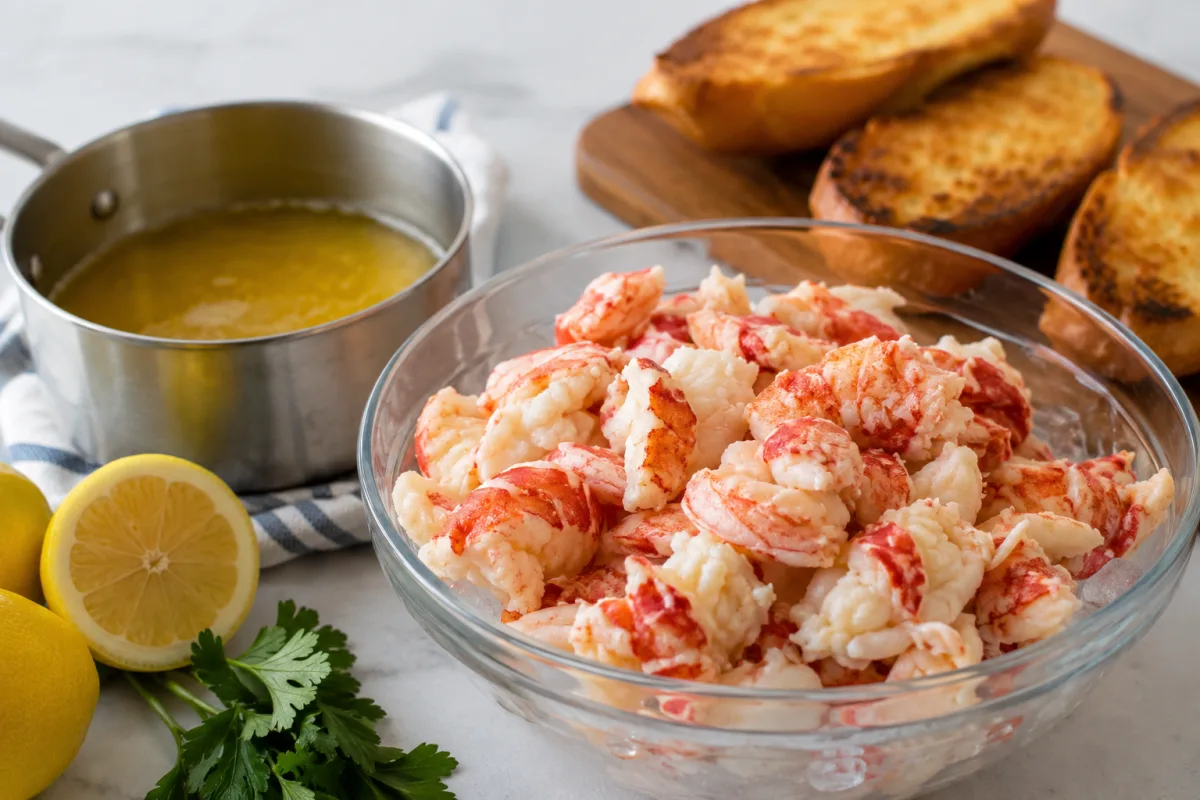
Cool leftovers quickly, pick the meat, and refrigerate it in a covered container. Use it for lobster rolls, pasta, omelets, chowder, salad, or warm buttered toast. Do not drown leftover lobster in heavy sauce if the meat is sweet; add just enough fat, acid, and salt to wake it up.
Cold lobster is already cooked, so reheat gently. Warm it in butter over low heat or fold it into a sauce at the end. Hard boiling leftover lobster turns a luxury ingredient into a chew toy. For a sauce-thinking comparison, Livecub's stir-fry sauces guide is a reminder that sauce should support the main ingredient, not bury it.
What Should You Serve With Lobster?
Keep sides simple: corn, potatoes, green salad, asparagus, lemon, drawn butter, crusty bread, or a light slaw. Lobster is rich, so acid and crunch help. Heavy sides can make the meal feel muddy. If you need a vegetable side, Livecub's guide to cooking greens can help balance the plate.
Plan the table before cooking. Lobster cools while people search for crackers and napkins. Set shell bowls, towels, picks, shears, butter, lemon, and plates first. The best lobster tip is boring but useful: make the eating setup ready before the pot starts steaming.
Season the meal at the edges. Salt the cooking water, brighten the plate with lemon, and keep butter warm rather than boiling hot. Herbs are fine, but heavy spice blends can hide the sweetness that made the lobster expensive in the first place. If you want a bigger meal, add simple sides and let the lobster stay the center of the plate.
Frequently Asked Questions
Is steaming better than boiling lobster?
Steaming gives more control and less water dilution. Boiling is fine when the pot is large enough and timing is managed carefully.
How do I know lobster is done?
The meat should be firm, pearly, and opaque, and a thermometer gives the safest check. Do not rely only on shell color.
Can I cook a dead lobster?
No. Live lobsters spoil quickly after death. Buy and cook only lobsters that show movement before cooking.
Should I eat the tomalley?
No. NOAA notes FDA advice not to eat lobster tomalley, the light-green substance inside the lobster.
How much lobster should I buy per person?
A one- to one-and-a-half-pound lobster per person is a common dinner range, with sides. Bigger lobsters need more careful claw timing.
What Is The Best Lobster Cooking Habit?
Control the variables you can: buy live, keep cold, avoid crowding, use salt, check doneness, drain promptly, and serve with the table ready. Lobster does not need a complicated recipe. It needs a cook who stops before caution turns into overcooking.

Tory Stearns
Edits practical household, travel and lifestyle explainers. Claims that can change are linked to current primary or subject-authority sources.



Leave a reply
Replying to