
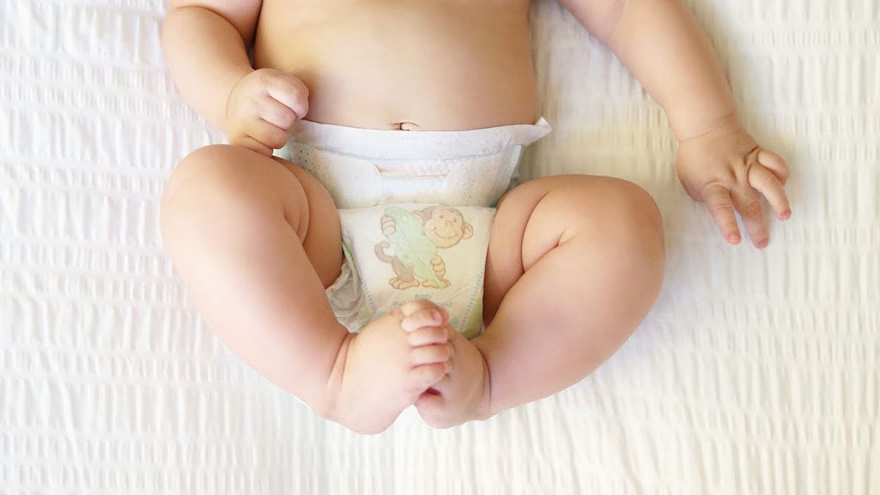
What Causes Diaper Rash? Usually the answer is not one villain diaper. It is moisture, friction, urine, stool enzymes, skin sensitivity, yeast, product residue, or a new food changing the stool.
Most diaper rashes are ordinary irritant dermatitis, but not every red diaper area should be treated the same way. The pattern matters: flat red patches after a long wet diaper are different from bright folds with little satellite bumps, yellow crusting, blisters, fever, or a rash that keeps worsening.
Moisture, Urine, And Stool Contact
Mayo Clinic describes diaper rash as inflamed skin on the buttocks, thighs, and genitals, often caused by wet or soiled diapers left on too long, skin sensitivity, or chafing: Mayo Clinic diaper rash causes.
The mechanism is simple and harsh. Moist skin breaks down faster. Urine changes the skin environment. Stool contains digestive enzymes that keep working on skin after a bowel movement. Add rubbing from a diaper edge, and the barrier starts to fail.
Frequent changes are not busywork. They shorten contact time. For cleaning technique, how to wash an infant is relevant because rubbing and harsh products can make an irritated area worse.
Friction From Fit And Movement
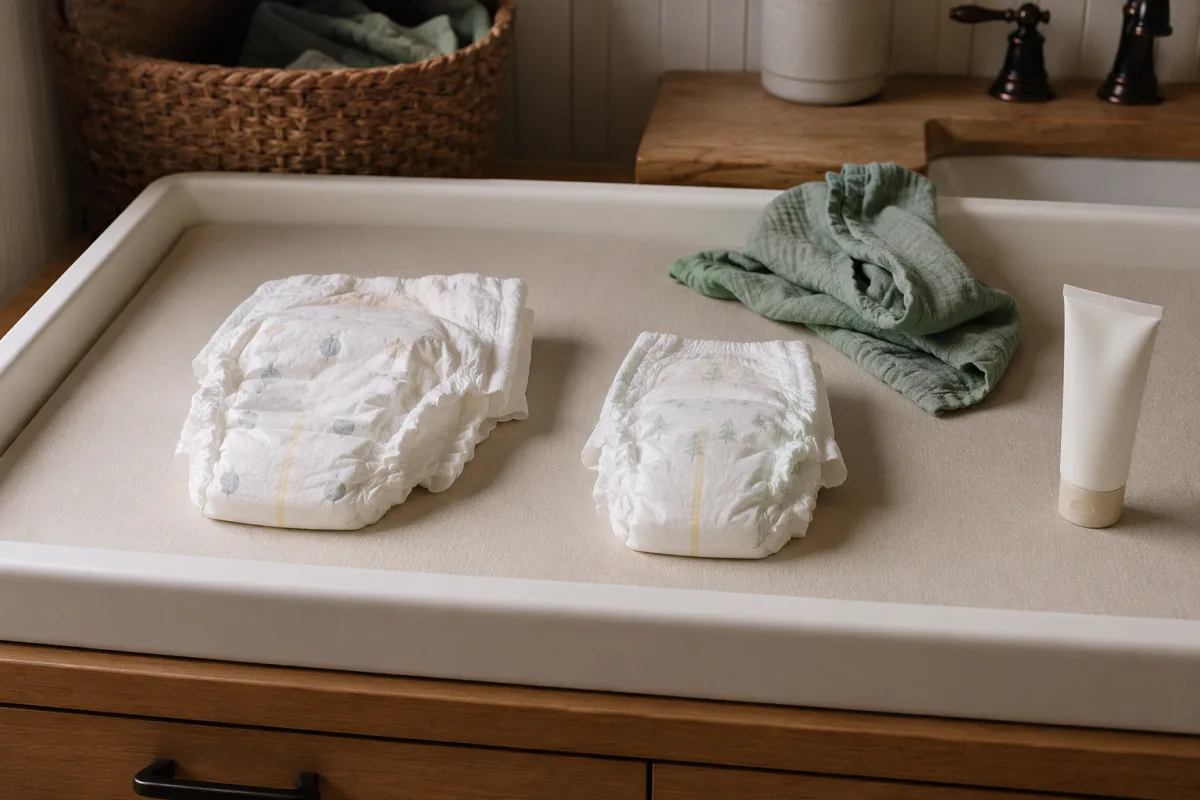
A diaper that is too tight can rub the waist, thighs, and folds. A diaper that is too loose can shift and chafe. Both problems get worse when the baby is sweaty, has diarrhea, or spends long periods sitting or sleeping in one position.
Look at the map of the rash. Irritation on high-contact surfaces points toward rubbing and moisture. Deep folds that look mostly spared can suggest simple irritant rash; folds that look worse may suggest yeast. The pattern is not a perfect diagnosis, but it tells you what to change first.
Use the right size, leave breathing room, and check leg cuffs. If mobility is increasing, the home setup matters too. A practical safety page like baby-proofing your home room by room helps once diaper changes become a rolling, crawling contest.
Yeast And Bacterial Infection
AAP's HealthyChildren explains that irritant dermatitis is the most common diaper rash, while yeast can cause shiny bright patches with sharp edges and small bumps, often worse in the groin folds: HealthyChildren diaper rash types.
Yeast likes warm, moist places. A baby who recently took antibiotics, has diarrhea, or has a rash that does not improve after basic care may need a different treatment plan. Barrier cream alone may not clear yeast.
Bacterial signs are less common but more urgent: yellow crusting, weeping, pimples, pus-filled spots, or very painful skin. HealthyChildren advises that infection in the diaper area should be confirmed and treated by the child's doctor.
New Foods And More Acidic Stool
Diaper rash often appears during the months when babies begin solids. MedlinePlus notes that diaper rashes are common from 4 to 15 months and may be noticed more when babies begin to eat solid foods: MedlinePlus diaper rash overview.
Food does not usually mean a true allergy. Often the stool simply changes: more frequent, looser, or more irritating. Acidic fruits, diarrhea during illness, or rapid diet shifts can all make the diaper area react.
If a rash follows a new food, write down what changed, but do not cut whole food groups without medical advice. Feeding and skin issues overlap, and a rash diary often helps more than guessing.
Wipes, Diapers, Detergent, And Creams

New products can trigger contact irritation. Scented wipes, alcohol-containing wipes, diaper dyes, elastic materials, laundry detergent, fabric softener, soaps, lotions, and even some creams can bother a sensitive baby.
The clue is timing and shape. A rash that appears everywhere a wipe touches, or returns after each use of the same product, deserves a product trial. Switch to fragrance-free wipes or water and a soft cloth for two weeks. Keep the rest of the routine boring so you know what helped.
For severe irritation, rinse rather than scrub. Pat dry or air-dry. A thick layer of zinc oxide or petrolatum barrier can protect clean, dry skin from the next stool or wet diaper.
Less Common Causes That Need A Closer Look
Some diaper-area rashes mimic routine irritation: eczema, psoriasis, seborrheic dermatitis, zinc deficiency, bacterial infection, or other skin conditions. These are not common, but they matter when the rash looks unusual or ignores good basic care.
Call the pediatrician if the rash worsens after two to three days of treatment, includes blisters, peeling skin, pus, oozing, crusting, fever, severe pain, or bright red spots around the edges after antibiotics. Do not keep rotating home remedies while the skin breaks open.
For broader skin concerns, baby rash blister cures can help parents organize what they see, while how to care for a circumcised infant and how to care for the circumcision site are relevant when irritation is near a healing procedure site.
How To Lower The Risk
Prevention is mostly unglamorous: change diapers promptly, clean gently, dry the skin, use a barrier when irritation starts, avoid fragrance-heavy products, and size diapers so they do not rub. MedlinePlus also recommends keeping the area clean and dry, changing diapers often, using water and a soft cloth, and avoiding alcohol or perfume wipes.
Air time helps when it is practical. Lay the baby on a washable towel, keep the room warm, and let the skin dry fully before re-diapering. During diarrhea, use barrier paste more aggressively because stool contact is the main irritant.
If the baby was premature or medically fragile, ask before using medicated creams. Skin can be thinner and care instructions may differ. how to gauge a premature baby's development is related for families already watching growth and care timelines closely.
A Practical Rash Check At Each Change
A good diaper change includes a quick skin scan before cream goes on. Look at the color, edges, folds, and surface. Is the rash flat or raised? Are there small dots around the main patch? Are the folds spared or worse? Is the skin dry, shiny, cracked, bleeding, or crusted?
Then think about timing. Did diarrhea start yesterday? Did a new wipe brand enter the house? Did solids change stool frequency? Was the diaper left on longer during travel or sleep? These details point toward the cause more reliably than the word rash by itself.
Keep the response simple for a mild rash: clean gently, pat or air-dry, apply a thick barrier, and change sooner. Do not wipe off every bit of barrier cream at each change if the skin is raw; removing it can cause more rubbing. Clean stool away, then replace the protective layer.
Take a photo in the same lighting once a day if the rash is worrying. That gives the pediatrician a clearer timeline and keeps tired parents from debating whether it looked better yesterday.
Use separate washcloths for rash care and regular bathing, then launder them hot enough for your household routine. If the baby has diarrhea, wash hands carefully after every change and clean the changing surface so irritation is not joined by infection spread.
Avoid the temptation to try five fixes in one afternoon. Change one product or habit at a time unless the rash looks severe. That slow approach makes it easier to tell whether fragrance, friction, stool frequency, or moisture was the main trigger.
If daycare or another caregiver changes diapers, share the same plan: which wipes to use, which cream to apply, and which signs mean they should call you before pickup.
Consistency matters because the skin only gets a fair chance to heal when every change follows the same gentle routine for a few days.
Frequently Asked Questions
Are diapers themselves usually the cause?
Not usually. Moisture, urine, stool, friction, and product sensitivity are more common causes than the diaper alone.
How fast should diaper rash improve?
Mild irritant rash often improves within a few days with frequent changes, gentle cleaning, drying, and barrier cream.
What does yeast diaper rash look like?
It may look shiny, bright red or pink, have sharp edges, include small bumps, and be worse in skin folds.
Should I use baby powder?
Avoid powder unless your clinician specifically recommends it. Powder can irritate lungs and is not needed for routine rash care.
When should I call the pediatrician?
Call if the rash has fever, pus, blisters, crusting, severe pain, bleeding, or gets worse after two to three days of careful home care.
This article is for general information only and isn't a substitute for medical advice. Talk to a clinician who knows your full history before making changes.

Linda Fehrman
Edits general wellness and relationship explainers. Health material is educational, avoids diagnosis and links to health-authority guidance.




Leave a reply
Replying to