
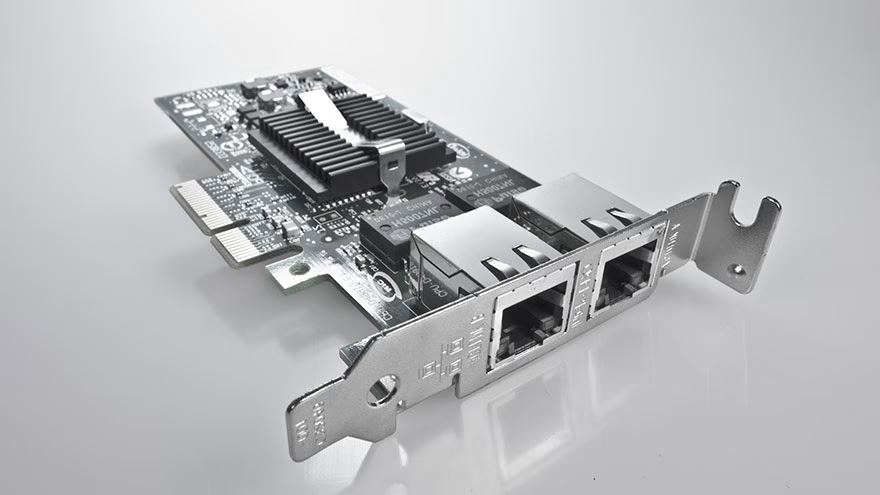
What Is an NIC Failure Message? means a computer or server is warning that the network interface card or network adapter may not be working correctly. The NIC is the hardware and driver layer that lets the device connect to a wired Ethernet network or, in modern wording, a network adapter may also include wireless hardware.
An NIC failure message does not always mean the card is physically dead. The cause might be a loose cable, disabled adapter, bad driver, failed switch port, incorrect IP settings, damaged port, firmware problem, or motherboard issue.
What The NIC Does
The network interface card translates data from the computer into signals the network can use. In older desktops, it may be a separate PCIe card. In many laptops and modern desktops, Ethernet hardware is built into the motherboard. USB Ethernet adapters are also common.
When the NIC fails, the system may lose local network access, internet access, server communication, printer access, or domain login. That is why the message can feel bigger than one small part.
Common Failure Messages
Windows may show "network cable unplugged," "device cannot start," a yellow warning icon in Device Manager, or no adapter at all. BIOS or server tools may report a failed port. Linux may show missing interfaces, driver errors, or link-down messages in logs.
Some messages point to connection problems rather than hardware. Livecub's Linksys association failure article and FileZilla data connection failure guide show how network errors can come from settings, not only broken parts.
Start With The Cable And Port
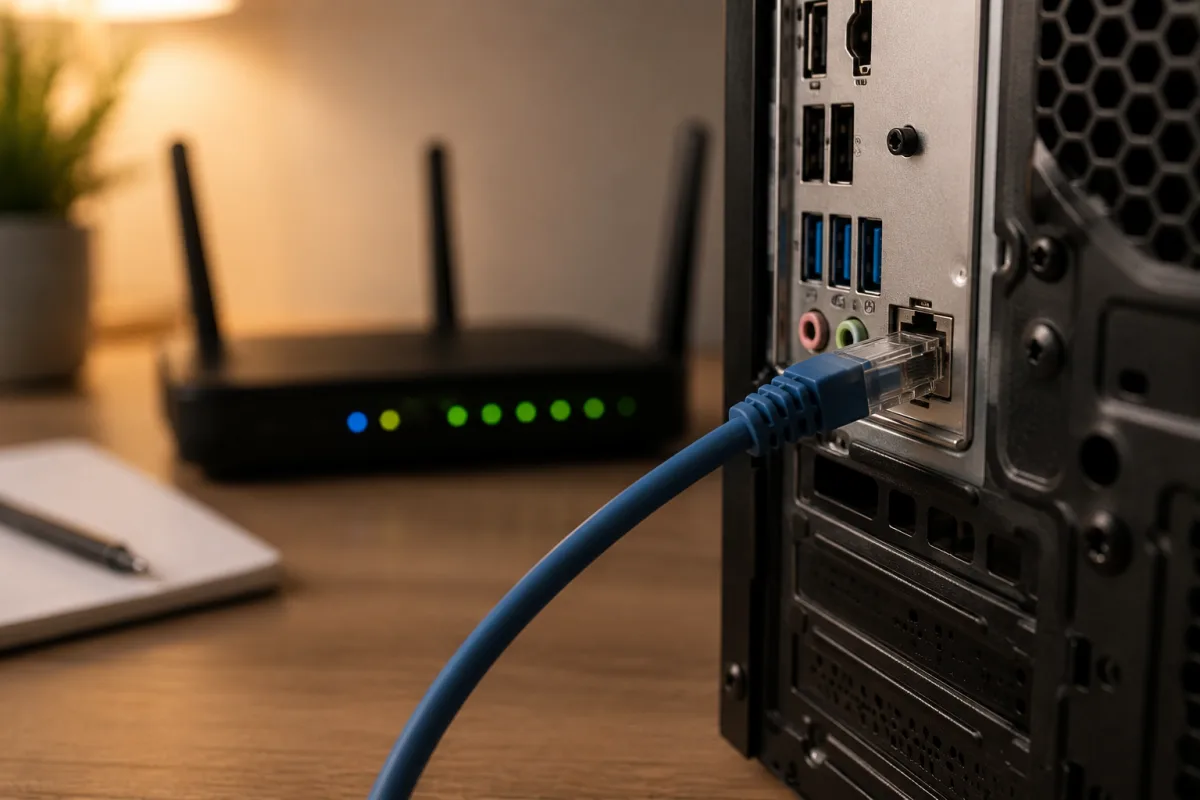
For wired Ethernet, check that the cable clicks into place, the link lights turn on, and the cable is not crushed. Try a known-good cable. Try a different switch or router port. If another device works on the same cable and port, the problem moves back toward the computer.
Do this before uninstalling drivers. A bad patch cable can waste an hour of software troubleshooting.
Check Device Manager Or System Tools

Microsoft's Ethernet troubleshooting guidance includes checking the Ethernet network adapter in Device Manager, uninstalling and reinstalling the driver, and restarting the computer. If Windows does not detect the adapter, drivers or hardware may be involved.
On Linux, check tools such as ip link, lspci, dmesg, NetworkManager logs, or the server vendor's diagnostic tools. On servers, use the vendor management console if available.
Use Adapter Diagnostics
Intel's PROSet diagnostics documentation says supported adapters can run tests for adapter hardware, cabling, and network connection. Vendor diagnostics are useful because they can separate driver, cable, and hardware clues.
Do not rely on one test alone. A card may pass a simple test and still fail under heat, heavy traffic, or after sleep. Look for repeat patterns.
Loopback And Ping Tests
A loopback test checks whether the local TCP/IP stack answers itself, often through 127.0.0.1. If loopback works, the operating system's network stack is at least partly alive. It does not prove the physical NIC, cable, or switch works.
Next, ping the router or gateway. Then ping another local device. Then test DNS with a domain name. This order helps separate local stack, adapter, gateway, and name-resolution problems.
Driver Problems
A driver update can break a working adapter, especially after operating system updates. Try rollback if the problem began right after an update. If the driver is corrupted, uninstalling and restarting may let the operating system reload it. For business machines, use the manufacturer-approved driver, not a random download.
Livecub's Winlogon buffer failure article is a different kind of system error, but it shares one troubleshooting lesson: note what changed right before the failure.
IP Configuration Issues
An NIC can be healthy while the IP configuration is wrong. Check whether the adapter has an IP address, gateway, DNS server, and correct subnet. If the address begins with 169.254 on Windows, the device may not have received DHCP configuration.
Release and renew DHCP only after checking physical link. Static IP systems need extra caution because changing the wrong address can disconnect a server, camera, printer, or point-of-sale system.
When Hardware Is Likely
Hardware becomes more likely when the adapter disappears from BIOS or Device Manager, link lights never turn on with known-good cables, diagnostics fail, the port is physically damaged, the adapter overheats, or multiple operating systems cannot see it.
Storage and hardware failures can have similar diagnostic discipline. Livecub's physical HDD failure recovery article is about drives, but the same rule applies: confirm the failing part before replacing it.
Replacing A NIC
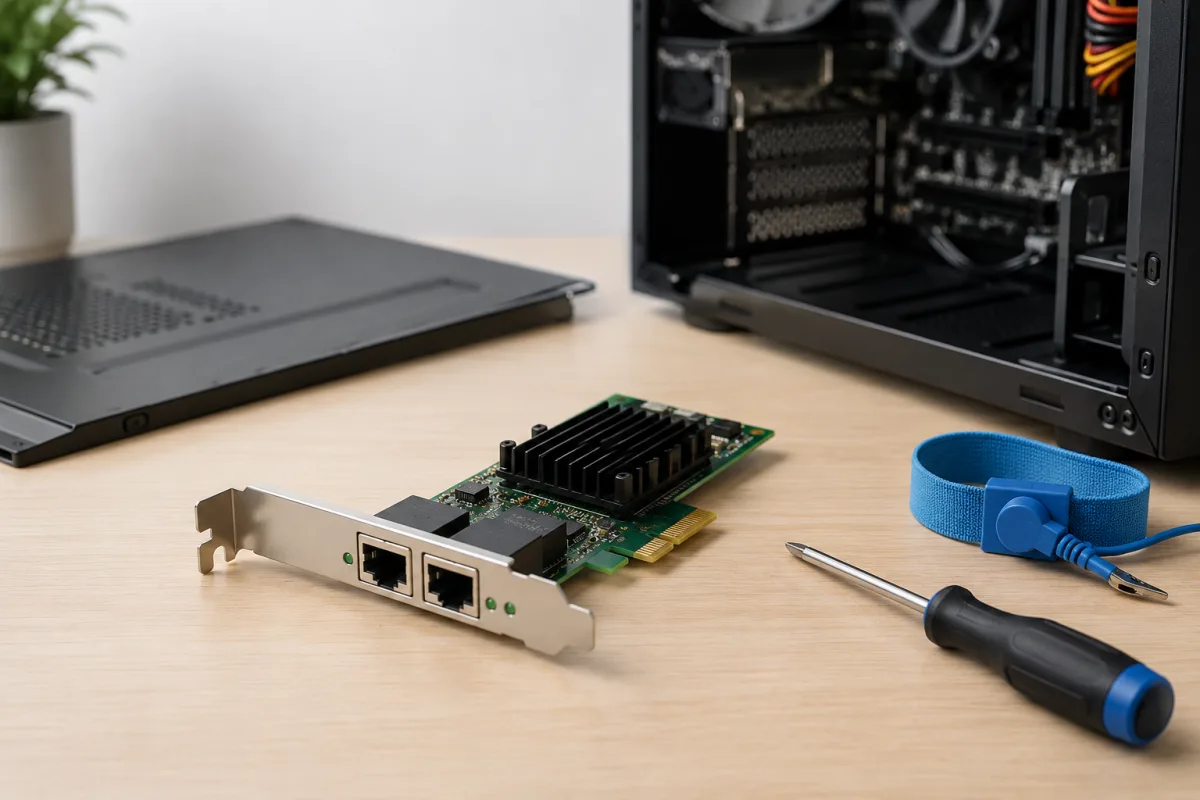
Lenovo's NIC replacement guidance for server hardware starts by identifying the failed NIC through management tools or indicator lights, then shutting down through the proper procedure. That level of care matters on production machines.
For a desktop, replacement may mean adding a PCIe Ethernet card or using a USB adapter. For a laptop, a USB adapter may be easier than motherboard repair. For servers, follow the vendor's maintenance process and record port mappings, MAC addresses, VLANs, and IP settings.
Disable The Old Adapter
If you install a replacement but leave the old adapter active, the system may keep trying to use the broken interface. Disable the old adapter in the operating system or BIOS if needed. Document what changed so the next person understands the setup.
Livecub's failure-to-deliver email guide and Linux rootkit detected failure article are reminders that error messages need context. The words on screen are a clue, not the whole diagnosis.
Server And Business Systems
On servers, an NIC failure can affect virtual machines, storage traffic, backups, remote management, and monitoring. Check bonded interfaces, teaming, VLAN tags, static routes, and switch configuration before replacing hardware. One failed port may be hidden by failover until maintenance exposes it.
Record MAC addresses and port labels before swapping adapters. Some software licenses, DHCP reservations, firewall rules, or monitoring tools may be tied to a specific address.
Wireless Adapters Are Different
People sometimes use NIC failure to describe Wi-Fi adapter failure too. Wireless adds different variables: radio disabled, airplane mode, antenna damage, access point distance, driver problems, saved network corruption, and interference. Start with the same basic idea, but test wireless and wired paths separately.
If wired Ethernet works but Wi-Fi does not, the Ethernet NIC is not the problem. If neither works, the issue may be operating system networking, security software, DHCP, or router configuration.
Document The Fix
After the network works again, write down what fixed it: cable swap, driver rollback, adapter replacement, switch port change, DHCP correction, or BIOS setting. This helps if the problem returns and prevents the next technician from repeating every step.
For business systems, update diagrams, asset notes, and monitoring labels. A repaired NIC that is not documented can create confusion during the next outage.
When To Stop Troubleshooting
Stop and escalate if the computer is mission-critical, the server hosts production workloads, the adapter fails intermittently under load, or replacement could affect bonded ports and VLANs. Guessing on a live system can create a larger outage than the original failure.
For home users, escalation may simply mean trying a USB Ethernet adapter or asking a repair shop to confirm the port.
Prevention And Monitoring
Use surge protection, keep dust out of desktops, avoid cable strain, update drivers carefully, label switch ports, and monitor server link errors. If a port flaps repeatedly, investigate before it becomes a full outage.
For older PCs that also show boot hardware messages, FDC failure context can help distinguish unrelated motherboard or legacy device messages from true network adapter failure.
Frequently Asked Questions
Does an NIC failure message mean the adapter is dead?
No. Cables, drivers, disabled adapters, switch ports, and IP settings can create similar symptoms.
What should I check first?
Check cable, link lights, switch port, adapter status, and whether the device appears in system tools.
What does loopback prove?
Loopback proves the local network stack can answer itself. It does not prove the physical NIC works.
Can I use a USB Ethernet adapter?
Often yes for desktops and laptops, but servers and managed systems may need approved hardware.
When should I replace the NIC?
Replace it when known-good cables, ports, drivers, and diagnostics point back to failed hardware.
The Practical Diagnosis
An NIC failure message is a starting point. Check physical link, operating system detection, diagnostics, IP settings, and recent changes before replacing hardware. The best fix is the one that proves the actual failure.

Timothy Davidson
Edits step-by-step general-interest guides for clarity, realistic limits and source verification.


Leave a reply
Replying to