

Why Does Stage Fright Occur? Stage fright happens when the brain treats performance as a threat. The body prepares for danger even when the real task is a speech, audition, meeting, reading, interview, or performance.
That reaction can feel embarrassing, but it is not a character flaw. It is a stress response mixed with fear of judgment, memory, expectations, and the pressure to perform while being watched.
The Body Reads Performance As Risk
Before a performance, the nervous system may release stress hormones that speed the heart, tighten muscles, dry the mouth, shake the hands, and narrow attention.
Mayo Clinic lists physical symptoms of social anxiety such as fast heartbeat, trembling, sweating, nausea, trouble catching breath, and a blank mind: Mayo Clinic social anxiety symptoms.
The body is trying to protect you. The problem is that protection can interfere with the performance.
Fear Of Evaluation Is Central

Stage fright is often less about the task and more about being judged. The mind predicts embarrassment, rejection, failure, or visible anxiety.
NIMH describes social anxiety disorder as fear or anxiety about situations where a person may be judged or scrutinized by others: NIMH social anxiety disorder.
Not every case of stage fright is social anxiety disorder, but the fear of scrutiny is a common thread.
Your Brain Uses Old Evidence
A bad presentation, teasing, voice crack, forgotten line, strict teacher, or public mistake can teach the brain that performance is unsafe.
Later, the body may react before you consciously remember the old event. That is why stage fright can feel faster than thought.
If a sports setting is the trigger, sports tryout nerves may help with that version of being watched.
Perfectionism Raises The Stakes
Perfectionism tells you the performance must be flawless or it is worthless. That turns normal mistakes into threats.
The more the mind demands perfect delivery, the harder it is to recover from a small stumble.
A better goal is controlled recovery: pause, breathe, continue, and let the audience move on.
Avoidance Keeps The Fear Alive
Avoiding every performance brings short-term relief, but it teaches the brain that escape was necessary. The fear stays untested.
Gradual practice gives the brain new evidence: discomfort can rise and fall, and mistakes can be survived.
For quick performance tools, stage fright coping is a related internal guide.
The Audience Feels Larger Than It Is
Stage fright often includes the spotlight effect: the sense that everyone notices every breath, swallow, shake, or pause.
Most audiences notice less than the performer thinks. They are following the message, waiting their turn, checking the program, or thinking about themselves.
This does not mean the fear is fake. It means the fear overestimates the audience's attention.
Physical Sensations Create A Loop

A fast heart can scare you, then the fear makes the heart faster. Shaking hands can make you worry people will see, which increases shaking.
Cleveland Clinic's performance anxiety guidance discusses calming the body's pressure response and notes that stage fright can be addressed with both medication-free strategies and, for some people, medical options: Cleveland Clinic performance anxiety.
Breaking the loop often means changing how you respond to symptoms, not demanding that symptoms vanish.
Preparation Can Help Or Hurt
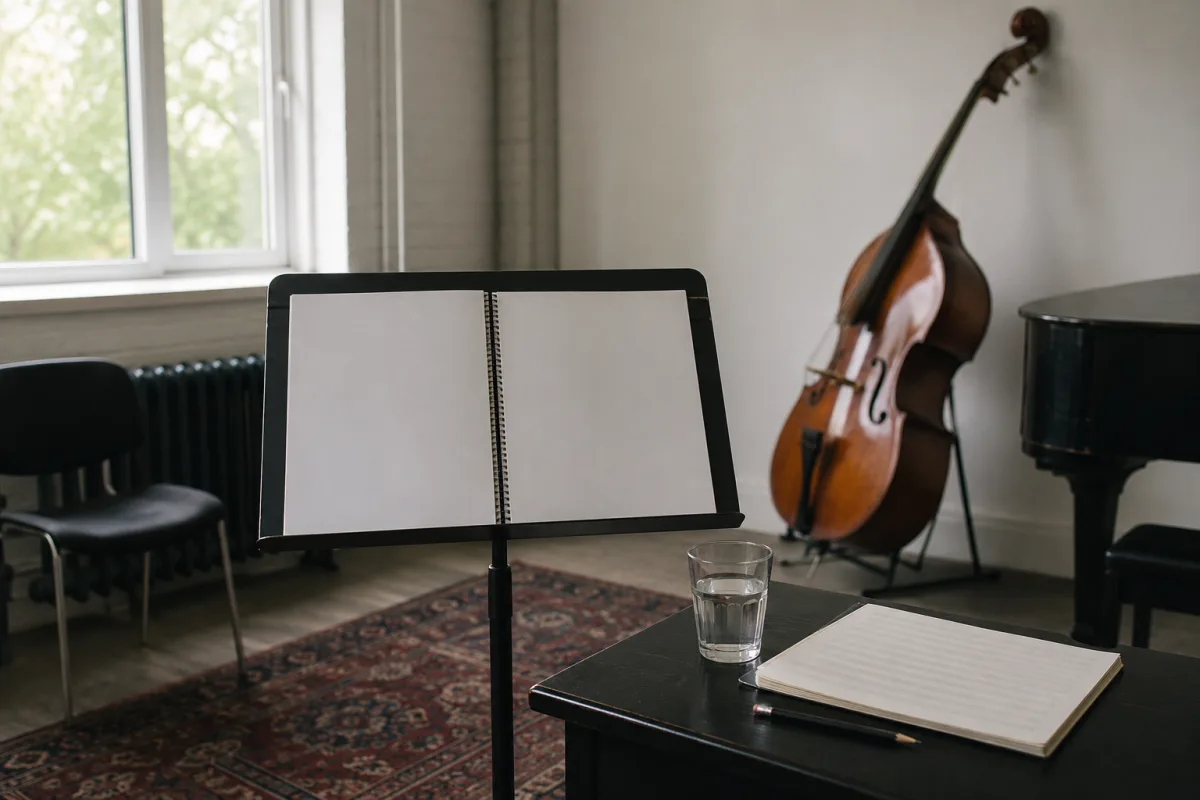
Practice helps when it makes the task familiar. It hurts when it becomes endless checking, rewriting, or trying to remove every possible mistake.
Use realistic practice: stand up, speak out loud, use the same notes, time yourself, and practice recovery after a mistake.
Do not practice only in perfect private conditions if the real event includes noise, people, or a time limit.
Identity Gets Involved
Stage fright grows when one performance feels like proof of intelligence, talent, attractiveness, or worth.
A performance is an event. It may matter, but it is not your whole identity.
If self-image is tangled with performance, journaling patterns can be adapted into a thought journal rather than a food journal.
When It Is More Than Ordinary Nerves
Occasional nerves are common. Professional help is worth considering when fear causes avoidance, panic attacks, missed school or work, substance use to cope, or major distress for months.
Treatment may include cognitive behavioral therapy, exposure practice, medication discussion, or coaching depending on severity and context.
If speaking becomes impossible in certain settings, selective mutism treatment is a separate but related topic.
Why Symptoms Peak Before The Event
Many people feel worst before walking onstage. Anticipation gives the mind time to imagine every failure without any real information from the event.
Once the performance starts, attention may shift to the task, and symptoms can settle. This is why the waiting room often feels harder than the first minute.
A pre-performance routine helps because it gives the mind a job besides prediction.
Why Some Performers Still Get It
Experience reduces uncertainty, but it does not make someone immune. Skilled performers can still care deeply, remember past mistakes, or face higher stakes.
Stage fright can also return after a break, illness, criticism, or a new audience.
The presence of fear does not mean you lack ability. It means the situation matters to your nervous system.
The Role Of Attention
Stage fright pulls attention inward: heart, hands, voice, face, thoughts, and imagined judgment. Performance usually improves when attention returns to the task.
Use anchors: the first sentence, the next note, the person asking the question, the rhythm of the breath, or the point you want the audience to understand.
Attention training is a skill, not a switch.
Why Reassurance Does Not Always Work
People may say you will be fine, but reassurance often fades quickly because the fear wants certainty that no one can give.
More useful reassurance is specific: I know my opening line, I practiced the transition, I can pause if needed, and one mistake does not end the event.
This kind of reassurance points to action rather than perfection.
Why The Voice Changes
The voice can shake, tighten, speed up, or go quiet because breathing and muscle tension change during the stress response.
Trying to hide the change can make it worse. Slowing the first sentence and allowing a pause often helps more than forcing confidence.
Warmups, hydration, and realistic rehearsal can reduce surprise, but they do not need to erase every symptom.
Why Memory Goes Blank
Anxiety can pull working memory away from the content and toward threat monitoring. The mind starts tracking faces, mistakes, and escape routes.
Use cues rather than full scripts when possible: first line, three main points, closing sentence. Cues are easier to recover than memorized paragraphs.
If you blank, say the last point again or move to the next cue. Recovery is part of the skill.
Why It Can Feel Worse With People You Know
Some people fear strangers less than classmates, coworkers, relatives, or friends. Familiar audiences can feel higher stakes because you will see them again.
That does not mean the audience is more dangerous. It means the relationship matters to you.
Practice with a safe familiar person before a real familiar group if that is your hardest setting.
Why Avoidance Spreads
Avoiding one speech can lead to avoiding meetings, then introductions, then opportunities. Anxiety often widens the boundary if it is never challenged.
Small exposures keep the boundary from expanding. You do not need to jump to a huge stage; you need regular evidence that being seen is survivable.
If avoidance is already broad, treatment can help rebuild the ladder.
This is why early practice matters. It protects choices before fear quietly removes them.
The first goal may be attendance, not excellence. Showing up with symptoms can be the exposure that starts changing the pattern.
Why Control Makes It Louder
Trying to control every heartbeat, pause, hand movement, and facial expression puts more attention on symptoms. That attention can make them feel stronger.
A better approach is to control the next useful action: say the first line, look at the notes, answer the question, or take one breath.
Performance improves when attention returns to the message rather than the monitoring of fear.
Frequently Asked Questions
Is stage fright the same as social anxiety?
Not always. Stage fright can be situational, while social anxiety disorder is broader and more impairing.
Why do I shake on stage?
Shaking can come from adrenaline and muscle tension during the stress response.
Can stage fright happen even if I am prepared?
Yes. Preparation helps, but fear of judgment and body symptoms can still appear.
Does avoiding performances help?
It may relieve fear short term, but it often keeps the fear strong over time.
When should I get treatment?
Seek help if fear causes avoidance, panic, missed opportunities, or major distress.
This article is for general information only and isn't a substitute for medical or mental health advice. If symptoms affect daily life, talk with a qualified professional.

Chiara Bradshaw
Covers education, culture and creative topics with an emphasis on readable explanations and verifiable references.




Leave a reply
Replying to