

How to Cure Stage Fright & Other Social Phobias needs a careful correction: most people should think in terms of treatment, practice, and recovery, not a one-time cure.
Stage fright and social anxiety can improve a lot. The path usually combines gradual exposure, CBT skills, better preparation, body regulation, and professional help when fear limits daily life.
Cure Is The Wrong Promise
A cure claim can make people feel broken when fear returns. Anxiety often improves in layers: fewer symptoms, faster recovery, less avoidance, and more freedom.
NIMH describes social anxiety as fear in situations where someone may be judged, including public speaking and meeting new people: NIMH social anxiety guide.
Know The Pattern
Write the pattern: trigger, feared outcome, body symptoms, safety behavior, avoidance, and aftermath. This turns a vague fear into something you can work on.
Stage fright may center on speeches, while social phobia may affect conversations, eating around others, dating, work, or asking for help.
Use Gradual Exposure
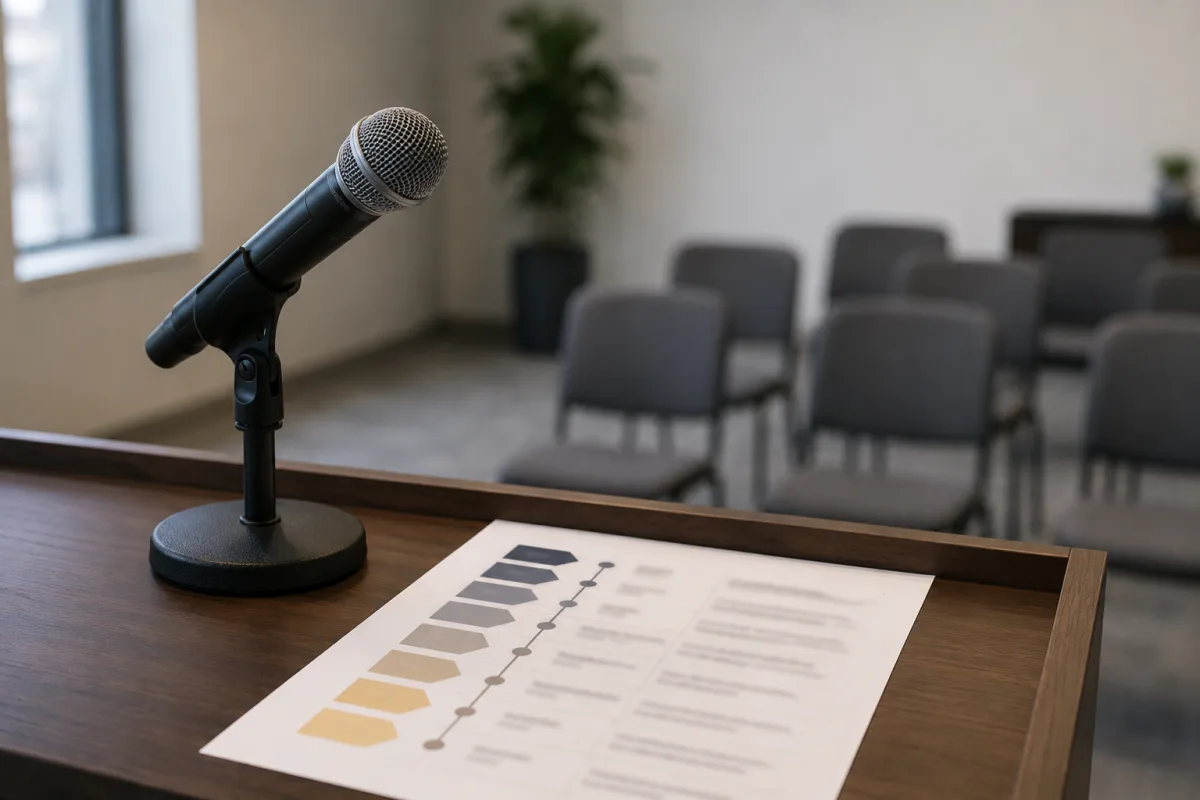
Exposure means approaching feared situations in planned steps, not throwing yourself into the hardest event with no support.
Start with reading aloud alone, then recording, then one listener, then a small group, then a lower-stakes live setting. Repeat until the body learns.
Drop Safety Behaviors
Safety behaviors are habits that feel protective but keep fear alive: over-rehearsing every word, avoiding eye contact, hiding hands, speaking too fast, or escaping quickly.
Drop one safety behavior at a time. The goal is learning that you can cope without it.
CBT Skills
APA describes CBT as a treatment that works with thoughts and behavior patterns: APA CBT overview.
For social anxiety, CBT often helps people test predictions, reduce avoidance, and practice feared situations with support.
Speech Mechanics

Stage fright interferes with breath, voice, memory, and pacing. These can be trained separately from the fear itself.
Livecub's sports tryout nerves guide uses a different setting, but the performance-pressure pattern is similar.
Fast Tools Have A Place
Fast tools can help before a speech: slower exhale, feet on the floor, simpler notes, planned pauses, and a first sentence you know well.
Livecub's quick stage fright guide can help for immediate events, but quick tools are not the whole treatment.
Medication Questions
Some people ask about beta blockers or other medication. Medication decisions depend on diagnosis, health history, other medicines, and the type of anxiety.
Track symptoms, triggers, and questions before the visit. Livecub's food journal guide shows the same basic habit in another health context.
Selective Mutism
If speech disappears in specific settings, especially since childhood, selective mutism may need a more specific treatment plan.
Livecub's selective mutism guide is the better internal path for that pattern.
Practice Across Settings
If fear only improves in one room, practice may be too narrow. Try different rooms, audiences, times of day, and formats.
The point is not to become fearless. It is to become flexible enough that fear no longer runs the schedule.
Self-Compassion
Harsh self-talk after a speech teaches the brain that speaking is dangerous. Review like a coach: what worked, what was hard, what to practice next.
Do not grade the speech by anxiety level alone. A nervous speech can still be clear, useful, and brave.
Professional Help

Seek therapy if avoidance affects school, work, relationships, medical care, or daily errands. Social anxiety treatment is a normal reason to see a mental health professional.
Mayo Clinic's social anxiety treatment page discusses psychotherapy, medication, and coping steps.
Group Practice
A class, speaking club, therapy group, or rehearsal circle can create repeated exposure with feedback. Repetition matters because the brain needs new evidence.
Choose a group that is firm but kind. Humiliation is not treatment.
Track Avoidance
Track what you avoid for two weeks: calls, meetings, cameras, eating near others, asking questions, or presenting. The list shows where fear has been making decisions.
Pick the smallest avoided task first. Progress usually starts below the dramatic goal.
Build A Fear Ladder
A fear ladder ranks tasks from easiest to hardest. For example: read aloud alone, record a minute, call a friend, ask a question in a meeting, then give a short talk.
The steps should feel uncomfortable but doable. If a step causes panic every time, make it smaller.
Repeat The Same Step
Trying a feared task once is not enough for most people. Repetition teaches the nervous system that the feared outcome does not happen, or that it can be handled.
Stay with one step until it feels less gripping, then move up. Speed is less useful than consistency.
Stop Mental Replays
After social events, anxious people often replay every sentence. That keeps the threat alive after the event ends.
Set a review limit: one useful lesson, one thing that went okay, one next step. Then stop the replay.
Use Realistic Goals
A realistic goal is not never feel anxious. A realistic goal is attend the meeting, ask one question, or finish the speech while anxious.
This makes success possible before fear is gone. Success teaches more than waiting for confidence.
Handle Blushing And Shaking
Blushing, shaking, and sweating feel embarrassing, but fighting them often makes them louder. Let symptoms be present while you continue the task.
Most people are focused on the message, not the exact shade of your face.
Friends Can Help
A trusted friend can practice as an audience, make small talk in a shop with you nearby, or attend a first class with you.
Support should not become rescue. The aim is to help you approach, not help you avoid.
Medication Is A Discussion
Medication may be discussed for social anxiety or performance symptoms, but the choice depends on diagnosis, health history, and goals.
Ask what the medication is meant to change, what it will not change, and how progress will be measured.
Setback Planning
A bad speech or awkward conversation may happen. Plan for it before it happens: rest, review fairly, and repeat a smaller practice step.
Setbacks are part of treatment. They are not proof that treatment failed.
Choose A Practice Theme
One week can focus on eye contact, another on slower speech, another on asking questions. A theme keeps practice focused.
Trying to fix every symptom in one exposure makes the task too large and the review too harsh.
Use Recording Wisely
Recording can help, but anxious people may watch themselves with a cruel eye. Watch once for one skill only, such as pacing or filler words.
Then stop. Replaying every facial expression is not practice; it is checking.
Prepare For Body Symptoms
Before exposure, decide what you will do if your hands shake, face flushes, or voice cracks. The answer should be continue, pause, breathe, and speak the next line.
Having a plan keeps symptoms from becoming surprises.
Social Goals
For broader social phobia, practice can include saying hello, making a small request, eating near others, or staying in a group for ten minutes.
Speech practice helps, but everyday social tasks may need their own ladder.
Review With Kind Precision
After practice, avoid two extremes: that was perfect or that was awful. Use kind precision: what happened, what did I learn, what is the next small step?
This style keeps motivation alive without lying to yourself. It also makes progress easier to see because the review is tied to behavior, not mood. If you spoke while anxious, stayed in the room, asked one question, or tried again after a stumble, that counts as treatment evidence for the next practice round again this week.
Frequently Asked Questions
Can stage fright be cured permanently?
Some people improve so much that it rarely limits them, but a permanent cure promise is not realistic. Treatment focuses on less avoidance and better coping.
What treatment helps stage fright?
Gradual exposure, CBT skills, speech practice, and sometimes medication discussions can help, depending on the person.
Is social phobia the same as shyness?
No. Social anxiety disorder is more intense and can interfere with work, school, relationships, and daily tasks.
Should I avoid speeches until I feel ready?
Avoidance often keeps fear strong. A safer plan is gradual practice with steps you can repeat.
When should I see a therapist?
See a therapist if fear limits your choices, causes strong distress, or keeps you from school, work, care, or relationships.
Stage fright and social phobias improve through practice and treatment, not magic. Build gradual exposure, reduce avoidance, and get professional help when life is shrinking.

Linda Fehrman
Edits general wellness and relationship explainers. Health material is educational, avoids diagnosis and links to health-authority guidance.




Leave a reply
Replying to