Press Enter to search or ESC to close
Health

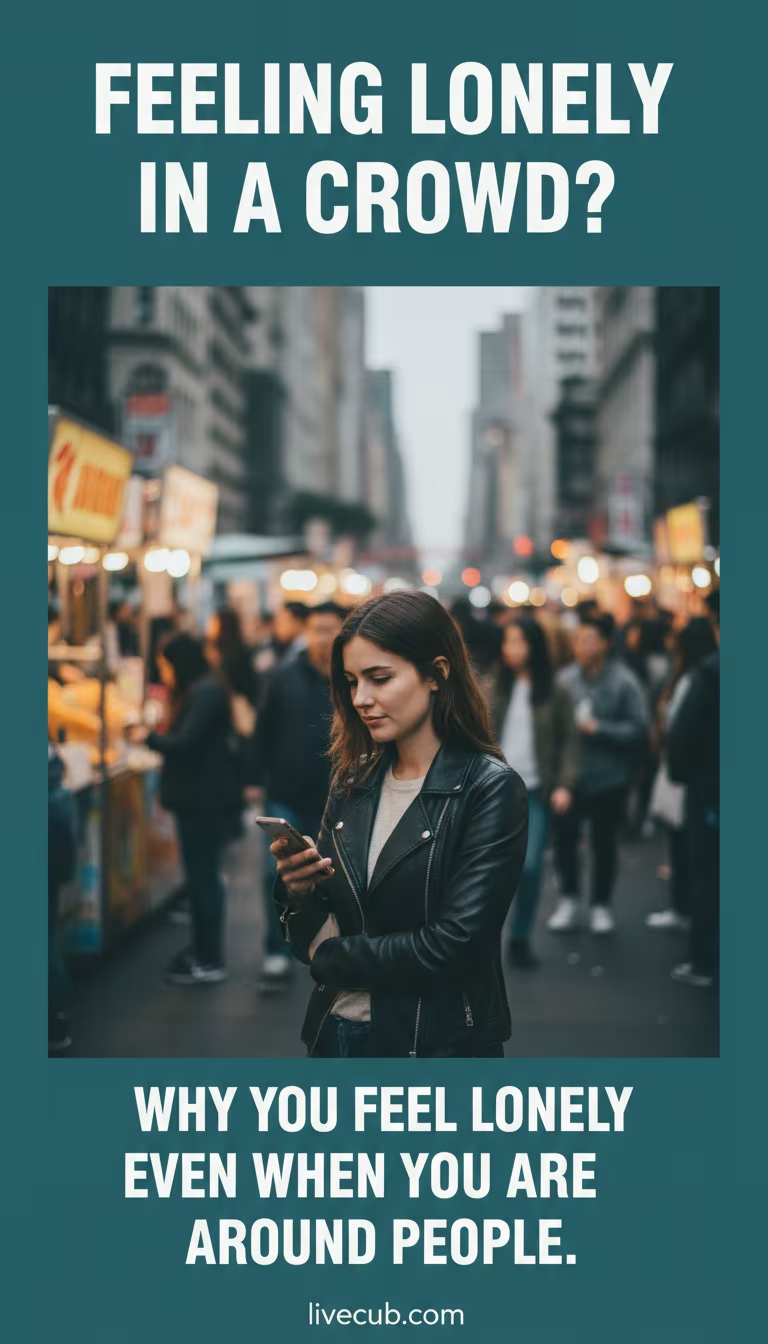
Why You Feel Lonely Even When You Are Around People

Linda Fehrman
· · Updated Jan 30, 2026 · 16 min read

Why You Feel Lonely Even When You Are Around People

You’re at that party, right? Or maybe it’s a family gathering, a bustling office event, even just a busy coffee shop. The room is full of chatter, laughter, and the hum of human interaction.

You’re smiling, nodding, perhaps even joining in a conversation or two. But beneath it all, there’s this quiet ache, a hollow feeling that whispers, "I'm alone." It’s a strange paradox, isn’t it? To be surrounded by people, yet feel utterly isolated.

It's like everyone else is speaking a language you can’t quite grasp, or they're all part of a secret club you didn't get an invite to. You might wonder, "Is there something wrong with me?" Or "Why does this keep happening?" Here's the thing: you're definitely not alone in feeling this way. I've been there, more times than I can count, navigating rooms full of friendly faces while wrestling with a profound sense of disconnection.

Why This Matters

This isn't just some fleeting mood or a minor inconvenience. This feeling of loneliness, even when we’re with others, is a significant signal from our inner world, and it genuinely matters. When it persists, it can quietly chip away at our well-being, affecting everything from our mental health to our physical resilience.

I’ve seen it firsthand in my own life and among friends; that persistent ache can morph into anxiety, dull our joy, and even make us question our self-worth. It’s like a silent alarm going off, telling us that something in our need for genuine connection isn’t being met. Ignoring it won't make it disappear; in fact, it often makes it louder.

Beyond the emotional toll, chronic feelings of loneliness have been linked to a whole host of health issues – everything from increased stress hormones to a weakened immune system. Think about it: our brains are wired for connection. We're social creatures, and when that fundamental need isn't truly satisfied, our bodies and minds register it as a threat.

It can hinder our personal growth, make us hesitant to take risks, and even prevent us from forming the very relationships we crave. This isn't about being an introvert or an extrovert; it’s about a universal human need for belonging, for feeling seen, understood, and valued. When we understand why we feel this way, we can start to do something about it, moving from a place of passive suffering to active self-care and genuine connection.

The Illusion of Proximity: It's About Quality, Not Quantity

One of the biggest misconceptions we often grapple with is equating physical presence with actual connection. We can be in a room packed shoulder-to-shoulder with people and still feel like we’re on a desert island. Why?

Because being *around* people isn't the same as *connecting* with them. Modern life, with its endless digital "friends" and constant demands, often provides a surplus of surface-level interactions. We might exchange pleasantries, share memes, or even discuss current events, but these conversations rarely scratch beneath the surface.

It's like having a hundred appetizers but never a main course; you might be surrounded by food, but you're still hungry.

What we're truly yearning for when we feel lonely is a sense of genuine understanding, empathy, and shared experience. We want to be able to show up as our authentic selves, flaws and all, and feel accepted. We want to feel heard, not just listened to.

This distinction is absolutely fundamental. In my experience, chasing more social engagements to cure loneliness often backfires if those engagements lack depth. You end up feeling even more exhausted and disillusioned because you’ve put in the effort but haven’t gotten the emotional nourishment you needed.

It's about shifting our focus from simply accumulating contacts to cultivating meaningful bonds that enrich our lives and make us feel truly seen. This means being intentional about how we spend our time and with whom, ensuring that our interactions move beyond the superficial and into the realm of the truly personal.

How to Cultivate Deeper Bonds

  • Practice Active Listening: This isn't just about waiting for your turn to speak. Active listening means truly focusing on what the other person is saying, both verbally and non-verbally. Put away distractions – yes, that means your phone – make eye contact, and ask follow-up questions that show genuine curiosity. Instead of planning your witty retort, try to understand their perspective, their feelings, their underlying message. For example, if someone says, "I had a really tough day," instead of immediately launching into your own tough day, try, "Oh no, I'm sorry to hear that. What made it particularly tough?" This signals that you're engaged and that their experience matters.
  • Share Authentically (Appropriately): Connection thrives on vulnerability. This doesn't mean spilling your deepest secrets to every casual acquaintance, but it does mean being willing to share a bit of your true self. Talk about your passions, your struggles, your dreams, your fears – the things that make you uniquely you. When you share a personal anecdote or a genuine feeling, you create an opening for the other person to reciprocate, fostering a sense of mutual trust and understanding. Start small; maybe share a personal opinion about something you genuinely care about, or admit to a minor struggle. It takes courage, but it's the bridge to true intimacy.
  • Invest Time in Fewer, Deeper Relationships: We live in a world that often celebrates a huge network, but when it comes to combating loneliness, quality absolutely trumps quantity. Instead of spreading yourself thin across dozens of acquaintances, identify a few people with whom you feel a natural resonance and intentionally invest more time and energy into those relationships. Schedule regular catch-ups – a weekly coffee, a monthly dinner, a recurring walk in the park. Be the one who initiates, who remembers important dates, and who follows up. These sustained efforts build a history, shared memories, and a foundation of trust that can withstand the ups and downs of life.

The Inner Landscape: Self-Perception and Internal Barriers

Sometimes, the feeling of loneliness isn't just about the quality of external interactions; it's deeply rooted in our inner world. Our self-perception, our deepest beliefs about ourselves, and the stories we tell ourselves can become formidable barriers to true connection, even when people are genuinely trying to reach out.

Think about it: if you secretly believe you're not interesting enough, not smart enough, or simply not worthy of deep connection, you might unconsciously push people away. You might hold back, put up walls, or interpret friendly gestures through a lens of suspicion or self-doubt. It's a cruel irony – the very thing we crave, we inadvertently sabotage because of internal messaging.

Imposter syndrome, fear of rejection, overwhelming self-criticism – these are all internal factors that can make us feel isolated even in a crowd. When your inner voice is constantly telling you you don't belong, it becomes incredibly difficult to truly feel like you do, regardless of how welcoming your external environment might be.

I've had moments where I've been praised or celebrated, yet a nagging voice inside whispered, "They don't really know you," or "You'll be found out." That kind of internal narrative creates a chasm between who you are and who you present to the world, making authentic connection feel impossible. Addressing this internal landscape isn't selfish; it’s a necessary step towards being able to receive and give genuine connection.

It involves cultivating self-compassion, challenging negative beliefs, and understanding that your worth isn't contingent on external validation.

Breaking Down Internal Barriers

  • Challenge Negative Self-Talk: Become an observer of your own thoughts. When that inner critic pipes up with a harsh judgment ("You're so awkward," "Nobody really cares what you think"), pause and ask yourself: Is that truly accurate? Is there evidence for this? Would I say that to a friend I love? Often, our internal critiques are far more severe and irrational than anything someone else might think. By actively questioning these thoughts, you can start to dismantle their power. Try reframing them: "I'm feeling a bit awkward right now, but that's okay, everyone feels that sometimes."
  • Practice Self-Compassion: This is about treating yourself with the same kindness, understanding, and empathy you would offer to a loved one facing a difficult situation. Instead of beating yourself up for a perceived social misstep, offer yourself comfort. Acknowledge that feeling lonely or inadequate is painful, and that it's okay to feel that way. Kristin Neff, a leading researcher in self-compassion, suggests a simple three-part practice: be kind to yourself in moments of suffering, recognize that suffering is part of the common human experience, and be mindful of your painful emotions without over-identifying with them.
  • Identify and Address Limiting Beliefs: What "rules" or beliefs do you hold about yourself and your ability to connect? "I'm always the outsider," "I'm not interesting enough," "People will judge me if I'm myself." These beliefs often stem from past experiences or messages we internalized long ago. Write them down. Then, for each belief, try to find counter-evidence or consider alternative perspectives. What if, just for a moment, you challenged that belief and acted as if it wasn't true? This process can slowly, but surely, start to rewire your brain's pathways towards more empowering self-perceptions.

Environmental and Lifestyle Influences: Beyond Personal Control

It's easy to blame ourselves when we feel lonely, but sometimes, the environment we inhabit and the lifestyles we lead play a huge, often unseen, role. Our modern world, while incredibly connected technologically, has inadvertently created conditions that make true human connection harder to find. Think about the rise of remote work, which, while offering flexibility, can also strip away those casual watercooler chats and spontaneous coffee breaks that organically foster relationships.

Long commutes, the demands of "always-on" work culture, and even the design of our cities can contribute to isolation.

Many of us spend less time in "third places" – those communal spaces outside of work and home where casual interactions can flourish. We might drive everywhere, bypassing opportunities to walk and encounter neighbors. Our schedules are often packed to the brim, leaving little margin for spontaneous meet-ups or just "being" with people.

And then there's technology: while it can bridge distances, constant scrolling, endless notifications, and the curated perfection of social media can create a sense of being constantly connected, yet perpetually separate. It's a digital paradox where we're seeing everyone's highlights reel, feeling like we're part of the action, but missing the messy, authentic, shared reality that builds real bonds.

Understanding these external factors helps us recognize that it's not always "just you"; it's a systemic challenge we can consciously work to counteract.

Reclaiming Your Environment for Connection

  • Create "Third Places": Actively seek out or cultivate spaces that foster casual interaction. This could be a local coffee shop where you're a regular, a community garden, a volunteer group, a book club, or even a specific dog park if you have a furry friend. The idea is to have a place where you can regularly encounter the same people in a relaxed, low-pressure setting. Over time, these repeated, casual encounters can organically evolve into deeper connections. It’s about building a sense of community, one familiar face at a time.
  • Digital Detox Moments: This isn't about ditching your phone forever, but about intentionally putting it away when you're with people. When you're having dinner, leave your phone in your bag. During a coffee chat, keep it on silent and out of sight. The simple act of being fully present, making eye contact, and giving someone your undivided attention is a powerful act of connection in our distracted world. I’ve noticed a huge difference in how deeply I connect with friends when we make a conscious effort to keep phones off the table. It signals respect and prioritizes the person in front of you.
  • Prioritize In-Person Interactions: In an era of easy texting and video calls, make a conscious effort to prioritize meeting up in person whenever possible. While digital communication is convenient, it can never fully replicate the nuances of face-to-face interaction – the shared physical space, the subtle body language, the energy of being together. Even a quick coffee or a walk in the park can be more nourishing than an hour-long video chat. Schedule these meet-ups like you would any other important appointment, and guard that time fiercely. It's an investment in your well-being.

Common Mistakes to Avoid

When you're trying to combat loneliness, it's easy to fall into certain traps that actually make things worse. I've been there, making many of these blunders myself, and I can tell you from personal experience, they're not productive. One of the biggest mistakes is trying to fill the void with purely superficial interactions.

Think endless swiping on dating apps, constantly attending large, impersonal events where you barely know anyone, or collecting "friends" on social media without any real-world connection. These activities can give a temporary illusion of connection, but they often leave you feeling emptier and more disheartened because they don’t address the core need for depth.

Another common pitfall is blaming everyone else or external circumstances without doing any inner work. While external factors definitely play a role, constantly pointing fingers at others for "not reaching out" or "not understanding" prevents us from taking responsibility for our part in cultivating connections.

Connection is a two-way street, and we have to be willing to extend ourselves. Similarly, expecting others to always initiate is a recipe for frustration. If you're always waiting for an invitation, you'll spend a lot of time waiting.

Don't be afraid to be the one who suggests a meet-up or sends that first friendly message. Furthermore, not being vulnerable or authentic is a huge barrier; if you're constantly wearing a mask or trying to be someone you're not, people can sense it, and true connection becomes impossible. Finally, comparing your social life to the curated highlight reels you see on social media is a fast track to feeling inadequate.

Remember, everyone's showing their best bits; you're seeing their vacation photos, not their quiet, lonely nights. This kind of comparison is incredibly unfair to yourself and distorts your perception of reality.

Expert Tips for Deeper Connection

Moving beyond the basics, there are some more nuanced approaches that can really make a difference when you’re looking to foster deeper connections and overcome that persistent feeling of loneliness. These aren't quick fixes, but intentional practices that, over time, can profoundly shift your experience.

  • Cultivate Mindfulness and Presence: This is a powerful tool for connection. When you're truly present, you're not just physically in the room; your mind is there too. You're observing, listening, and engaging without being distracted by your inner monologue or external noise. Practices like meditation can train your brain to stay in the moment, which in turn makes you a more attentive and engaging conversationalist and friend. When you're mindful, you pick up on subtle cues, respond more authentically, and truly soak in the shared experience, making the connection feel richer for both parties.
  • Practice Proactive Boundary Setting: This might sound counterintuitive, but setting healthy boundaries can actually enhance your capacity for connection. If you're constantly over-scheduling yourself, saying yes to everything, or letting your energy be drained by interactions that don't serve you, you'll have nothing left for the people who truly matter. By saying "no" to things that deplete you, you create space and energy for genuine, nourishing connections. It’s about protecting your emotional resources so you can show up fully when it counts.
  • Seek Professional Support: There's absolutely no shame in reaching out for help when feelings of loneliness become overwhelming or persistent. A therapist or counselor can provide a safe space to explore underlying issues like anxiety, depression, past traumas, or deeply ingrained negative self-beliefs that might be hindering your ability to connect. They can offer strategies, coping mechanisms, and a fresh perspective that’s hard to find on your own. Sometimes, a little professional guidance is exactly what you need to navigate these complex emotions.
  • Engage in Purpose-Driven Connection: Connecting over shared interests is great, but connecting over a shared purpose can be even more powerful. Join a volunteer organization, get involved in local activism, or participate in a community project that aligns with your values. When you work alongside others towards a common goal, especially one you care deeply about, you naturally forge strong bonds. These relationships are often built on mutual respect, shared passion, and a sense of collective impact, providing a profound sense of belonging.
  • Embrace the "Helper's High": Research shows that helping others can significantly boost our own sense of well-being and connection. When you offer support, kindness, or assistance to someone else, you not only make a positive impact on their life but also reinforce your own sense of value and contribution. This act of giving can counteract feelings of isolation by creating a positive feedback loop where you feel needed and appreciated, fostering a sense of interconnectedness. It doesn't have to be grand; a simple act of kindness or a listening ear can be incredibly powerful.

Final Thoughts

Feeling lonely, even when you're surrounded by people, is a deeply human experience, and please know that it doesn't mean there's anything fundamentally wrong with you. It’s a signal, an invitation to look a little closer at the quality of your connections, your internal landscape, and the environments you inhabit.

While it can be a painful feeling, it's also a powerful catalyst for growth and change. The journey towards deeper, more authentic connection isn't a race or a checklist to be completed; it's a continuous process of self-awareness, courage, and consistent effort. It's about being brave enough to show up, to listen truly, and to open yourself up, even just a tiny bit, to the beautiful messiness of human interaction.

Remember, building genuine relationships takes time, patience, and a willingness to be imperfect. But oh, is it worth it!

So, take a deep breath. Start small. Perhaps it’s just one conscious choice this week to put your phone away during a conversation, or to reach out to that one person you’ve been meaning to connect with more deeply.

Maybe it’s dedicating a few minutes to challenging that nagging inner critic. Every single step, no matter how tiny, moves you closer to the vibrant, connected life you truly deserve. You have the power to create more meaningful connections, and you are absolutely worthy of them.

What's one small step you'll take today to nurture your sense of belonging?

Why You Feel Lonely Even When You Are Around People

Save for later

Found this helpful?

Pin this article to your Pinterest board and come back to it whenever you need a reminder.

Save to Pinterest
Written by

Linda Fehrman

Linda began writing professionally in 2014. The majority of her work has been published on fitness, health-eating and relationships. Linda is well-versed and passionate about relationships, fitness and health issues.

More posts
Linda Fehrman

Responses (0)

0%