
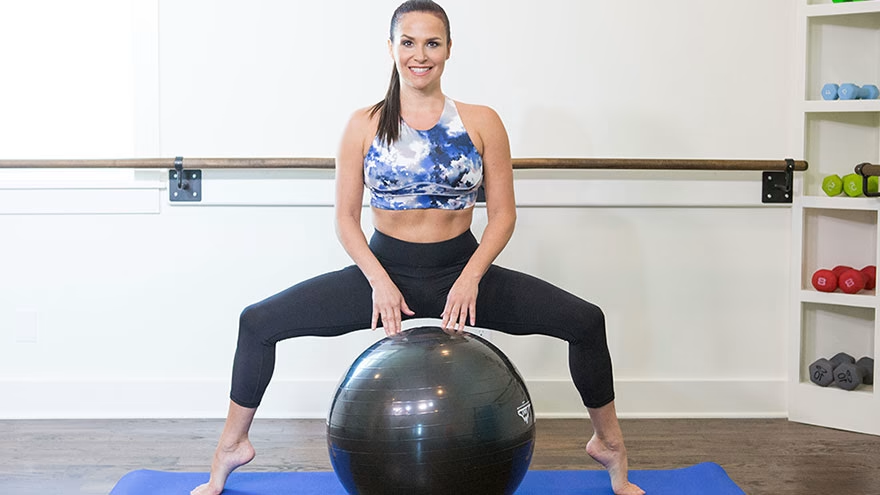
Sixteen Counts Should Improve Control, Not Punish Form
16 count Pilates exercises are simply Pilates movements or holds performed slowly enough that the body has to organize breath, alignment, and muscular control. The count is not magic. If the neck strains, the low back arches, or the breath disappears, the count is too long for the current version.
Use the count as feedback. A clean eight-count hold is better than a shaky 16-count hold. The goal is to make the exercise quieter, not more dramatic.
The count serves the form; the form does not serve the count.
What a 16 Count Means
A 16 count can mean holding a position for 16 steady beats, moving through one repetition over 16 beats, or using two sets of eight counts. Choose one meaning before you start. Random counting makes the exercise harder to assess.
Beginners should use a slow spoken count or a metronome-like rhythm. Do not rush the middle and call it 16. If you cannot breathe normally, shorten the count.
Counting should organize movement, not hide tension.
Breath Comes First
Pilates often links movement and breath. During a longer hold, keep the ribs moving and avoid clenching the jaw. If you are holding your breath to survive the position, you are no longer training clean control.
Cleveland Clinic's overview of Pilates benefits describes Pilates as a low-impact exercise system that can improve core strength, flexibility, and posture for many people. Those benefits depend on controlled practice, not breathless gripping.
For another Pilates topic, Livecub's Pilates or Tai Chi comparison can help readers think about breath, control, and pace.
Set Up the Body Before Counting
Before starting the count, check the feet, pelvis, ribs, shoulders, neck, and gaze. In many mat exercises, the hardest part is not the count itself; it is entering the shape without extra tension.
If you are on your back, keep the neck comfortable. If legs are lifted, choose a height that does not pull the low back into strain. If arms are overhead, keep the ribs from flaring.
Setup is part of the exercise.
Exercise 1: Hundred Prep Hold
Lie on your back with knees bent and feet on the floor. Lift the head and shoulders only if the neck stays comfortable. Reach arms long by the sides and hold for 16 counts while breathing steadily.
Progress by lifting one leg at a time to tabletop. Do not move both legs away from the body until the trunk can stay quiet. Stop if the neck takes over.
Exercise 2: Single-Leg Stretch Pause
From a comfortable curl, draw one knee toward the chest and extend the other leg only as low as you can control. Hold the shape for 8 counts, switch, then hold the other side for 8 counts.
That gives the body 16 counts of total work without forcing one side past its limit. Keep the pelvis still and the breath moving.
Exercise 3: Side-Lying Leg Lift
Lie on one side with the body in a long line. Lift the top leg slightly and hold for 16 counts. Keep the waist lifted, ribs quiet, and toes facing forward rather than rolling open.
This is a good place to learn how small a movement can be. A high leg lift with a rolling pelvis teaches less than a smaller lift with control.
Exercise 4: Forearm Plank Option
Use a forearm plank from knees or toes. Hold for 16 counts only if the shoulders, ribs, pelvis, and breath stay organized. If the low back sags, use knees or shorten the hold.
The CDC's adult activity guidance includes muscle-strengthening activity as part of weekly movement. A plank can contribute to strength, but it is not useful if form collapses.
Exercise 5: Bridge Hold
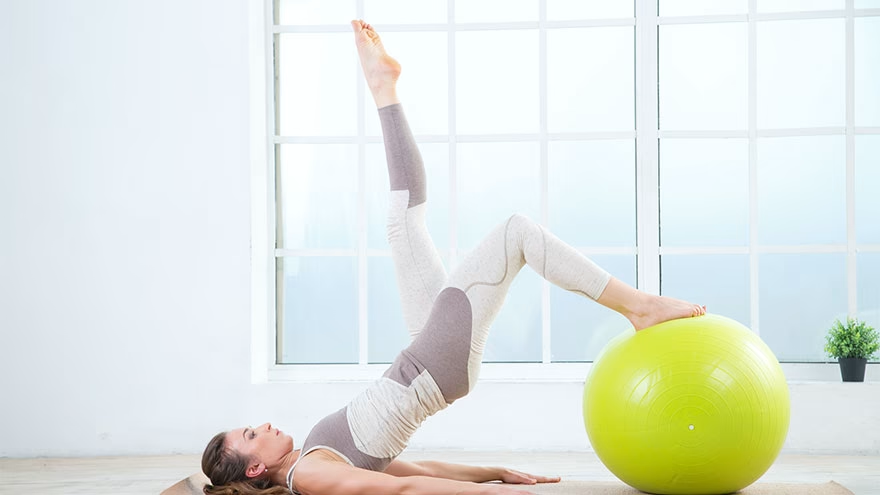
Lie on your back with knees bent. Roll or lift the pelvis into a bridge, depending on the style you practice. Hold for 16 counts with weight spread through the feet and shoulders relaxed.
Lower slowly. If hamstrings cramp, bring the feet closer or reduce the height. If the low back pinches, make the bridge smaller.
For equipment-based progression, Livecub's jump board on the reformer shows why Pilates progressions should match control and setup.
Beginner Progression
Start with 4 counts, then 8, then 12, then 16. Stay at each level until you can breathe and repeat the exercise without shaking through the joints. Muscles working is fine. Joint strain is not.
Use fewer exercises per session. Three clean 16-count exercises teach more than a long list done badly.
Progression is a volume knob, not a dare.
Warning Signs
Stop for sharp pain, numbness, tingling, dizziness, chest pain, unusual shortness of breath, or symptoms that do not settle when you stop. Modify for neck, back, hip, shoulder, wrist, or knee issues.
If you are pregnant, post-surgical, injured, or managing a medical condition, ask a qualified clinician or instructor before using longer holds. Video classes cannot see your compensations.
How to Build a Short Routine
Choose one supine exercise, one side-lying exercise, one prone or plank option, and one mobility finish. Rest between holds. Keep the total session short enough that the final rep looks like the first.
Livecub's basic aerobic steps article is a useful contrast: aerobic rhythm and Pilates control train different skills, and both need pacing.
How to Count Without Rushing
Many people lose the middle of the count. They start slowly, rush from 6 to 12, then grind through the last few beats. That pattern makes it hard to know what the body can actually control.
Pick a steady pace before the exercise begins. A quiet spoken count works well. If counting out loud changes the breath too much, count in pairs: inhale for two counts, exhale for two counts, and repeat until 16.
Do not use music that pulls the body faster than the exercise. A slower room makes it easier to notice ribs, pelvis, shoulders, and neck before the shape falls apart.
Where Props Can Help
Props are not a shortcut. A folded towel under the head, a small ball between the knees, or a block under the hands can make the right muscles easier to find. The point is to remove noise, not make the exercise look harder.
If the neck works too much in a curled position, keep the head down and train the leg pattern first. If the wrists dislike plank, use forearms or a raised surface. If the hips grip during side-lying work, bend the lower knee and make the range smaller.
Good props make the exercise feel clearer. If a prop adds confusion, remove it and return to the simplest version.
A Practical 12-Minute Session
Start with two minutes of breathing on your back. Add two rounds of bridge holds, two rounds of single-leg stretch pauses, two rounds of side-lying leg lifts on each side, and one short plank option. Finish with gentle spinal movement.
Leave space between holds. Ten seconds of rest can make the next 16 counts cleaner. Beginners often need that pause more than they need another exercise.
Use this kind of session two or three times per week at first. Add time only when the current routine feels repeatable, not just survivable.
How to Track Progress
Track the version used, not just the count reached. Write down head down or head lifted, knees bent or legs extended, plank from knees or toes, and how the breath felt. Those details tell a better story than a single number.
Progress may look like less neck tension, quieter ribs, easier breathing, or smoother exits from each exercise. Those changes matter. A longer hold with worse movement is not a better result.
Film one short set from the side if you practice alone. Look for rib flare, pelvis tipping, shoulders creeping, and breath holding. Keep the review simple, then make one correction next time.
When a 16 Count Is Too Much
Some days call for a shorter count. Poor sleep, soreness, stress, travel, and a hard workout the day before can all change what the body can organize. Pilates should be adjusted to the body in front of you.
Drop from 16 to 8 counts when form fades early. Use the easier version without treating it as failure. The useful session is the one that lets you practice again with less strain tomorrow.
Shorter and cleaner beats longer and strained.
Frequently Asked Questions
Are 16 count Pilates exercises good for beginners?
They can be if shortened first. Beginners should build from 4 to 8 to 12 to 16 counts with clean breathing and alignment.
Should I hold my breath during longer Pilates holds?
No. If you cannot breathe, shorten the hold or use an easier version.
How many exercises should I do?
Start with three to five exercises. Quality matters more than a long list.
What if my neck hurts during Pilates?
Lower the head, use support, shorten the hold, or choose another exercise. Persistent pain should be assessed by a qualified professional.
Cashie Evans
Covers parenting and practical household topics with clear steps, safety notes and links to current guidance.
Leave a reply
Replying to