
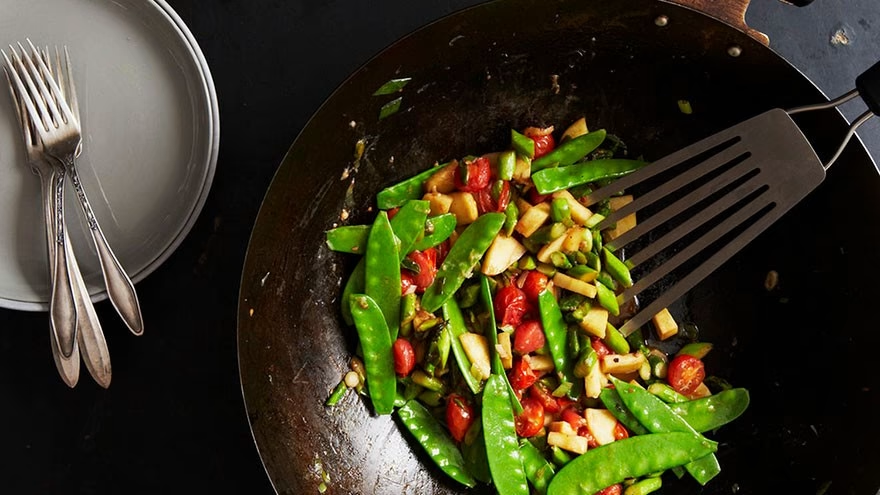
Most stir fry failures aren't about the protein or the vegetables — they're about the sauce arriving at the wrong moment, made with the wrong ratio, or built on mismatched flavors. A stir fry sauce is essentially a four-part system: a liquid base (stock or water) that carries heat through the pan; aromatics (garlic, ginger, scallions) that perfume the oil in the first seconds of cooking; a sweetener (brown sugar, honey, molasses) that balances salt and adds the caramelized edge that clings to protein; and a thickener — almost always a cornstarch slurry — that gelatinizes at around 203°F (95°C), transforming thin liquid into the glossy glaze that coats every piece of food. Get those four elements right, in the right proportions, and you can build any of the stir fry sauces below from scratch without needing a recipe card.
What Makes a Great Stir Fry Sauce?
The answer starts with starch science. When you mix cornstarch with cold water in a 1:1 ratio by volume — one tablespoon cornstarch to one tablespoon cold liquid — you create a suspension, not a solution. The granules stay intact and invisible until the sauce in the wok climbs past 144°F (62°C), at which point they begin absorbing liquid and swelling. At the burst point of around 203°F (95°C), the granules rupture, releasing long starch chains that trap moisture and create that translucent, lightly set texture Chinese restaurant sauces are known for. This is why the slurry always goes in last, into an already-bubbling pan: a cold wok means raw-tasting, floury sauce. And why it should never boil long after thickening — prolonged heat shears those starch chains apart and turns a glossy glaze back into thin liquid.
Flavor balance matters as much as texture. The four tastes most active in stir fry sauces — salty, sweet, sour, and umami — need to pull against each other rather than stack in one direction. Soy sauce contributes salt and glutamate-driven umami simultaneously; a small amount of sweetener softens the salt's edge; vinegar or citrus cuts through fat and brightens the finish; and fermented condiments like oyster sauce, hoisin, or fish sauce pile on depth that no single seasoning can replicate alone.
A note on heat: wok hei, literally "the breath of the wok," is the smoky, almost charred quality you taste in restaurant stir fries. It develops above 600°F (315°C) when oil droplets aerosolize and partially combust, settling back onto the food as tiny carriers of Maillard-reaction flavor compounds — hundreds of new aromatic molecules formed from the interaction of amino acids and reducing sugars under extreme heat. Home stoves rarely reach those temperatures, but a dry, preheated wok, high-smoke-point oil (avocado oil at 520°F or refined canola at 400°F), and an uncrowded pan — no more than one-third full — gets you meaningfully closer. Add the sauce only after all proteins and vegetables are cooked through; you want a 30-second reduction, not a long braise.
The 6 Essential Stir Fry Sauce Recipes
1. No Sauce at All — The Aromatic Method
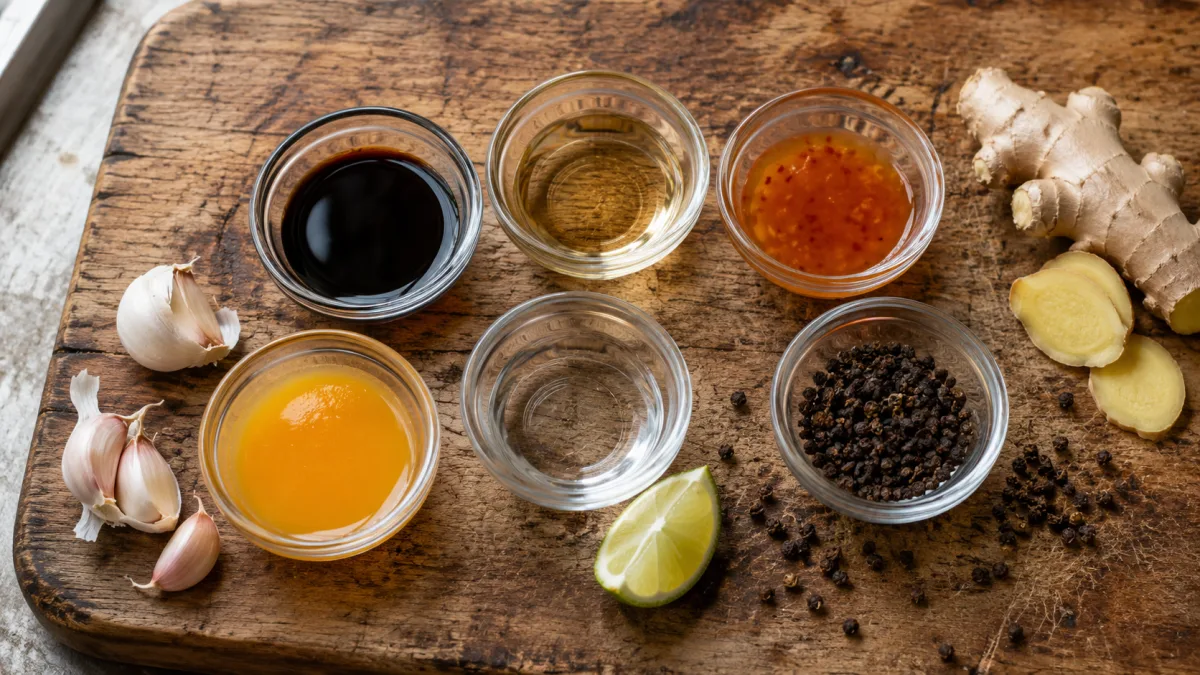
This isn't a sauce so much as a philosophy: let the wok do the work. When your pan is hot enough to show the first wisp of smoke, aromatics dropped directly into the oil — minced garlic, freshly grated ginger, quality sea salt — release their volatile compounds within seconds and perfume every ingredient they touch. The result tastes like a sauce without any liquid involved, because the wok hei itself becomes the seasoning.
The trick is heat management. Garlic burns at temperatures where you want to be cooking, so add it just before the protein, not before the oil has been in the pan for thirty seconds. If you want a little moisture without a real sauce, a drizzle of toasted sesame oil off-heat adds both richness and fragrance without diluting anything.
- 3–4 garlic cloves, finely minced
- 1 teaspoon freshly grated ginger
- ½ teaspoon quality sea salt (flaked, not fine table salt)
- 1 teaspoon toasted sesame oil (added off-heat, optional)
- Freshly ground white pepper to taste
Add garlic and ginger to hot oil in a preheated wok. Stir for 15–20 seconds maximum — the moment they turn golden, add your protein immediately. Vegetables follow. Season with salt and white pepper as you toss. Remove from heat and drizzle with sesame oil before serving.
Best with: shrimp, thinly sliced chicken breast, snap peas, bok choy, or any vegetable with high natural water content. Avoid dense root vegetables — they need the gentle steam a sauce provides to finish cooking through.
Common mistake: adding garlic to a dry cold wok before it has reached temperature. Garlic needs hot fat to bloom, not raw metal — and it needs to move constantly the entire time it's in the pan.
2. Brown Sauce — The Chinese-American Classic
What Americans call "brown sauce" has an interesting origin: it is largely a Chinese-American invention, built in mid-20th-century restaurant kitchens to suit palates accustomed to British-style gravies and dark barbecue glazes. In China, the equivalent technique is called qian (芡) — a cornstarch-thickened pan reduction adjusted per dish rather than a fixed formula. The American version standardized that technique into a single sauce used across dozens of dishes. It works because it covers every flavor axis: soy for salt and umami, molasses for deep sweetness and color, ginger for warmth, and enough liquid to deglaze the wok fond and carry the glaze evenly.
Ingredients:
- 2 tablespoons soy sauce
- 1 tablespoon freshly grated ginger
- ¼ teaspoon ground cloves
- 1 tablespoon molasses
- ⅔ cup chicken or vegetable stock
- 2 tablespoons cornstarch dissolved in 2 tablespoons cold water
- Optional: 1 teaspoon dry sherry or Shaoxing rice wine, 1 green onion (minced), 4 dried red chilies or 2 teaspoons crushed red pepper
Combine the sauce base first, whisking until the molasses fully dissolves — it sinks and resists mixing, so give it a full minute. Whisk cornstarch and cold water separately until smooth. Once your protein and vegetables are cooked, push ingredients to the wok sides to clear the center, pour in the sauce base and let it bubble for 10 seconds, then stir in the slurry. Cook at high heat for 30–45 seconds until the sauce turns from milky to translucent. Toss everything together and serve immediately.
Why it works: Molasses is not just sweet — it contains organic acids and sulfur compounds that give the sauce a bitter, almost smoky back-note that plain brown sugar cannot replicate. Ground cloves are the quiet contributor; a quarter teaspoon adds a warm, aromatic depth without announcing itself. The Shaoxing wine, if used, contributes aldehydes and esters that lift the entire aromatic profile and round out the soy's sharpness.
Best with: beef (flank steak, sirloin, or short rib), broccoli, mushrooms, and toasted sesame seeds. The sauce is assertive enough to stand up to the iron-rich depth of red meat. For richer proteins like roasted goose, increase molasses by half a teaspoon to match the meat's intensity.
Common mistake: starting the sauce too thick. It should look slightly thin before the slurry goes in — it will tighten significantly once the starch gelatinizes at 203°F. A sauce that starts too concentrated becomes unpleasantly gluey once the cornstarch sets.
3. White Sauce — Delicate and Versatile
If brown sauce is the bold crowd-pleaser, white sauce is the one that lets individual ingredients breathe. It has less color and less sweetness, relying on the natural savor of the stock and the aromatic punch of garlic and ginger. The flavor reads as clean rather than bland because each component has a defined role with nothing competing for dominance. This is closer to the Cantonese tradition — a light-dark soy combination with stock and white pepper — than to any American-Chinese invention.
Ingredients:
- 1 tablespoon freshly grated ginger
- 1 garlic clove, minced
- 2 tablespoons light soy sauce (or regular soy sauce for a slightly darker result)
- ¾ cup chicken or vegetable stock
- ¼ teaspoon white pepper
- 1 tablespoon cornstarch dissolved in 2 tablespoons cold water
Combine ginger, garlic, soy sauce, stock, and white pepper in a bowl and stir well. Once protein and vegetables are cooked, add the sauce base to the hot wok and let it bubble for 15 seconds. Stir in the cornstarch slurry and keep stirring until the sauce turns from milky to translucent — about 30 seconds at high heat.
Why it works: Light soy sauce (as opposed to dark soy) is lower in caramel colorant and slightly brighter in flavor, giving the sauce its characteristic pale gold appearance. White pepper — far more common in Chinese cooking than black — delivers a sharp, penetrating heat that diffuses through the sauce rather than sitting on top. A tablespoon of oyster sauce added to the base introduces a rich, sweet-brininess that bridges this sauce toward brown territory without going all the way. Oyster sauce is made from reduced oyster extractives with brine and sugar — thicker than soy, lower in sodium per tablespoon than it tastes, and packed with glutamates that amplify umami across the whole dish.
Best with: chicken breast, shrimp, scallops, snow peas, asparagus, baby bok choy. It is also the best base for a vegetarian leafy greens stir fry, where a heavier sauce would smother the vegetables.
Common mistake: using dark soy sauce instead of light, turning the sauce muddy brown and far too aggressive in flavor for a dish built on subtlety.
4. Sweet and Sour Sauce — Balance Through Tension
Sweet and sour is the most misunderstood stir fry sauce in home kitchens, largely because the commercial bottled versions — neon pink, cloying, and cornstarch-heavy — bear almost no resemblance to a properly made version. The real thing is built on tension: the tartness of apple cider vinegar pulling against the mellow sweetness of brown sugar, with soy sauce threading savory depth through both. Red pepper flakes aren't decorative heat — they're the third flavor axis that stops the sauce from being one-dimensional.
Ingredients:
- ¼ cup chicken or vegetable stock
- 2 tablespoons soy sauce
- 2 tablespoons apple cider vinegar
- 1 tablespoon brown sugar
- ½ teaspoon red pepper flakes
- 1¼ tablespoons cornstarch dissolved in 2 tablespoons cold water (slightly more than usual — see below)
Combine stock, soy sauce, vinegar, brown sugar, and pepper flakes in a bowl. Stir until sugar fully dissolves — undissolved sugar will cause uneven browning in the pan. Mix the cornstarch slurry separately. Pour sauce base into the hot wok over cooked ingredients, bring to a bubble, add slurry, and stir vigorously for about a minute.
Why it works — and why more cornstarch: Acidity does something instructive to cornstarch — it partially hydrolyzes the starch chains, making gelatinization less reliable. The vinegar is actively working against your thickener. The fix: increase cornstarch by roughly 20% (1¼ tablespoons instead of 1) and make sure the sauce is fully bubbling before the slurry goes in, maximizing gelatinization speed before the acid interferes. Rice vinegar is milder than apple cider vinegar and gives a cleaner, less fruity acidity if you prefer a subtler finish.
Best with: pork tenderloin, chicken thigh, firm tofu, bell peppers, pineapple chunks, and water chestnuts. The sauce's sweetness needs something with a bit of fat — pork, chicken thigh — to feel balanced rather than cloying.
Common mistake: adding too much vinegar and tasting the raw sauce as a guide. If it tastes mouth-puckeringly sour off the spoon, it will only concentrate as it cooks. Reduce vinegar by a teaspoon and taste again before it hits the wok.
5. Fish and Lime Sauce — Southeast Asian Depth
Fish sauce intimidates people right up until they taste it in context, at which point it becomes indispensable. Made from fermented anchovies packed in salt and left to mature for months or years, it is extraordinarily rich in free glutamates — the same compounds responsible for the savory depth of Parmesan cheese, ripe tomatoes, and aged soy sauce. That glutamate content is why fish sauce works beyond Southeast Asian cooking: a teaspoon stirred into pasta sauce, braised beef, or a simple vinaigrette adds umami depth that nothing else quite replicates, without tasting remotely "fishy" once cooked. The volatile amine compounds responsible for the raw pungency evaporate rapidly at heat, leaving only the glutamate richness behind.
Ingredients:
- ⅓ cup chicken or vegetable stock
- 2 tablespoons fish sauce
- 1 tablespoon fresh lime juice
- 1 teaspoon brown sugar or honey
- 6 garlic cloves, minced
- 2 teaspoons cornstarch dissolved in 4 tablespoons cold water
Combine stock, fish sauce, lime juice, and sugar in a small saucepan. Bring to a medium simmer and cook until bubbles form at the edges — about 2 minutes. Reduce heat and add minced garlic. Cook 30 seconds, stirring constantly; garlic scorches quickly at this stage. Set the slurry aside. Once protein and vegetables are cooked in the wok, pour in the warm sauce, stir in the slurry, and cook at high heat for 30–45 seconds until glossy.
Why it works: Cooking the sauce base separately before adding it to the wok does two things: it mellows the sharp raw edge of the fish sauce and blooms the garlic gently in a liquid medium rather than in hot dry fat, producing a softer, more integrated allium flavor. The lime juice is added early (not off-heat) because its citric acid benefits from brief heat to integrate, losing some sharpness while keeping its brightness.
Best with: prawns, white fish (cod, tilapia), chicken thigh, Thai basil, green beans, and eggplant. The saline-citrus combination cuts through the richness of seafood without masking it. It also pairs remarkably well with frog legs, where its brightness complements the mild, delicate meat without overpowering it.
Common mistake: using too much fish sauce. Two tablespoons in this ratio is the ceiling — exceed it and saltiness overwhelms everything else. If you're sodium-sensitive, start with 1½ tablespoons and taste the base before it hits the wok. Never skip the sweetener; a teaspoon of sugar or honey is what stops the sauce from tasting like straight brine.
6. Orange Sichuan Sauce — Numbing Heat and Citrus
This sauce is built on a flavor sensation no other ingredient can replicate: the mala (麻辣) combination of Sichuan peppercorns and citrus. The peppercorns do not deliver heat in the capsaicin sense — they create paresthesia, a buzzing, tingling numbness caused by hydroxy-alpha-sanshool, a compound found in plants of the Zanthoxylum genus. Sanshool activates touch receptors in the trigeminal nerve at a frequency of roughly 50Hz, mimicking the sensation of a mild electric current or a vibrating cellphone held to the lip. Unlike capsaicin, which binds to pain receptors and triggers a burning response, sanshool essentially makes your mouth vibrate. Fresh orange juice is not decorative here — its fructose and citric acid brighten the entire composition, giving the tongue something sweet and sharp to focus on between the numbing waves.
Ingredients:
- 1 teaspoon freshly grated ginger
- 1 garlic clove, minced
- ½ teaspoon Sichuan peppercorns, lightly toasted and freshly ground
- 2 tablespoons soy sauce
- ⅔ cup fresh orange juice (not from concentrate)
- 2 tablespoons cornstarch dissolved in 4 tablespoons cold water
Toast Sichuan peppercorns in a dry pan over medium heat for 60 seconds until fragrant and just beginning to smoke. Grind in a mortar or spice grinder — pre-ground peppercorns lose their sanshool compound rapidly, so fresh grinding is worth the extra step. Combine ground peppercorns with ginger, garlic, soy sauce, and orange juice and stir well. Mix cornstarch slurry separately. Pour sauce base into the wok over cooked ingredients, bring to a rapid bubble, add slurry, and stir until the sauce turns glossy and clings — about 30 seconds. Orange juice reduces quickly, so watch for over-thickening.
Why it works: Fresh orange juice contains roughly 8–10g of natural sugar per 100ml, which caramelizes slightly at wok temperatures to produce a more complex sweetness than added refined sugar — richer, with a slight bitter edge from the citrus oils in the peel fragments. The citric acid also interferes with cornstarch gelatinization the same way vinegar does in sweet and sour sauce; a slightly increased starch quantity (2 tablespoons here vs. the 1 tablespoon used in simpler sauces) compensates.
Best with: chicken thigh, pork belly, duck breast, firm tofu, and broccolini. The citrus-numbing combination is particularly good against fatty proteins — acidity cuts through fat and the sanshool lingers pleasantly after eating. It also makes a brilliant sauce for grilled vegetables used as a stir fry base, where char from the grill amplifies the orange's caramelized notes.
Common mistake: using bottled orange juice. Pasteurized juice from concentrate has been heat-treated, stripping the volatile aromatic compounds — limonene, linalool — responsible for the fresh orange character. The sauce will taste flat and sugary rather than bright and complex. Use fresh-squeezed or cold-pressed juice.
How to Build Your Own Stir Fry Sauce From Scratch
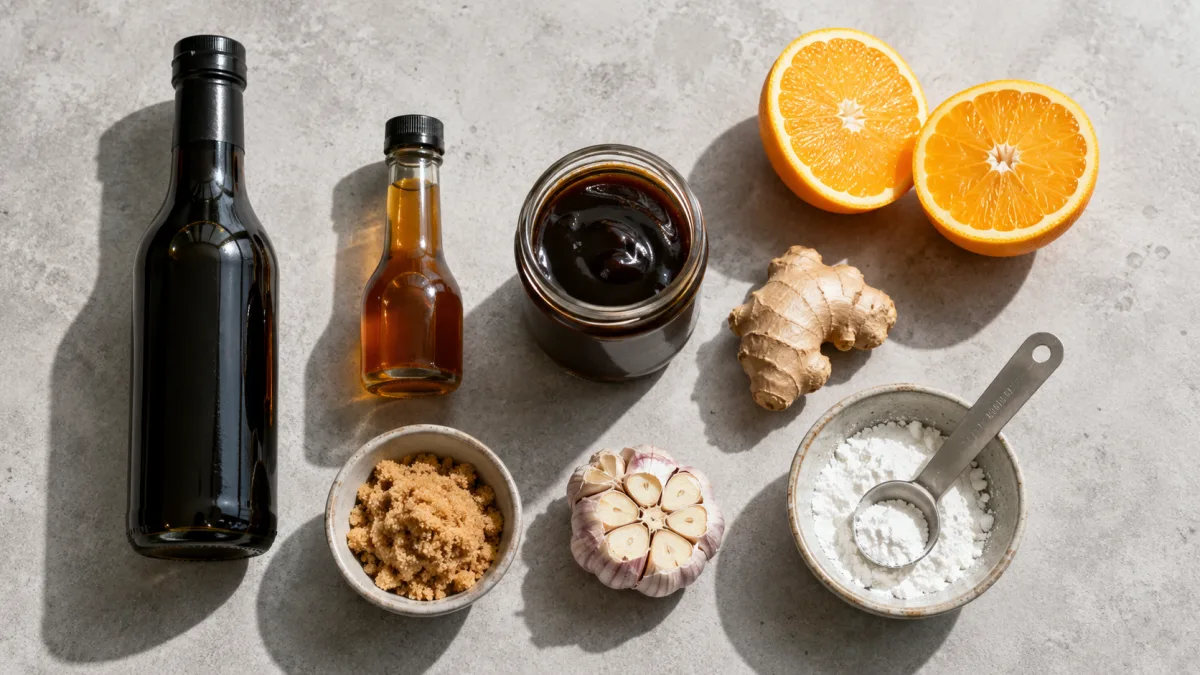
Once you understand the four-component structure, any stir fry sauce becomes a matter of choosing ingredients from each category. Here is the full pantry toolkit, with notes on what each ingredient actually does in the pan.
Liquid bases: chicken stock (neutral, savory, gives the sauce body), vegetable stock (lighter, slightly sweet), water (use only when you want condiment flavors to dominate uncut).
Fermented condiments — the flavor builders:
- Soy sauce — the backbone of nearly every stir fry sauce; use light soy for delicate dishes, dark soy for color and molasses depth.
- Oyster sauce — thick, slightly sweet, with concentrated savory richness from reduced oyster extractives; clings to stir fry ingredients better than any other condiment. Not fishy once cooked.
- Hoisin sauce — sweet, tangy, and spiced (fermented soybean paste, sugar, vinegar, garlic, chili); functions more like a glaze than a primary sauce base. Use it in combination rather than alone.
- Fish sauce — the most glutamate-dense of the group; use sparingly (1–2 teaspoons) as a depth-adder rather than a primary salt source. Its pungent raw smell disappears completely at cooking temperature.
- XO sauce — dried seafood (scallop, shrimp), cured ham, and chili in oil; intensely savory. A single tablespoon transforms a sauce.
Aromatics: fresh garlic (minced, not jarred — the allicin and other flavor compounds degrade within hours of mincing), freshly grated ginger (the fibrous texture vanishes into the sauce; dried ginger substitutes poorly), green onions (white parts early in oil, green parts off-heat for color and fresh flavor), five spice powder (a tiny pinch — cinnamon, cloves, star anise, Sichuan pepper, fennel — adds warm complexity without being identifiable).
Sweeteners: brown sugar (reliable, widely available, adds mild molasses note), honey (floral notes and a different sweetness curve than refined sugar), molasses (deep, bitter-sweet; good in dark assertive sauces), maple syrup (mild, slightly woodsy — works surprisingly well in lighter sauces).
Acids: rice vinegar (mild, slightly sweet, the most versatile choice), apple cider vinegar (more assertive, with a fruity edge), white pepper (sharp and penetrating — far more common in Chinese cooking than black pepper), and fresh citrus juice.
Thickeners compared: cornstarch (translucent, smooth, widely available — the standard choice, 1:1 slurry, 1–1.5 tablespoons per cup of liquid for a medium glaze); potato starch (clearer and silkier than cornstarch, preferred in many professional Chinese kitchens for dishes where appearance matters); arrowroot (crystal clear but heat-sensitive — breaks down if the sauce boils too long, so add it last and pull from heat immediately). Keeping well-prepped vegetables ready to go before mixing your sauce means nothing sits cooling while you adjust seasoning.
When improvising, taste the raw sauce base before it goes into the wok — it should be noticeably stronger than you'd want to eat straight, because heat mellows and concentrates it. Too salty? A teaspoon of honey or a splash of stock brings it back. Flat? A few drops of rice vinegar and a pinch of white pepper sharpen the whole profile. For an authoritative reference on building Chinese sauces from scratch, The Woks of Life's stir fry guide covers ingredient ratios and technique in excellent detail. The Woks of Love cornstarch science guide is the most thorough breakdown of gelatinization mechanics available online, covering starch comparison across cornstarch, potato starch, and arrowroot.
Common Stir Fry Sauce Mistakes to Avoid
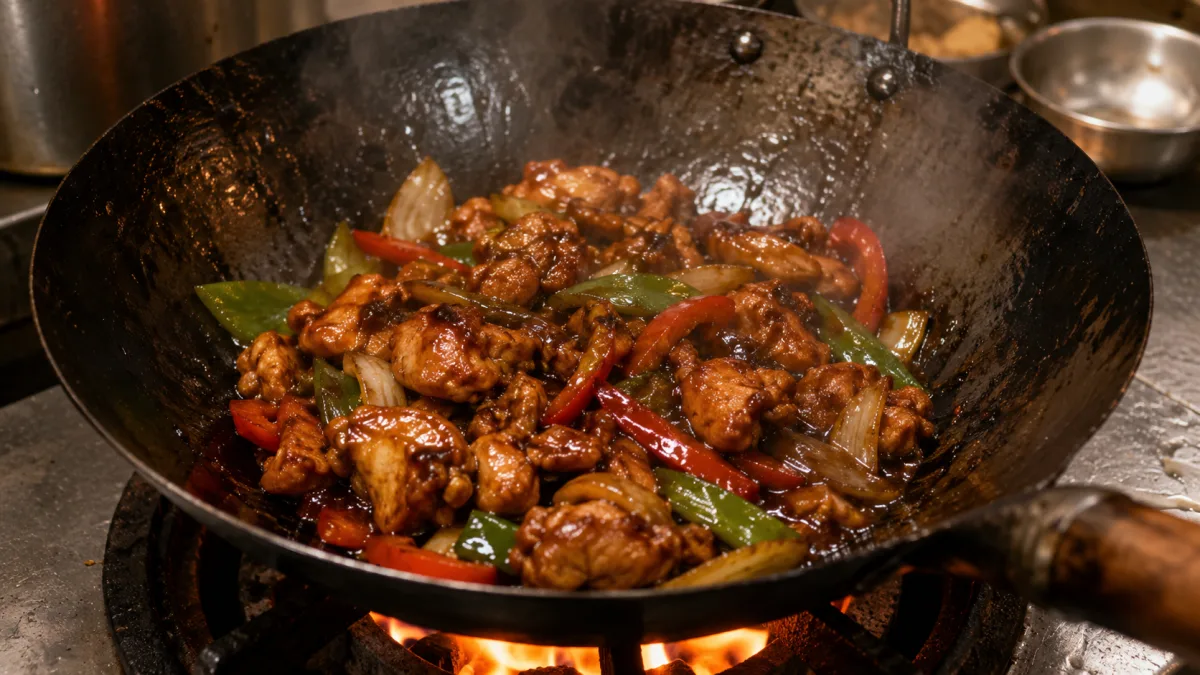
Even a well-crafted sauce fails if the execution is off. The single most common error is adding the sauce too early — the goal is not to cook ingredients in sauce but to coat them with it during the final 30 seconds, letting it reduce and glaze under fierce heat. A sauce added at the start of cooking produces soggy, waterlogged food and a diluted, watery finish. The second most common issue is overcrowding the wok: a pan packed beyond one-third of its capacity generates steam rather than sear, releasing moisture faster than the cornstarch can absorb it. Cook protein and vegetables in separate batches if needed, then combine everything for the final sauce stage. Third: don't add the cornstarch slurry to a cold or even merely warm pan. The starch granules need to reach 203°F (95°C) to burst and create the glossy network that makes a great stir fry sauce — below that temperature, you get a floury, cloudy, raw-tasting coating instead of a glaze.
Frequently Asked Questions
Why does my stir fry sauce always turn watery?
Two things cause this. The first is overcrowding: vegetables release significant moisture when they cook, and a packed wok generates steam rather than sear, creating far more liquid than your cornstarch slurry can absorb. Cook in batches — a 14-inch wok should hold no more than enough ingredients to feed two portions at once. The second cause is overboiling: once starch gelatinizes at 203°F (95°C), continued high heat shears the starch-chain network apart. The sauce thickens, then visibly loosens again within a minute. Remove the wok from heat as soon as the sauce turns glossy and translucent.
Can I make stir fry sauce in advance?
The flavor base — liquid, soy sauce, aromatics, sweetener, vinegar or citrus — can be made up to a week ahead and refrigerated in a sealed jar. Do not add the cornstarch slurry until the moment you cook. Starch left to hydrate and sit will partially thicken the sauce in the jar, and you'll end up with an uneven, clumpy texture in the pan. Mix slurry fresh, in cold liquid, immediately before use.
What is the difference between hoisin and oyster sauce?
Hoisin is made primarily from fermented soybeans, sugar, vinegar, garlic, and chili — sweet-tangy, deeply spiced, and used more often as a glaze or dipping sauce than a stir fry base. Oyster sauce is made from reduced oyster extractives with brine and sugar — savory with a subtle seafood sweetness and thick enough to cling to stir fry ingredients on contact. They are not interchangeable, though a small amount of each together (1 tablespoon oyster, 1 teaspoon hoisin) creates a richer compound flavor than either alone. Neither tastes of the sea once cooked at stir fry temperatures.
Do I need a wok, or can I use a regular pan?
A heavy-bottomed skillet or stainless steel pan will work, but it produces a different result. A wok's curved sides allow food to be tossed continuously against superheated metal at multiple angles, generating Maillard-reaction flavor compounds through rapid, repeated contact with the hottest surface. A flat skillet distributes food across a larger surface area and loses heat when ingredients are added. If using a skillet, cook in smaller batches, keep the heat as high as your stove allows, and add the sauce in the same sequence as you would in a wok. The sauce technique itself is identical regardless of pan shape.
Why does my garlic always burn in a stir fry?
Garlic scorches fast at the temperatures required for proper stir frying. Add it to hot oil and move immediately — 15 to 20 seconds maximum before adding the next ingredient. Alternatively, add minced garlic with the sauce rather than with the oil, where liquid protects it from direct heat. Minced garlic burns faster than sliced; if your stove runs very hot, switch to thin slices, which have slightly more mass and release moisture more slowly.
Can I use arrowroot instead of cornstarch?
Yes, with two caveats. Arrowroot produces a clearer, more elegant glaze than cornstarch — noticeably glossier and more translucent — but it is heat-sensitive. Boil an arrowroot-thickened sauce for more than a minute and it breaks down, turning thin and slightly slippery. Use it at a 1:1 swap with cornstarch but remove the wok from heat the moment the sauce sets. It works particularly well in delicate white sauce and fish-lime sauce variations where maximum visual clarity matters. For a non-savory comparison of how starch-based textures behave in dessert applications, see how to make the perfect tiramisu — mascarpone cream thickening follows similar gelatinization logic.
How do I fix a stir fry sauce that is too salty?
You cannot remove salt once it's in the pan, but you can balance it. A small amount of sweetener — half a teaspoon of honey or brown sugar — suppresses the perception of saltiness without making the sauce detectably sweet. A splash of additional stock dilutes salt concentration. A few drops of rice vinegar or a squeeze of lime sharpens other flavors so the salt recedes to background rather than dominating. Going forward, use low-sodium soy sauce in any recipe that also contains fish sauce or oyster sauce — three high-sodium ingredients in one sauce compound quickly.

Cashie Evans
Covers parenting and practical household topics with clear steps, safety notes and links to current guidance.




Leave a reply
Replying to