
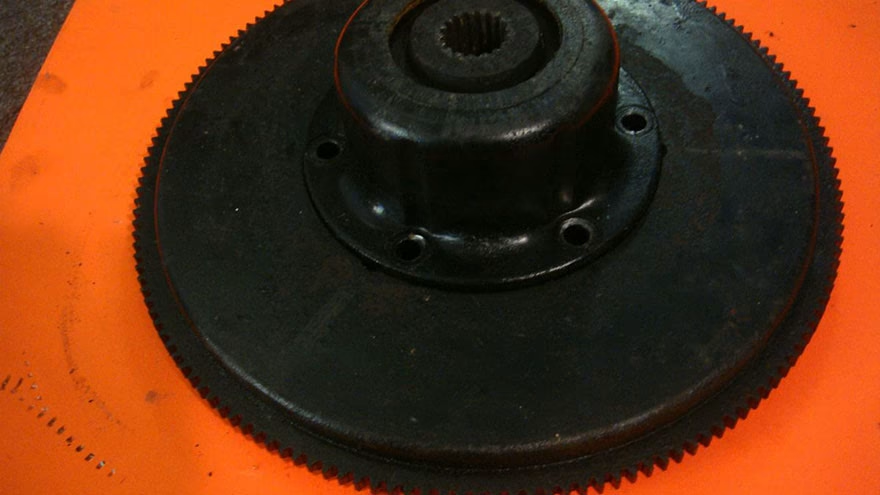
Understand What the Coupler Does
Mercruiser engine coupler failure is serious because the coupler is the link between engine torque and the sterndrive input shaft. When it slips, strips, overheats, or loses spline engagement, the engine may still run while the boat loses propulsion. That mismatch can confuse owners because the motor sounds alive, but the drive is no longer receiving usable torque.
The coupler sits behind the engine, near the flywheel area, and engages the sterndrive shaft through splines. It is not a simple external belt you can inspect from the swim platform. In many repairs, the drive must come off for checks, and coupler replacement can require moving or removing the engine.
That access problem is why diagnosis matters. A noise in the stern, a vibration, or poor acceleration does not automatically mean the coupler has failed. The gimbal bearing, U-joints, propeller, engine mounts, alignment, shift system, and drive internals can all create similar complaints.
Know the Classic Failure Signs
A fully failed coupler often shows up as loss of propulsion while the engine revs. The boat may not move, or it may move weakly under light load and slip under throttle. A burning rubber smell, squealing, smoke near the rear of the engine, or sudden loss of drive engagement all raise concern.
Partial failure can be harder. Vibration under load, repeated alignment trouble, metallic dust, damaged splines, or a drive shaft that will not align cleanly may point toward coupler wear or a related driveline problem. Do not keep testing hard throttle if the symptom suggests slipping.
Mercury Marine's service FAQ says that engine alignment can change with time and use, and that accurate alignment plus proper spline grease supports coupler life. Its Mercury Marine FAQ also says damage from improper alignment or lack of lubrication is not covered under limited warranty.
The key sign is engine speed without matching boat movement. Treat that as a stop-and-diagnose moment.
Alignment Is the First Suspect
A sterndrive coupler expects the engine, transom assembly, gimbal bearing, and drive shaft to share the correct centerline. If engine mounts settle, stringers soften, hardware loosens, or the drive is installed against resistance, the splines can run under side load. That side load eats the coupler over time.
Alignment is checked with the correct tool and the drive removed. If the tool does not slide in and out smoothly, forcing the drive back on is a bad sign. The tool is not there to make the drive fit by persuasion; it is there to show whether the engine and drive are aligned.
A misaligned boat can still run for a while, which is why owners sometimes dismiss the problem until the coupler fails. By then, related parts such as the gimbal bearing, U-joints, and input shaft splines may also need inspection.
For any step-by-step mechanical job, the same project discipline applies. Livecub's freezing fresh vegetables guide is obviously a kitchen topic, but the useful habit is identical: prepare the setup before the work begins.
Lubrication and Spline Wear
The coupler splines need the correct marine grease in the right place. Grease helps reduce wear and corrosion where the drive shaft engages the coupler. Too little grease, old contaminated grease, or poor alignment can all leave the splines working under rough conditions.
Mercury specifically recommends Quicksilver Engine Coupler Spline Grease in its FAQ. Use the grease and service schedule called for by the engine and drive documentation. Do not substitute random shop grease and assume it will handle the same load, water exposure, and temperature.
Look for spline wear patterns when the drive is removed. Uneven marks, dry rust, chewed metal, or rubber debris near the coupler area tell a story. A clean inspection can prevent replacing one part while the root cause remains.
The repair mindset is find why it failed. A new coupler installed into the same bad alignment may not last.
Other Problems That Mimic Coupler Failure
A spun prop hub can feel like a slipping coupler because the engine revs while thrust drops. Marking the prop hub for testing or having a shop inspect it can prevent a much larger teardown. Drive clutch issues, shift cable problems, and internal gear damage can also change propulsion under load.
Gimbal bearing noise can be mistaken for coupler trouble, especially if it changes while turning. U-joint noise may show up under trim or steering angle. Engine mount problems can create vibration that sends the diagnosis toward the wrong part.
Discover Boating's boat maintenance guide points owners toward year-round care, spring commissioning, and professional service for many maintenance tasks. That general advice fits sterndrive diagnosis because one symptom can involve several connected parts.
Keep notes like you would for any organized project. Livecub's cookie display guide is unrelated mechanically, but it shows why layout and sequence make a complicated task easier to manage.
Do Not Keep Running a Suspect Coupler
If the boat loses propulsion, smells like burning rubber, squeals under load, or vibrates badly after drive work, stop testing. Continuing can damage splines, drive components, mounts, or related bearings. It can also leave you stranded in traffic, current, or weather.
Use safe towing or a kicker if available rather than repeated throttle tests. If you are on the water, focus on getting back safely, not confirming the failure ten times. Once ashore, document symptoms, operating conditions, recent service, and any unusual noises.
Canadian Boating's recent engine and shaft alignment article is focused on inboard shaft alignment, not MerCruiser sterndrives, but it reinforces the same mechanical truth: small alignment errors can create driveline wear.
Boat owners often want a cheap answer, but driveline faults deserve safe handling first. Propulsion loss is not a dockside curiosity once the boat is underway.
What to Tell the Marine Technician
A good service visit starts with a clear history. Tell the technician when the symptom began, whether the drive was recently removed, whether the boat hit bottom, how the engine mounts look, and whether the failure happened during acceleration, turning, trimming, or normal cruise.
Bring service records if you have them. Alignment checks, gimbal bearing replacement, U-joint service, engine removal, transom repairs, and drive installation notes all help. The technician is looking for a chain of cause, not only a damaged coupler.
Ask the shop to inspect related parts while access is open. That includes the input shaft splines, gimbal bearing, U-joints, bellows, mounts, and drive alignment. A coupler job is too much work to skip nearby evidence.
If you authorize repair, ask what failed and why. A receipt that says "replaced coupler" is less useful than one that records alignment condition, spline condition, grease condition, and any mount or transom concerns.
Repair and Prevention Plan
A proper repair usually begins with removing the sterndrive, checking alignment, inspecting the gimbal bearing and U-joints, examining input shaft splines, and looking for signs of mount or transom movement. If the coupler is stripped or overheated, the engine may need to move for replacement.
After replacement, alignment must be checked before the drive goes back on. Grease the splines with the specified product, torque fasteners to the service manual, and inspect the reason the previous part failed. If mounts are soft or stringers are compromised, the coupler is a symptom, not the root issue.
For recordkeeping, save photos of spline wear, old coupler condition, mount height, and drive shaft marks. That makes future service easier and helps a shop understand what has already been found. Livecub's goose cooking guide is a different kind of how-to, but it shares one lesson with repairs: timing and sequence decide the final result.
The best prevention is simple: periodic alignment checks, correct grease, careful drive installation, attention to vibration, and prompt inspection after hard grounding, engine removal, mount work, or unusual driveline noise. Keep those checks in the logbook.
Frequently Asked Questions
What happens when a MerCruiser coupler fails?
The engine may run and rev while the sterndrive no longer receives torque, causing weak or lost propulsion.
What causes MerCruiser coupler failure?
Common causes include poor engine alignment, lack of spline lubrication, mount movement, worn driveline parts, corrosion, or forced drive installation.
Can I replace a coupler without pulling the engine?
On many MerCruiser setups, coupler replacement requires moving or removing the engine. Check the exact service manual for the model.
How can I prevent another coupler failure?
Check alignment, use the specified spline grease, inspect mounts and driveline parts, and do not force the sterndrive back on during service.

Timothy Davidson
Edits step-by-step general-interest guides for clarity, realistic limits and source verification.




Leave a reply
Replying to