
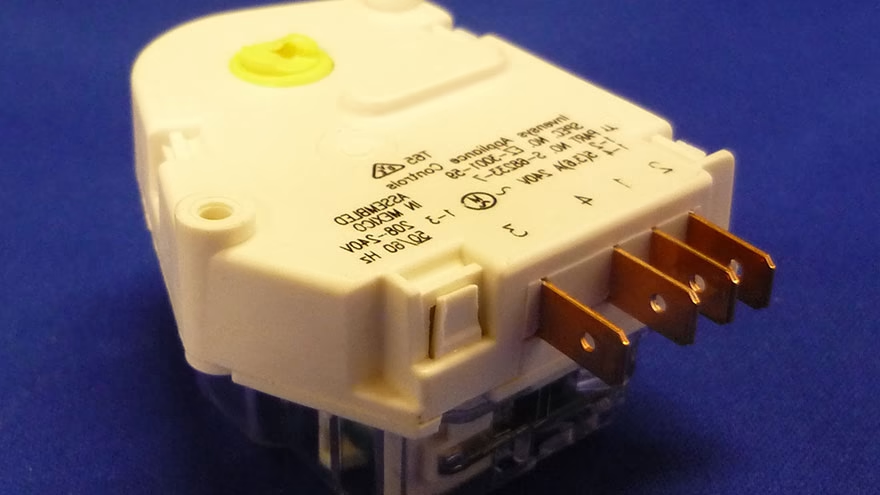
Defrost Timer Failure Looks Like a Frost Problem
Defrost timer failure usually shows up as frost building on the evaporator area, warm fresh-food temperatures, long compressor run time, or a freezer that looks cold while airflow is blocked. The timer is only one possible cause, though. A heater, thermostat, sensor, control board, fan, gasket, or dirty coil can create similar symptoms.
GE Appliances' automatic defrost system page explains that frost-free refrigerators melt frost that forms during normal cooling. If that process stops, cold air movement suffers.
Do not replace the timer just because you see ice.
Know Which Defrost System You Have
Older frost-free refrigerators may use a mechanical or electromechanical timer. Newer models may use adaptive defrost controls, sensors, or a main control board. A manual-defrost unit is different again and may not have the timer you are looking for.
GE's types of defrost systems page notes that frost-free refrigerators can defrost by time-based or usage-based systems. That is why the model number matters before diagnosis.
Find the model number, owner manual, and parts diagram. Guessing from a forum photo can send you toward the wrong part.
The right diagnosis starts with the exact appliance.
Common Symptoms
A failed or stuck timer may leave the appliance in cooling mode too long, so frost accumulates on the evaporator and blocks airflow. It may also leave the refrigerator in defrost mode, so the compressor and fans do not run when expected.
Common signs include a warm refrigerator section, thick frost behind the freezer panel, a freezer that seems cold but has poor air movement, clicking or stalled timer behavior, and cooling that returns briefly after manual defrosting.
For food-storage context, Livecub's freezing fresh vegetables article is a useful internal reminder that freezer temperature and airflow affect stored food quality.
Check Simple Causes First
Before opening panels, check the door gasket, temperature controls, blocked vents, overloaded shelves, dirty condenser coils, and recent power outages. A door left open overnight can create frost that looks like a system failure.
Also check whether the refrigerator is level and whether packages are blocking airflow. A freezer packed tight against the back wall can create uneven temperatures and frost patterns.
Simple causes are not embarrassing; they are efficient.
Protect Food Safety
If the refrigerator is warming, move perishable food to another working refrigerator or a cooler with ice. Use an appliance thermometer rather than guessing from how food feels. Food safety should be handled separately from the repair decision.
The FDA's refrigerator thermometer guidance explains why refrigerator temperature matters for food safety. A repair can wait longer than unsafe food should.
If food has been held warm too long, throw it out. The repair bill is not a reason to gamble with illness.
Manual Advance Test
Some mechanical defrost timers can be manually advanced with a small slot or dial. If the refrigerator enters defrost when advanced, that may point toward a timer that is not moving on its own. If nothing happens, the heater, thermostat, wiring, or timer may still be involved.
Unplug the refrigerator before removing covers or touching components. If you are not comfortable working around electricity, stop at visual checks and call a technician. A refrigerator contains live voltage and sharp metal edges.
A manual advance is a clue, not a complete diagnosis.
Do Not Ignore the Defrost Heater and Thermostat
A timer can be blamed for a failed defrost cycle when the heater is open, the thermostat is not closing, or a sensor is misreading temperature. Replacing the timer without checking the rest of the circuit can waste money.
A technician may use a meter to test continuity, voltage, and component operation. That is different from looking at frost and choosing a part from a search result.
For kitchen planning context, Livecub's how to cook goose article is a reminder that cold storage, thawing, and appliance reliability matter before the cooking even begins.
Document the Frost Pattern
Before unplugging or defrosting anything, take a photo of the frost pattern if it is safe to do so. Heavy frost across the evaporator cover, ice in one corner, and moisture around the door gasket can point in different directions.
Write down when the problem started, whether the compressor runs, whether the fan runs, and whether temperatures recover after a manual defrost. A technician can use that timeline.
Good notes can save a second service visit.
When to Call an Appliance Technician
Call a technician if the unit is under warranty, the defrost system is electronic, the wiring looks damaged, the breaker trips, the compressor will not run, the evaporator panel is frozen solid, or you do not have the tools to test safely.
Also call if the same frost pattern returns after a full manual defrost. A one-time door-left-open problem should not keep repeating. A recurring pattern means the appliance needs real diagnosis.
DIY should stop before safety or food loss gets worse.
Warranty and Age Matter
Check the warranty before buying parts. Opening panels or replacing components yourself may affect coverage on some appliances. If the refrigerator is fairly new, contact the manufacturer or retailer before doing anything beyond basic checks.
For an older unit, compare repair cost with age, energy use, repeated failures, and food-loss risk. A cheap part may be sensible. A pattern of failures may point toward replacement.
Do not decide while the freezer is melting and everyone is frustrated. Move the food first, then make the repair decision with a clear head later.
Replacement Decisions
If the timer is confirmed bad, compare part cost, appliance age, labor cost, and refrigerator condition. A simple timer on an otherwise reliable unit may be a sensible repair. A control-board problem in an old unit with other issues may change the math.
Use the model number when ordering parts. Similar-looking timers can have different terminals, timing, or mounting. Keep photos of wiring before disconnecting anything, but do not rely on photos instead of the wiring diagram.
Livecub's cooking greens guide is an unusual internal fit, but food storage and appliance reliability connect in real kitchens.
What a Technician May Test
A technician may test the defrost heater, defrost thermostat, thermistor, timer motor, control board, wiring, fan operation, and temperature readings. The order depends on the model and the symptom pattern.
This is why a confirmed diagnosis costs more than a guess. The visible frost is only the symptom. The failed part may be hidden behind a panel, inside a control housing, or in a sensor circuit.
Replacing the easy part is not the same as finding the failed part.
Prevent Repeat Frost Problems
Keep door gaskets clean, avoid blocking vents, let hot food cool safely before refrigeration, clean condenser coils, and do not overload the freezer. These habits will not fix a dead timer, but they reduce stress on the cooling system.
If you defrost manually during diagnosis, dry the area well before restarting and watch the frost pattern over the next several days. Notes and photos help a technician if the problem returns.
For another kitchen-planning reference, Livecub's cookie display guide indirectly reinforces the same point: kitchen systems work better when storage and timing are controlled.
Manual Defrost as a Temporary Measure
A full manual defrost can buy time, but it is not a repair if the frost returns. Move food safely, unplug the unit, protect flooring from water, and let ice melt without stabbing coils or using open flame.
Do not use a knife, screwdriver, or heat gun on the evaporator area. Puncturing a refrigerant line or melting plastic can turn a repairable appliance into scrap.
If the unit cools normally for a few days and then repeats the same frost problem, the defrost system still needs diagnosis.
Frequently Asked Questions
What does a defrost timer do?
On timer-based frost-free models, it switches the refrigerator between normal cooling and a defrost cycle at set intervals.
Can a bad defrost timer make the refrigerator warm?
Yes. Frost can block airflow, or the unit may stay in defrost mode too long, depending on how the timer fails.
How do I know it is not the heater?
You usually need testing. The heater, thermostat, wiring, sensor, control board, and timer can create similar symptoms.
Is replacing a defrost timer a DIY repair?
It can be on some older models, but electrical testing and correct part matching matter. Stop if you are unsure.

Tory Stearns
Edits practical household, travel and lifestyle explainers. Claims that can change are linked to current primary or subject-authority sources.




Leave a reply
Replying to