
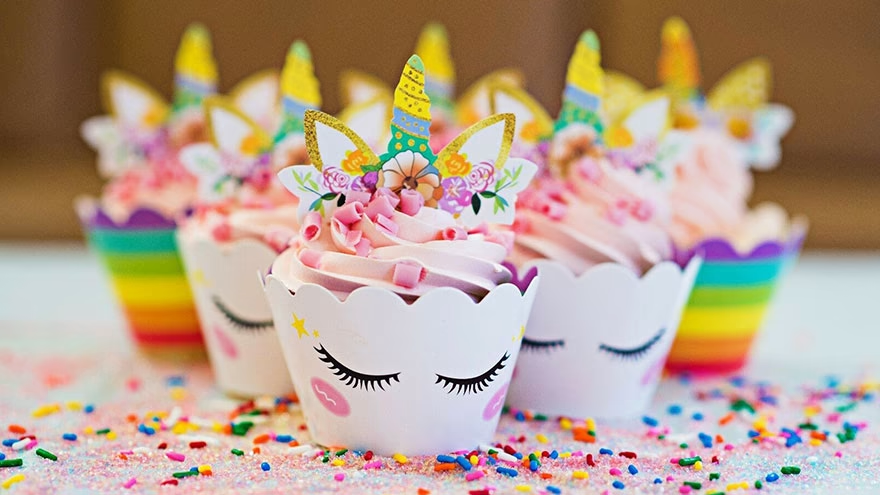
A deceased loved one's birthday triggers something specific in the brain — not just sadness, but what grief researchers call an anniversary reaction, a temporary and documented resurgence of acute grief symptoms that clusters around significant calendar dates. The birthday is one of the sharpest of these triggers because it is tied not just to loss but to celebration: a day that once meant cake and phone calls and the ritual of honoring someone's existence now arrives without them. Knowing that this reaction is neurologically predictable — and that it does not signal a failure to heal — is the first useful thing to hold onto when memorial birthday ideas come to mind.
For most of the 20th century, grief psychology operated on a "letting go" model: healthy mourning was understood as the gradual detachment from the deceased, freeing survivors to invest emotionally in new relationships. In 1996, researchers Dennis Klass, Phyllis Silverman, and Steven Nickman published Continuing Bonds: New Understandings of Grief, which dismantled this model with evidence from bereaved parents, widows, and children. Their data showed that maintaining an ongoing inner relationship with the deceased — talking to them, acting in their memory, integrating their values — was not pathological clinging. It was, in fact, how most people actually grieve, and how many find their way toward a livable life.
That shift in thinking is what gives a memorial birthday its real meaning. You are not staging denial. You are doing something that grief science now actively supports: keeping the relationship alive in the form it can still take. What follows are concrete, psychologically grounded ways to do that.
Why a Deceased Person's Birthday Hits Differently
The hippocampus encodes memories within a dense web of contextual cues — season, light quality, familiar smells, and calendar position among them. As the birthday approaches, these cues can reactivate the neural networks associated with your loved one before you consciously register the date. This is why many grieving people report feeling inexplicably heavy or irritable in the days leading up to a birthday, often before they have thought explicitly about it.
Research consistently shows that the anticipatory buildup — the week or two before the date — is often more difficult than the day itself. The birthday arrives and, for many people, brings with it a kind of focused sorrow that feels more manageable than the dread that preceded it. One practical implication: if you are going to mark the day with something intentional, build some preparation time in. Decide in advance what you want to do. A plan does not eliminate grief; it gives the grief a container.
The Simply Psychology overview of anniversary reactions notes that while reactions typically soften over years, they rarely disappear — and for many people they eventually take on a quality of warmth alongside sadness, particularly when the day is actively marked rather than endured.
Host a Memorial Birthday Gathering
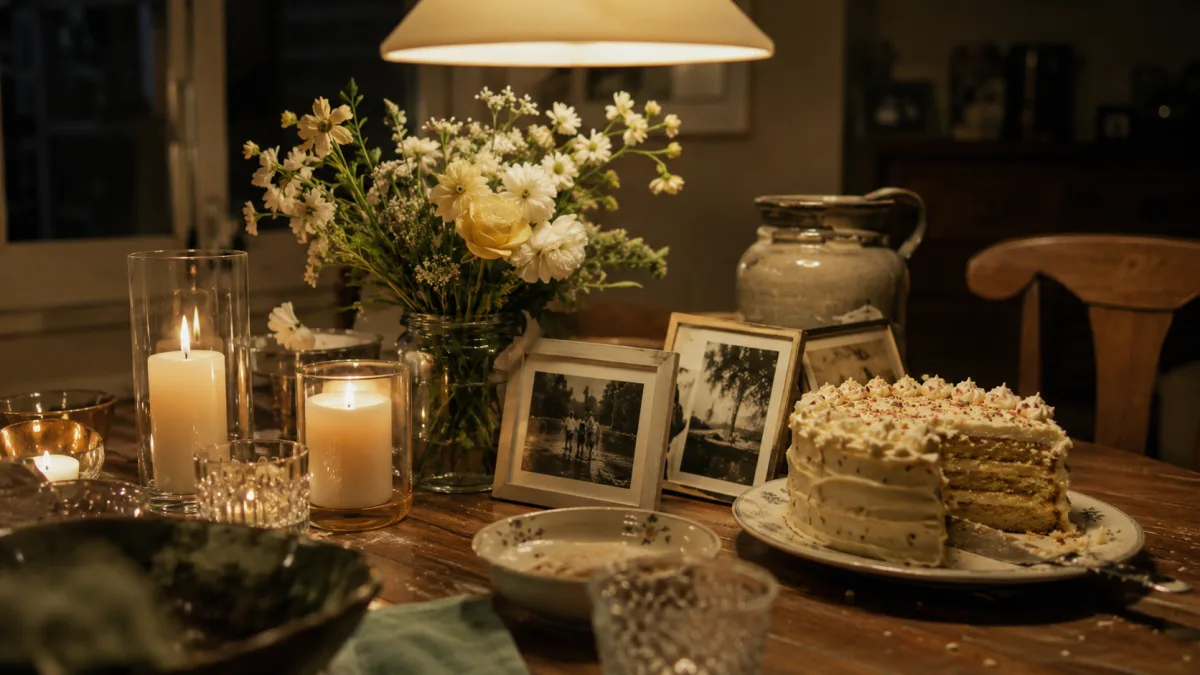
Throwing a birthday party for someone who has died sounds unusual until you consider what a birthday party actually does: it gathers people who love the same person in the same room, creating a shared space for stories. That function does not expire with the person.
The form can match who your loved one was. If she held an annual backyard cookout, replicate it. If he preferred a quiet dinner with close friends, do that. Send invitations — actual invitations, not just a group text — because the formality signals that this matters. Ask each guest to bring one specific memory: not a general tribute, but a scene, a conversation, a moment. Read them aloud. The specificity of these small stories is what keeps the person vivid rather than abstracted into a symbol.
You can also adapt party planning ideas to fit a memorial gathering — the same attention to atmosphere and guest experience applies. The goal is to create an occasion that people genuinely want to return to year after year, not one that they dread attending.
One practical addition: designate someone to photograph the gathering each year. After ten years, those photographs become their own archive of how the people who loved your person have carried that love forward.
Do Something They Loved
Continuing bonds theory suggests that one of the most effective ways to maintain a connection with the deceased is to embody their preferences and values in your own behavior. Going ice skating because she loved it, visiting the diner he considered his office, taking the hiking trail you always promised to do together — these actions do something specific: they shift the birthday from an absence into an experience that carries the person's imprint.
Psychologists describe this as "incorporating the deceased into the self," which sounds clinical but in practice means something recognizable: you order the meal she always ordered, and for a moment you feel close to her. That mechanism is real, not sentimental. It is how continuing bonds work in daily life.
Write down what you do and how it felt. Even a few sentences. Over years, this record becomes a log of a relationship that is still actively taking place, just in a different form.
Visit the Grave or a Meaningful Place
An annual pilgrimage to a physical location — the grave, a favorite park, the house where someone grew up — satisfies something that purely mental commemoration does not. Ritual requires the body: the drive, the walk, the act of clearing off the headstone with a brush and replacing the wilted flowers. These physical actions give the grief somewhere to go.
If travel to a grave is not possible, identify a place that carried meaning for them — the garden they tended, the beach they loved, the coffee shop they worked from — and go there instead. Bring something to leave: flowers, a stone, a handwritten note tucked under a rock. Sit long enough for the place to register.
Talk. Say the things you would have said to them directly. This is not a performance for anyone else; it is a continuation of a relationship by other means. The research on continuing bonds suggests that this kind of internal dialogue with the deceased is normative and healthy, not a sign of being unable to accept loss.
Make a Donation in Their Name
Charitable giving in someone's memory is one of the most durable forms of tribute because it extends their influence into the world beyond their lifetime. The key is specificity: the most meaningful donations align closely with who the person actually was, not just what cause feels appropriately solemn.
If she spent every Saturday at the animal shelter, a recurring annual donation to that shelter — or a named sponsorship of an animal's care — is a concrete expression of her values. If he was the first in his family to finish college and talked often about what that meant, a contribution to a first-generation college student scholarship keeps that exact value alive in another person's trajectory.
Setting up a memorial scholarship is more accessible than most people realize. Organizations like Bold.org allow you to create a named memorial scholarship starting at $500, with no management fees, and contributions from others are tracked and acknowledged. Many community foundations offer similar programs at the local level. Scholarship America and similar organizations can walk you through the process of establishing one tied to a specific institution.
For standard charitable donations, keep the tax receipt. Donated amounts to registered 501(c)(3) organizations are generally deductible; a tax advisor can confirm specifics for your situation. If the estate of the deceased is involved in funding an annual gift, consulting an estate lawyer about structuring recurring charitable giving from estate funds can clarify options and tax treatment. The deduction is not the point, but it makes the practice sustainable year after year.
Plant a Tree or Start a Living Memorial
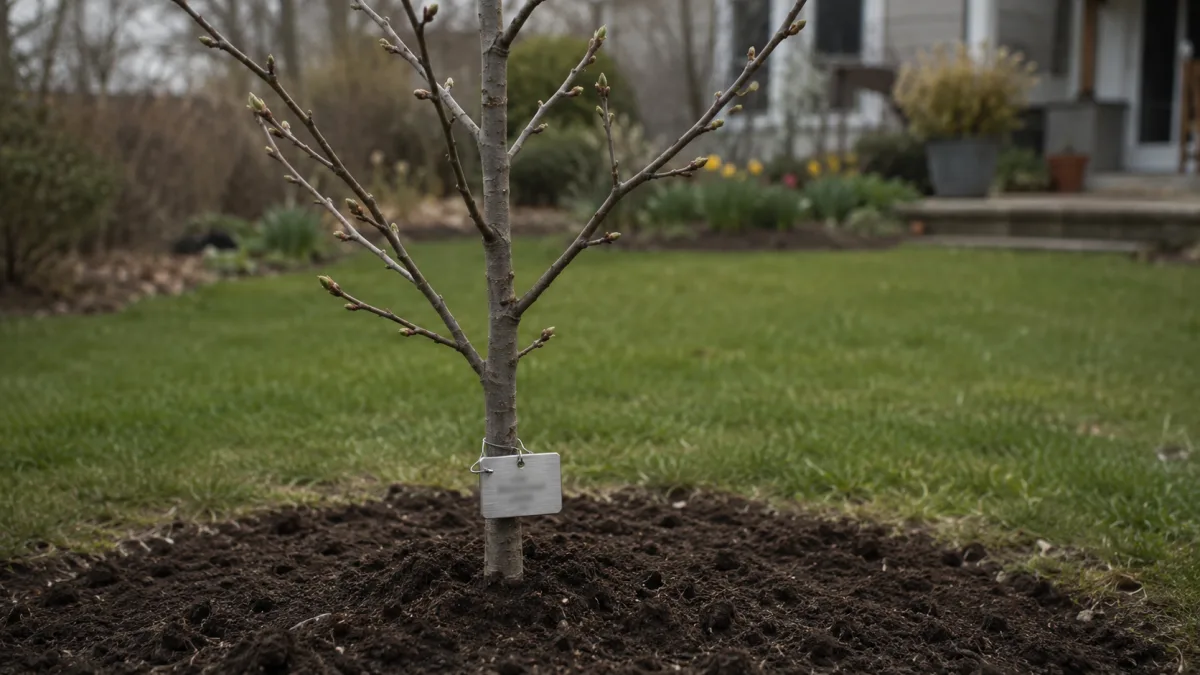
The Arbor Day Foundation's commemorative tree program has placed more than 30 million trees in memory and celebration across reforestation sites throughout the United States. You can plant a tree in someone's name through their online registry — the tree is documented there permanently, planted by professional foresters in areas of genuine ecological need. It is a different kind of permanence than a headstone: generative rather than static.
If you prefer something closer to home, plant a tree in your own yard or a community garden on the birthday. Choose a species they would have liked: a cherry tree if she loved spring blossoms, a white oak if he spent his weekends outdoors. A small metal tag with their name and dates turns it into a marker that can be visited without requiring travel.
Beyond trees, consider planting a dedicated garden section — a corner of a yard or a set of container pots — filled with plants they favored. Tending it on their birthday and throughout the year makes the act of caring for something living a recurring extension of care for them. The Arbor Day Foundation's commemorative tree page includes options for certificates and digital registry entries if you want something shareable with other family members.
Create a Memory Recipe Book or Legacy Project
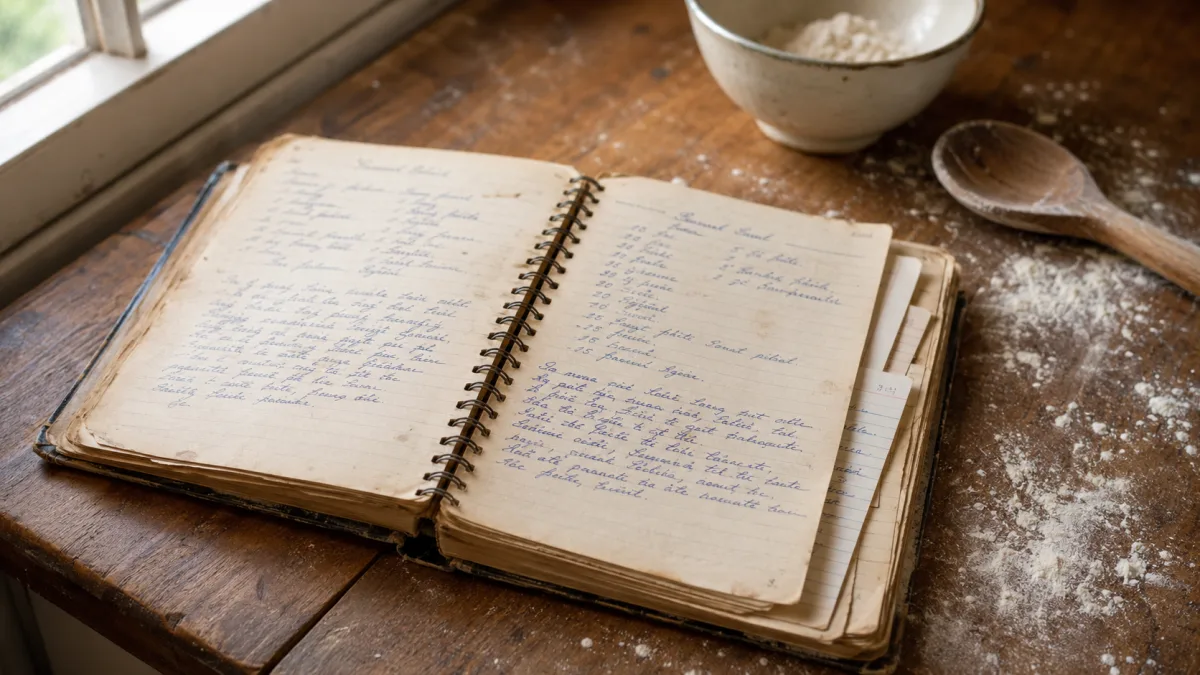
Food carries more biographical density than most objects. Recipes are the intersection of a person's upbringing, preferences, habits, and the particular care they put into feeding people they loved. Gathering the recipes associated with your loved one — the ones they made every year, the ones they requested at every holiday, the ones that exist only in memory because they never wrote them down — is both a grief practice and the creation of something that will outlast you.
Interview the people who ate at their table. Call cousins who remember her potato salad from forty years of family gatherings. Write the recipes with notes: "he always added more garlic than the recipe said" or "she made this the morning after every big snowstorm." Cook one of those dishes on the birthday and eat it with people who remember the original.
A memory recipe book pairs naturally with a broader legacy project: a collection of photographs organized by decade, a document of stories gathered from friends and family, a short audio recording of people sharing memories. Services like Meminto allow families to compile these materials into printed books. The birthday is a natural annual occasion to add to it — one new story, one new photograph scanned, one letter to the person written and added to the archive.
For baking something simpler, a thoughtfully presented batch of their favorite cookies shared with the people who miss them is its own form of memorial.
Start a Letter Tradition
Writing a letter to the deceased on their birthday — and keeping those letters — is one of the more quietly powerful grief practices there is. The first year, the letter may be mostly grief. By the fifth year, it is likely to include updates: who has been born, what has changed, what you think they would make of it all. Over time, the collection of letters becomes a record of your own life as much as theirs — a document of how you have carried them forward.
This practice has support in grief therapy. Expressive writing about loss has been shown to reduce grief-related distress and improve psychological wellbeing, particularly when it involves narrating the loss rather than simply expressing emotion. Writing to the person rather than about them shifts the register from eulogy to conversation, which is closer to how continuing bonds actually function in the grieving mind.
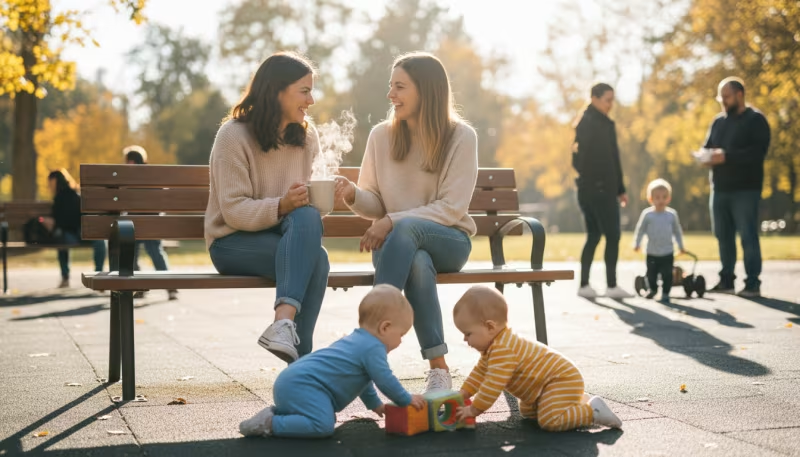
Some families make this a group practice: on the birthday, each person writes a letter independently, then they share what they are willing to share. After the gathering, the letters go into a shared envelope or a box that accumulates over years. Opening past letters together is its own ritual.
Create an Online Memorial or Shared Digital Archive
Platforms like ForeverMissed, Ever Loved, and Keeper allow you to build a dedicated memorial page where photographs, videos, written tributes, and audio recordings can be gathered and shared with anyone who knew the person, regardless of geography. On the birthday, the page gives distant family members and old friends a specific place to go — to add a memory, to read what others have written, to feel connected to the group of people who share this loss.
Some services, like Keeper, allow family members to contribute to a running archive of memories that grows over years. Others, like Kudoboard, produce a collaborative tribute that can be downloaded and printed. The birthday becomes not just a day of private remembering but a point of convergence for a wider community of grief.
A digital archive also solves the practical problem of dispersed family: the cousin who moved abroad and the old college roommate who lost touch can both participate in marking the day, which extends the circle of people who actively remember your loved one's life.
Mark the Day at Their Church or Community
If your loved one was part of a faith community, a regular club, or an organization, the birthday is a natural occasion to contact that community and ask for acknowledgment. Most clergy welcome the request to mention someone by name during a service near their birthday. A congregation that knew and loved the person may want to gather briefly after a service — not as a formal event, but as a natural extension of community.
If formal religious practice is not part of your life or theirs, a moment of silence at home — a lit candle, a specific chair left empty by choice, a few minutes of stillness before the day begins — creates a boundary that the mind registers as meaningful. These small demarcations matter because they give the grief a form rather than letting it diffuse into a vague and unaddressed weight throughout the day.
Frequently Asked Questions
Is it normal to feel worse on a loved one's birthday than on the anniversary of their death?
Yes. Both dates carry weight, but they carry different weight. The death anniversary is tied to loss; the birthday is tied to the person's existence, their presence, the person they were before the illness or accident or final chapter. For some people, the birthday triggers more acute grief precisely because it is about who they were rather than how they left. Neither reaction is more or less valid than the other.
How long do birthday grief reactions typically last?
Most anniversary reactions are time-limited, lasting anywhere from a few days to a few weeks around the date. They tend to soften in intensity over years for most people, though research indicates they rarely disappear entirely. Many bereaved individuals report that after several years, the birthday carries a quality of bittersweet warmth alongside the sadness — still difficult, but no longer destabilizing in the way the first one or two were.
What if other family members do not want to mark the birthday?
Grief timelines and preferences vary widely even within families that shared the same loss. Some people find marking the date helpful; others find it re-traumatizing. If family members are not ready to participate in a gathering or ritual, that deserves respect. You can mark the day privately, invite only those who want to participate, or find a small individual practice — a letter, a donation, a visit to a meaningful place — that does not require anyone else's involvement.
Should I include children in memorial birthday observances?
In most cases, yes. Children who are excluded from grief rituals may internalize the message that death is too terrible to acknowledge openly, which can complicate their own grief. Age-appropriate inclusion — letting a young child place flowers, include them in a birthday dinner, or help bake a cake while hearing stories — gives children a language and a set of practices for grief that will serve them throughout their lives. The specifics should match the child's developmental stage and their relationship to the deceased.
What if the birthday falls close to another difficult date, like a holiday?
Cluster dates — when a birthday falls near a death anniversary, a major holiday, or another meaningful date — can produce compounded grief that is particularly intense. In these cases, it can help to separate the observances deliberately: mark the birthday on the birthday, with its own specific intention, rather than folding it into the other occasion. This keeps each date from losing its distinct meaning while also managing the emotional load of a concentrated calendar.
Is it appropriate to post about a deceased loved one's birthday on social media?
There is no single appropriate answer — it depends on how your loved one related to social media and on what feels authentic to you. Some families find that a post invites other people to share memories they might not have otherwise surfaced, which can be meaningful. Others find it performative or feel uncomfortable with the public nature of it. What matters is whether it serves the relationship and the grief, not whether it meets any external standard of appropriateness.
What's the most useful thing I can do if this is the first birthday since the death?
Make a plan before the day arrives. The first birthday is typically the hardest, partly because it arrives without any precedent — you have never done this before, and you do not know what the day will feel like. Decide in advance whether you want company or solitude, whether you want to do something active or quiet, whether you want to acknowledge the day explicitly or let it pass with a private ritual. Having a plan does not prevent grief; it means the grief does not arrive in a vacuum. That distinction matters more than it might seem.
The most lasting tribute is a simple one: on their birthday, cook one meal they loved, with real ingredients, and eat it slowly, thinking about them. Everything else is optional. That one thing, done consistently over years, becomes the most honest document of what they meant to you — and the clearest evidence that the relationship is still alive in the only way relationships can be once someone is gone.
Olivia Prete
Edits culture and personal-development articles, distinguishing opinion and experience from verifiable claims.



Leave a reply
Replying to