

Only about 32 percent of Americans have a will or any estate planning document in place, according to recurring survey data — yet nearly everyone has an opinion on who should get the house, the savings accounts, or the family heirlooms. Closing that gap requires sitting down with a qualified estate attorney, and the quality of that conversation depends almost entirely on the estate lawyer questions you bring to it. The federal estate tax exemption stands at $13,990,000 for deaths in 2025 (rising to $15,000,000 in 2026 under the One Big Beautiful Bill Act), which means most families won't owe federal estate tax — but that fact alone doesn't make planning optional. State-level estate taxes, probate costs, and guardianship gaps create real financial and emotional consequences for families who skip the process.
What Documents Should I Bring to My First Meeting with an Estate Attorney?

Attorneys bill by the hour or by flat fee, but either way, a disorganized first meeting wastes both time and money. Arrive with a clear picture of what you own, what you owe, and who matters to you. That means recent bank and brokerage statements, retirement account summaries (401(k), IRA, pension), property deeds, life insurance declarations pages showing the policy number and death benefit, and any existing legal documents — previous wills, powers of attorney, trust agreements, or prenuptial and divorce decrees.
Beyond paperwork, prepare a written list of everyone you would consider a beneficiary: full legal names, dates of birth, and relationship to you. Include the people you would name as executor, trustee, or guardian for minor children. Attorneys spend a surprising portion of first consultations just gathering this information; arriving with it in hand lets the conversation move to strategy instead of data collection. If you own a business or have a stake in a partnership, bring the operating agreement or buy-sell agreement — those documents often contain clauses that override your personal estate plan if they conflict with it.
What's the Difference Between a Will and a Living Trust?
A will is a legal instruction set that takes effect only at death and must pass through probate — a court-supervised process that verifies the document's validity and oversees distribution. Probate is public record. It typically runs three to seven percent of an estate's gross value in court costs, attorney fees, and executor compensation; on a $500,000 estate, that is $15,000 to $35,000 gone before a single heir receives a dollar. It also takes time — six months in uncomplicated cases, years when heirs dispute anything.
A revocable living trust, by contrast, takes effect the moment you sign it and fund it. Funding means retitling your assets into the trust's name — your home deed reads "Jane Smith, Trustee of the Jane Smith Revocable Living Trust" rather than "Jane Smith." Assets held in a properly funded trust bypass probate entirely and can pass to beneficiaries within weeks of death rather than months. A trust also manages your assets during incapacity, which a will cannot. The trade-off: trusts cost more to establish (typically $1,500 to $3,500 for a comprehensive plan versus $300 to $1,000 for a standalone will) and require active maintenance every time you acquire a significant asset.
One gap that surprises people: a living trust cannot name a guardian for minor children. That designation must still appear in a will, which is why most estate attorneys recommend a pour-over will alongside any trust — it catches unfunded assets and names a guardian in the same document. Ask your attorney to walk through both options side by side, including what happens if you move to a different state, since irrevocable living trust advantages and limitations vary by jurisdiction.
How Does the Federal Estate Tax Affect My Plan — and What About State-Level Rules?
The federal estate tax applies only to estates exceeding $13,990,000 for people who die in 2025, per the IRS estate tax filing thresholds. Married couples can effectively double that figure through portability — an election made on a timely filed estate tax return that transfers the deceased spouse's unused exemption to the survivor. The math matters: a couple with a $20 million estate and a proper portability election owes no federal estate tax; the same couple without it could owe 40 percent on the amount above the single-filer threshold.
State taxes are a different story. Twelve states and the District of Columbia impose their own estate or inheritance taxes, with exemptions ranging from $1 million in Massachusetts to $4 million in Illinois — a fraction of the federal threshold. If you live in one of those states or own property there, your attorney needs to run projections under both sets of rules. Ask specifically for a side-by-side comparison showing how different structures — outright bequests, a credit shelter trust, charitable giving strategies — affect your taxable estate under your state's law. The annual gift tax exclusion ($19,000 per recipient in 2025) is another lever worth discussing; systematic gifting can reduce a taxable estate over time without triggering gift tax.
How Do I Choose Between an Executor and a Trustee?
The roles sound similar but operate on completely different timelines and under different legal frameworks. An executor is named in your will, appointed by a probate court after your death, and exists to close a chapter: gather assets, pay debts, file final tax returns, and distribute what remains according to the will. The job typically ends within twelve to eighteen months. A trustee, by contrast, may serve for decades — especially if the trust exists to support minor children until they reach age 25 or 30, or to provide lifetime income for a spouse with a disability.
That difference in duration shapes who you should choose for each role. An executor needs organizational skill and the willingness to deal with probate paperwork and creditor claims. A trustee needs sound financial judgment and the emotional resilience to decline a beneficiary who requests an early distribution the trust terms do not permit. The same person can serve in both roles, but the combination creates conflicts of interest in some states. Ask your attorney whether your state imposes a bond requirement on executors and what the compensation norms are — most states allow executors to claim a percentage of the estate's value, typically one to four percent, which on a $1 million estate means $10,000 to $40,000 paid from the estate before heirs receive anything. For guidance on what happens when a trustee's tenure ends, see how to transfer property upon the death of the trustee.
How Much Does an Estate Planning Attorney Charge?
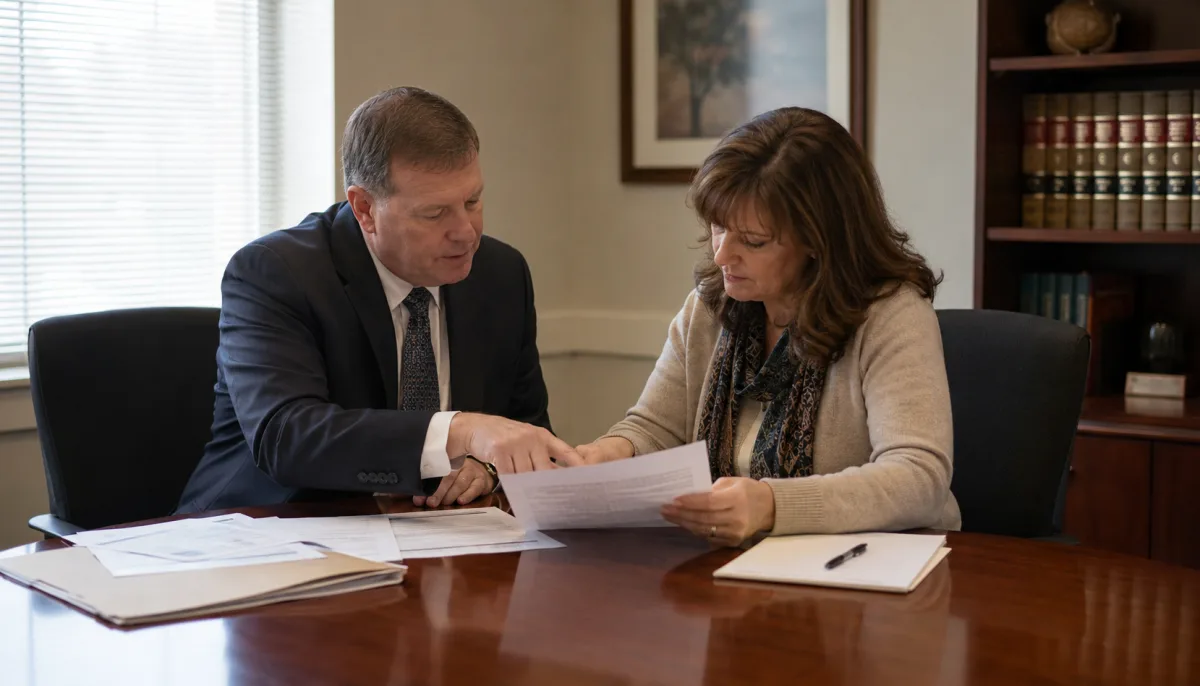
Fee structure matters more than the dollar figure itself, because the billing model changes the attorney's incentives. Under hourly billing — typically $200 to $500 per hour nationally, with averages around $327 — every additional phone call, revision request, and follow-up question adds to your bill. That is not inherently bad; complex estates with business interests, blended families, or multi-state property genuinely require more hours. But hourly arrangements can make clients reluctant to ask clarifying questions, which leads to plans that do not reflect their actual wishes.
Flat-fee pricing, now offered by the majority of estate planning firms, bundles all drafting, revision, and signing meetings into a single price — typically $1,500 to $3,500 for a comprehensive package including a will, revocable trust, durable financial power of attorney, and healthcare directive. The flat fee aligns incentives: the attorney earns the same whether the plan takes two meetings or six. Ask explicitly what the flat fee includes and what triggers extra billing. Common add-ons include deed transfers for real estate (recording fees plus attorney time), trust funding assistance, and Medicaid planning if long-term care is a concern.
Ask whether the firm charges for future amendments. Life changes, and a plan that cannot be updated affordably becomes a plan that does not get updated. Some firms offer annual maintenance plans for a modest retainer; others charge per amendment. You should also ask about the fees an executor or trustee may charge the estate for their services — those costs come out of the estate before distribution. If you need to understand your rights to revoke or change a power of attorney later, see how to revoke a POA.
When Should I Update My Estate Plan?
A baseline review every three to five years catches incremental drift — a beneficiary who has moved, an executor who has become estranged, a tax law change that reshapes your exposure. Certain life events should trigger an immediate call to your attorney rather than waiting for the next scheduled review. Marriage and divorce top the list. An ex-spouse named as primary beneficiary on a life insurance policy or retirement account remains entitled to those funds regardless of what a divorce decree says, because beneficiary designations are contracts with the financial institution and supersede both wills and court orders.
Birth or adoption of a child, the death of a named executor or beneficiary, moving to a different state, acquiring significant new assets (real estate, an inheritance, a business interest), and a serious health diagnosis all warrant immediate attention. So does any substantial change in federal or state tax law — the 2025 to 2026 exemption shift is a clear example. Ask your attorney at the first meeting to recommend a review rhythm and to specify which events should prompt an unscheduled call. A well-structured plan that never gets reviewed will eventually fail someone.
What Happens If I Die Without a Will in My State?

Intestate succession — dying without a valid will — hands control of your estate to the state legislature rather than to you. Every state has a statutory priority list that dictates who inherits and in what proportions. Spouses and children rank first; parents and siblings rank next; more distant relatives follow. Unmarried partners, regardless of how long the relationship lasted, receive nothing under intestate succession laws. Friends, stepchildren without legal adoption, and charities are similarly excluded. If no eligible relatives can be found, the estate escheats — transfers to the state itself.
The proportions matter as much as the priority list. In many states, a surviving spouse with children does not inherit the entire estate; the children share in assets the surviving parent may need to live on. A spouse expecting to inherit the family home outright may instead co-own it with adult children from a prior relationship, creating immediate conflict. Probate under intestacy moves slowly, since the court must establish family relationships and notify all potential heirs before distributing anything. Dying without a will also means the court appoints a guardian for your minor children — a judge who has never met your family makes that call, not you. For practical steps after a death occurs, see how to search for a death certificate.
Do I Need a Power of Attorney and Healthcare Directive as Part of My Estate Plan?
A will governs what happens after you die. Powers of attorney and healthcare directives govern what happens if you cannot speak for yourself while still alive — and a period of incapacity before death is statistically more common than sudden death. Without a durable financial power of attorney, no one can pay your bills, manage your investments, or make business decisions on your behalf during incapacity; a family member who tries to do so without this document must petition a court for guardianship or conservatorship, a process that typically costs thousands of dollars and months of delay.
A healthcare power of attorney designates someone to make medical decisions when you cannot. A living will (also called an advance directive or healthcare directive) spells out your specific wishes — whether you want life-sustaining treatment continued, under what circumstances, and for how long. The two documents serve different functions: one names a decision-maker, the other states your instructions. Both are necessary. Without the advance directive, even a designated healthcare agent may face pushback from medical providers who want explicit written authorization before withdrawing treatment. The American Bar Association's Section of Real Property, Trust and Estate Law documents how often families face avoidable court proceedings simply because these documents were never executed. Nolo's intestate succession guide explains what courts do when no plan exists at all. Ask your attorney whether your state requires witnesses, notarization, or both for healthcare directives to be valid — requirements vary significantly. For questions about financial obligations that survive a death, see is a surviving spouse liable for medical bills.
Frequently Asked Questions
What is the single most important question to ask an estate planning attorney at a first meeting?
Ask: "If I were to die or become incapacitated tomorrow, what would actually happen to my assets and my family under my current situation?" That question forces the attorney to map the gap between where you are and where you need to be — including intestate succession exposure, unfunded beneficiary designations, absent healthcare documents, and unprotected minor children. The answer shows exactly how much work the plan needs to do.
How long does it typically take to complete an estate plan?
A straightforward plan — will, revocable trust, durable power of attorney, and healthcare directive — usually moves from first meeting to signed documents in two to six weeks. Complex plans involving business succession, blended family structures, charitable vehicles, or multi-state property can take three to six months. The bottleneck is usually the client, not the attorney: decisions about who serves as trustee or how assets are split among children often require family conversations that take time to resolve.
Can I write my own will without an attorney?
Most states recognize handwritten (holographic) wills and online will services, so technically yes. Practically, the risks are real. Self-drafted wills frequently fail on execution formalities: insufficient witnesses, improper notarization, or language that conflicts with beneficiary designations on retirement accounts. A $299 online will that leaves a $400,000 IRA to the wrong person because beneficiary designations were never updated costs far more in grief and legal fees than it saved.
What happens to my retirement accounts when I die — do they pass under my will?
No. IRAs, 401(k)s, 403(b)s, and similar accounts pass by beneficiary designation directly to the named recipient, completely outside the will and outside probate. The designation form you filed with your plan administrator controls distribution, regardless of what your will says. An outdated designation — naming a deceased parent, a prior spouse, or simply "estate" instead of a named person — can create significant tax and distribution problems. Ask your attorney to review all beneficiary designations as part of the planning process, not as an afterthought.
Does a living trust protect my assets from creditors?
A revocable living trust does not protect assets from creditors during your lifetime because you retain full control and can revoke it at any time. Creditors can reach those assets just as they can reach your personal accounts. Protection from creditors requires an irrevocable trust structure — one where you relinquish control — and the rules, timing, and look-back periods vary by state. This is a separate and more complex planning conversation from basic estate planning.
What should I ask about an attorney's experience before hiring them?
Ask what percentage of their practice is estate planning and how many plans they complete annually. An attorney who divides time equally among estate work, business litigation, and family law has less depth than one whose caseload is predominantly wills, trusts, and related documents. Ask whether they stay current on state-specific probate rules and federal tax changes — both shifted meaningfully in 2025 and 2026. References from clients with situations resembling yours — blended family, business ownership, special needs beneficiary — are more useful than general testimonials.
How do I know if I need a simple will or a trust-based plan?
The threshold question is whether avoiding probate justifies the upfront cost of a trust. Generally, a trust earns its keep if you own real estate in more than one state (each state requires separate probate), have a blended family with competing interests, want privacy (probate is public record), have a beneficiary receiving government disability benefits, or if your estate exceeds your state's small estate threshold — which ranges from roughly $10,000 to $150,000 depending on the state. A will alone may be sufficient for a single-state homeowner with a straightforward family structure and modest assets, provided beneficiary designations on financial accounts stay current.

Olivia Prete
Edits culture and personal-development articles, distinguishing opinion and experience from verifiable claims.



Leave a reply
Replying to