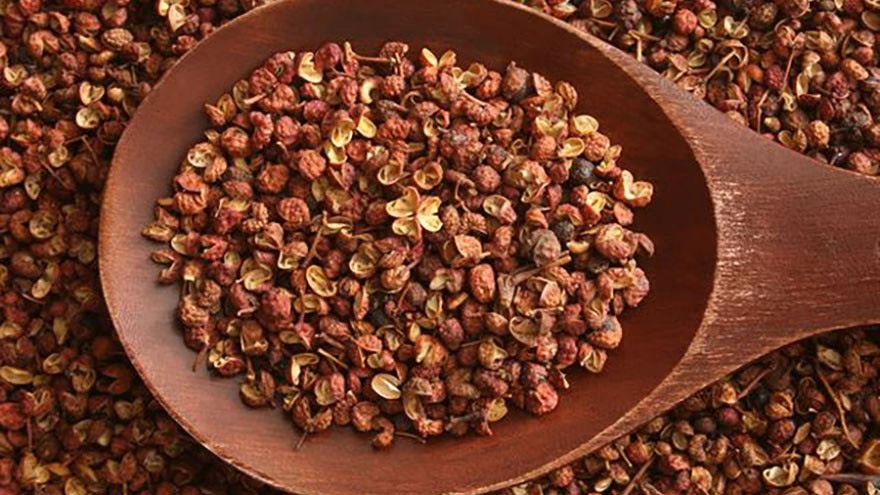
Bite into a dish built on Sichuan pepper and you'll notice something strange within seconds: a low electric buzz spreads across your lips and tongue, as though someone pressed a nine-volt battery to your mouth. That sensation isn't heat. It isn't the burn of chili. It's closer to touching a live wire — and the chemistry behind it is genuinely fascinating. The active compound, hydroxy-alpha sanshool, blocks a class of potassium channels (KCNK3, KCNK9, and KCNK18) that normally keep certain nerve fibers quiet. With those channels blocked, D-hair afferent fibers — the same touch receptors that respond to light brushing on skin — fire continuously. Your brain interprets that sustained discharge as vibration. The result is tingling paresthesia: not pain, not warmth, but a persistent low-frequency buzz that makes your whole mouth feel like it's humming at around 50 Hz. Capsaicin, by contrast, works by activating heat-pain receptors directly. Sanshool takes a different route entirely.
What is Sichuan pepper and why does it numb your mouth?
Sichuan pepper (also written Szechuan pepper, and called huajiao in Mandarin) is the dried outer husk of the berry produced by trees in the Zanthoxylum genus. The two species most common in Chinese cooking are Zanthoxylum bungeanum, the more prized variety grown in Sichuan's Hanyuan County and Gansu Province, and Zanthoxylum simulans, a flatspine prickly-ash native to central and southern China that's considered an adequate but lesser substitute. Both belong to the Rutaceae family — the same botanical family as lemons, limes, and oranges — which explains the citrus notes in the flavor and, critically, explains why the US government banned the spice for nearly four decades.
The numbing effect is specific to the husk. The small black seeds inside carry no sanshool and no aromatic oils; they're hard, bitter, and should be picked out before cooking. The husk is where all the action is — citrus volatiles, floral compounds, and around 3% hydroxy-alpha sanshool by weight. Unlike TRPV1 agonists such as capsaicin that simply trigger pain receptors, sanshool targets mechanosensitive nerve channels, which is why the feeling registers more as vibration than burning. Research published in Nature Neuroscience by Bautista et al. (2008) confirmed that two-pore potassium channel inhibition is the primary driver of the effect. That makes Sichuan pepper one of the only foods that creates a neurological experience almost indistinguishable from a low-frequency electric current.
Is Sichuan pepper related to black pepper?
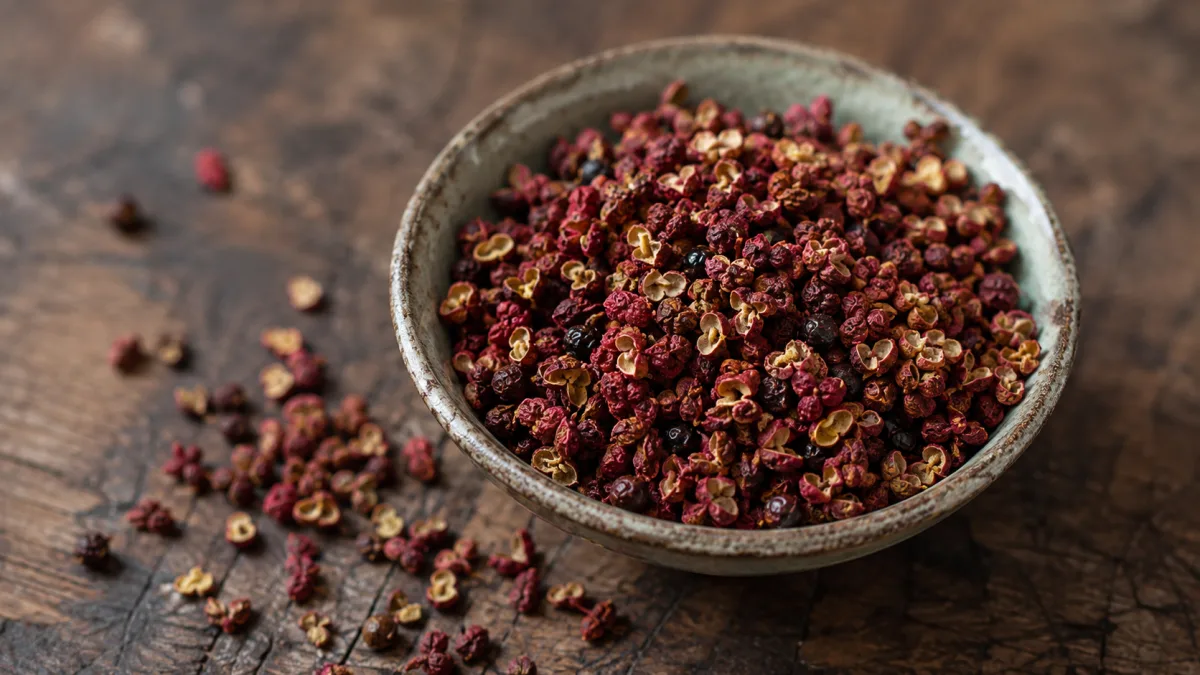
No — and the naming has caused confusion for centuries. Black pepper comes from Piper nigrum, a climbing vine in the Piperaceae family. Sichuan pepper comes from a small thorny tree in the Rutaceae family. The two are not even distant cousins botanically. They share a name because early European traders and writers defaulted to "pepper" for any small, pungent dried spice, a linguistic habit that stuck.
The US import ban illuminates the botanical distinction. In 1968, the USDA issued a blanket prohibition on fresh plant material from Rutaceae species originating in most of Asia, citing the risk of introducing citrus canker — a bacterial disease (caused by Xanthomonas citri) that damages foliage and fruit of commercial citrus crops. Because Zanthoxylum sits in the same family as orange and lemon trees, dried Sichuan peppercorns were swept into the ban. The prohibition held for 37 years. Enforcement was loose through most of that period, but in 2002 the USDA intensified inspections and began confiscating shipments at Asian grocery stores — at the time, the spice was the single most common banned food item intercepted at US ports. In 2005, the ban was lifted under a compromise: peppercorns destined for the US market must be heat-treated to at least 70 degrees Celsius before export, killing any live bacterial material. By 2007, updated USDA regulations covering dried goods effectively removed remaining restrictions. Sichuan pepper is now freely available across the country. True black pepper (Piper nigrum), needless to say, was never subject to any of this.
Japanese sansho pepper (Zanthoxylum piperitum) is another close relative — same genus, different species. It shares the numbing quality but carries a distinctly piney, green character and is used differently in Japanese cuisine. It is the closest readily available substitute if Sichuan pepper is out of reach, though the flavor profile diverges noticeably.
Red vs. green Sichuan peppercorns — what's the difference?
The two types look different, taste different, and suit different dishes — though both come from the same Zanthoxylum genus and produce the same sanshool-driven buzz.
Red Sichuan peppercorns are the variety most Westerners encounter first. They're harvested in late summer, dried to a deep brick-red, and carry a warm, woodsy citrus character — think dried orange peel with a faint menthol edge. The numbing effect is strong but round. Da Hong Pao ("Big Red Robe") is the prestige red variety, grown in Hanyuan, Sichuan, and considered the benchmark for quality. Red peppercorns hold up in stir-fries, braises, and chili oils where bold, sustained mala flavor is the goal.
Green Sichuan peppercorns are harvested earlier in the season while still immature, then dried or processed fresh. The flavor is sharper and more volatile — closer to lime zest than orange peel, with a distinct piney resin note and a quicker, almost electric onset of tingling that many describe as more intense than the red variety. They're particularly well suited to cold dishes, cucumber salads, and fish preparations where their brightness won't be overwhelmed by heavy sauce. Green Sichuan pepper is responsible for the vibrant, fresh quality in dishes like certain stir-fry preparations where you want aromatics in the foreground.
Neither is universally better. They answer different flavor needs. If a recipe just says "Sichuan pepper" without specifying, red is the safe default.
How to prepare and use Sichuan peppercorns in cooking
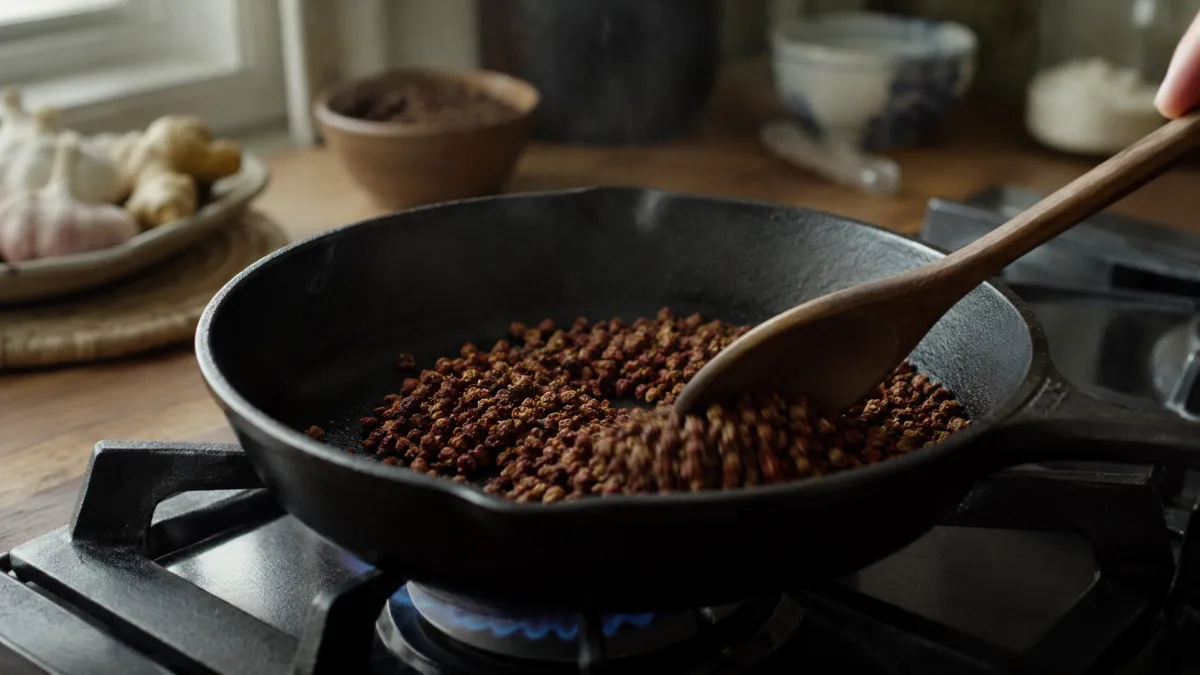
The single most important technique for working with Sichuan peppercorns at home is dry-toasting before grinding — and doing it over low heat. Place whole peppercorns (husks only, seeds removed) in a cold, dry skillet. Turn the heat to low-medium and stir or swirl constantly. The goal is slow, even heat that drives out internal moisture and activates the volatile aromatic compounds in the husks. After two to four minutes you'll notice the kitchen beginning to smell floral and slightly citrusy — that's the terpenes and limonene fractions releasing. The peppercorns should darken slightly but not blacken. When you can snap one between your fingers and it crunches cleanly apart, they're ready. Pull them off the heat immediately.
Let them cool completely — five minutes is enough — before grinding. Grinding hot spices traps steam and produces a paste rather than a powder. A mortar and pestle gives the most control and tends to release the aromatic oils more completely than a blade grinder's shearing action. A dedicated spice grinder (kept separate from your coffee grinder, for obvious reasons) also works well. Sieve out any remaining seed fragments, which will be gritty. Use the ground pepper within a day or two. Pre-ground Sichuan pepper sold in jars loses its volatile compounds quickly; what you're buying in those jars is often closer to dust than spice.
Whole peppercorns can also be added directly to braises, soups, and stews to infuse flavor. They're often fried briefly in hot oil at the start of a dish — a technique called "blooming" — to extract their oils into the fat before other ingredients go in. This is one reason a good stir-fry sauce can carry such depth even with a short cook time. Add ground Sichuan pepper near the end of cooking; long exposure to high heat degrades the volatile aromatics responsible for the floral notes. If you enjoy pairing peppercorns with other bold protein preparations, the same principle of adding spice late applies to richer meats where you want the pepper aroma to stay sharp.
Classic dishes that feature Sichuan pepper
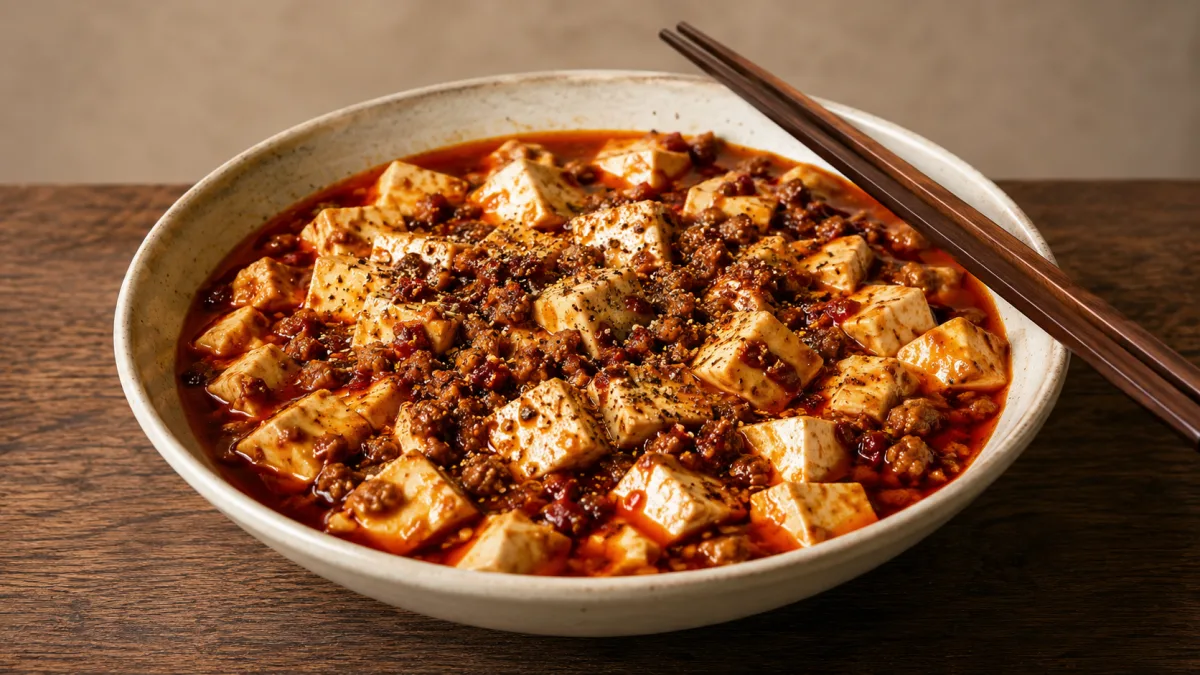
Sichuan pepper is inseparable from the flavor concept of mala — the two-character compound that defines a wide range of Sichuan cooking. Ma (the numbing buzz) and la (the fiery chili heat) together create a sensation neither ingredient produces alone: the numbness blunts the sharpest edges of chili heat while the heat amplifies perception of the tingle. Virtually every canonical Sichuan dish is built on some ratio of this pairing.
Mapo Tofu is perhaps the purest expression — silken tofu in a sauce of doubanjiang (fermented chili bean paste), ground pork, and enough ground Sichuan pepper to leave your mouth humming long after the last bite. Dan Dan Noodles balance sesame paste, chili oil, and ground pork with a finish of Sichuan pepper that sharpens the whole bowl. Kung Pao Chicken uses whole dried chilies and Sichuan peppercorns in hot oil at the start — the peppercorns perfume the oil before the chicken and peanuts go in. Twice-cooked pork braises a whole piece of pork belly first, then slices and returns it to a wok with chili bean paste and Sichuan pepper. Sichuan hotpot, the communal boiling-broth experience, floats a thick slick of chili oil and peppercorns across the surface of the broth — you taste mala in every piece of food you pull out.
These dishes all benefit from properly prepared vegetables and fresh aromatics. Getting comfortable with cooking greens that accompany Sichuan dishes — bok choy, Chinese broccoli, spinach — gives the spiced components something clean to work against.
Chinese five-spice powder — the role of Sichuan pepper
Five-spice powder is one of the oldest spice blends in Chinese cooking, and Sichuan pepper is one of its five core components. The standard composition: star anise, Chinese cinnamon (cassia), cloves, fennel seeds, and Sichuan peppercorns. Proportions vary by region and cook, but the logic of the blend follows the traditional Chinese flavor framework — balancing sweet (fennel, cinnamon), warm-bitter (cloves, star anise), and the unique numbing-citrus character of Sichuan pepper. Together the five create a flavor more complex than any single ingredient.
Some commercial blends substitute white pepper for Sichuan peppercorns, presumably for cost or to produce a hotter, more familiar pepper flavor. The substitution is a significant downgrade — white pepper brings pungency but none of the citrus or sanshool-driven character that makes five-spice recognizable. If you've ever tasted a five-spice blend that seemed one-dimensional or overly sharp, white pepper substitution is likely the reason.
Five-spice appears extensively in braised meats, roasted duck, Chinese BBQ pork (char siu), and fried preparations. The Sichuan pepper component is largely responsible for cutting through fat in those rich dishes — the citrus volatiles in the husk perform a similar palate-cleansing function to orange peel in a classic duck preparation. It's a spice that earns its place in the blend for mechanical reasons, not just tradition.
Where to buy Sichuan pepper and how to store it
Sichuan peppercorns are far more accessible in the US now than they were before 2005. Asian grocery stores are the most reliable brick-and-mortar option — the spice section will typically carry at least one variety of red Sichuan peppercorns, and larger stores may stock green as well. Specialty spice retailers like The Spice House carry them reliably and ship nationwide.
For the highest quality, particularly single-origin Hanyuan or Da Hong Pao varieties, The Mala Market is the specialist importer — they hand-package weekly to preserve freshness and carry both red and green varieties, including the premium Qingxi Gong Jiao tribute pepper. The difference between a fresh, high-quality Sichuan peppercorn and a stale jar from a generic spice rack is substantial enough to be worth seeking out.
Storage is straightforward but important. Keep whole peppercorns in an airtight container away from direct light and heat. Stored properly, whole husks maintain their potency for two to three years. Ground Sichuan pepper loses its volatile aromatics within weeks — months at best — which is why grinding your own small batches at home consistently outperforms anything pre-ground. Avoid freezing; the moisture cycle on thawing degrades the husks. If you're building a spice pantry that includes Sichuan pepper, it pairs naturally with other preserved and dried ingredients — the same care you'd apply to properly storing vegetables applies here: airtight, dark, and cool.
Frequently Asked Questions
Is Sichuan pepper the same as Szechuan pepper?
Yes — both spellings refer to the same spice. Szechuan is an older romanization of the province's name; Sichuan (from pinyin) is the current standard. You'll also see it called Chinese pepper, mala pepper, or huajiao. The spice itself is identical regardless of how the label is spelled.
Why does Sichuan pepper make your mouth go numb?
The active compound, hydroxy-alpha sanshool, blocks two-pore potassium channels (KCNK3, KCNK9, KCNK18) in sensory nerve fibers. This keeps D-hair afferent fibers — mechanosensitive touch receptors — firing continuously. Your nervous system interprets that sustained discharge as a low-frequency vibration, producing the characteristic tingling paresthesia. It's a tactile sensation created through nerve chemistry, not a heat response like capsaicin.
Can you eat the black seeds inside Sichuan peppercorns?
Technically yes, but there's little reason to. The seeds contain no sanshool, no useful aromatics, and carry an unpleasant bitter, gritty texture. High-quality Sichuan peppercorns are sold pre-sorted with most seeds removed. If you're working with cheaper bulk product that has many seeds, pick them out before toasting.
What can I substitute for Sichuan pepper if I can't find it?
Japanese sansho pepper (Zanthoxylum piperitum) is the closest substitute — same genus, similar sanshool content, though greener and more piney in flavor. It's available at Japanese grocery stores and some specialty retailers. In a pinch, a small amount of lemon zest combined with black pepper approximates the citrus and pungency, though without the numbing quality. Nothing fully replaces the sanshool sensation.
Is Sichuan pepper spicy-hot?
No — Sichuan pepper scores 0 on the Scoville scale, which measures capsaicin content. It produces no heat. The confusion comes from the mala flavor profile, where Sichuan pepper (the numbing element) is almost always paired with dried chili peppers (the hot element). The heat you taste in a mala dish comes from the chilies, not the peppercorns.
How should I add Sichuan pepper to a recipe?
For stir-fries and oil-based dishes, whole peppercorns can be bloomed in hot oil at the start to infuse flavor, then removed or left in. For finishing — adding depth to a completed dish — use freshly ground, toasted powder added in the last minute of cooking. For braises and soups, add whole peppercorns to the liquid early and let them steep. The key rule: ground Sichuan pepper added too early loses its floral volatiles to heat. Add it late.

Tory Stearns
Edits practical household, travel and lifestyle explainers. Claims that can change are linked to current primary or subject-authority sources.



Leave a reply
Replying to