
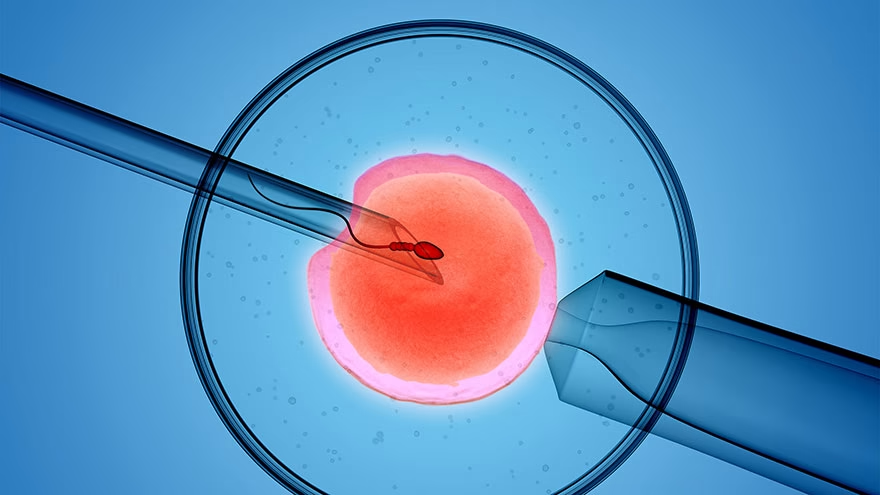
Artificial Insemination vs. IVF is usually a choice about diagnosis, age, sperm factors, tubes, cost, time, medication burden, and how much control the clinic needs over eggs, sperm, and embryos.
Artificial insemination often means intrauterine insemination, or IUI. IVF means eggs are retrieved from the ovaries, fertilized in a lab, and an embryo is transferred later. Both can be helpful, but they solve different problems.
What Artificial Insemination Usually Means
In fertility clinics, artificial insemination commonly refers to IUI. Sperm is washed and placed into the uterus around ovulation.
ASRM's patient information explains that IUI places sperm directly into the uterus and may be used with or without fertility medicines: ASRM IUI fact sheet.
IUI still relies on ovulation, open fallopian tubes, and sperm reaching and fertilizing the egg inside the body.
What IVF Means

IVF uses ovarian stimulation, egg retrieval, fertilization in a lab, embryo culture, and embryo transfer. Some cycles also use ICSI, genetic testing, freezing, or donor eggs or sperm.
ASRM describes IVF as combining eggs and sperm outside the body and transferring an embryo to the uterus: ASRM IVF information.
IVF is more involved than IUI, but it can bypass or address problems IUI cannot.
When IUI May Fit

IUI may be considered for unexplained infertility, mild male factor infertility, cervical factors, donor sperm use, or ovulation problems when tubes are open.
It is usually less expensive per cycle than IVF and less invasive. It may use no medication, oral medication, or injectable medication depending on the case.
If timing intercourse has become stressful, staying intimate during pregnancy has communication ideas that can still apply during treatment planning.
When IVF May Fit
IVF may be recommended for blocked tubes, severe male factor infertility, endometriosis, advanced reproductive age, repeated IUI failure, need for genetic testing, fertility preservation, or donor egg treatment.
It gives the clinic more information: egg number, fertilization, embryo development, and sometimes genetic testing results.
That extra information can be valuable, but it also brings cost, procedures, medication, and emotional intensity.
Success Rates Are Not One Number
Success depends on age, diagnosis, ovarian reserve, sperm factors, clinic approach, embryo quality, uterine factors, and prior treatment history.
CDC's ART data page provides clinic and national data for assisted reproductive technology outcomes: CDC ART success rates. IUI success data is usually discussed directly with the clinic because it depends heavily on diagnosis and protocol.
Ask for age-specific and diagnosis-specific estimates instead of relying on a general percentage.
Cost And Insurance
IUI usually costs less per attempt, but several failed IUIs can still add up. IVF costs more per cycle, but may offer a higher chance per attempt for some diagnoses.
Insurance rules vary widely. Ask about monitoring, medications, sperm processing, anesthesia, lab fees, embryo freezing, storage, genetic testing, and transfer fees.
If money stress is affecting decisions, keep a written comparison of total expected cost, not only the headline cycle price.
Medication And Monitoring
IUI monitoring may include ovulation tracking, ultrasound, blood work, medication, and trigger timing. IVF usually involves more injections, more monitoring, retrieval, and lab steps.
Medication response can change plans. Too many follicles in an IUI cycle may raise multiple pregnancy risk, while IVF stimulation may raise OHSS concerns in some patients.
If you are reading about follicle response, conception claims should not guide medication decisions.
Multiple Pregnancy Risk
IUI with ovulation-stimulating medication can increase the chance of twins or higher-order multiples if multiple eggs ovulate.
IVF can reduce multiple risk when one embryo is transferred, but decisions depend on age, embryo quality, history, and clinic guidance.
Ask directly how the clinic reduces multiple pregnancy risk with each option.
Male Factor Questions
Semen analysis matters before choosing treatment. Mild issues may still fit IUI, while more severe sperm problems may lead to IVF with ICSI discussion.
Do not assume the female partner needs more medication before the sperm side is evaluated.
A fair comparison includes both partners' testing when sperm is part of the plan.
Tubal And Uterine Testing
IUI usually requires at least one open fallopian tube because fertilization happens inside the body. IVF can bypass blocked tubes, though uterine factors still matter.
Ask whether HSG, saline ultrasound, hysteroscopy, or other evaluation is needed before spending money on treatment.
If early testing and pregnancy tests have been confusing in the past, evaporation lines on pregnancy tests may help with test-reading basics, separate from fertility workup.
Emotional Load
IUI can feel lighter because it is shorter and less invasive, but repeated negative cycles can be draining. IVF can feel more intense because each step produces new numbers and decisions.
Build support before treatment starts. Decide who knows, how updates will be shared, and what kind of comments are not helpful.
If sadness or anxiety starts running the process, depression during pregnancy may help you recognize when to ask for support.
How Clinics Often Sequence Care
Some people try timed intercourse, then IUI, then IVF. Others move directly to IVF because of age, tubal disease, severe sperm factors, genetic concerns, or time pressure.
A standard ladder is not always the best ladder. Ask why the clinic recommends one option now.
If you want a second opinion, bring records: labs, semen analysis, imaging, prior cycles, medications, and pregnancy history.
Questions To Ask Before Choosing

Ask what diagnosis each option addresses, expected success for your age and history, total cost, medication plan, multiple pregnancy risk, cancellation rules, and when to switch strategies.
Ask how many cycles they would try before reassessing. Open-ended treatment can become expensive and emotionally hard.
A good plan includes the next decision point, not only the next procedure.
Time Pressure Changes The Math
A younger patient with open tubes and mild factors may reasonably try IUI first. Someone older, with blocked tubes, severe sperm issues, or repeated losses may not have the same timeline.
Ask how time affects the recommendation. The answer should include age, ovarian reserve, diagnosis, and how long you have already been trying.
The cheapest first step is not always the least expensive path if it uses months that matter.
Donor Sperm Or Donor Eggs
IUI is often used with donor sperm when the person carrying the pregnancy has open tubes and ovulates or can be induced to ovulate.
Donor eggs require IVF because the egg must be retrieved, fertilized, and transferred as an embryo.
Ask about legal consent, genetic carrier screening, infectious disease testing, storage, and future sibling planning if donor gametes are involved.
What A Failed Cycle Means
A failed IUI or IVF cycle does not always mean the wrong treatment was chosen. It may mean the odds did not land that month, or that the plan needs adjustment.
After a failed cycle, ask what was learned: response to medication, sperm sample quality, lining, fertilization, embryo development, or transfer details.
Use the debrief to decide whether to repeat, adjust, or switch strategies.
Decide How Much Information You Want
IVF can produce many numbers: follicles, eggs, mature eggs, fertilization, embryos, grading, genetic testing, and beta hCG. Some people find that helpful; others find it overwhelming.
IUI usually provides fewer data points, which can feel simpler but also less informative.
Ask the clinic how updates are delivered and who explains results in plain language.
Medication Burden Feels Different
IUI may involve oral or injectable medications, depending on the plan. IVF usually involves more injections and tighter timing.
Medication burden matters if needles, work schedules, travel, or cost are major issues. Ask what the calendar would look like before choosing.
A treatment that looks best on paper still has to fit the person's life enough to complete it safely.
Lab And Storage Decisions
IVF can create decisions about embryo freezing, storage fees, genetic testing, future use, donation, or disposal. IUI usually does not create embryo storage decisions.
These topics can be emotional, legal, financial, and religious for some families. Discuss them before retrieval if IVF is likely.
Ask the clinic what consent forms must be signed and what happens if partners disagree later.
When A Second Opinion Helps
A second opinion can be useful after repeated failed cycles, unclear diagnosis, major cost pressure, or a recommendation that does not make sense to you.
Bring records so the next clinic can give a real opinion instead of starting from memory.
A second opinion is not a betrayal. It is a way to understand the options before spending more time and money.
Frequently Asked Questions
Is artificial insemination the same as IUI?
In many fertility clinics, artificial insemination usually refers to IUI.
Is IVF always better than IUI?
No. IVF may be more effective for some diagnoses, but IUI may fit others.
Which is cheaper?
IUI is usually cheaper per cycle, but repeated attempts can add up.
Do I need open tubes for IUI?
Usually yes, because fertilization happens inside the body.
When should we move from IUI to IVF?
Ask your clinic based on age, diagnosis, prior cycles, cost, and time pressure.
This article is for general information only and isn't a substitute for medical advice. Talk to a clinician who knows your full history before making changes.

Cashie Evans
Covers parenting and practical household topics with clear steps, safety notes and links to current guidance.




Leave a reply
Replying to