

A Beagle is friendly, merry, nosy, and built to follow scent before it follows your calendar. That mix can make the breed a wonderful family dog and a stubborn housemate in the same afternoon. Good Beagle breed information should be honest about the charm and the work: food control, recall practice, exercise, voice, nose games, and steady boundaries all matter.
What kind of dog is a Beagle?
The Beagle is a scent hound, not a tiny decorative dog. The AKC describes the breed as merry, friendly, and curious, with a strong hound background. The AKC Beagle breed page is a useful starting point because it explains why the nose, voice, and social nature are central to daily life with this breed.
Most Beagles like company. Many dislike being left bored, isolated, or under-exercised. A quiet Beagle is possible, but it usually comes from routine, training, and enough work for the nose.
If you are comparing hound-style personalities, Livecub's Basset Hound questions guide gives another useful reference point.
What temperament should families expect?
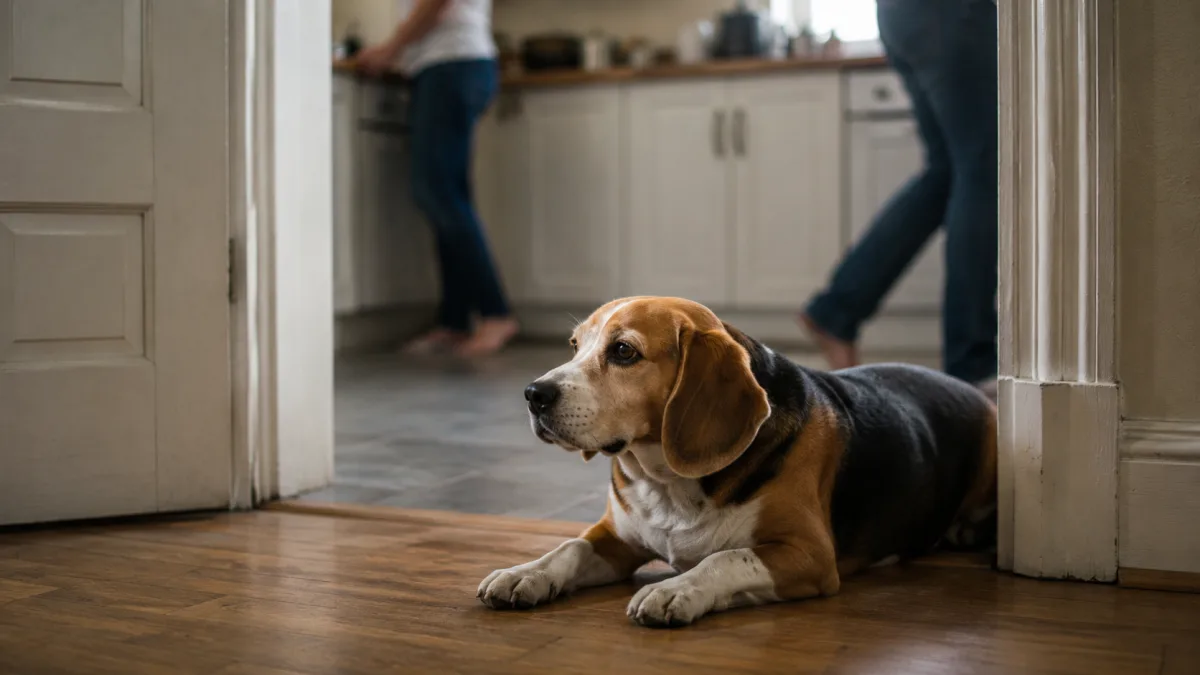
Beagles are often cheerful with family members, visitors, and other dogs. Their friendliness is one reason the breed remains popular. The same social nature can become noisy or needy if the dog never learns to settle alone.
They are also determined. A Beagle that has found a scent may seem deaf to normal conversation. That is not spite; it is breeding and reinforcement doing their job.
The nose is not a flaw. It is the trait you need to train around.
How much exercise does a Beagle need?
Daily exercise should include walking, sniffing, play, training, and some controlled problem solving. A plain march around the block may not satisfy a hound that wants to inspect every odor. Use sniff walks, food puzzles, simple tracking games, and recall practice on a long line in safe areas.
A fenced yard helps, but it is not a babysitter. Beagles may dig, follow scents, or look for gaps if left alone too long. Supervised yard time is safer than assuming the fence will do all the thinking.
For a higher-energy sporting breed comparison, Livecub's German Shorthaired Pointer questions guide shows how breed purpose changes exercise planning.
How can scent work fit into daily life?
Scent work does not have to be fancy. Hide a few pieces of kibble in a towel, scatter food in short grass, or place treats behind chair legs while the dog waits in another room. Then release the Beagle to search.
These games give the nose a legal job and make walks less frantic. They also help rainy days, apartment living, and busy family schedules. Let the dog sniff on purpose, then ask for a cue when you need movement again.
Keep search games safe. Avoid sharp objects, toxic plants, unsecured trash, and food that will upset the stomach. The goal is not chaos; it is controlled work that fits the breed.
What training works best for Beagles?
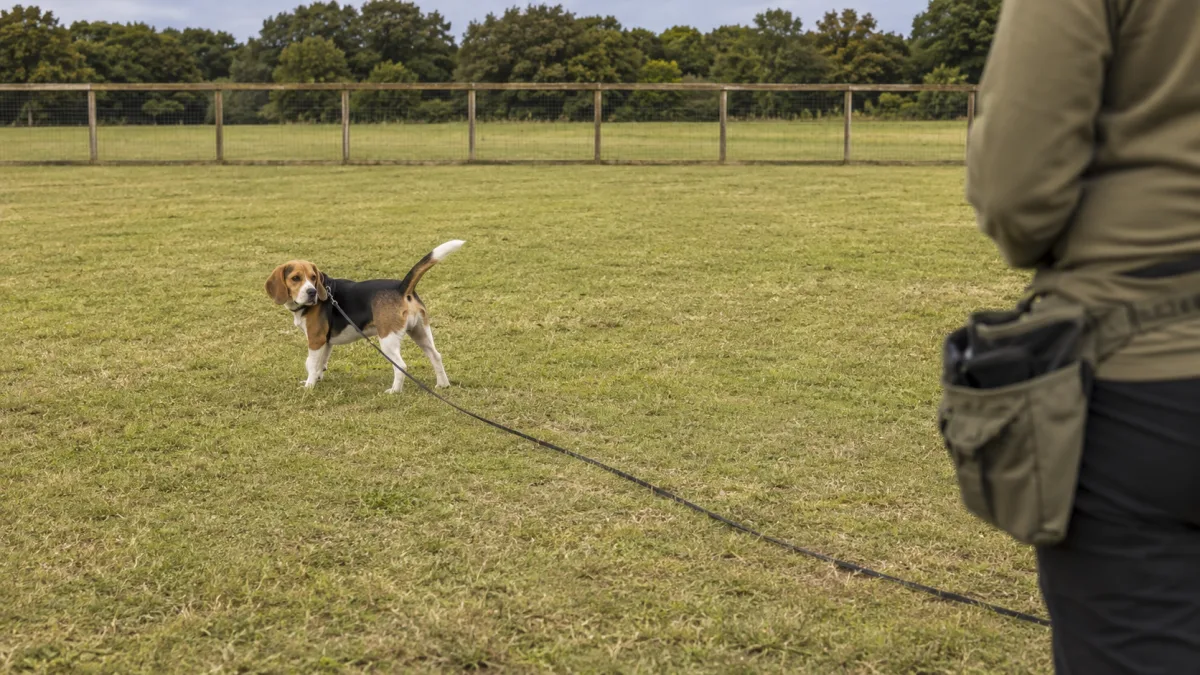
Use rewards the dog actually cares about. Food often works, but sniffing, movement, praise, and access to a trail can also be rewards. Keep sessions short and clear because a bored Beagle will start shopping for its own job.
Plan training before the exciting moment. Practice leave-it near boring food before picnic scraps appear. Practice recall in a hallway before asking for it near rabbits, squirrels, or a fresh trail. Small rehearsals make the hard moments less dramatic.
Recall and long-line work
Practice recall in easy places, then in mildly distracting areas, then around scents from a distance. Use a long line outdoors unless the area is secure. Do not trust a young or untrained Beagle off leash near roads, wildlife, or open fields.
Leave-it and food manners
Teach leave-it, drop, wait, and polite feeding routines. These cues matter because many Beagles are talented at finding snacks nobody offered.
Settle and separation practice
Reward the dog for lying down, using a mat, resting in a crate, and staying calm while people move around. A Beagle that learns to switch off is easier to live with than one that is always hunting for action.
Pay the behavior you want, especially around scent distractions. Calling louder after the dog is gone is rarely a plan.
What about barking, baying, and noise?
Beagles can bark, bay, and announce things with feeling. Noise may come from excitement, frustration, alarm, boredom, or separation stress. A useful plan starts by identifying the trigger and reducing rehearsal.
Teach quiet after one or two alerts, reward check-ins, block window rehearsals, and give the dog a mat during predictable activity. If the dog bays when left alone, look at exercise, gradual departures, and whether the dog is anxious rather than only noisy.
What health and care points matter?
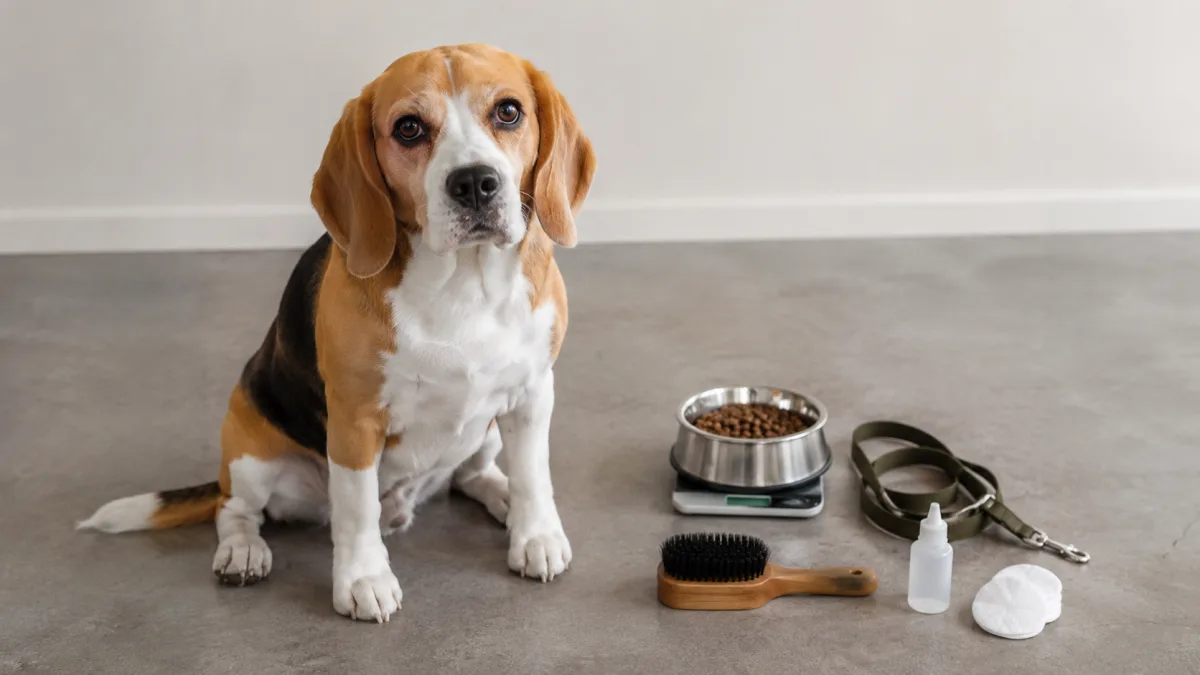
Food management deserves a serious place in Beagle care. The breed's appetite can turn training into a gift, but it can also lead to weight gain if meals, treats, and stolen food are not measured. Use small rewards and count them as part of the day.
The Orthopedic Foundation for Animals lists breed-specific health screening recommendations for Beagles through its CHIC program. The OFA Beagle CHIC listing is a good source to discuss with breeders and veterinarians when asking about health testing.
Ask for proof, not promises. A responsible breeder should be comfortable discussing screening, family history, temperament, and what support they provide after the puppy goes home.
Watch body shape instead of trusting appetite. You should be able to discuss ribs, waist, and feeding amounts with your veterinarian without guessing. Treats for training are useful, but they still count as food.
Home safety matters too. Secure trash, close pantry doors, and teach drop before the dog has stolen something risky. A Beagle that finds food once will remember the route.
How much grooming does a Beagle need?
Beagles have short coats, but they still shed and need routine care. Brush weekly, check ears, trim nails, clean teeth, and look over the skin after outdoor adventures. Drop ears can hold moisture and debris, so ear checks should be normal, calm, and rewarded.
Handling practice makes grooming easier. Touch ears, paws, collar, mouth, and tail gently, reward cooperation, and stop before the dog has to fight the process.
Livecub's longhair Dachshund grooming guide is a different coat type, but the handling lesson still applies.
Is a Beagle a good family dog?
A Beagle can be a very good family dog when the home understands scent drive, food control, exercise, and noise. The breed often enjoys children and visitors, but children still need rules about doors, food, ears, and rest areas.
Homes that want a quiet dog with little training may struggle. Homes that enjoy walks, sniffing games, routines, and a social dog often do better.
For size expectations across breeds, Livecub's biggest dog breeds guide helps place the Beagle's medium-small build in context.
What homes should think twice?
A Beagle may be a poor match for someone who wants off-leash freedom without training, a silent apartment dog, or a pet that ignores food on counters. The breed can adapt to many homes, but it needs management.
Think about neighbors, work hours, fences, food storage, and who will walk the dog when weather is bad. A realistic plan before adoption is kinder than hoping the dog becomes a different breed.
Also think about companionship. Many Beagles do best with people who include them in the day, give them safe sniffing work, and teach rest before noise becomes the only outlet. A lonely hound often invents louder hobbies, especially when the house is quiet for hours and nobody has planned a job.
Frequently Asked Questions
Are Beagles easy to train?
They can learn well, but scent distractions are powerful. Short reward-based sessions and safe long-line practice usually work better than harsh correction.
Do Beagles bark a lot?
Some are noisy, especially when bored, excited, alarmed, or left alone. Training helps most when the trigger is managed too.
Can Beagles live in apartments?
Some can, but noise, exercise, and scent outlets must be handled carefully. Close neighbors make barking control especially necessary.
Are Beagles good with children?
Many are friendly with children, but food, doors, ears, and rest spaces need supervision and clear household rules.
A good Beagle home works with the nose instead of fighting it. Give the dog legal ways to sniff, learn, rest, and be social, and the breed makes far more sense.

Chiara Bradshaw
Covers education, culture and creative topics with an emphasis on readable explanations and verifiable references.


Leave a reply
Replying to