
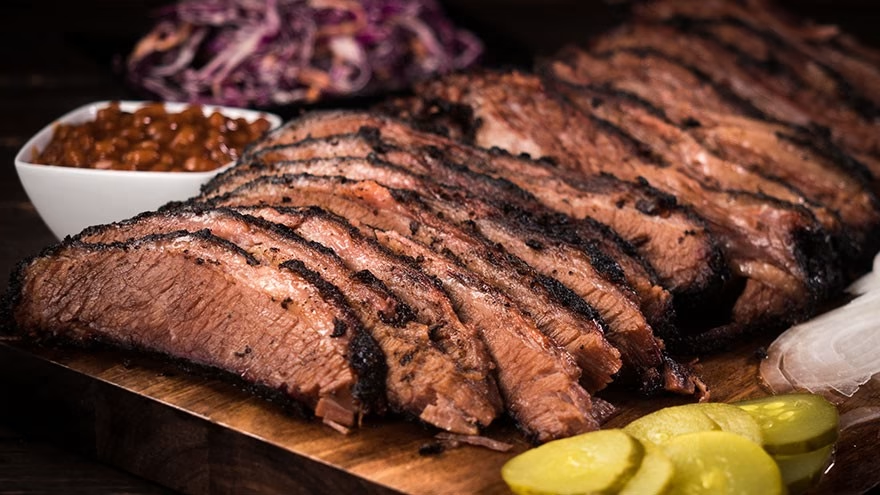
Beef Brisket in Beer Recipe is built for a low oven, a covered pan, and time. Brisket comes from a hardworking part of the animal, so it needs slow cooking to become tender. Beer brings malt, bitterness, and depth, while onions, garlic, stock, and tomato help turn the braising liquid into a sauce.
This is not a fast weeknight steak. It is a cook-it-slow dish for a weekend, holiday meal, or make-ahead dinner. The reward is sliced beef that holds together on the board but yields under a fork.
What Cut Do You Need?
Use beef brisket flat, point, or a trimmed whole brisket that fits your pan. The flat slices neatly and is easier for a braise. The point is fattier and richer. If the brisket has a heavy fat cap, trim it to about 1/4 inch so the sauce does not become greasy.
Beef It's What's For Dinner has a brisket flat guide that describes the cut as best for slow cooking. That is exactly why beer braising works: liquid, covered heat, and time soften the connective tissue.
What Ingredients Do You Need?
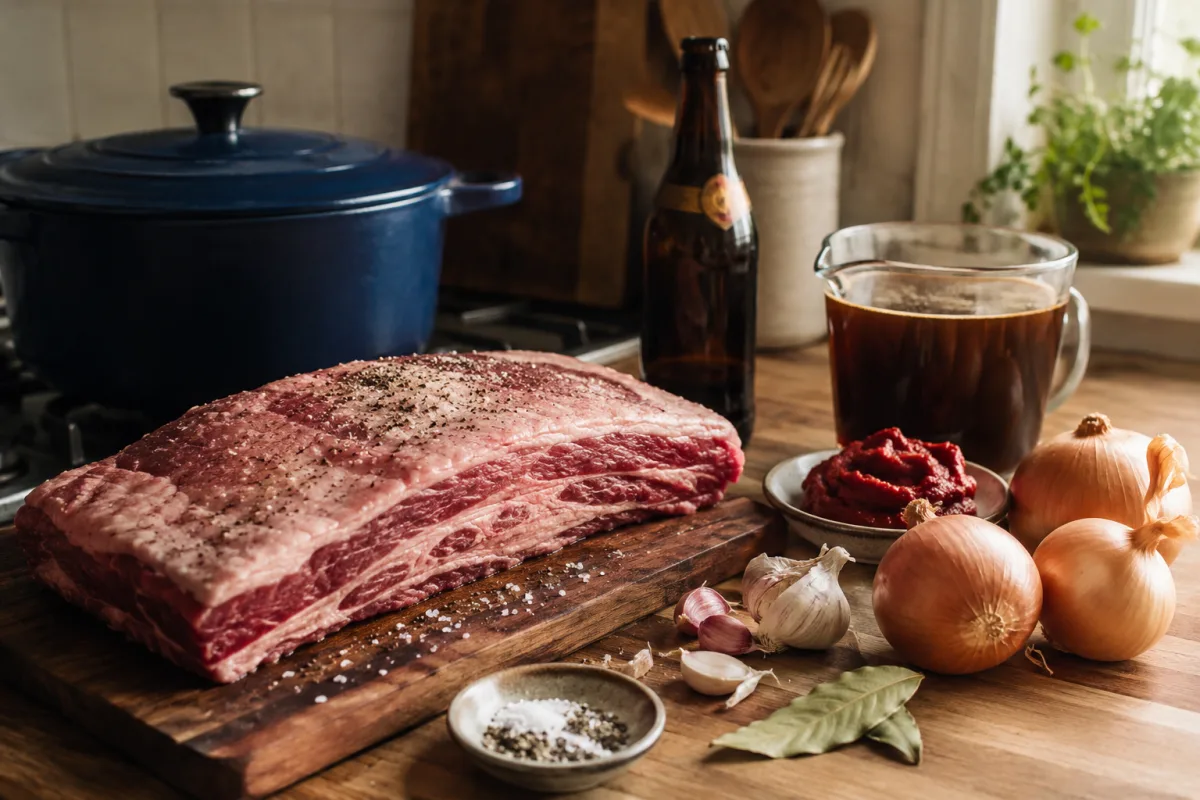
For 6 to 8 servings, use 4 pounds beef brisket, 2 teaspoons kosher salt, 1 teaspoon black pepper, 1 tablespoon oil, 2 large onions sliced, 4 garlic cloves, 2 tablespoons tomato paste, 12 ounces beer, 1 cup beef stock, 1 tablespoon Worcestershire sauce, 2 bay leaves, 1 teaspoon smoked paprika, and 1 teaspoon brown sugar if the beer is bitter.
Choose a beer you would drink with dinner. Brown ale, amber lager, porter, or stout can work. Very bitter IPAs can turn sharp after long cooking. If you like building savory layers, Livecub's seasoning mix guide is a useful reminder that balance matters more than one loud ingredient.
How Do You Season The Brisket?
Salt the brisket at least 45 minutes before cooking, or the night before if you have time. Pat it dry before searing. Black pepper, smoked paprika, garlic powder, onion powder, or a little mustard powder can be added, but keep the seasoning simple enough that the beef and beer still speak clearly.
If the brisket is very thick, season all sides. If it is thin, go lighter with salt and adjust the sauce later. Braising concentrates flavors as liquid reduces.
Do You Have To Sear It?
Searing is worth it. Brown the brisket in a heavy pan or Dutch oven until the surface develops color. Browning creates flavor that plain simmering cannot. Remove the meat, then cook the onions in the same pan so they pick up the browned bits.
Do not burn the fond on the bottom. If dark bits start turning black, lower the heat. Beer will loosen browned bits, but it will not fix scorched flavor.
How Do You Build The Beer Braise?
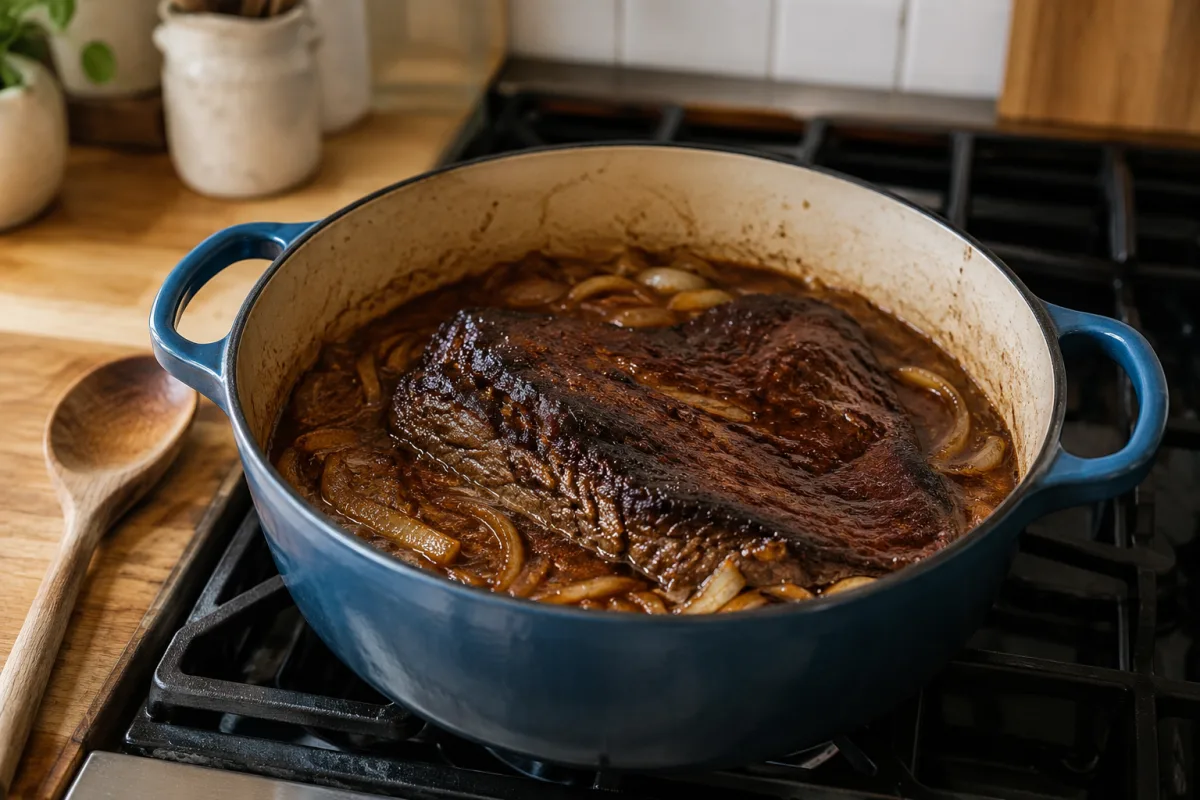
Cook onions until soft and lightly browned, then add garlic and tomato paste. Stir for a minute so the paste darkens. Pour in beer and scrape the pan. Add stock, Worcestershire, bay leaves, paprika, and the brisket. The liquid should come partway up the meat, not cover it like soup.
Cover tightly and cook in a 300 degree Fahrenheit oven for about 3 to 4 hours, depending on thickness. Turn the brisket once or twice if you like, but keep the lid closed most of the time.
How Do You Know When It Is Tender?
Use a fork or skewer. The brisket should offer little resistance in the thickest part. If it slices like a rubber band, it needs more time. If it falls apart completely, it has gone past slicing but can still be chopped and served with sauce.
FoodSafety.gov's safe temperature chart lists 145 degrees Fahrenheit with a 3-minute rest for whole cuts of beef. Brisket is usually cooked much higher for tenderness, but safety and tenderness are not the same thing.
Should You Slice It Right Away?
No. Rest the brisket, then slice across the grain. For the cleanest slices, chill the cooked brisket in its sauce overnight, lift off hardened fat, slice cold, and reheat gently in the sauce. This is why brisket is such a good make-ahead dish.
If the grain changes direction, rotate the meat and keep slicing across it. Long strands make brisket seem tougher than it really is.
How Do You Finish The Sauce?
Remove the brisket and bay leaves. Skim excess fat. Simmer the liquid until it tastes full and coats a spoon. Blend some onions into the sauce if you want it thicker, or leave them soft and rustic.
If the sauce is bitter, add a little brown sugar or a splash of stock. If it is flat, add salt or a teaspoon of vinegar. If it is too salty, add unsalted stock and simmer gently. For another comfort-style dinner with sauce at the center, Livecub's easy Yugoslavian chicken recipe can help.
What Do You Serve With Beer Brisket?
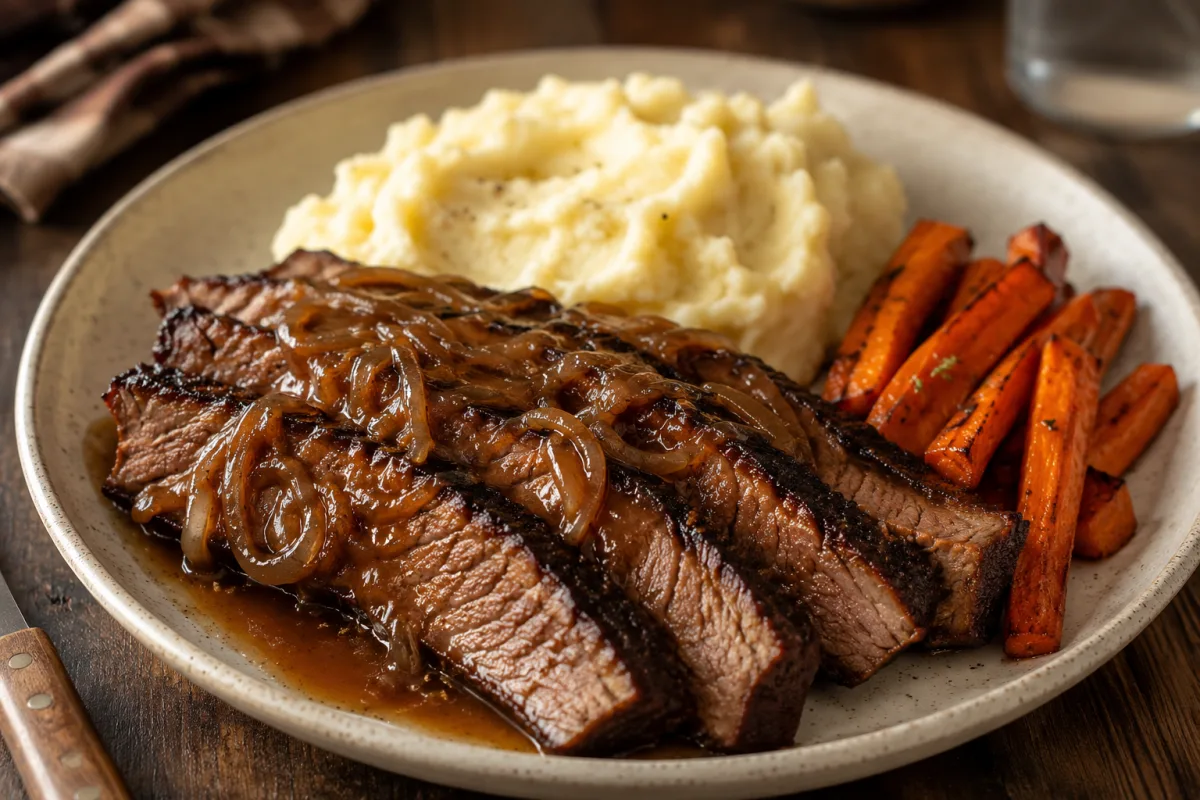
Mashed potatoes, buttered noodles, roasted carrots, cabbage, green beans, pickles, or crusty bread all work. The dish is rich, so sides should either absorb sauce or cut through it.
For a bigger meal, Livecub's basic corn souffle and asparagus rolls can add softer and greener sides without fighting the brisket.
How Do You Store Leftovers?
Store brisket in its sauce so it stays moist. Refrigerate in shallow containers and reheat gently. Thin slices can dry out if reheated uncovered, so spoon sauce over them and use low heat.
Leftover brisket can become sandwiches, hash, tacos, noodle bowls, or a topping for baked potatoes. If you want a second meat dish for another night, Livecub's grilled whole duck recipe lives in a different lane but suits the same slow-meal mindset.
Can You Use A Slow Cooker?
Yes. Sear the brisket and cook the onions first, then move everything to a slow cooker. Cook on low until the meat is tender. The sauce may be thinner than an oven braise because there is less evaporation, so reduce it in a pan before serving.
Do not skip the sear just because the slow cooker is convenient. Browning gives the sauce a deeper base. A slow cooker handles time well, but it does not create the same surface flavor on its own.
Does The Alcohol Cook Out?
Some alcohol cooks off during a long braise, but not every trace disappears. If you avoid alcohol for health, religious, recovery, pregnancy, or family reasons, use nonalcoholic beer or replace the beer with beef stock plus a splash of vinegar and a little brown sugar.
The dish should taste malty and savory, not boozy. If the beer smells sharp after deglazing, simmer it for a minute before adding stock and returning the brisket to the pot.
What Mistakes Ruin Beer Brisket?
The common mistakes are using a pan that is too small, choosing a very bitter beer, boiling hard instead of braising gently, slicing with the grain, and giving up before the connective tissue has softened. Brisket often feels stubborn right before it becomes tender.
Another mistake is serving immediately while the sauce is greasy. Skimming fat and resting the meat make the plate cleaner. If time allows, chilling overnight gives you the easiest fat removal and the cleanest slices.
Can You Freeze It?
Yes. Freeze sliced brisket with sauce in airtight containers. Sauce protects the meat from drying out. Thaw in the refrigerator and reheat gently in a covered pan or low oven before serving.
Frequently Asked Questions
Can I use nonalcoholic beer?
Yes. Choose one with flavor and balance bitterness with stock, onions, or a small amount of sugar.
Can I cook it in a slow cooker?
Yes. Sear first, then cook on low until tender. Reduce the sauce separately if it is thin.
What beer is best?
Amber lager, brown ale, porter, or stout are good choices. Avoid very bitter beers unless you know you like the result.
Why is my brisket tough?
It likely needs more time. Brisket can be safe before it is tender.
Can I make it the day before?
Yes. Brisket often slices cleaner and tastes deeper after chilling in the sauce overnight.
What Is The Best Method?
Season the brisket, sear it well, build a beer and onion braise, cook it covered and low, then rest and slice across the grain. Brisket rewards patience. If the schedule feels rushed, make it a day ahead and let the sauce do half the work overnight.

Linda Fehrman
Edits general wellness and relationship explainers. Health material is educational, avoids diagnosis and links to health-authority guidance.



Leave a reply
Replying to