
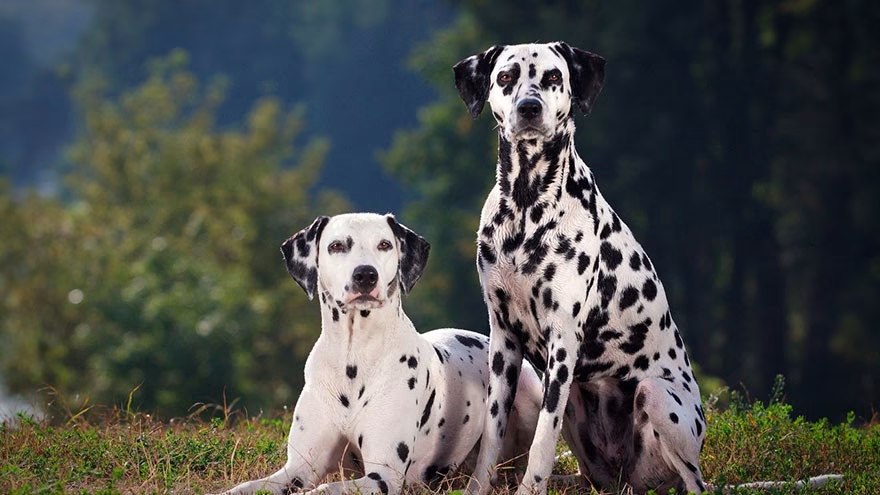
A Dalmatian is easy to recognize and easy to misunderstand. The spots draw attention, but good Dalmatian health care starts with ears, urine, weight, water, and movement. This breed was built for endurance beside horse-drawn vehicles, not for life as a couch ornament. A healthy Dalmatian usually needs daily activity, a lean body, and owners who know which breed-specific risks deserve early questions.
What makes Dalmatian health different from many breeds?
The AKC Dalmatian profile describes the breed as a historic coach dog famous for its spotted coat and work alongside horse-drawn rigs. That background explains the athletic frame, but it does not tell the whole health story. Dalmatians also have well-known concerns around congenital deafness and urate urinary stones.
Breed-aware care does not mean assuming every Dalmatian is sick. It means knowing what to test, what to watch, and when to call the veterinarian. The best owners keep the dog fit, provide water access, ask breeders for records, and treat urinary changes as time-sensitive.
For comparison with another breed-specific health topic, Livecub's Staffordshire Bull Terrier health problems article shows the same pattern: each breed has a different watch list, and good care starts with knowing that list.
Why is BAER hearing testing so important?
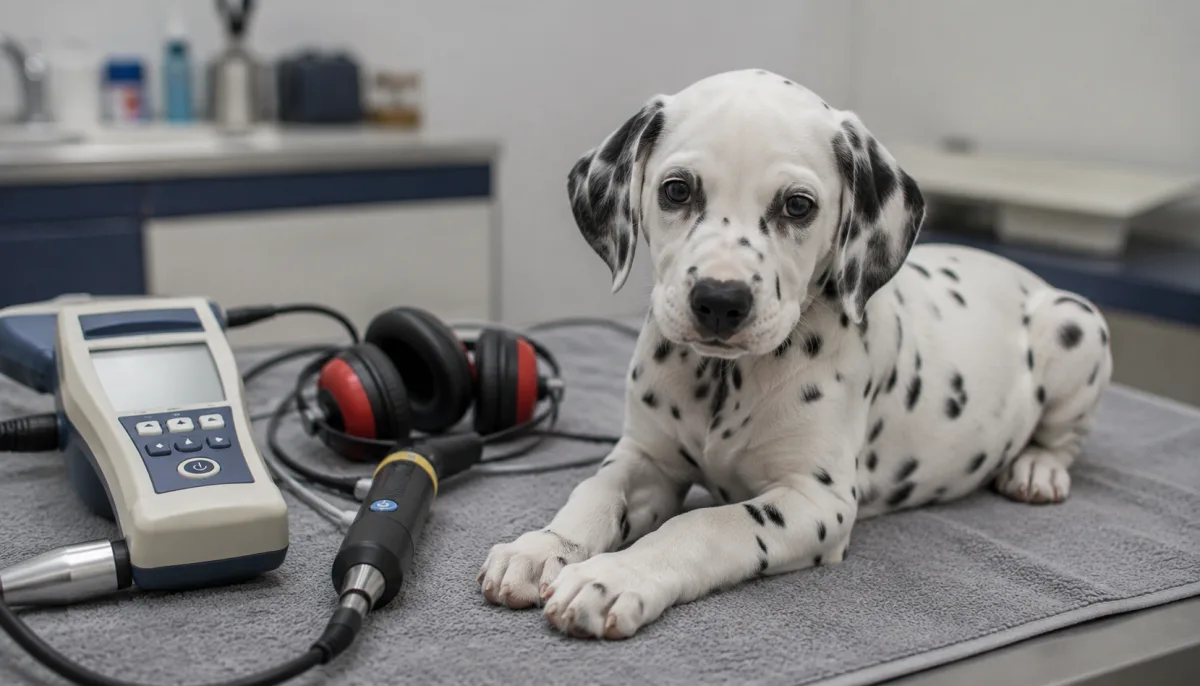
Dalmatian hearing cannot be judged reliably by clapping, calling, or watching a puppy follow littermates. The Dalmatian Club of America says most Dalmatians can hear, but its Hearing 101 page lists representative pre-weaned puppy figures: about 70 percent bilateral hearing, about 22 percent unilateral hearing, and about 8 percent totally deaf. It also notes that BAER testing can provide a permanent record of hearing status.
The DCA Hearing 101 guidance says puppies can be tested as early as five weeks. Ask the breeder for BAER results for the puppy, not only a claim that the puppy responds to sound. A unilaterally hearing dog may behave normally in many settings but still need thoughtful handling around traffic, recall, and direction cues.
Deaf dogs can live good lives in prepared homes, but they need owners who understand visual cues, vibration cues, fencing, and safe management. The issue is not shame. The issue is accurate information before placement.
A hearing-impaired puppy should never be surprised awake by grabbing. Step near the dog, create a light floor vibration, or use a consistent visual cue. In the yard, use a long line until recall to a hand signal is reliable. Visual training should be practiced before the dog is loose in distracting places.
What should owners know about urinary stones?
Dalmatians have a special relationship with uric acid metabolism. UC Davis explains that hyperuricosuria is excessive uric acid in urine, can cause bladder or kidney stones, and is commonly seen in Dalmatians. The same source notes that the condition can become life-threatening in males if the urinary tract becomes blocked.
The UC Davis hyperuricosuria overview lists warning signs such as difficulty urinating, frequent urination, blood in the urine, and urinating in unusual places. Those signs should trigger a veterinary call quickly. Do not wait through a weekend if a male Dalmatian is straining and producing little urine.
The Dalmatian Club of America Foundation says most Dalmatians never form stones or block as long as low-purine diet planning, adequate water, necessary exercise, and appropriate management are provided. Owners should build that plan with a veterinarian rather than guessing from generic food lists.
Ask your veterinarian what urine checks make sense for your dog. Some owners track urine concentration, pH, crystals, or past infection history under veterinary direction. Keep dates and results in one file. If a urinary emergency happens later, those notes can shorten the conversation at the clinic.
Know your emergency route before you need it. Save the nearest 24-hour clinic, keep your dog's medication list current, and learn how to describe urine output clearly. "He tried six times and produced drops" is more useful than "he seems off." For male Dalmatians, that level of detail can change triage speed.
How should diet and water be managed?
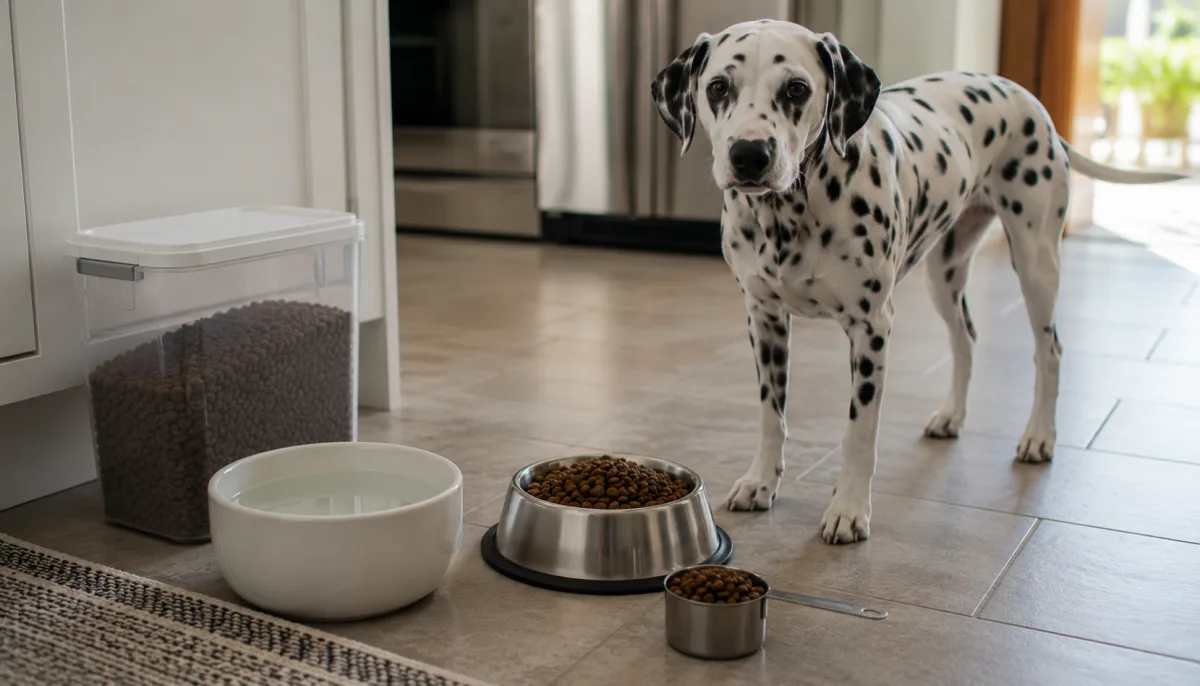
Diet decisions should be individual. Some Dalmatians need low-purine feeding strategies; others may simply need a balanced diet, measured portions, and water access. A veterinarian can help decide whether urine monitoring, special diets, or medication are needed for a particular dog.
Water intake is not a small detail. More dilute urine can help reduce risk for stone formation in susceptible dogs. Keep clean water available, offer water after exercise, and notice changes in drinking or urination. If the dog starts asking to go out constantly, that is information.
Avoid making a Dalmatian overweight. Extra weight can reduce activity, increase heat stress, and make urinary management harder. Use treats from the daily ration when training, and keep chews in the calorie count.
Be careful with high-purine extras. Organ meats, some fish, and rich table scraps may not suit a dog with stone risk. That does not mean every Dalmatian needs the same bowl; it means diet changes should be deliberate and documented.
How much exercise supports a Dalmatian's health?
Most adult Dalmatians need regular movement and mental work. Walks, jogging for conditioned adults, hiking, scent games, obedience, and structured play can all fit. Puppies need gentler, shorter sessions while growing. Senior dogs may need shorter routes but still benefit from routine.
The key is steady conditioning. A Dalmatian that lies around all week and runs hard on Saturday is at higher risk for soreness or injury. Build activity gradually, especially in heat. Spotted coats do not protect a dog from overheating, and a dark patch pattern can still absorb sun.
Use exercise as a health check. A dog that suddenly lags, coughs, limps, avoids jumping into the car, or tires far earlier than normal is telling you something. Do not turn every walk into a test, but do notice changes from the dog's own baseline.
Owners who enjoy active breeds may compare expectations with German Shorthaired Pointer questions. Dalmatians are not the same breed, but both reward people who combine movement with training rather than relying on exercise alone.
What breeder records should a Dalmatian buyer ask for?
The DCA's OFA/CHIC page says CHIC certification for Dalmatians includes recommended screening such as hip evaluation and congenital deafness evaluation based on BAER testing, with elective options such as thyroid or eye exams. It also notes that results do not all need to be normal for CHIC, but they must be public so breeders can make informed decisions.
Ask for BAER results, parent health records, registered names, and any urinary stone history in the family. A breeder should be able to explain diet guidance, hearing status, socialization, and return policy. If the answer is only "the vet said they are healthy," ask again.
Grooming is easy compared with many coated breeds, but skin checks still matter. Brush the short coat, inspect ears, watch nails, and check for irritation. Owners used to smaller companion breeds, such as those in Maltese questions, may be surprised by the Dalmatian's activity needs.
Dental care belongs in the same routine. Brush teeth if the dog allows it, or ask your veterinarian for acceptable alternatives. Bad breath, broken teeth, drooling, or reluctance to chew should not be dismissed as normal dog odor.
Small routine notes make annual exams better at regular checkups because the conversation starts with evidence instead of guesswork.
Frequently Asked Questions
Do all Dalmatians get urinary stones?
No. Many never form stones, but the breed has a known urate-stone risk. Water, diet planning, exercise, and fast veterinary care for urinary signs are central to management.
Can a deaf Dalmatian be a good pet?
Yes, in the right home. Deaf dogs need visual cues, secure fencing, careful traffic management, and owners who are prepared before adoption. BAER testing helps match the dog correctly.
What urinary signs need urgent attention?
Straining, blood in urine, repeated attempts with little output, pain, accidents, or sudden changes in urination deserve a veterinary call. A blocked male dog is an emergency.
Are Dalmatians low-maintenance because they have short coats?
No. The coat is simple, but the breed needs exercise, training, hearing records, urinary awareness, dental care, nail care, and weight control. Short hair is only one small part of care.
Dalmatian care works best when the owner treats the spots as the least complicated feature. Test hearing, plan for urinary health, keep the dog lean, and build a routine that respects an athletic breed.

Chiara Bradshaw
Covers education, culture and creative topics with an emphasis on readable explanations and verifiable references.
Leave a reply
Replying to