
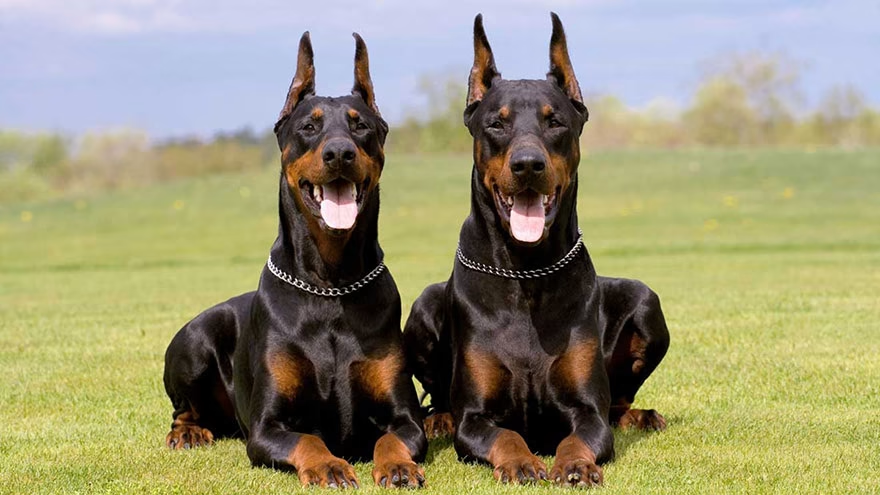
A Doberman puppy can look elegant before the brain and body are ready for adult responsibility. That is why Doberman Pinscher training starts with calm structure, not intimidation. The breed is powerful, quick, watchful, and people-focused, so every early habit matters: greeting, leash manners, recall, impulse control, crate rest, and the owner's ability to stay consistent.
What should Doberman Pinscher training focus on first?
Start with safety and attention. The American Kennel Club describes the Doberman Pinscher as sleek, powerful, intelligent, fearless, and vigilant. Those traits can make a superb companion in the right home, but they also punish sloppy handling when the dog matures.
The AKC Doberman Pinscher profile gives the breed frame: this is not a casual dog for owners who want obedience to appear by itself. Teach the puppy that people provide direction, rewards, rest, and boundaries.
If you are comparing active dogs, Livecub's German Shorthaired Pointer questions show another breed where energy and intelligence need a plan before they become household noise.
How early should a Doberman be socialized?
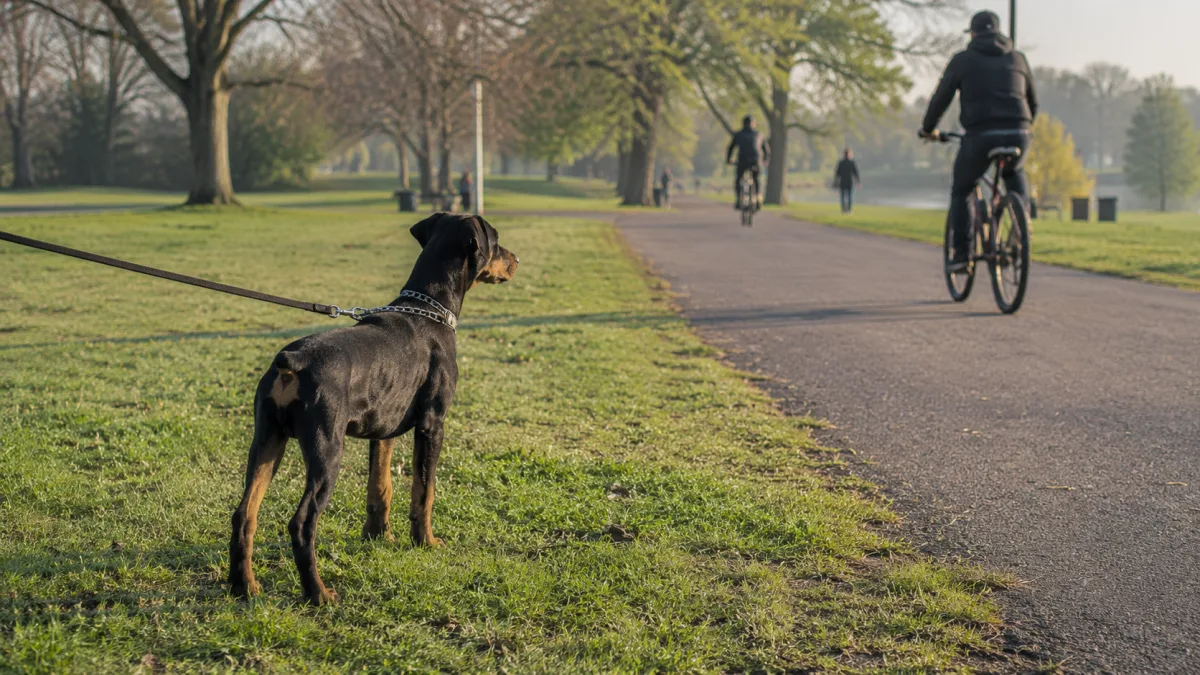
Early, carefully, and positively. AKC's puppy socialization guide says the first three months are a socialization period that shapes how a puppy reacts to the world as an adult. It recommends gentle exposure to people, places, surfaces, sounds, and situations rather than one overwhelming trip.
The AKC puppy socialization guide is useful because it stresses positive exposure and small steps. A Doberman should learn that strangers, bicycles, umbrellas, vet tables, car rides, and normal city sounds are information, not threats.
Socialization is not forced greeting. A puppy can observe calmly, eat treats, and move away. The goal is neutrality and confidence, not making the dog accept every hand on its head.
How do you teach leash manners before the dog is strong?
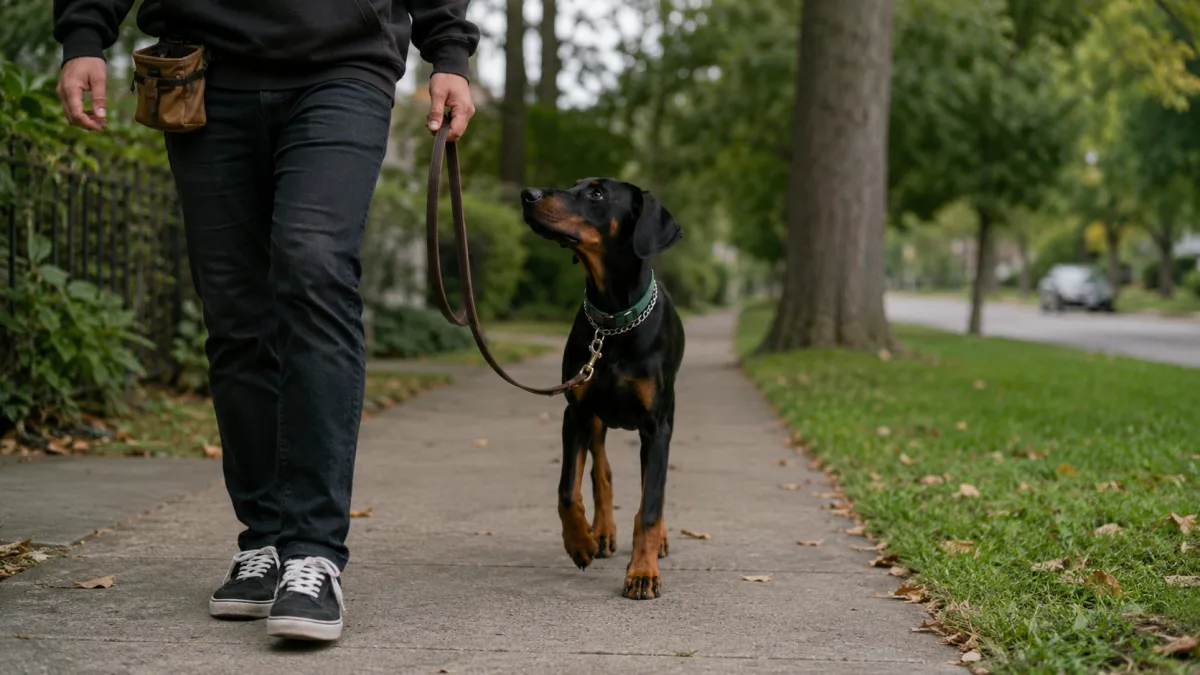
Teach leash skills while the puppy is still easy to redirect. Reward walking near your leg, checking in, stopping at curbs, and turning with you. Do not let the puppy drag you to every person, dog, smell, or doorway. That pattern becomes much less funny at adult size.
Use a well-fitted flat collar or suitable walking gear and a regular leash for daily work. Retractable leashes teach distance and tension. If the puppy pulls, stop, change direction, or reward the moment the leash softens. Keep sessions short enough that the dog can succeed.
Leash pressure should not become the steering wheel. The dog needs to learn where you are, not just where the leash tightens.
What obedience cues matter most?
Teach name response, sit, down, stay, come, leave it, drop it, place, quiet, and release. Those cues are not party tricks. They are daily controls for doors, guests, food, wildlife, vet visits, and busy sidewalks.
Recall deserves special care. Reward heavily when the dog comes, never call only to end fun, and practice on a long line before trusting distance. A Doberman that learns recall as a paid habit is safer than one corrected after ignoring you.
If you like comparing training style across large breeds, Livecub's Rottweiler questions show the same owner requirement: strength needs manners before adolescence.
How do you prevent guarding from becoming a problem?
Dobermans are naturally alert. Do not encourage suspicion for entertainment, and do not let the dog practice rushing windows, fence lines, or visitors. A dog that rehearses arousal every day becomes harder to settle.
Teach a door routine: bark once if needed, come to a mat, stay while the person enters, then greet only with permission. Reward calm observation. If the dog stiffens, growls, lunges, or cannot recover, get help from a qualified trainer early.
Protection myths hurt dogs. A family Doberman needs judgment, obedience, social stability, and an owner who can manage situations. Suspicion without control is not protection.
How should guests be introduced?
Use distance and structure. Put the dog on leash or behind a gate before the door opens, then reward calm looking, sitting, or moving to a mat. Do not let guests squeal, lean over the dog, or push hands into the dog's face.
Give the Doberman a job that is not guarding: hold a down-stay, take treats from the owner, or settle near the room. If the dog cannot relax, increase distance. A successful guest visit may mean no greeting at all.
Neutrality is a win. A Doberman does not have to love every visitor to behave safely around them.
How much exercise does a Doberman need?
Most Dobermans need daily physical exercise and mental work. Walks, training games, scent work, structured play, and appropriate fetch can help. Long, repetitive forced exercise is not for young puppies, and heat or orthopedic concerns should change the plan.
Build an off-switch too. A dog who only learns movement may struggle when guests arrive or the weather is bad. Mat work, crate rest, chew time, and calm handling teach the nervous system how to come down.
For size and power comparisons, Livecub's biggest dog breeds guide is a reminder that the physical dog changes the training stakes.
How should crate and home-alone training work?
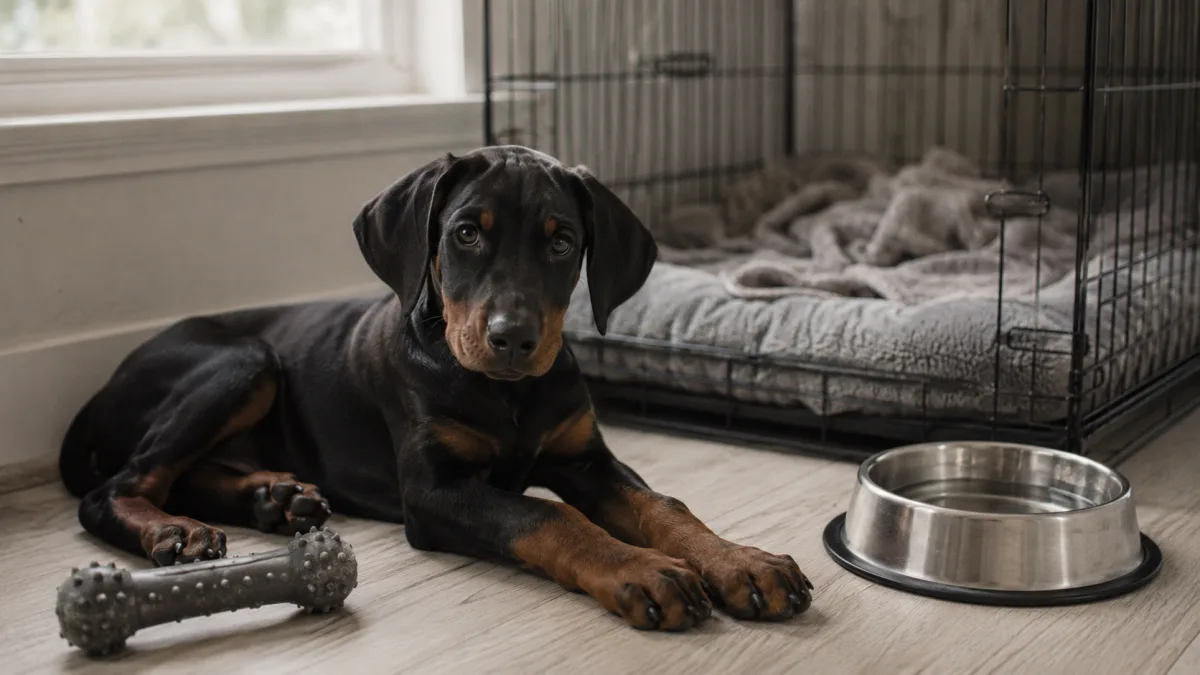
Crate training should feel predictable, not punitive. Feed meals near or in the crate, reward short calm stays, and build duration slowly. A crate helps with rest, travel, repair visits, guests, and recovery after medical care.
Practice alone time before you need it. Leave for seconds, then minutes, then longer windows. Do not turn every departure into a dramatic goodbye. A Doberman that bonds tightly still needs to learn that normal absences are safe.
Rest is training. A tired, overstimulated Doberman may look disobedient when the real problem is that nobody taught the dog how to settle.
What mistakes slow Doberman training?
The first mistake is waiting until the dog is physically hard to manage. The second is mixing harsh corrections with inconsistent rules. The third is allowing cute puppy behaviors that will be unsafe in an adult: jumping, mouthing, body slamming, door rushing, and dragging on leash.
Another mistake is outsourcing all training. Classes help, but the dog lives with you. Every meal, doorway, walk, and guest greeting teaches something. If the household rules change by person, the dog will test every person.
Livecub's Brittany Spaniel breeder recommendations are for another breed, but the breeder question transfers: ask what early socialization and handling the puppy already received.
How do you handle Doberman adolescence?
Adolescence can make a trained puppy look newly unreliable. The dog is larger, faster, more interested in the world, and less impressed by rewards that used to work. Return to basics instead of assuming the dog is being spiteful.
Use a long line for recall practice, keep greetings managed, review leash skills, and shorten training sessions before the dog checks out. Reward good choices heavily because the environment becomes more tempting during this stage.
Do not remove structure too early. Freedom should expand when behavior proves ready, not when the owner is tired of managing it.
Write down wins so progress stays visible during hard weeks.
When should you get professional help?
Get help early for growling that escalates, biting, severe fear, resource guarding, leash lunging, separation panic, or a dog you cannot safely hold. Choose a trainer who can explain methods clearly, uses humane handling, and understands large working breeds.
A veterinarian should also be involved if behavior changes suddenly, because pain, illness, medication, or sensory changes can affect training. Behavior is not always a training problem alone.
If health issues enter the picture, Livecub's Staffordshire Bull Terrier health guide shows the right habit: observe, document, and involve a professional instead of guessing.
Frequently Asked Questions
Are Dobermans easy to train?
They can learn quickly, but they need consistency, socialization, and clear rules. Intelligence makes training faster only when the owner is organized.
Should Dobermans be trained for protection?
Most family Dobermans need obedience, social stability, and impulse control, not amateur protection work. Serious protection training requires qualified professionals.
How do I stop a Doberman puppy from jumping?
Reward four feet on the floor, manage greetings with a leash or gate, and stop allowing excited jumping while the dog is small.
Can older Dobermans still be trained?
Yes. Start with management and reward clear behaviors. Older dogs may need more patience if they have practiced the wrong habits for years.
Train the dog you will have at two years old, not the puppy you can hold today. Doberman training is a daily structure, not a weekend project.

Chiara Bradshaw
Covers education, culture and creative topics with an emphasis on readable explanations and verifiable references.

Leave a reply
Replying to