
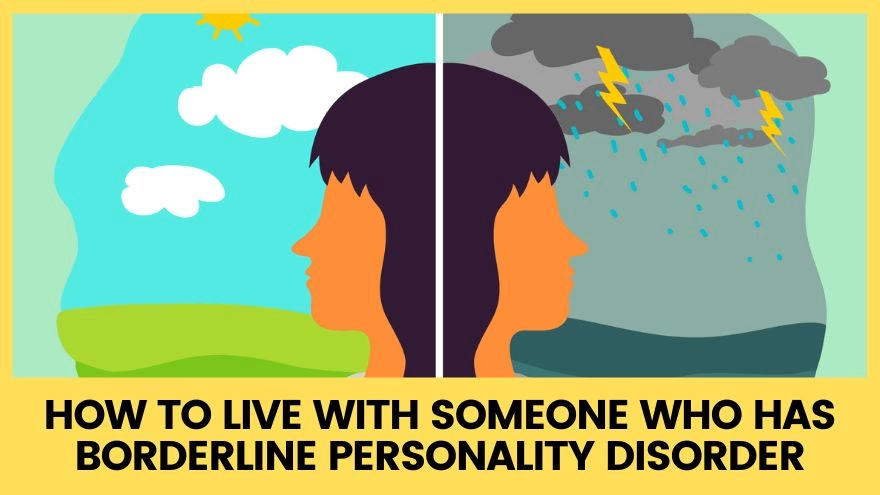
How to Live With Someone Who Has Borderline Personality Disorder starts with two truths that can feel hard to hold at the same time: the person is not their diagnosis, and the patterns in the home still need to be taken seriously. Love alone does not create safety, steadiness, or treatment.
This article is general mental health education, not therapy or medical advice. If anyone is in immediate danger, call emergency services. If someone may harm themselves or someone else, contact emergency support, a crisis line, or a licensed clinician right away.
Learn The Condition First
Borderline personality disorder can involve intense emotions, fear of abandonment, unstable relationships, impulsive behavior, self-harm risk, identity distress, and fast shifts in how a person sees themselves or others. Symptoms vary, and only a qualified professional can diagnose it.
NIMH's borderline personality disorder overview explains symptoms and treatment options, including psychotherapy and support for families or caregivers. Learning the basics helps you respond to patterns without reducing the person to a label.
Separate The Person From The Pattern
In a tense home, it is easy to call every conflict "BPD" and stop listening. That is unfair and usually unhelpful. It is also unhelpful to excuse every hurtful action because a diagnosis exists. Name the pattern, not the person: yelling, threats, disappearing, accusations, spending, substances, or unsafe driving.
This gives you a clearer target. You can care about the person and still say, "I will not keep talking while I am being called names."
Use Validation Without Surrendering Reality

Validation means showing that you understand the feeling, not agreeing with every claim. "I can see you feel abandoned" is different from "You are right that I never care." That distinction matters in daily life.
Good validation is brief, calm, and specific. Long arguments often feed the conflict. Try: "I hear that this feels scary. I am still going to work, and I will text at lunch like we planned."
Set Boundaries You Can Keep

Boundaries should be boring, clear, and enforceable. A boundary is not "You need to calm down." It is "If yelling starts, I will leave the room for twenty minutes and come back when we can speak safely." Boundaries you cannot keep teach the opposite lesson.
NAMI's BPD resource notes that treatment may include psychotherapy, medication for related symptoms, and peer or family support. Home boundaries work best alongside real treatment, not as a substitute for it.
Make A Crisis Plan While Calm
Do not wait for a crisis to decide what counts as emergency behavior. Write down warning signs, clinician contacts, medication information if the person chooses to share it, local crisis options, preferred hospital, and who should not be called because they escalate the situation.
The 988 Lifeline help-someone-else guidance explains that you can contact 988 if you are worried about another person. In an immediate danger situation, use emergency services.
Do Not Become The Whole Treatment Plan
Living together can tempt one person to become partner, parent, therapist, case manager, and crisis team. That role will wear you down and may keep the other person dependent on you instead of a wider support system.
Encourage professional care, skills groups, family education, medication review when relevant, and peer support. Your job is to live safely and support recovery where you can, not to personally cure the condition.
Use Short Conflict Rules
Decide what happens when conflict rises: no blocking doors, no following someone from room to room, no threats, no name-calling, no arguing while driving, no breaking objects, and no waking children for adult fights. Put the rules in writing if memory gets selective during conflict.
If conflict makes speech hard, Livecub's selective mutism article may help explain why written plans, pauses, and lower-pressure communication can work better than verbal debate in high stress.
Protect Children In The Home
Children should not be asked to mediate, keep secrets, comfort adults after explosions, or choose sides. If children live in the home, their safety and emotional stability need their own plan. This may include therapy, school support, custody advice, or emergency housing depending on the situation.
Do not explain frightening behavior by saying, "That is just how they are." Children need simple truth: "The yelling was not okay. Adults are getting help. You did not cause it."
Track Patterns, Not Every Word
After a hard incident, write down what happened, what came before it, what helped, what made it worse, and what needs to change. Avoid keeping a rage diary of every sentence. Look for patterns around sleep, alcohol, missed appointments, money stress, separation, or family visits.
Livecub's food journal guide can be adapted into a daily stability log: sleep, meals, medication, stress, conflict, and recovery. Use it for pattern awareness, not blame.
Know Your Own Body Signals
People living in high-conflict homes often stop noticing their own stress. Watch your jaw, stomach, shoulders, sleep, driving, tone, and urge to check your phone. Your body may know the home is unsafe before your mind admits it.
For physical stress before tense conversations, Livecub's stage fright guide and tryout nerves guide offer simple grounding ideas that can be used before difficult talks.
Do Not Reward Threats With Total Control
Self-harm threats should always be taken seriously, but that does not mean surrendering every boundary. The safer move is to involve crisis support, clinicians, or emergency services when risk is real. Do not agree to unsafe demands just to make the threat stop for the moment.
Say what you will do: "I care about you. I cannot keep you safe by myself. I am calling for help." That response treats the risk as real without making you the only safety plan.
Build Your Own Support Plan

You need people who can hear the truth without turning the person into a villain or telling you to tolerate harm. A therapist, support group, trusted friend, attorney, domestic violence advocate, or family education program can help you think clearly.
If you also care for aging relatives, Livecub's guide to motivating the elderly may help with a related caregiver skill: respect the person's dignity while still protecting your own limits.
When Living Together Is Not Safe
Some homes cannot be made safe with better wording. Violence, stalking, threats with weapons, coercive control, harm to children, repeated self-harm emergencies, or severe substance use may require separation, legal help, emergency housing, or a safety plan.
Leaving or setting distance can be painful and still be necessary. A diagnosis explains some suffering; it does not require you to live in danger.
After An Episode
Do not try to repair everything while both people are still activated. Wait until voices, breathing, and body language have settled. Then keep the repair conversation narrow: what happened, what boundary was crossed, what support is needed, and what changes before next time.
A repair is not a trial. If every repair becomes a four-hour argument about who suffered more, use a therapist, mediator, or written format. The goal is changed behavior, not winning the recap.
Treatment Progress Is Uneven
Skills can improve and still fail under stress. A good week does not mean the whole pattern is gone, and a bad day does not erase all progress. Track the direction over months, not one emotional night.
That wider view helps you avoid two traps: hopelessness after one setback and denial after one calm stretch.
Frequently Asked Questions
Can someone with BPD have a stable relationship?
Yes, many people improve with treatment, skills practice, and support. Stability also depends on safety, accountability, and realistic boundaries.
Should I ignore emotional outbursts?
No. Validate feelings briefly, avoid long fights, and keep clear limits around yelling, threats, and unsafe behavior.
What if they threaten self-harm?
Take it seriously. Contact emergency services, crisis support, 988 in the United States, or the person's treatment team when risk is present.
Can I be their only support?
No. One person cannot safely replace therapy, crisis care, peer support, and a wider treatment plan.
Is it wrong to leave?
No. If the home is unsafe or the relationship is harming you or children, distance and safety planning may be needed.
The Livable Home Standard
Living with someone who has borderline personality disorder requires compassion, education, boundaries, crisis planning, and support for both people. The goal is not perfect calm. The goal is a home where love does not erase safety, treatment, or your own health.

Linda Fehrman
Edits general wellness and relationship explainers. Health material is educational, avoids diagnosis and links to health-authority guidance.




Leave a reply
Replying to