
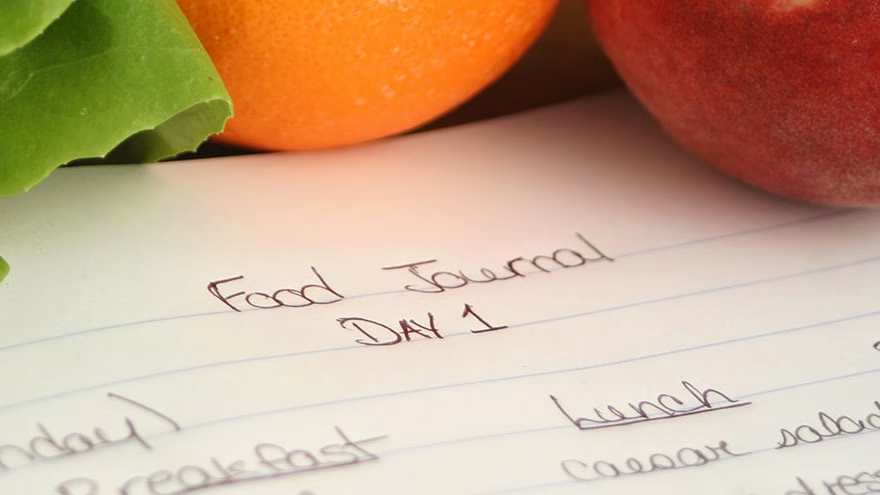
A food journal is useful only if it tells the truth without turning meals into a punishment log. The best journals capture what you ate, roughly how much, when, hunger, mood, energy, symptoms, and context. Learning how to write a food journal means building a record you can actually keep, then reviewing it with curiosity instead of shame.
This article is educational and does not diagnose, treat, or replace care from a doctor, registered dietitian, therapist, or eating-disorder specialist. If tracking food makes you anxious, obsessive, guilty, or tempted to restrict, stop and seek professional guidance. A food journal should support health decisions, not become another source of harm.
What Is A Food Journal For?
A food journal can help people notice patterns: skipped meals, low protein breakfasts, late-night snacking, low fiber, too little water, symptom triggers, or the gap between planned meals and real life. The National Institute of Diabetes and Digestive and Kidney Diseases encourages practical tracking and goal setting as part of weight-management and activity habits. The useful part is awareness, not perfection.
For some people, the goal is nutrition. For others, it is energy, digestion, blood sugar discussion with a clinician, athletic fueling, or identifying meals that leave them hungry. If you are changing food choices, Livecub's pasta substitutes guide can help with practical swaps, but a journal should show whether those swaps actually fit your day.
What Should You Record?

Record the meal or snack, time, approximate amount, drink, hunger level before eating, fullness after eating, mood, energy, movement, sleep, symptoms, and anything unusual. You do not need a laboratory-grade entry for every bite. "Turkey sandwich, chips, apple, water, rushed between meetings" is often more useful than a perfect calorie number with no context.
The American Heart Association suggests tracking what you eat, how much, when, where, and how you feel. That last piece matters. Eating in the car after a stressful appointment is different from eating the same food at a calm table. The food is only part of the pattern.
It can also help to record what was available. A snack chosen from a gas station during travel tells a different story than the same snack chosen from a full kitchen. Context prevents lazy conclusions. The journal should help you design better defaults, not blame yourself for every rushed day.
How Detailed Should It Be?
Choose the lowest level of detail that answers your question. If your goal is reflux triggers, timing, symptoms, caffeine, alcohol, spicy foods, and portion size may matter more than exact calories. If your goal is steady energy, meal spacing and protein may matter. If your clinician asked for blood sugar context, bring the details they requested.
Many people fail because they try to track everything forever. Start with three to seven days. Include at least one workday and one weekend day if your schedule changes. Review, learn, and decide whether to continue. If a journal creates dread, simplify it. A record that survives real life beats an elaborate notebook abandoned by Wednesday.
Give each tracking period a question. "Why am I hungry at 4 p.m.?" is easier to answer than "How can I fix my whole diet?" A clear question tells you what to record and what to ignore. It also makes the review kinder because you are looking for one pattern, not grading your entire life.
Use neutral marks during review. A star can mean "worked well" and a circle can mean "look again." Avoid red-pen corrections. The journal should invite planning, not make you brace for criticism or hide normal eating days. Keep the review short enough to repeat.
What Format Works Best?
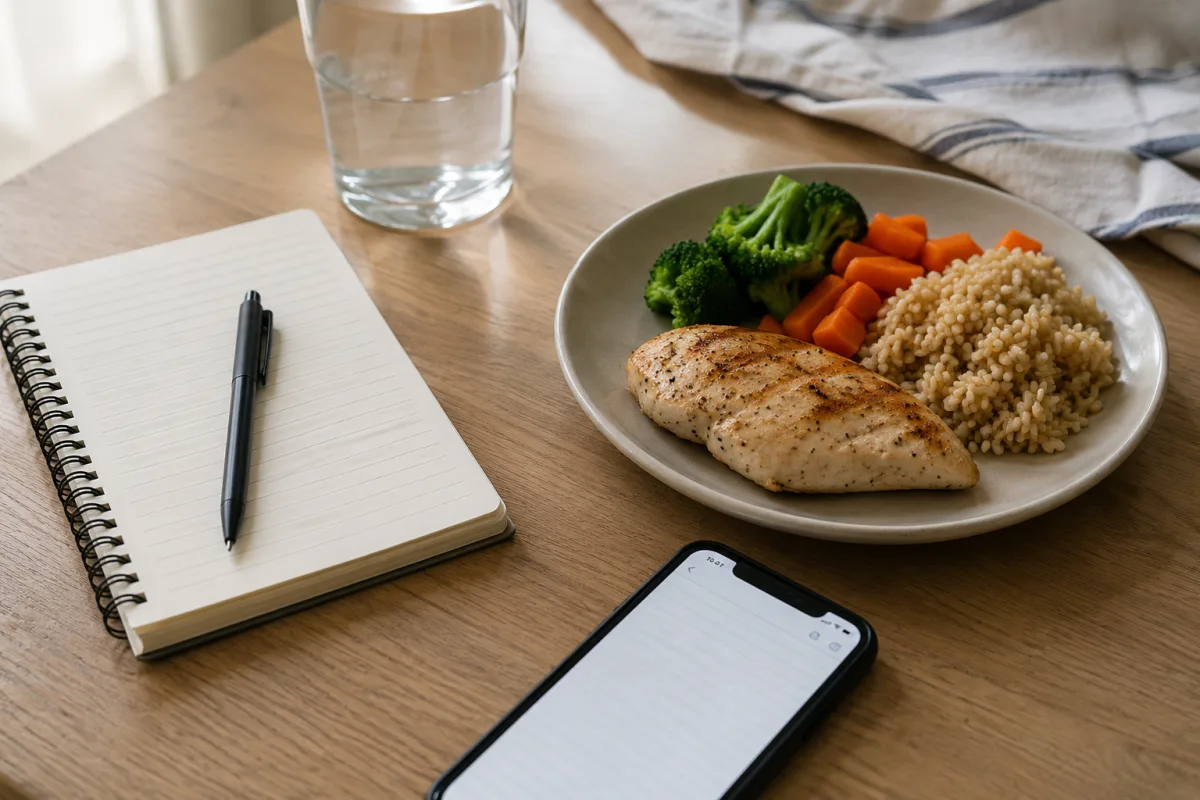
Use the format you will actually open: paper notebook, notes app, spreadsheet, photo log, voice memo, or a nutrition app. Paper is fast and private. Apps can calculate nutrients but may encourage overchecking for some people. Photos capture portions quickly, though they miss hunger and mood unless you add notes.
Make a simple template: time, food and drink, amount, hunger, fullness, mood, symptoms, and notes. Keep it on one page. If you are helping an older adult track meals, Livecub's how to motivate the elderly can help frame support in a respectful way. The journal should not feel like surveillance.
How Do You Estimate Portions?
Use practical descriptions: one bowl, two eggs, palm-size chicken, fist of rice, handful of nuts, large latte, half a plate of salad. Exact weighing is not required for many goals. If a dietitian asks for more precision, follow that plan. For daily pattern-finding, consistent estimates are usually enough.
Do not let portion estimates turn into judgment. The point is to learn. If dinner was a large plate because lunch was skipped, write both facts. If a snack happened because bedtime was late, write that. Patterns become visible when the journal includes the reason, not only the food.
How Should You Review The Journal?
Review in a calm moment, not while hungry and annoyed. Look for repeated patterns. Are mornings underfed? Does afternoon energy crash after certain lunches? Are vegetables missing at dinner? Do weekends change portions? Are symptoms tied to timing, stress, or specific foods? Circle patterns, not mistakes.
Cleveland Clinic notes that a food journal can help people see patterns and make better choices. That is the right tone. A journal is a mirror, not a courtroom. If the record shows a problem, choose one small change to test for a week. Changing five things at once makes it hard to know what helped.
What Should You Avoid?
Avoid using the journal to punish yourself, skip meals, hide food, or compete with an app. Avoid recording only "good" days. Avoid moral labels such as clean, bad, cheating, or failure. Those words make the record less honest. Food choices can be more or less useful for a goal without becoming a character judgment.
Be extra careful if you have a history of an eating disorder, obsessive tracking, compulsive exercise, or body-checking. In that case, a food journal should only be used with professional guidance, if at all. Some people do better with a symptom journal, mood journal, or meal adequacy checklist instead of detailed food tracking.
Privacy matters as well. A food journal can contain health details, stress notes, medication timing, and body concerns. Keep it where you feel comfortable, and do not share it with someone who uses it to criticize you. If you bring it to a clinician, bring questions too, so the visit becomes a conversation rather than a weigh-in of your choices.
How Can A Journal Support Real Goals?
Connect the journal to one goal at a time. For energy, test breakfast. For digestion, track timing and symptoms. For heart health, track fiber, sodium-heavy meals, and produce. For athletic training, track pre-workout fuel and recovery meals. If nerves affect appetite before events, Livecub's sports tryout nerves guide is a useful reminder that stress and eating often travel together.
Parents and caregivers may notice different patterns: eating leftovers while standing, missing lunch, or snacking late after children sleep. Livecub's parental burnout guide can help connect food patterns with fatigue and overload. The journal should lead to kinder planning, not stricter self-criticism.
Frequently Asked Questions
Do I need to count calories?
Not always. Many people can learn enough from meal timing, portions, hunger, mood, and symptoms. Follow clinician advice if calories are part of your care plan.
How long should I keep a food journal?
Start with three to seven days. Longer tracking can help some goals, but it should remain useful and emotionally safe.
Should I write down drinks?
Yes. Coffee drinks, alcohol, soda, juice, water, and smoothies can affect energy, appetite, hydration, sleep, and symptoms.
What if I forget to record a meal?
Write what you remember and keep going. One missed entry does not ruin the record.
Can a food journal help with symptoms?
It can show patterns to discuss with a clinician, but it should not be used to self-diagnose or remove major food groups without guidance.
What Is The Best Food Journal Habit?
Write soon after eating, keep the entry short, and review with curiosity. A useful food journal tells the story of your real days: meals, stress, hunger, sleep, symptoms, and choices. When it stays honest and kind, it can turn vague frustration into clear next steps.

Chiara Bradshaw
Covers education, culture and creative topics with an emphasis on readable explanations and verifiable references.




Leave a reply
Replying to