

How to overcome stage fright fast does not mean deleting anxiety in five minutes. It means lowering the surge enough to speak, sing, present, audition, or perform without letting fear take over the whole moment. Fast tools work best when they are simple, physical, and practiced before the stressful day.
Stage fright is a performance anxiety response. Your heart may race, hands shake, mouth dry out, stomach tighten, or mind go blank. Those symptoms are uncomfortable, but they are not proof that you are failing. They are signs that your nervous system thinks the moment matters.
What Is Stage Fright?
Cleveland Clinic's performance anxiety overview describes stage fright as a stress response tied to tasks like public speaking or athletic performance. The body prepares for threat even when the real task is a speech, song, meeting, or audition.
The first shift is to stop arguing with the body. You can feel adrenaline and still perform. You can be nervous and still be clear. The goal is not to feel blank and fearless; it is to guide the energy into the next action.
What Can You Do In The Last Five Minutes?
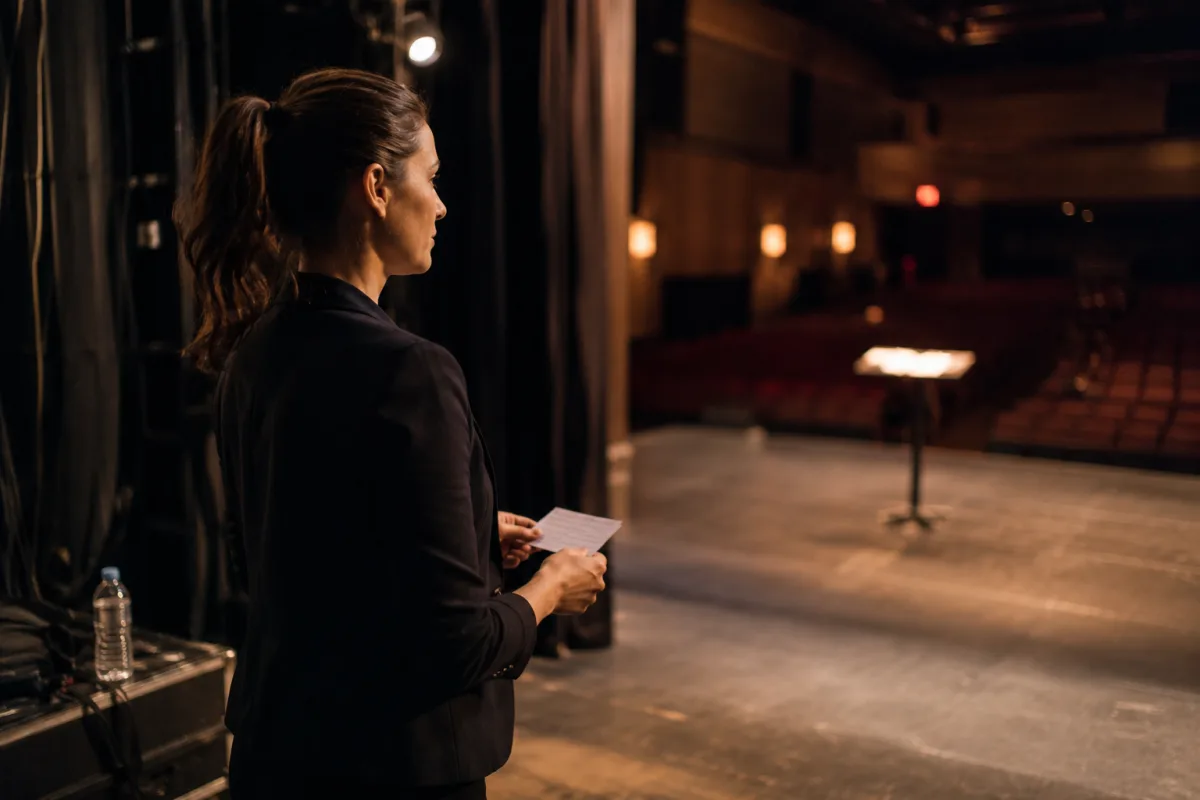
Use a short routine: breathe slowly, relax your jaw, drop your shoulders, press your feet into the floor, and say the first line out loud once. Then stop rehearsing. Last-second overpractice can make the brain spin.
Mayo Clinic's public speaking anxiety advice recommends deep, slow breaths before and during a speech and notes that anxiety often peaks near the start. That is useful because the first minute may feel worse than the rest.
How Should You Breathe?
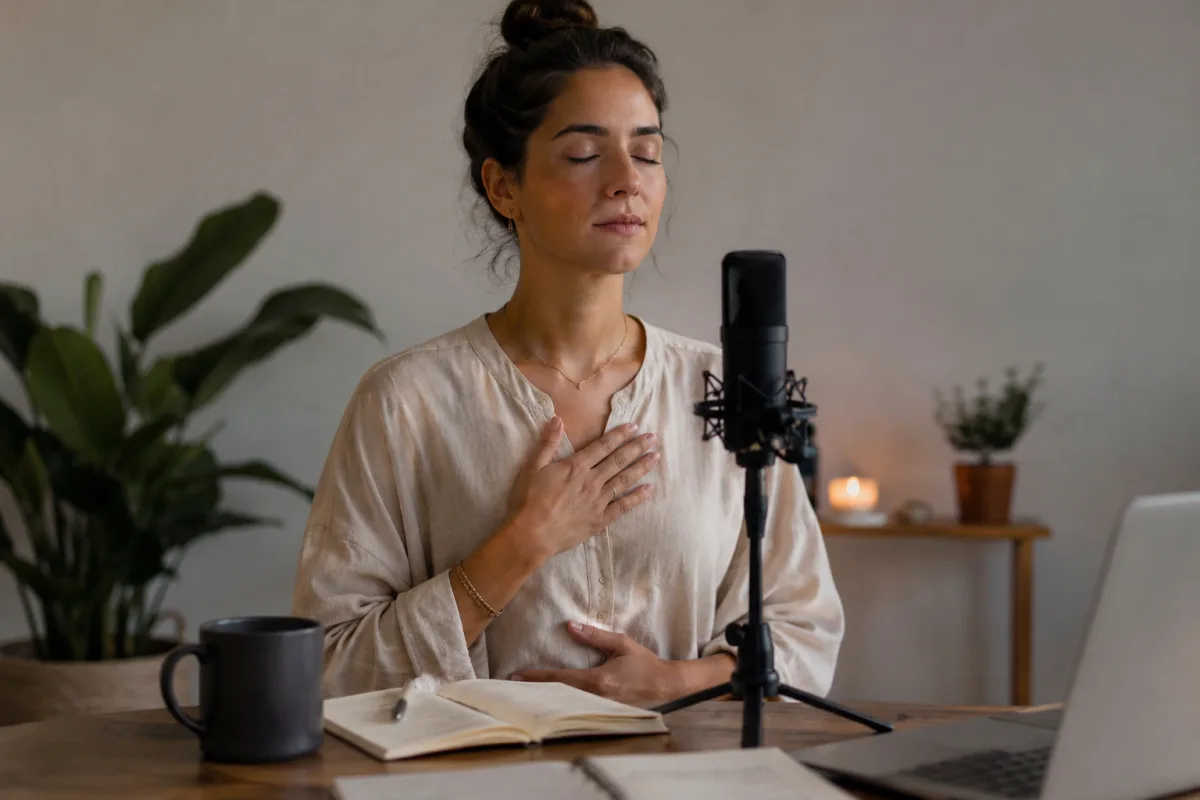
Try a longer exhale. Inhale gently through the nose for three or four counts, then exhale for five or six. Do not force a giant breath. Big gulping breaths can make some people feel lightheaded. Quiet, slow breathing is easier to use backstage or before a meeting.
Pair the breath with a physical cue: thumb and finger touching, feet pressing down, or a hand on your notes. The cue gives the mind something concrete to return to when thoughts start racing.
What Should You Focus On?
Focus on the message, song, scene, or next task, not on whether everyone likes you. The American Psychological Association's public speaking tips emphasize that the presentation is about helping the audience understand the topic, not about studying every nervous feeling.
Pick one job for the first minute: introduce the topic, land the first note, greet the room, or state the problem. A focused job is easier than "be confident." Confidence is too vague under pressure.
How Do You Stop Your Mind From Going Blank?
Use anchors. Put the first line on a card. Mark three signposts in your notes. Use slide headings as memory cues. Practice recovering from a blank by saying, "Let me return to the main point," then continuing.
If performance nerves show up in sports too, Livecub's sports tryout nerves guide uses the same principle: one next action beats trying to control the whole result at once.
Should You Practice More Right Before?
No, not heavily. In the final minutes, practice the opening and one transition, then let the rest be. Heavy last-minute drilling can increase panic because it makes every imperfect sentence feel like a warning.
Better preparation happens earlier. Rehearse in small pieces, practice out loud, use the room if possible, and do at least one run where you keep going after mistakes. That teaches recovery, which is what live performance needs.
What Do You Do If Your Voice Shakes?
Slow down and speak slightly lower than your panic pace wants. Take a breath at punctuation. Sip water if allowed. A shaking voice often settles after the first stretch because the body learns that nothing terrible happened.
Do not apologize for being nervous unless it truly serves the moment. Most audiences notice less than you think. If you keep feeding them useful information, they usually follow the content.
Can Movement Help?
Yes, if it is controlled. Walk before you go on, shake out your hands, stretch your neck gently, or do a few slow shoulder rolls. Avoid frantic pacing that raises your heart rate higher. The point is to discharge tension, not add drama.
If you are stuck in a chair, press your toes into the floor, release, and repeat. Small muscle actions can help you feel present without drawing attention.
When Is Stage Fright More Than Normal Nerves?
The National Institute of Mental Health explains that some people have anxiety only during performance situations, such as giving a speech, competing, or playing music on stage. If fear causes avoidance, weeks of dread, panic attacks, or major life limits, extra support may be needed.
This article is general health information, not medical advice. If stage fright is severe, persistent, or tied to panic, depression, substance use, or avoidance of school or work, talk with a qualified mental health professional or medical clinician.
What If You Have To Perform Today?
Lower the goal. Do not aim for the best performance of your life. Aim to start, breathe, slow down, finish the next section, and recover from one mistake. A realistic goal can calm the body more than a perfection demand.
Write three reminders on one card: "Breathe out," "Say the first line," and "Look at one friendly face." If food or caffeine affects your nerves, Livecub's food journal guide can help you notice patterns before future events.
What Should You Avoid Right Before?
Avoid scanning the room for judgment, drinking extra caffeine to feel sharper, changing your entire opening, or asking five people if you seem nervous. Those moves usually feed the fear loop. Keep the last few minutes boring on purpose.
Also avoid holding your breath while waiting. Many people breathe normally during practice and then freeze backstage. Use the waiting time to exhale slowly and soften your face, hands, and shoulders.
How Can You Use Notes Without Looking Stiff?
Use signposts, not a full script, unless the event requires exact wording. Write the opening line, three main points, and the closing line. That gives you structure without trapping you in tiny text.
If your hands shake, use a thicker card or a clipboard. If slides are part of the talk, let the headings guide you. Notes should help you recover, not become another thing to fear.
What If The Stage Is A Video Call?
Video presentations can trigger the same fear. Set up the camera early, close extra tabs, keep water nearby, and place your first line near the lens. Looking at a friendly face on screen can help, but do not watch your own image the whole time.
If your voice shakes, slow down and use the same breathing routine. The body does not care whether the room is physical or digital, so the reset still works before you speak live today.
How Do You Improve Long Term?

Use gradual exposure. Practice alone, then with one person, then on video, then with a small friendly group, then in a setting closer to the real one. Each step teaches the body that performance is uncomfortable but survivable.
You can also join a speaking group, take a class, work with a coach, or use therapy if anxiety is stronger. If silence or speaking avoidance is part of a broader pattern, Livecub's selective mutism guide covers a different but related communication challenge.
Frequently Asked Questions
Can stage fright go away in minutes?
It may not disappear, but breathing, grounding, and a simple first action can lower it enough to begin.
Should I tell the audience I am nervous?
Usually you do not need to. If you do, keep it brief and return to the message.
What if I forget my lines?
Pause, breathe, use your notes or signposts, and return to the main point without punishing yourself.
Can caffeine make stage fright worse?
For some people, yes. Caffeine can increase racing heart and shakiness.
When should I get professional help?
Get help if fear causes avoidance, panic, major distress, or problems with school, work, or daily life.
What Is The Fastest Practical Reset?
Exhale longer than you inhale, relax your jaw, plant your feet, say the first line, and focus on the message rather than the fear. Fast stage-fright control is not magic. It is a small routine that gives your body a job before fear writes the script.

Chiara Bradshaw
Covers education, culture and creative topics with an emphasis on readable explanations and verifiable references.


Leave a reply
Replying to