
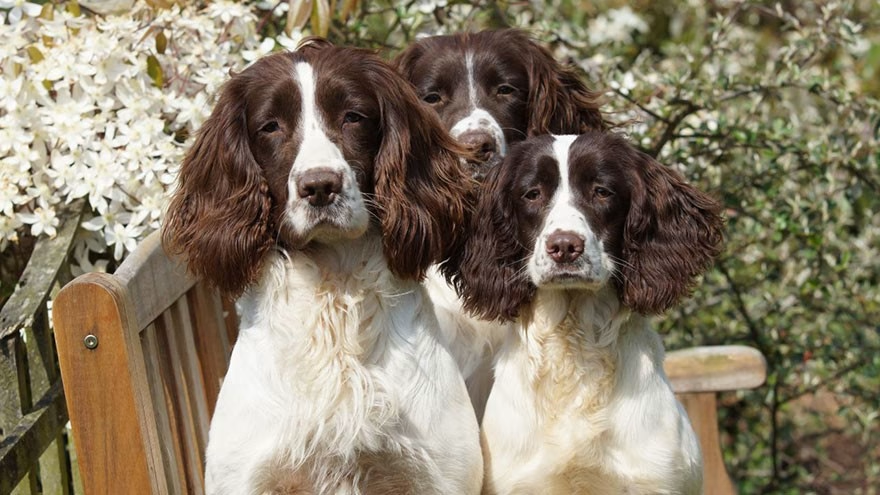
An English Springer Spaniel learns fast, which is useful only if the owner teaches the right things first. The breed was built to work with people, hunt in cover, flush birds, and stay busy. An English Springer Spaniel Training Guide should therefore focus on control around motion, recall, loose-leash walking, calm household manners, and enough work to keep the dog from inventing its own entertainment.
This is not a breed that thrives on boredom. A Springer can be affectionate indoors and intense outdoors, often in the same hour. Training has to respect both sides. Reward the dog for checking in, build impulse control before off-leash freedom, and make grooming and handling part of the routine before muddy ears and feathering become a battle.
What Makes English Springer Spaniel Training Different?
The American Kennel Club describes English Springer Spaniels as friendly, eager, and quick to learn, with a need for exercise. That eagerness is an advantage, but it can also become jumping, pulling, counter surfing, or frantic greeting if the household rewards excitement by accident.
Train before the dog is fully excited. A Springer that has already locked onto a bird, squirrel, tennis ball, or guest is harder to reach. Begin with low-distraction practice, then add controlled distractions slowly. If you are comparing active sporting dogs, Livecub's German Shorthaired Pointer questions can help frame exercise, drive, and family expectations.
Which Commands Should Come First?
Teach name response, sit, down, touch, leave it, drop it, recall, place, wait, and loose-leash walking before tricks. These cues control movement, mouth, and attention. Keep early sessions short and frequent. A five-minute session done well beats a half-hour session where the dog checks out.
Use food, toys, and access to fun as rewards. Spaniels often respond beautifully to a tossed treat, a short retrieve, or permission to sniff after a good check-in. Do not rely on correction alone. A Springer needs to know what behavior earns the next good thing.
Build a marker word or clicker early. Mark the exact second the dog looks back, drops the sock, or keeps four paws on the floor. Fast dogs need clear information. If the reward arrives late, the Springer may think the leap, spin, bark, or grab earned the treat.
How Do You Build A Reliable Recall?
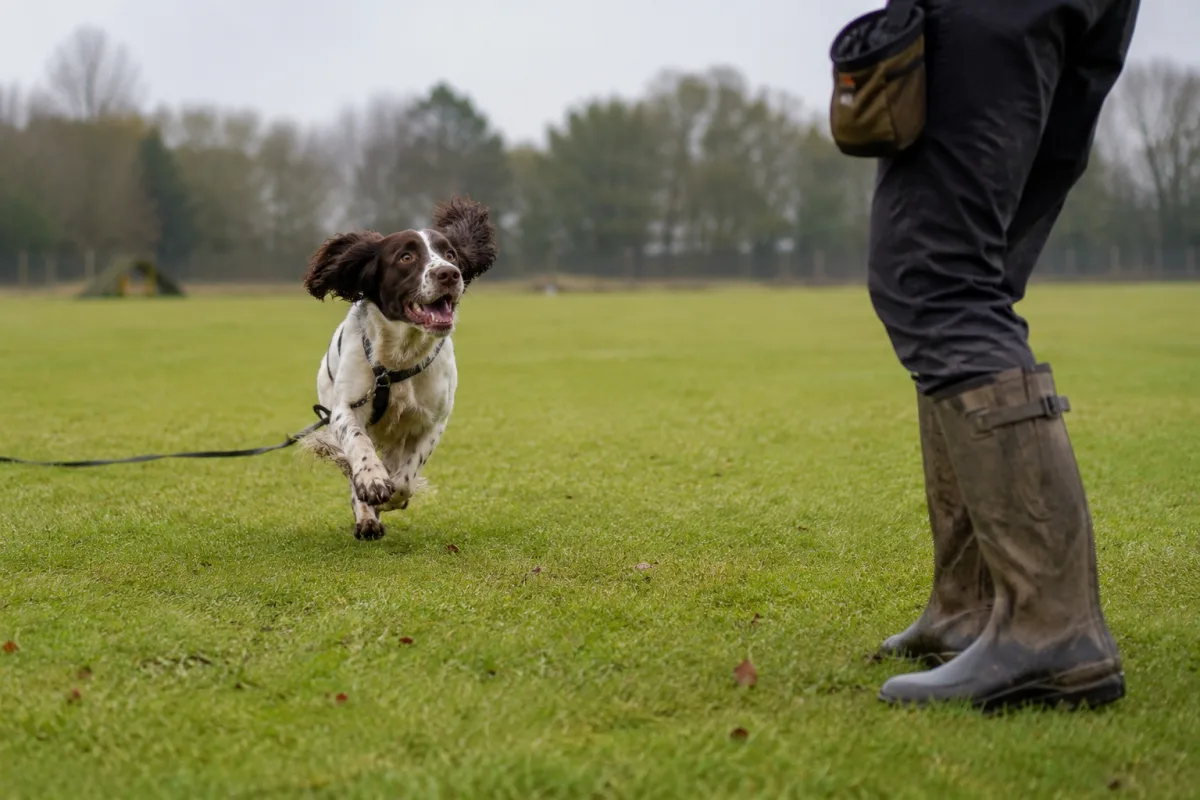
Recall is the cue that protects a Springer from its own nose. Start indoors, then fenced yard, then long line, then controlled outdoor spaces. Pay heavily. Use the best treats, a happy voice, and release the dog back to sniffing sometimes so recall does not always mean the fun ends.
Never punish the dog after it comes back, even if it took too long. You can adjust the training setup, use a long line, and lower distractions, but the dog should believe that coming to you is safe and profitable. If you also enjoy sporting breeds, Livecub's Brittany Spaniel breeder recommendations show how early matching and field drive become lifelong management issues.
Practice emergency stops separately. A hand target, whistle recall, or down at a distance can help when the dog is moving fast. Do not wait for a real chase to test it. Train the behavior in boring places, then gradually add movement, scent, and distance.
How Should You Handle Jumping And Excited Greetings?
Springers often greet with their whole body. Teach a greeting routine: four paws on the floor, sit for petting, or go to a mat when guests enter. Practice with family first, then calm visitors. If guests reward jumping, the dog learns that airborne greetings work.
Use management while training. Leash the dog before opening the door, scatter a few treats on the floor to lower arousal, or send the dog to a mat with a chew. Excitement is not disobedience by itself; it is energy without a job. Give the dog a job before the doorbell becomes chaos.
Practice greetings when no guest is expected. Ring the bell yourself, walk to the door, reward the mat, and reset. Then add one calm helper. Training only during real visits is unfair because the dog is already excited and the human is distracted.
What Exercise Does Training Depend On?
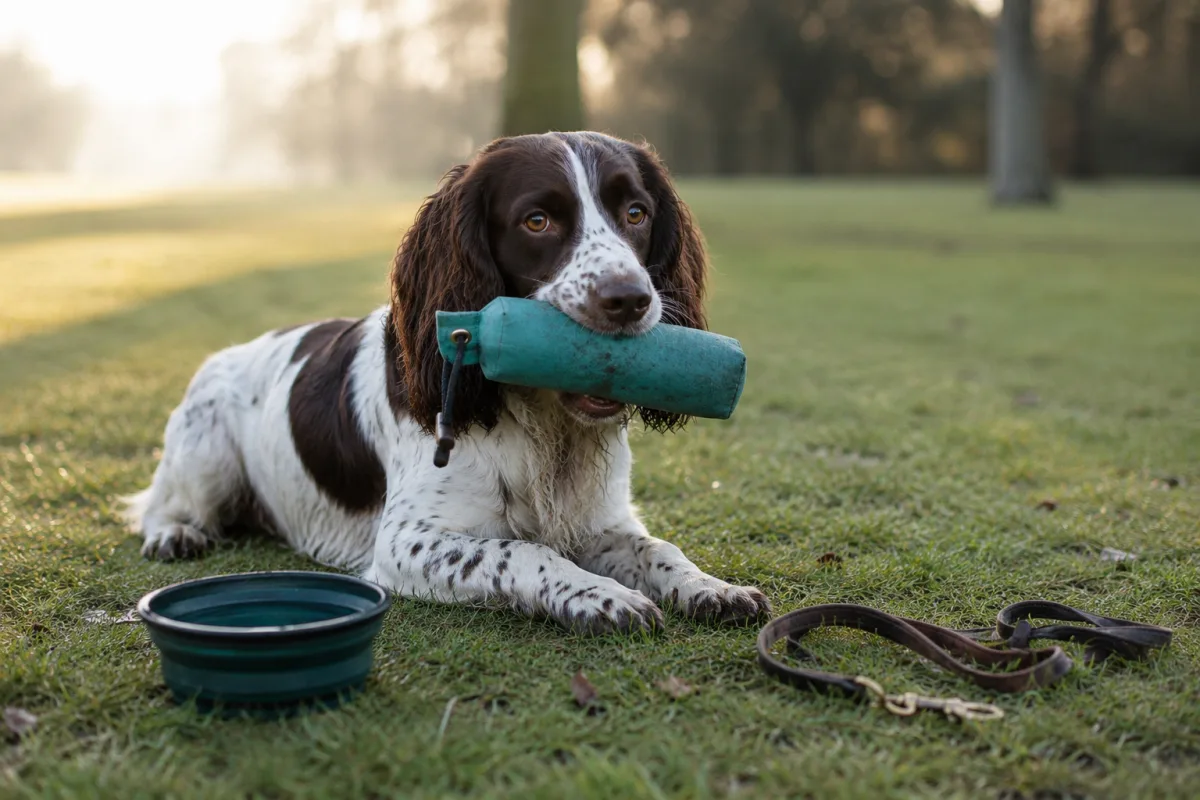
Training fails when a young Springer is under-exercised. The English Springer Spaniel Field Trial Association describes the breed as one developed to work in the field with energy and stamina. Daily walks help, but many dogs need sniffing, retrieving, hiking, swimming where safe, scent games, or field-style exercises to settle indoors.
Balance physical and mental work. Endless ball throwing can create an athlete who cannot relax. Mix movement with impulse control: wait before release, return the toy to hand, lie on a mat after a play session, and practice calm in public. Livecub's Brittany Spaniel breeder recommendations are useful if you are still choosing a puppy from lines that match your activity level.
Line matters. Some Springers come from field lines with higher drive, while others are bred more for conformation or companion life. Ask breeders about the parents' daily routines, not just titles. A puppy from high-drive working lines may be wonderful in the right home and exhausting in the wrong one.
How Do Grooming And Handling Fit Into Training?
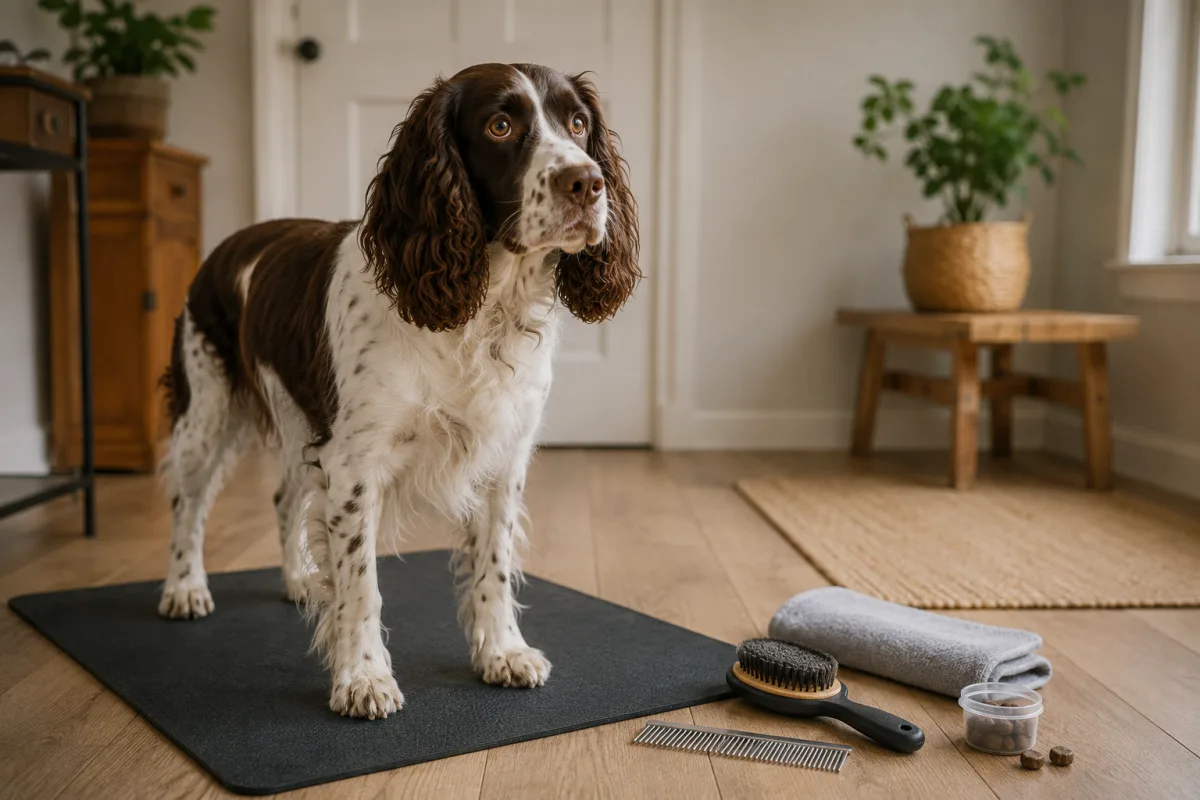
Train grooming like a cue, not a chore. English Springer Spaniels have ears, feathering, feet, and coat areas that collect burrs, moisture, and mud. Teach the dog to stand on a mat, accept ear checks, allow paw handling, and hold still for brushing. Pay for cooperation before the coat becomes tangled.
Use short sessions. Touch an ear, feed. Lift a paw, feed. Brush one section, feed. Stop while the dog is still calm. If you wait until the dog is filthy, sore, or matted, handling becomes conflict. For general coat-tool thinking, Livecub's longhair Dachshund grooming guide shows why brushing technique matters, even though the coat type differs.
Ear handling deserves its own practice because spaniel ears trap moisture and debris. Teach the dog to rest its chin on your hand, then reward a quick ear lift, a look inside, and a gentle wipe. Cooperative care turns a future vet or grooming visit into a routine instead of a wrestling match.
A good daily routine is simple: move, train, sniff, rest, handle, repeat. If one piece is missing, the dog usually tells you through noise, grabbing, or restless pacing.
What Training Mistakes Slow Progress?
The first mistake is giving too much freedom too early. A Springer that rehearses running off, jumping on guests, stealing food, or ignoring recall gets better at those behaviors. Use baby gates, leashes, crates, long lines, and closed doors while training catches up.
AKC training guidance is useful here because the second mistake is being boring. If every cue sounds flat and every reward is dry kibble, the environment wins. Use real rewards, vary sessions, and let the dog work for access to sniffing, retrieving, and people. The third mistake is skipping rest. A tired, over-stimulated spaniel can look disobedient when it is actually overloaded.
Track progress by situations, not by age. "Comes indoors" is different from "comes away from birds." "Walks nicely in the driveway" is different from "walks nicely at a soccer field." Separate the skill from the distraction and build both step by step.
Frequently Asked Questions
Are English Springer Spaniels easy to train?
They are often quick learners, but they need consistency, exercise, and impulse control. Easy to teach does not mean low effort.
When should training start?
Start the day the puppy comes home with name response, house rules, handling, crate comfort, and short reward-based sessions.
Can English Springer Spaniels be off leash?
Some can in safe places after strong recall training. Their nose and bird drive mean off-leash freedom should be earned slowly.
How do I stop pulling on leash?
Reward walking near you, change direction before the dog hits the end, and practice in low-distraction spaces before busy paths.
Do Springers need hunting training?
No, but many need structured outlets. Scent games, retrieving rules, hikes, and obedience can satisfy the working brain.
What Is The Training Priority?
Teach your Springer to come back, settle, and check in before you chase advanced goals. A dog that returns when called, greets politely, accepts grooming, and relaxes indoors is easier to enjoy everywhere else. The breed already brings energy and willingness. Your job is to give that energy rules it can understand.

Chiara Bradshaw
Covers education, culture and creative topics with an emphasis on readable explanations and verifiable references.

Leave a reply
Replying to