
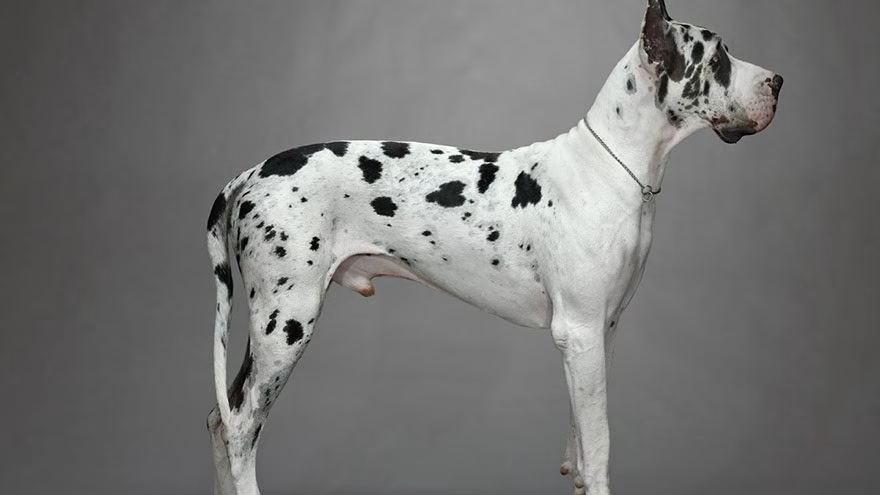
Great Danes are easy to admire from a distance and much harder to understand from a cropped puppy photo. They are giant dogs with soft manners when raised well, but their size changes everything: training, vehicles, furniture, vet bills, food, stairs, and the margin for mistakes. This guide answers the Great Dane 10 most common questions with practical detail instead of giant-dog myth.
What kind of dog is a Great Dane?
The Great Dane is a giant working breed known for height, power, and a generally friendly nature. The AKC describes the breed as dependable, patient, and friendly, and the AKC Great Dane breed page is a useful starting point before choosing one.
That friendliness does not make the breed low effort. A dog this large needs manners before it becomes strong enough to pull a person off balance or clear a counter without trying.
For size context across breeds, Livecub's biggest dog breeds guide helps place the Great Dane in the right scale.
How big do Great Danes get?
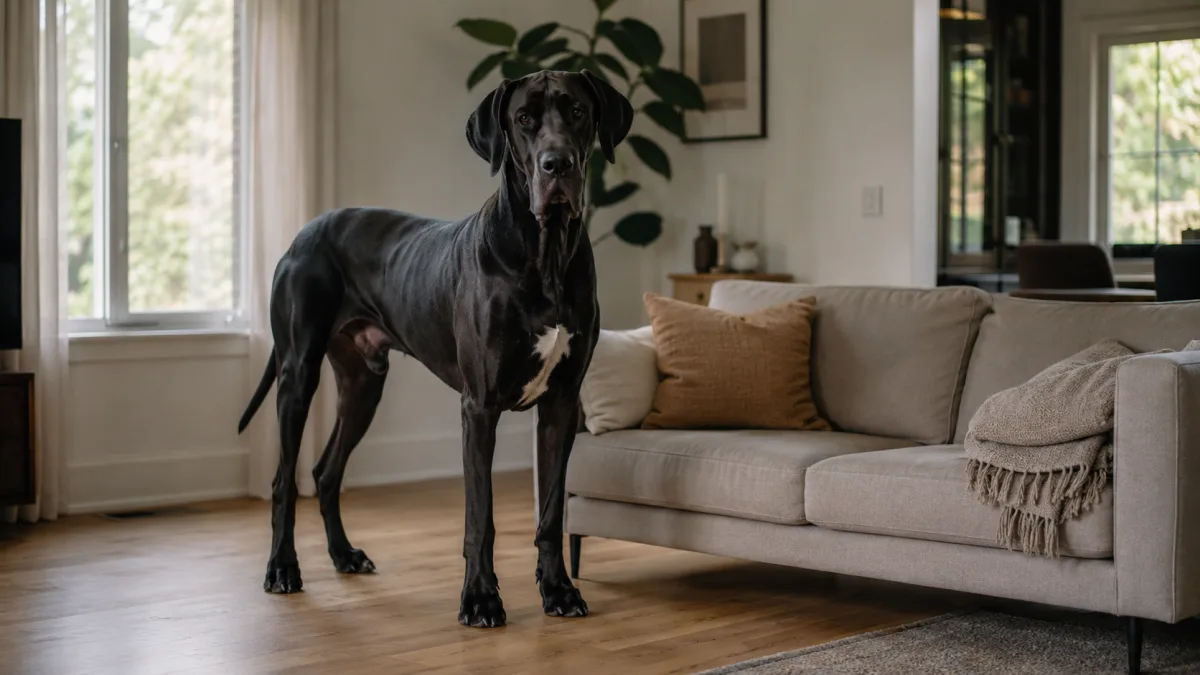
Great Danes are among the tallest dog breeds, and even a lean adult can take up a surprising amount of room. Height is only part of the story. Long legs, a deep chest, a strong tail, and a high head make the dog feel larger in a hallway than a number on a chart suggests.
Buy giant-size equipment early: crate, bed, bowls, vehicle space, grooming tools, and safe flooring. A bargain puppy setup usually becomes useless fast.
Are Great Danes good family dogs?
Many are gentle and affectionate with their families, but supervision is still needed around children. A friendly Great Dane can knock over a toddler by turning around. Children should learn not to climb on the dog, disturb sleep, or tease with food.
Good family fit depends on management, not only temperament. The home needs space, routine, training, and adults who can handle a giant dog calmly.
How much exercise do they need?
Great Danes need regular movement, but they are not built for endless forced running. Puppies need extra care because fast growth and heavy bodies can make hard jumping or long forced exercise unwise. Ask your veterinarian and breeder about age-appropriate activity.
Short walks, gentle play, training, sniffing, and controlled social exposure often work better than exhausting the dog. For an active-breed contrast, Livecub's German Shorthaired Pointer questions guide shows how different breed purpose changes exercise planning.
What training matters most?
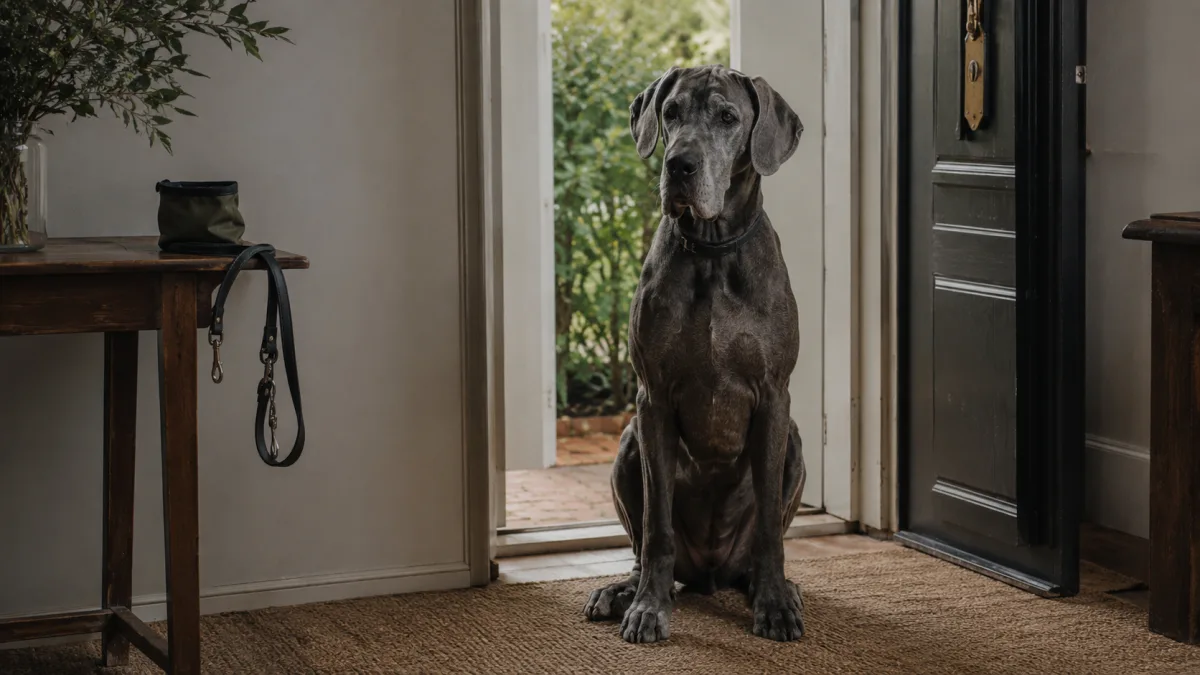
Start early with name response, recall, leash manners, wait, leave-it, polite greetings, crate comfort, and handling. A jumping puppy may be funny at ten weeks. The same habit in an adult is dangerous.
Leash manners
Teach loose walking before strength arrives. Use rewards, short sessions, and calm direction changes rather than letting the dog practice dragging people toward distractions.
Door and guest rules
Teach wait at doors and a settle spot for visitors. A Great Dane crowding a doorway can block movement without meaning to.
Handling
Practice paws, ears, mouth, tail, and gentle body checks. Vet visits are easier when the dog has learned cooperation before it weighs more than many adults.
What health questions should owners ask?
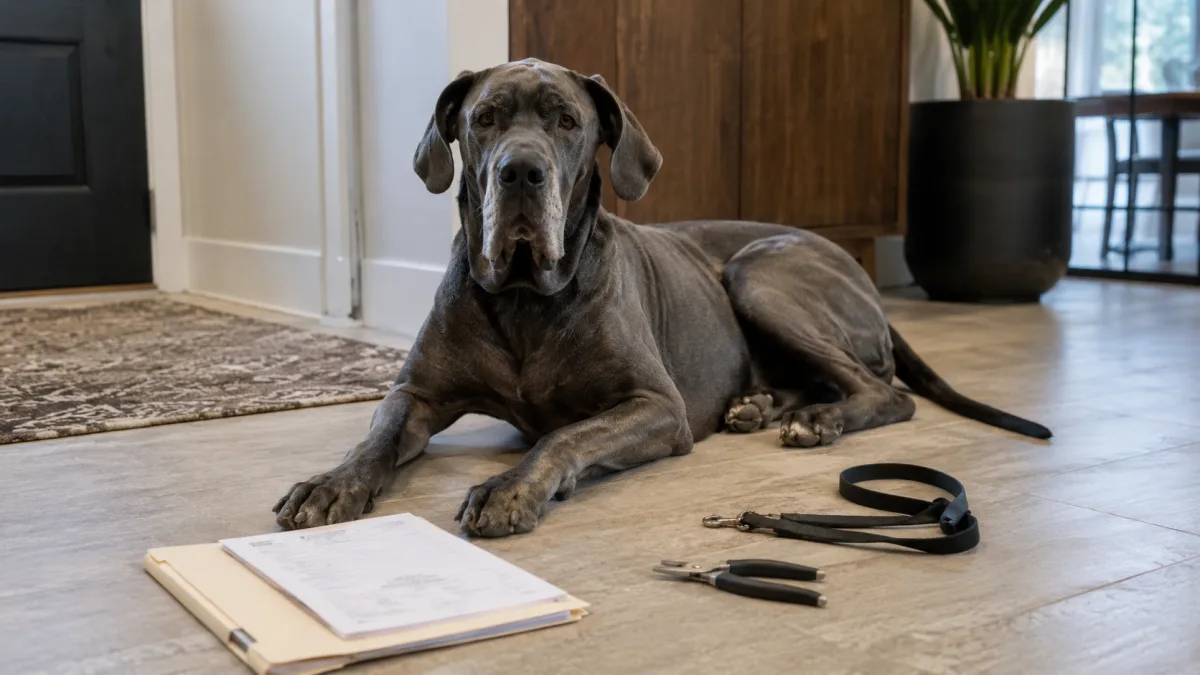
Great Dane buyers should ask breeders and veterinarians about hips, heart, eyes, thyroid, bloat, growth, and family longevity. The Great Dane Club of America provides breed health resources, and its Great Dane Club of America breed page is a good place to start learning beyond general summaries.
OFA keeps breed-health screening resources through CHIC. The OFA CHIC breed directory helps buyers understand why "vet checked" is not the same as documented screening.
For another breed-health example, Livecub's Staffordshire Bull Terrier health guide shows why breed-specific health questions should be plain and direct.
What is bloat and why does it matter?
Bloat and gastric dilatation-volvulus are emergency concerns in deep-chested breeds. Owners should talk with their veterinarian about signs, emergency plans, feeding routines, and whether preventive surgery is appropriate for their dog.
This is not a wait-and-see problem. A swollen abdomen, distress, retching without productive vomiting, weakness, or sudden collapse needs urgent veterinary help.
How should feeding and growth be handled?
Great Dane puppies grow quickly, so feeding should be planned with a veterinarian and a breeder who understands giant breeds. Do not push rapid growth with random supplements or oversized meals. Lean, steady growth is easier on the body than trying to make a puppy look huge early.
Use measured meals, watch body condition, and keep treats modest during training. A Great Dane can look thin to people used to smaller breeds, but extra weight adds strain to joints and movement. Ask your veterinarian what a healthy outline should look like at each stage.
Big puppies still need careful portions. More food is not always better care.
How much does daily care cost?
Everything is larger: food, preventives, beds, crates, medication doses, boarding, surgery, and vehicles. A Great Dane may be calm indoors, but the budget is rarely small.
Grooming is simple compared with long-coated breeds, but nails, ears, teeth, skin folds, and bedding still need routine care. For a grooming contrast, Livecub's longhair Dachshund grooming guide shows how coat type changes maintenance.
Can Great Danes live in apartments?
Some can, if the building allows giant dogs and the owner handles exercise, elevators, stairs, noise, and neighbors. The bigger question is not square footage alone; it is whether daily logistics work.
A giant dog recovering from surgery, refusing stairs, or riding in a tiny elevator can turn a normal day into a problem. Plan for the adult dog, not the puppy.
How should the home be set up?
Use non-slip rugs or mats on slick floors, especially for puppies and older dogs. Keep food off counters, secure trash, and give the dog a bed large enough to stretch out. A small bed will not keep a giant dog off the sofa if the dog cannot fit on it.
Think about doorways, car ramps, baby gates, and where the dog will rest when guests arrive. A Great Dane does not need a mansion, but the layout has to respect the size of the adult body.
What about travel and vet visits?
Plan transportation before the dog is full grown. The vehicle needs enough room for the dog to stand, turn, and lie safely. A tiny back seat may work for a puppy and fail before the first birthday.
Vet visits also need practice. Teach stepping on a scale, standing for exams, entering the car, and accepting gentle restraint. Staff can help more safely when the dog already understands the routine. Practice before a painful day makes care less stressful for everyone involved, including the dog, the owner, and the clinic team handling him safely together.
What should you ask a breeder?
Ask about health testing, parent temperament, longevity, bloat history, puppy raising, contracts, return policy, and what support is available after pickup. A breeder should talk about the hard parts of the breed as easily as the beautiful parts.
Ask how puppies are matched. The biggest puppy, the calmest puppy, and the boldest puppy may not be the right puppy for the same household. Matching is part of responsible breeding.
What changes as a Great Dane gets older?
Older Great Danes may need softer bedding, easier vehicle access, more traction, shorter walks, and closer weight management. Nails, dental care, and skin checks still matter. Small discomforts become larger problems when the dog is heavy.
Keep routines predictable. A senior giant dog that knows where to rest, how to move safely, and what to expect has a better chance of staying comfortable in daily life.
Frequently Asked Questions
Are Great Danes easy to train?
They can learn well, but training must start early because size makes poor manners harder to manage later.
Do Great Danes drool?
Some drool more than others. Head shape, excitement, drinking, food, and heat can all affect how messy a dog is.
Are Great Danes good with other dogs?
Many can be, but socialization, size awareness, supervision, and temperament matter. Not every dog enjoys giant play.
How long do Great Danes live?
They are generally shorter-lived than many smaller breeds. Ask breeders about longevity in their lines and discuss care with your veterinarian.
A Great Dane is not just a big version of a smaller dog. Choose carefully, train early, plan the budget, and treat health questions as part of ownership from day one.

Chiara Bradshaw
Covers education, culture and creative topics with an emphasis on readable explanations and verifiable references.
Leave a reply
Replying to