

How Do Voice Boxes Work? The voice box, or larynx, sits in the neck and helps with breathing, protecting the airway, and making sound. It is not just a sound machine.
Voice happens when air from the lungs moves through vocal folds in the larynx and makes them vibrate. The throat, mouth, tongue, lips, and nose shape that sound into speech.
The Larynx
Cleveland Clinic describes the larynx as the voice box that helps you breathe, contains the vocal cords, and includes the epiglottis: larynx anatomy and function.
It sits between the throat and windpipe. That position lets it help with both air movement and airway protection.
Vocal Folds
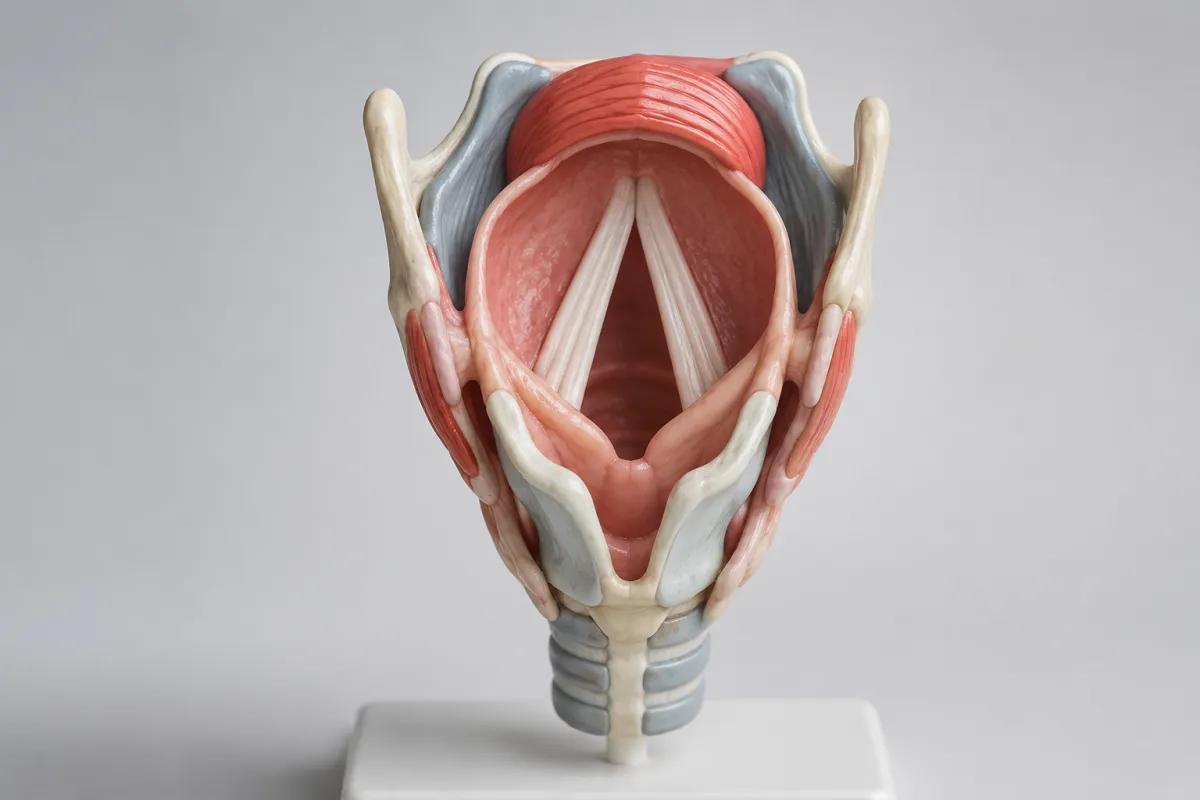
NIDCD explains that the sound of the voice is produced by vibration of the vocal folds, two bands of smooth muscle tissue inside the larynx: taking care of your voice.
The vocal folds open for breathing and come together for voice. Air pressure from the lungs starts the vibration.
Breathing Comes First
When you breathe quietly, the vocal folds stay open so air can move through the windpipe. If they stayed closed, breathing would be blocked.
This is why voice problems and breathing symptoms should be taken seriously. The same area is involved in both.
Sound Starts With Air

The lungs supply air, the diaphragm and ribs help manage pressure, and the vocal folds turn air movement into vibration.
A weak or strained voice may come from breath support, vocal fold irritation, swelling, nerve problems, or muscle tension.
Pitch And Loudness
Pitch changes when vocal fold tension and length change. Loudness depends partly on air pressure and how the vocal folds vibrate.
Cleveland Clinic's vocal cord page explains that vocal cords open for breathing and close to vibrate during speech: vocal cords overview.
The Mouth Shapes Speech
The larynx creates voice, but speech needs shaping. Tongue, lips, teeth, jaw, soft palate, and nose help turn vibration into words.
This is why a person can hum with the mouth closed but needs the mouth and tongue for clear speech sounds.
Swallowing Protection
The larynx helps protect the airway during swallowing. The epiglottis and coordinated movement help keep food and liquid out of the windpipe.
Coughing after swallowing can happen for many reasons. Frequent choking, voice changes after eating, or breathing trouble should be checked.
Puberty And Voice Change
During puberty, the larynx grows and vocal folds change, especially in many boys. The voice may crack while the system adjusts.
Voice change is usually normal, but pain, long-lasting hoarseness, or loss of voice should not be ignored.
Voice Strain

Yelling, long speaking, dehydration, smoke, reflux, illness, and poor technique can irritate the voice. Professional voice users need recovery time.
If stage fright makes someone push the voice, Livecub's stage fright guide may help reduce strain from panic speaking.
Tracking Hoarseness
Track hoarseness by date, trigger, duration, pain, illness, reflux, and voice use. Patterns can help a clinician or speech-language pathologist.
Livecub's food journal guide is a different subject, but the same record habit works for voice symptoms.
Speech And Silence
Some speaking problems are mechanical, some are neurological, and some are anxiety-related. Not all silence comes from the voice box itself.
If a person can speak in some settings but not others, Livecub's selective mutism guide may be more relevant than anatomy alone.
When To Get Checked
Seek medical advice for hoarseness that persists, breathing trouble, coughing blood, severe throat pain, swallowing problems, a neck lump, or voice loss after injury.
A laryngologist or ear, nose, and throat clinician can look at the larynx when symptoms warrant it.
Why Voices Sound Different
Voices differ because bodies differ. Vocal fold size, throat shape, mouth shape, resonance, habits, language, and health all affect sound.
That difference is normal. A unique voice is not automatically a damaged voice.
Voice Rest
Voice rest can mean reducing speaking, avoiding yelling, and giving irritated folds time to recover. Total silence is not always required, and whispering can strain some people.
Ask a clinician if voice loss or hoarseness keeps returning.
The Glottis
The opening between the vocal folds is called the glottis. It changes shape when you breathe, speak, cough, whisper, or hold your breath.
This small opening is one reason voice and breathing symptoms can overlap.
Resonance
The first sound from the vocal folds is shaped by the throat, mouth, and nose. That shaping is called resonance.
Resonance helps explain why two people can use the same pitch and still sound different.
Whispering
Whispering may feel gentle, but for some irritated voices it can be more tiring than quiet speech. A clinician or voice therapist can advise based on the problem.
If your voice is strained, avoid long whispered conversations as a default fix.
Hydration And Mucus
Vocal folds work best when the surface tissue is healthy and not overly dry or irritated. Hydration, reflux control, smoke avoidance, and rest can matter.
Water does not instantly coat the vocal folds, but whole-body hydration supports the tissue environment.
Coughing And Throat Clearing
Frequent throat clearing slams the vocal folds together. If it becomes a habit, it can keep irritation going.
Try sipping water or swallowing first. Persistent throat clearing deserves evaluation if it does not improve.
Why Hoarseness Happens
Hoarseness can come from swelling, infection, reflux, overuse, nodules, polyps, paralysis, allergies, or other causes.
Because causes vary, long-lasting hoarseness should be checked instead of guessed at from sound alone.
Professional Voice Users
Teachers, singers, coaches, call-center workers, clergy, and presenters use the voice like a tool. They may need warmups, amplification, rest, and technique.
Pain is not a badge of hard work. Voice strain is feedback.
False Vocal Folds
The larynx also has false vocal folds above the true vocal folds. They help protect the airway but are not the main source of normal voice.
Some voice disorders involve extra squeezing in this area, which is one reason professional evaluation can matter.
Nerves Control Movement
Nerves tell the vocal folds when to open, close, and adjust tension. If nerve signals are affected, voice and breathing can change.
This is why sudden voice change after surgery, injury, or neurological symptoms should be discussed with a clinician.
Cough And Protection
The larynx helps create a strong cough by closing briefly and then releasing air. That pressure helps clear material from the airway.
A weak cough or frequent choking may signal a swallowing or airway issue that needs medical attention.
Singing
Singing uses the same basic system as speaking but demands more control over breath, pitch, resonance, and endurance.
Singers often need training because the voice can be overused like any other body system.
Voice Changes With Age
The voice can change with age as muscles, tissue, hormones, hearing, breathing, and health change.
Some change is expected, but persistent hoarseness, strain, or sudden loss of range should not be dismissed as age alone.
Why Voice Cracks
A voice crack happens when the vocal folds and breath pressure do not coordinate smoothly for a moment. Puberty, strain, nerves, or fatigue can make this more likely.
Most occasional cracks are harmless. Frequent pain or loss of voice is different.
Laryngitis
Laryngitis means inflammation of the larynx. Viral illness, overuse, reflux, smoke, and irritation can all be involved.
Rest, hydration, and avoiding strain may help, but long-lasting symptoms should be checked.
Speech Therapy
Speech-language pathologists can help with voice use, resonance, breath coordination, and recovery after certain voice problems.
Voice therapy is not only for singers. Teachers, speakers, and people with medical voice issues may benefit too. Early guidance can prevent strain habits from becoming routine.
Frequently Asked Questions
What is the voice box?
The voice box is the larynx, a structure in the neck that helps with breathing, airway protection, and voice production.
How do vocal cords make sound?
Air from the lungs moves through closed vocal folds, causing them to vibrate and create sound.
Why does my voice change pitch?
Pitch changes when vocal fold length and tension change, along with how the mouth and throat shape sound.
Is the voice box only for talking?
No. It also helps keep the airway open for breathing and helps protect the airway during swallowing.
When should hoarseness be checked?
Persistent hoarseness, breathing trouble, swallowing problems, throat pain, blood, or a neck lump should be checked.
Voice boxes work by coordinating air, vocal fold vibration, resonance, and airway protection. The larynx is small, but it connects breathing, speaking, and swallowing.

Linda Fehrman
Edits general wellness and relationship explainers. Health material is educational, avoids diagnosis and links to health-authority guidance.




Leave a reply
Replying to