
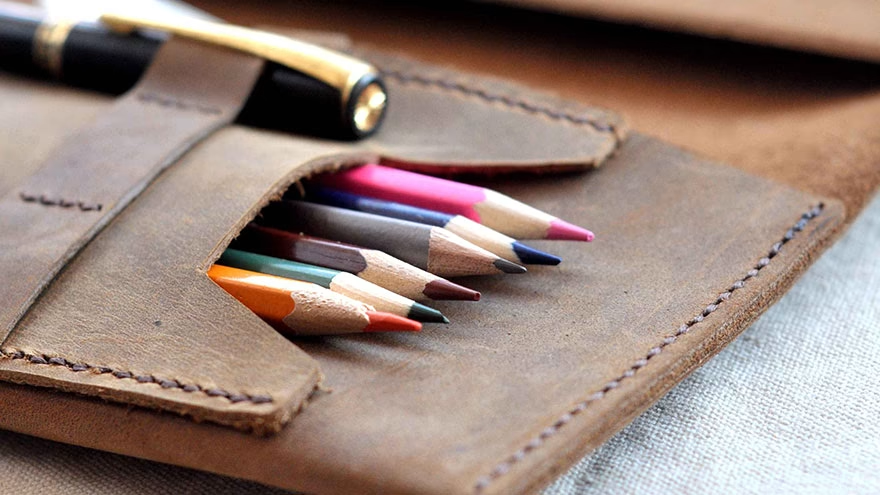
How to Add a Pen Holder to Your Journal is a small project that can make journaling easier because the pen stops wandering away. The best method depends on the journal cover, pen size, and how permanent you want the holder to be.
Use a removable clip if the journal is expensive, leather, archival, or sentimental. Use adhesive or sewn elastic when you are comfortable making a permanent change.
Choose The Holder Type
There are three simple options: adhesive pen loop, elastic band holder, or binder-clip loop. Adhesive is flat, elastic is secure, and a clip is removable.
For a mental health or habit journal, convenience matters. APA discusses expressive writing as a tool that can help people work through challenges: APA expressive writing podcast.
Pick The Pen First
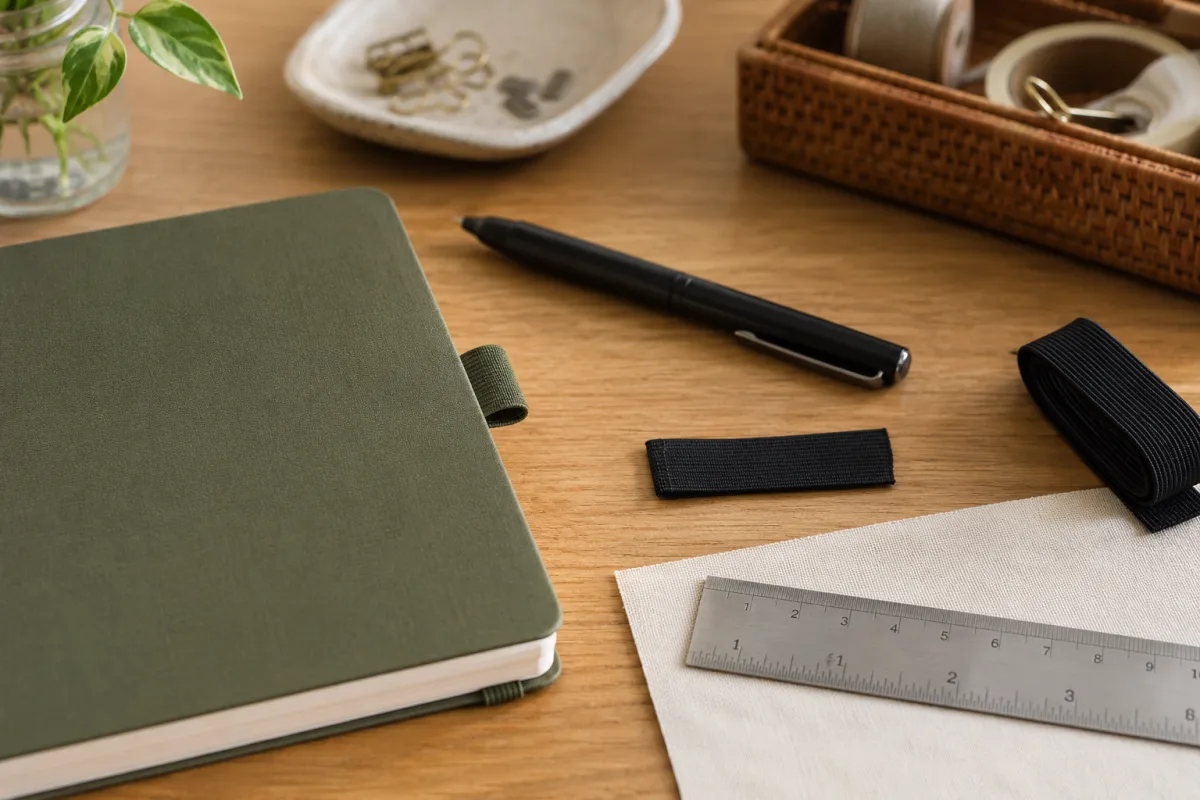
Measure the pen you actually use. Gel pens, fountain pens, markers, and mechanical pencils all need different loop sizes.
A loop that fits a skinny pen may stretch badly around a marker. A loop made for a marker may drop a pencil.
Check The Cover
Hard covers handle adhesive better than soft paper covers. Fabric, leather, and textured covers may reject glue or show marks.
If you care about resale, keepsake value, or archival storage, choose a removable band or clip instead of glue.
Adhesive Loop Method
Clean the inside back cover, let it dry, test pen placement, then stick the adhesive loop near the outer edge.
Self-adhesive pen loops are commonly sold for journals, notebooks, planners, and calendars; many attach to a clean smooth surface.
Elastic Band Method
Wrap elastic around the journal vertically or horizontally, then attach a small loop for the pen. This avoids gluing the journal itself.
A Rose Tinted World shows a notebook pen holder that fastens around a notebook with elastic: elastic notebook pen holder tutorial.
Binder Clip Method
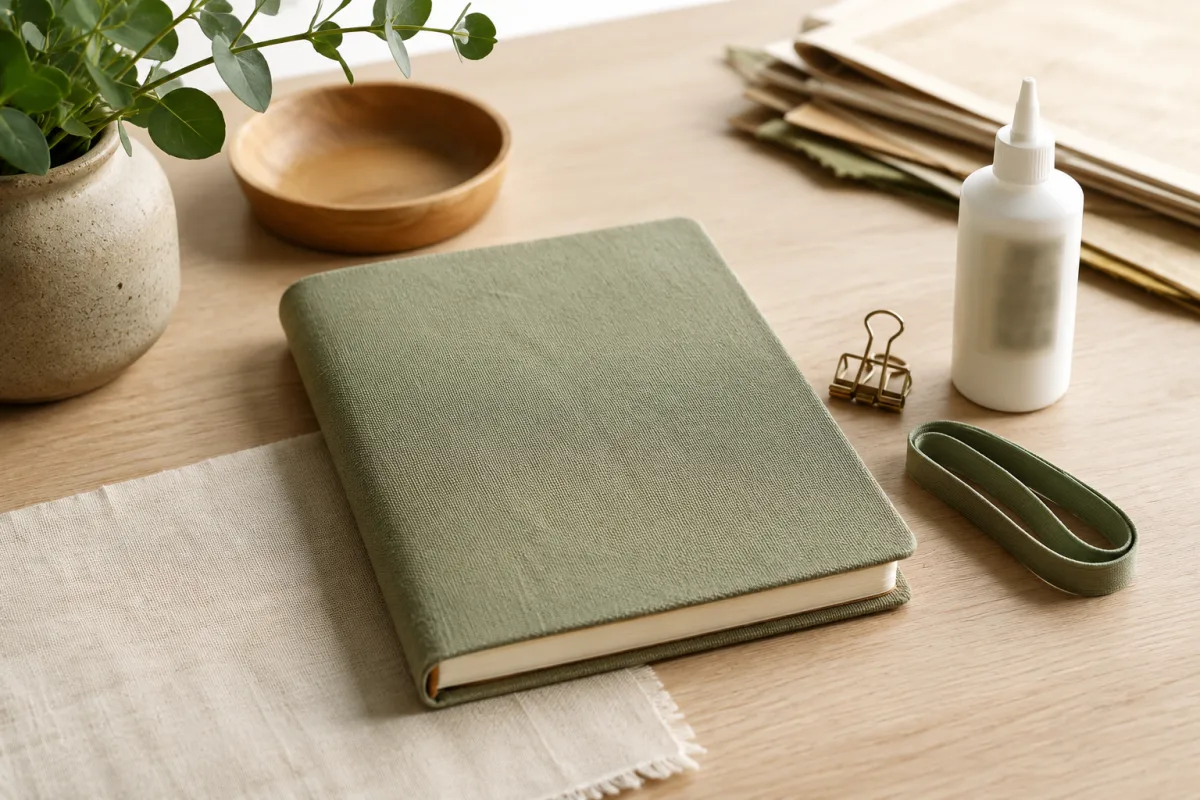
Glue elastic to a binder clip, let it dry fully, then clip it to the back cover. This is useful for people who change journals often.
Wendaful Planning's DIY elastic pen loop tutorial uses elastic and a binder clip as a removable planner or notebook holder: binder clip pen loop tutorial.
Measure The Elastic
Wrap elastic around the pen with slight tension, then add enough overlap for glue or stitching.
Do not pull it tight while measuring. Elastic that starts too tight can bend paper, crack glue, or make the pen hard to remove.
Placement Test
Close the journal with the pen in place before attaching anything. Check if the pages bulge, the cover warps, or the pen hits your hand while writing.
The best spot is often inside the back cover near the fore edge, but thick pens may work better on an outside band.
Protect The Pages
Put scrap paper under the work area before using glue. Hot glue strings and craft glue smears can mark the first or last pages.
Let glue cure longer than the label says if the loop will be pulled often.
Food Journal Setup
If the journal is for meals, keep the pen with it so you can write before memory fades.
Livecub's food journal guide pairs well with a pen holder because tracking works better when the tool is ready.
Meal Planning Use
A pen loop also helps if your journal doubles as a meal planner or grocery notebook.
Livecub's pasta substitutes guide can be the kind of reference you jot into a planning journal.
Event Planning Use
For event notebooks, a pen holder keeps quick sketches, measurements, and shopping notes in one place.
Livecub's cookie display guide is a good example of a project where a pen at hand saves backtracking.
No Glue Option
Use a large elastic band around the cover and slide the pen under it. This is not as tidy, but it is reversible.
You can also use a commercial clip-on holder if you do not want to craft anything.
Sewn Option
If you sew, make a fabric sleeve on an elastic strap. This works well for thick journals and multiple pens.
Use strong stitches because the loop will be pulled every time the pen comes out.
Hot Glue Caution
Hot glue is fast but bulky. It can peel from smooth covers and leave raised lumps under paper.
For a cleaner look, test fabric glue, strong double-sided tape, or stitching on scrap material first.
Pen Weight
Heavy pens need stronger elastic and a wider attachment point. A tiny adhesive loop may fail if the pen is metal.
Test by holding the journal upside down over a soft surface. If the pen slides out, tighten the loop before using it daily.
Left-Handed Writing
Left-handed writers may prefer the pen on the back cover or outside edge where it does not press into the wrist.
Open the journal in your normal writing position before deciding placement.
Travel Journals
For travel, choose a holder that grips tightly and does not snag in a bag.
A full elastic band around the journal is often safer than a small adhesive tab if the journal gets tossed around.
Make It Replaceable
If you use one journal after another, make the holder removable. Binder clips, elastic bands, and slip-on sleeves can move to the next notebook.
Permanent adhesive is better for a dedicated journal you plan to use until it is full.
Final Check
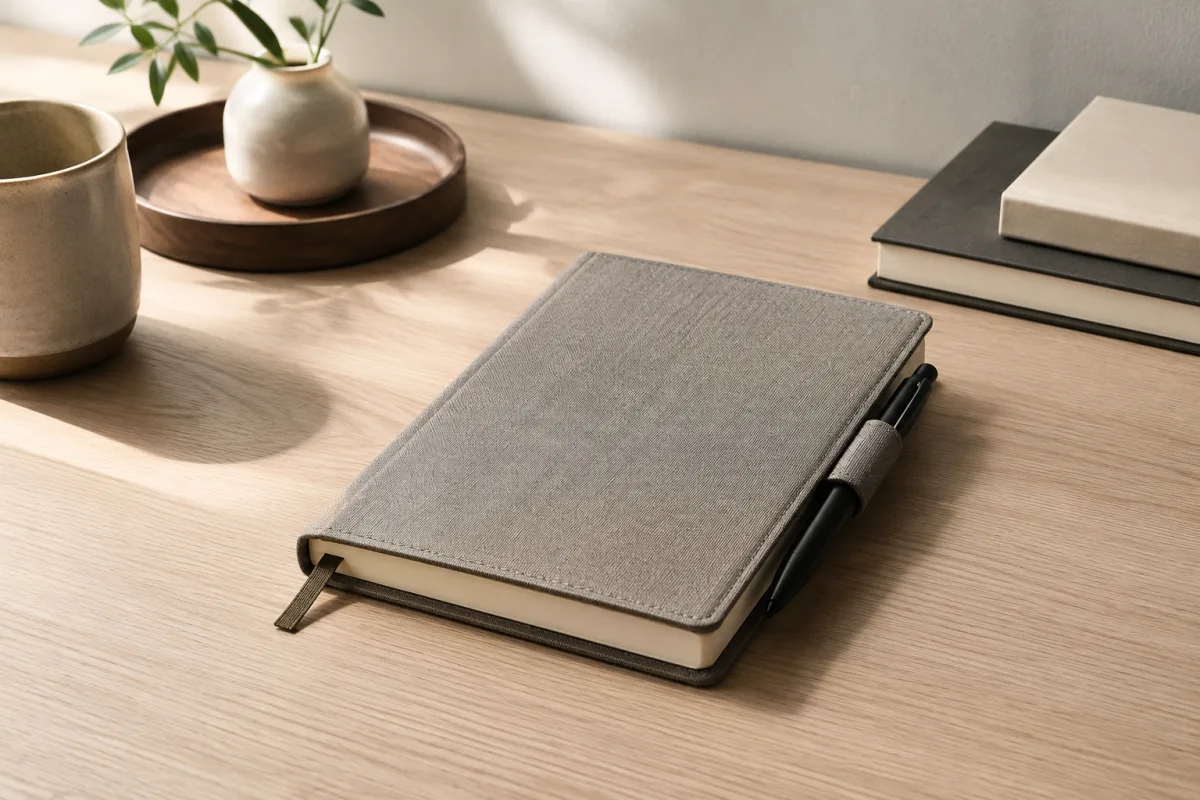
Insert the pen, close the journal, shake gently, open flat, and write a few lines. Check comfort, page bulge, and grip.
A pen holder is successful if you stop thinking about it after the first day.
Materials Checklist
For a basic project, gather elastic, scissors, ruler, pencil, binder clip or adhesive tab, glue if needed, scrap paper, and the pen.
Keep the actual journal nearby but do messy glue work on scrap first.
Make A Paper Template
Before cutting elastic or fabric, make a paper loop around the pen. Tape it lightly and test the size.
A paper template helps you avoid cutting elastic too short, especially for thick pens or pens with clips.
Cure Time
Glue may feel dry before it is strong. Let the holder sit under light pressure if the adhesive instructions allow it.
Using the loop too soon is a common reason the elastic peels away from the base.
Fountain Pen Caution
Fountain pens can be heavier, wider, and more prone to leaking if stored badly.
Use a snug but gentle loop and keep the pen orientation in mind. Do not crush the cap or clip.
Multiple Pens
If you need several pens, make a bandolier-style elastic strap rather than crowding three loops inside the cover.
Multiple pens add weight and can warp a soft journal if they all sit on one edge.
If The Loop Is Loose
If the pen slides out, shorten the elastic or add a tiny stitch to reduce the loop size.
For adhesive loops, replacement is usually cleaner than layering more glue.
If The Loop Is Tight
If the pen is hard to remove, the loop will eventually tear or bend the cover.
Make a slightly larger loop and test it while the journal is closed, not only while it lies flat.
Decorative Finish
Cover the attachment point with matching paper, fabric, washi tape, or a small label if the material allows it.
Decoration should not hide weak construction. Test strength before making it pretty.
Removing Adhesive
Adhesive can tear paper covers or leave residue. Warmth may soften some adhesives, but it can also damage finishes.
If the journal matters, accept a removable holder from the start instead of planning to remove glue later.
Maintenance
Check the loop every few weeks. Elastic stretches, glue loosens, and pen clips catch on bags.
A quick repair early prevents ink stains, torn covers, and lost pens.
Frequently Asked Questions
What is the easiest pen holder for a journal?
A self-adhesive pen loop is easiest on a smooth hard cover. A clip or elastic band is better if you want a removable option.
Where should I place the pen loop?
Test the inside back cover near the outer edge first, then close the journal with the pen inside to check bulge and comfort.
Can I add a holder without glue?
Yes. Use an elastic band, clip-on holder, binder-clip loop, or sewn sleeve that wraps around the journal.
What elastic size should I use?
Measure around the actual pen with slight tension and leave overlap for glue or stitching.
Will a pen holder damage my journal?
Permanent adhesive or hot glue can mark covers. Use removable holders for expensive, leather, archival, or sentimental journals.
Adding a pen holder to your journal is mostly about fit. Pick the pen first, test placement, protect the cover, and choose removable or permanent hardware on purpose.

Linda Fehrman
Edits general wellness and relationship explainers. Health material is educational, avoids diagnosis and links to health-authority guidance.




Leave a reply
Replying to