
Start with the dog's real life
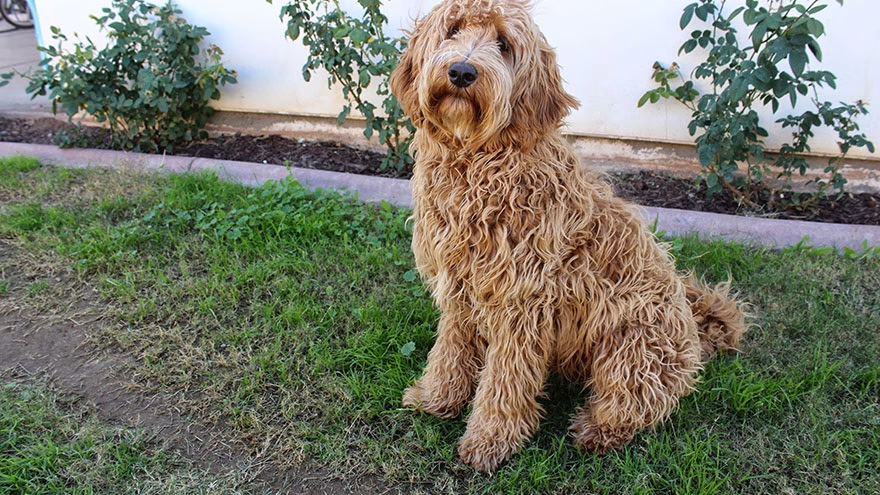
AVMA selecting a pet dog is the first outside check. Adopting a Labradoodle should start with the actual dog's health, temperament, coat, age, size, and history, not the doodle label.
Use related Livecub context such as coat-care questions only where it supports the next decision.
Check health before promises
Ask the rescue or shelter about behavior, medical records, grooming needs, and how the dog reacts to handling, other pets, children, and alone time. The useful advice is the part that still works when the day is busy, awkward, expensive, or uncertain.
A nearby internal reference, breeder screening questions, can help compare a habit without changing the main topic.
Use records, not guesses
AKC Poodle breed page adds a second reference. Allergy claims should be tested carefully before adoption.
Records, labels, maps, policies, messages, or vet notes are better than memory when the stakes are real.
Connect breed traits to routine
Plan grooming, training, exercise, and a slow first week at home. Keep the plan small enough to explain to another person in one minute.
Use size and household fit as a supporting path, not as a reason to drift away from the topic.
Ask for qualified help early
AKC Labrador Retriever breed page gives the third source. Progress is a match that protects both the dog and the household.
A current source should beat an old screenshot, a vague memory, or a sales page when safety, money, law, or trust is involved.
Keep the next step gentle
Delay adoption if key records are missing or the home cannot meet daily needs. The next step should reduce risk without making the plan too heavy to use.
A smaller action done correctly is better than a dramatic plan that fails when the day gets noisy.
Fit the advice to the constraint
The adoption should fit temperament, health records, coat care, allergies, size, training, budget, and home routine. Advice that ignores the fixed constraint usually fails at the first hard moment.
Name the constraint before choosing the tactic. It may be law, health, weather, access, trust, equipment, money, time, privacy, travel rules, or an animal's body.
Use one visible measure
The useful measure is medical record, coat type, behavior notes, home trial, grooming cost, and exercise plan. A visible measure keeps the plan out of vague optimism.
Write the measure down before acting. People remember details poorly when they are worried, excited, ashamed, rushed, or tired.
Plan for the ordinary interruption
Cute photos, rushed adoption, and allergy assumptions can interrupt fit. Build the interruption into the plan instead of treating it as a surprise.
The fallback should be simple enough to use under pressure. If it needs a long debate, it is not a real fallback.
Keep the cost honest
The cost can be return stress, grooming overload, behavior trouble, and owner guilt. Cost is not only cash. It can be trust, sleep, safety, health, data, time, privacy, training, reputation, or future repair work.
Name who carries that cost. If the cost falls on someone else, the plan needs more care.
Remove one fragile step
Find the step most likely to break first: a missing record, unclear sentence, unsafe trail, vague policy, weak profile, poor breeder answer, or skipped safety check.
Fix that step first. The rest of the plan gets easier when the weakest point is no longer ignored.
Keep the record easy to find
Save the useful details where they will be needed later. Use a folder, note, calendar entry, screenshot, vet file, HR file, route plan, or support ticket.
A findable record prevents repeat confusion. It also helps another person understand the decision without rebuilding the whole story.
Let the first attempt teach the next one
Review the first week plan before bringing the dog home. Review it while the details are still fresh.
The second attempt should be calmer and more accurate than the first. That is where practical improvement usually starts.
Know where general advice stops
Pause when health, behavior, allergy, or landlord rules are unclear. That is where a professional, official source, veterinarian, counselor, lawyer, support line, park office, or technical support channel should take over.
Stopping at that line is part of careful work. It protects people, animals, systems, and decisions from wishful shortcuts.
End with one ready action
Choose one action that can be done today: check the rule, make the appointment, save the note, ask the question, change the route, report the scam, or write the boundary.
One finished action beats ten loose intentions. It gives the next round a cleaner starting point.
Make the next round easier
Put the materials where they belong before you move on. File the document, label the note, pack the gear, update the chart, save the source, or write the follow-up message.
The next round should start with less searching and less emotional noise. That small cleanup step often saves the next decision and helps another person continue without guessing.
Check the source before acting
Use the freshest official page or professional record before money, health, legal risk, safety, or trust is on the line. Old memory can be useful for context, but it should not be treated as the final answer.
If two sources disagree, slow down and identify which one has authority for this situation. A travel advisory, labor poster page, park rule, vet record, or safety notice may matter more than a familiar post.
Respect the person affected
The person most affected should not be treated as a side character in the plan. That may be the employee reading a poster, the traveler near wildlife, the person using a dating site, or the dog living with the routine.
Ask what the decision changes for that person. The answer may point to timing, consent, privacy, safety, pacing, cost, or a calmer way to explain the next step.
Make the handoff clear
If someone else needs to act, write the handoff in plain language. Name the issue, the source checked, the date, the next step, and the detail that should not be missed.
A handoff that depends on memory usually weakens by the next day. Put it in the support ticket, vet file, HR note, travel folder, shared calendar, or relationship journal where it will actually be seen.
Set a review point
Every practical plan needs a point where you look again. Choose a date, a symptom, a reply deadline, a test result, a budget number, or a behavior change that tells you if the plan is working.
Without a review point, people often keep pushing the same tactic because stopping feels awkward. A clear review makes changing course feel planned rather than panicked.
Keep the tone practical
The tone should stay calm and plain, especially when the topic carries shame, fear, money, safety, legal risk, or uncertainty. Dramatic language can make a hard situation feel less manageable.
Use words that a real person could say out loud. A clear sentence, a dated note, a checked rule, or one honest conversation will usually do more than a polished speech. Plain records age better too.
Separate facts from preference
Write down what is known, what is assumed, and what is only preferred. That small separation prevents a personal wish from being mistaken for a rule, diagnosis, promise, or verified result.
A fact can be checked by a record, source, result, or direct observation. A preference still matters, but it should be named honestly so it does not crowd out risk.
Choose the least risky next step
The next step should reduce uncertainty without creating a larger problem. That may mean asking one better question, saving one record, delaying a choice, or getting qualified help.
If the next step would be hard to undo, pause and check the evidence again. Reversible steps are useful while the situation is still unclear. They also keep pressure from driving the decision and leave room for a cleaner correction.
Frequently Asked Questions
What should I check first?
Check the dog's records, coat care, and behavior history first.
That first check keeps the advice tied to the real situation.
What mistake should I avoid?
Avoid adopting because the breed mix sounds easy before meeting the dog carefully.
That is where small problems often become expensive, unsafe, or hard to undo.
When should I pause?
Pause when health, behavior, allergy, or landlord rules are unclear.
Use a qualified person, official rule, support line, or trusted expert when the stakes are high.
How do I make the next attempt better?
Review the first week plan before bringing the dog home.
Save one short note while the details are fresh.

Timothy Davidson
Edits step-by-step general-interest guides for clarity, realistic limits and source verification.




Leave a reply
Replying to